
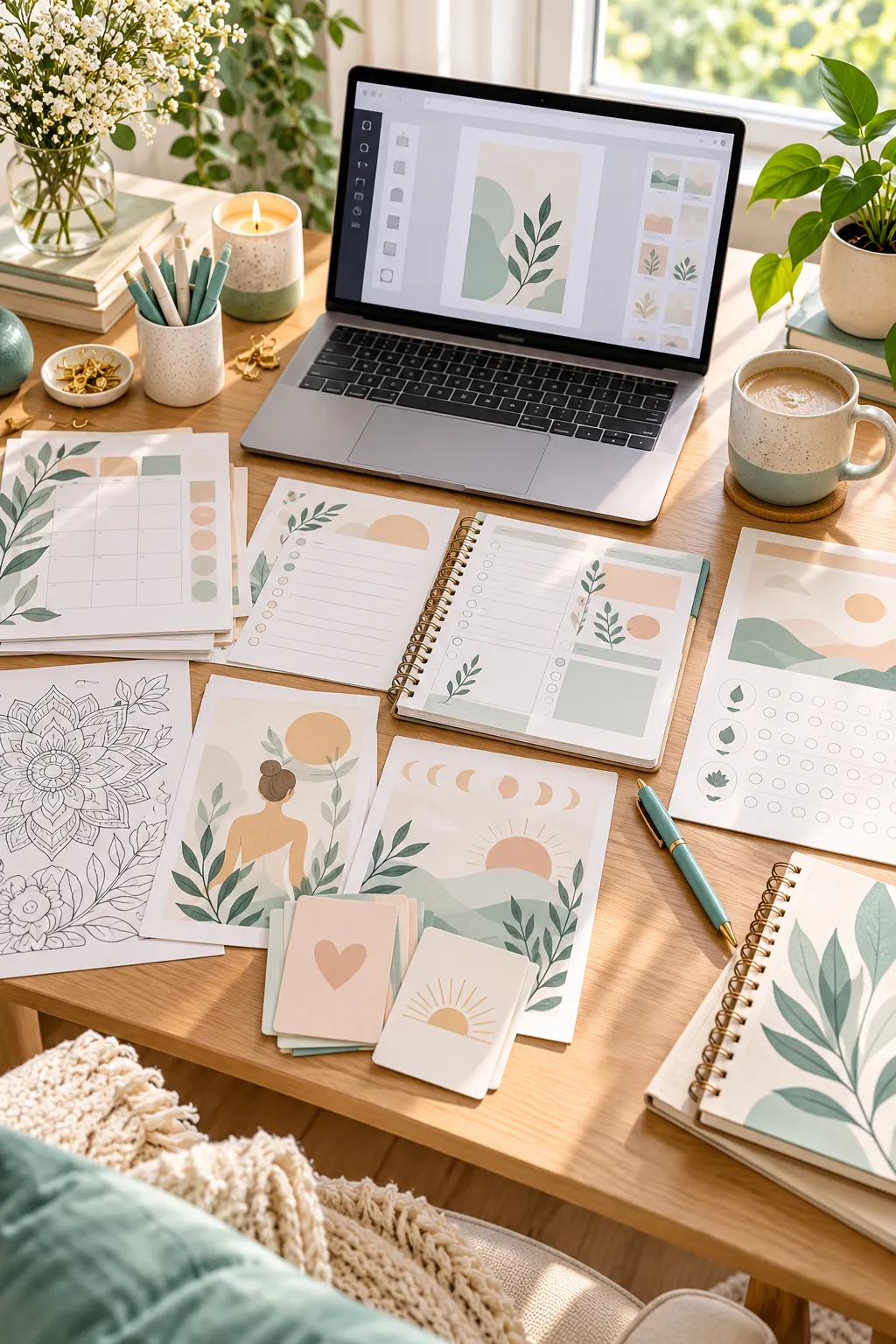
Creating digital products sounds simple until you sit down to decide what people might actually want to buy. There are countless printable planners, journals, and trackers online, but making another pretty worksheet is not enough. A useful printable needs to solve a small, everyday problem without making life more complicated.
That’s why self care printables are an interesting product category for beginners. People looking for calmer routines often want something they can print, fill out in a few minutes, and return to when they need it. A simple checklist might help someone remember their evening routine. A reflection worksheet could give them space to sort through a busy day.
For creators, the challenge is finding product ideas that feel useful and different from one another. You don’t need complicated designs or dozens of pages to get started. A clear layout, thoughtful prompts, and enough writing space can make a small product worth considering.
Here are 25 printable self-care product ideas you can create with Canva or similar design tools, along with suggestions for making each one practical and easy to use.
1. Daily Self-Care Routine Planner
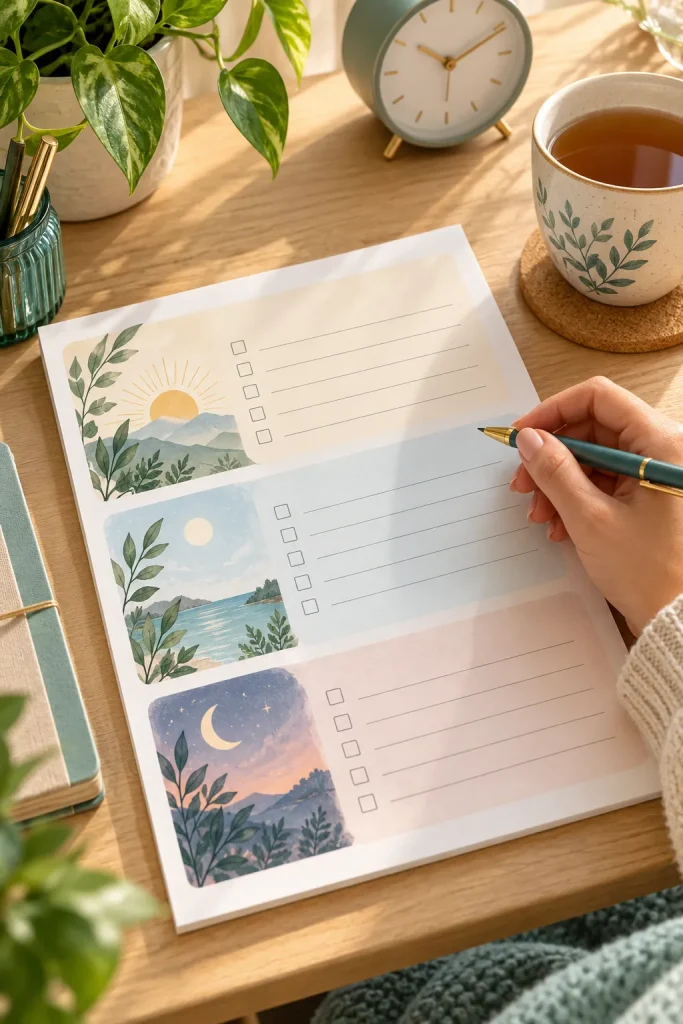
A daily self-care planner helps people make room for small personal needs alongside work, family, and household tasks. Instead of filling the page with a long to-do list, divide it into a few manageable sections.
What to Include
- Morning: One simple action to start the day.
- Afternoon: A short break or personal check-in.
- Evening: Something relaxing before bedtime.
- Personal note: A little space to write what felt helpful.
People with busy schedules may prefer an undated version they can use whenever needed.
Create the planner in Canva using soft colors, readable headings, and large writing boxes. Include a low-ink black-and-white version for buyers who print at home.
2. Weekly Self-Care Checklist
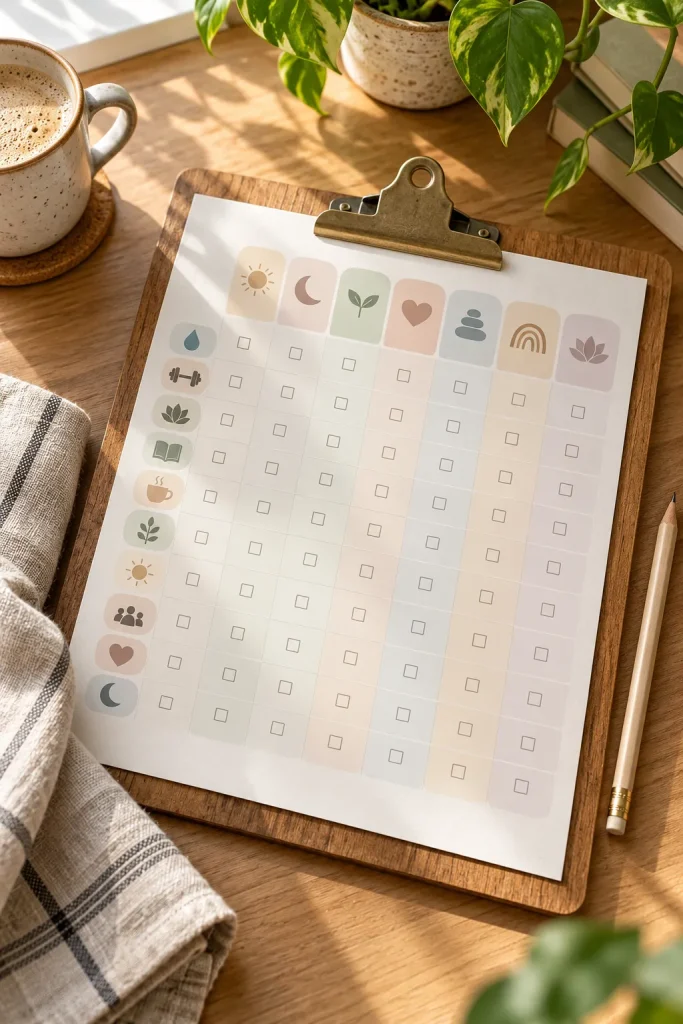
Some people don’t want to plan every hour. They just need a gentle reminder to look after themselves during a busy week.
A weekly self-care checklist gives buyers a simple page they can keep on the fridge, near their desk, or inside a planner.
Design It for Flexible Use
Include a mix of everyday activities:
- Take a screen break.
- Spend a little time outdoors.
- Make time for a favorite hobby.
- Check in with someone you care about.
- Set aside a few quiet minutes.
Add seven small checkboxes beside each activity so users can mark the days they complete it.
A useful product variation is a blank checklist where buyers write their own activities instead of following a fixed routine.
Weekly Checklist Design
3. 30-Day Self-Care Challenge Calendar
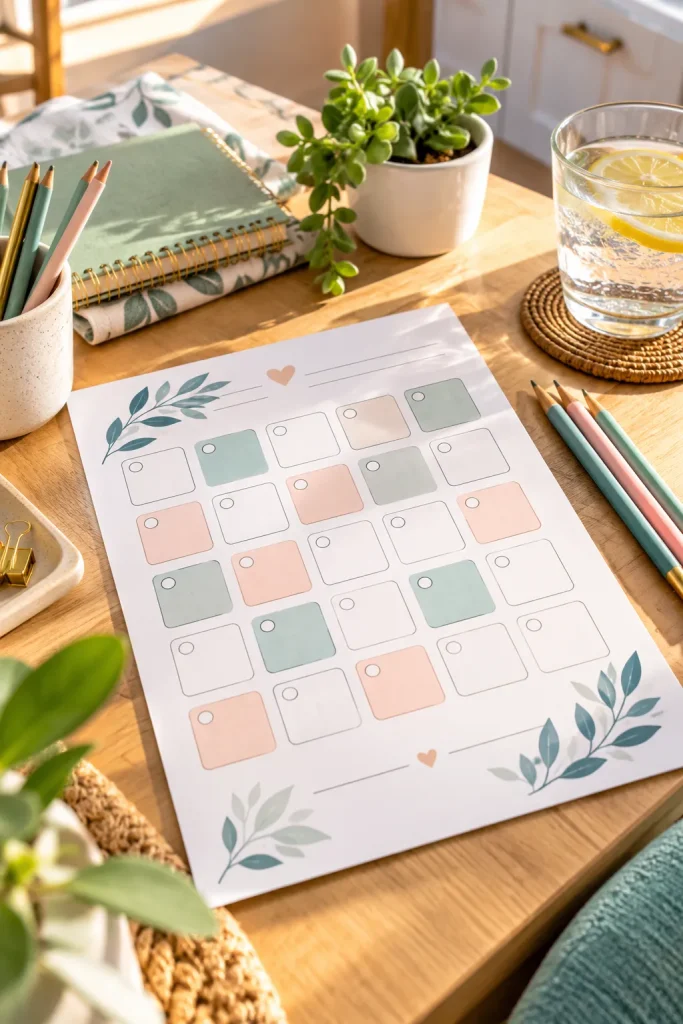
A challenge calendar gives someone a small activity to complete each day without needing to invent a new routine.
Unlike an open-ended planner, this product offers 30 ready-made prompts arranged in a calendar layout. Buyers who enjoy structured activities may find it easier to follow.
Build a Challenge That Feels Manageable
Start with low-effort actions such as taking a quiet break, writing a kind note to yourself, or clearing one small workspace.
Mix the activities so the calendar doesn’t feel repetitive. Avoid making every day another task that requires extra supplies or money.
Design 30 numbered boxes with short instructions. Keep the prompts brief enough to read at a glance, and leave space to mark each activity complete.
Days 1 to 7: Introduce small, familiar activities that take little preparation.
Days 8 to 14: Include creative activities, hobbies, and screen-free breaks.
Days 15 to 21: Add reflection prompts and opportunities to connect with others.
Days 22 to 30: Let users revisit favorites and choose habits to keep.
4. Mood Tracker Printable
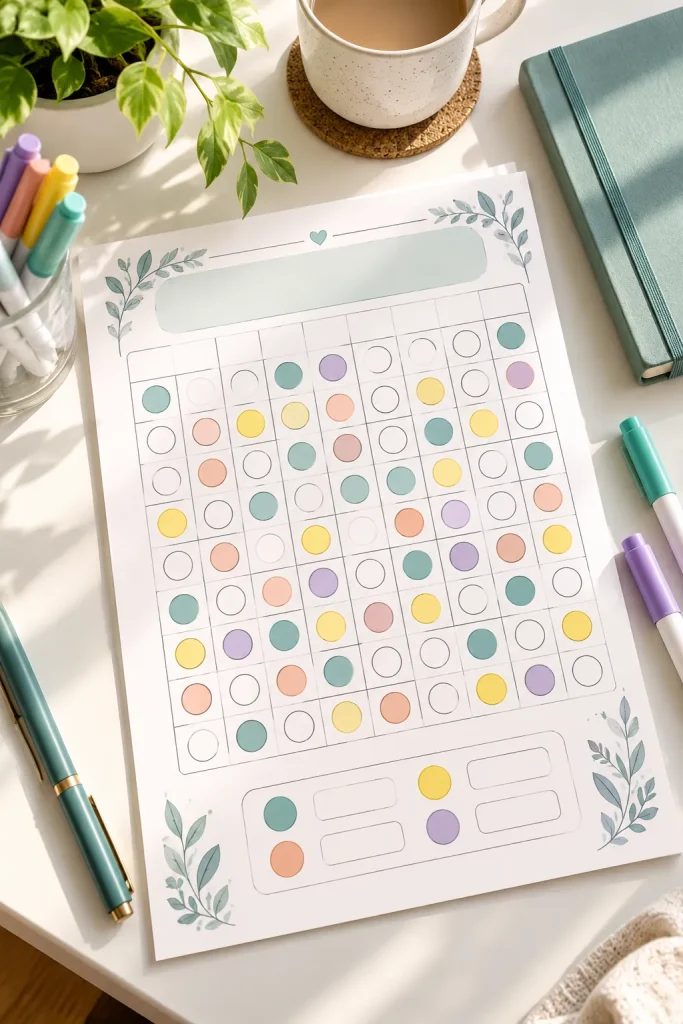
A mood tracker turns daily feelings into a simple visual record. Many people prefer coloring a small square or circle instead of writing a full journal entry.
A monthly tracker with a color key is easy to understand and takes up very little space.
Give Buyers More Than One Layout
Create two versions of the same product:
- Calendar layout: One box for each date.
- Circle layout: A group of numbered shapes that buyers color in.
Use labels such as happy, calm, tired, frustrated, and sad. Leave a blank category so users can choose their own feeling.
Add a small notes area for anyone who wants to remember what happened that day. Present it as a personal reflection tool rather than a way to diagnose emotional or mental health conditions.
5. Self-Care Habit Tracker
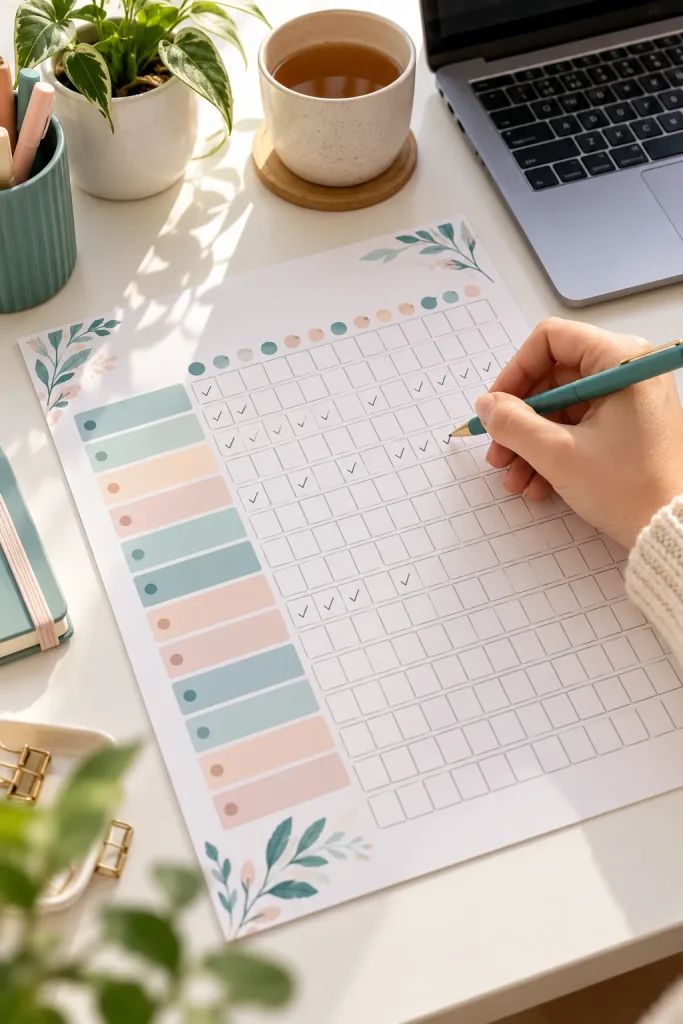
Forgetting a routine doesn’t always mean someone lacks motivation. Sometimes the activity simply gets lost among everything else happening during the week.
A self-care habit tracker helps people see which small activities they’re making time for, without needing a detailed schedule.
Keep the Tracking System Simple
Design a printable grid with habits listed down the left side and dates across the top.
Good examples include:
- Reading for pleasure
- Taking a short outdoor break
- Making time for a hobby
- Preparing for tomorrow
Offer a blank version so buyers can write their own habits.
A horizontal layout works well for tracking several activities across an entire month. Keep the boxes large enough to mark with a pen.
A buyer tries to remember several new routines but has no simple way to see which activities they actually make time for.
Each activity has its own row, with daily boxes that make it easy to notice patterns and adjust routines.
6. Self-Care Journal Prompt Cards
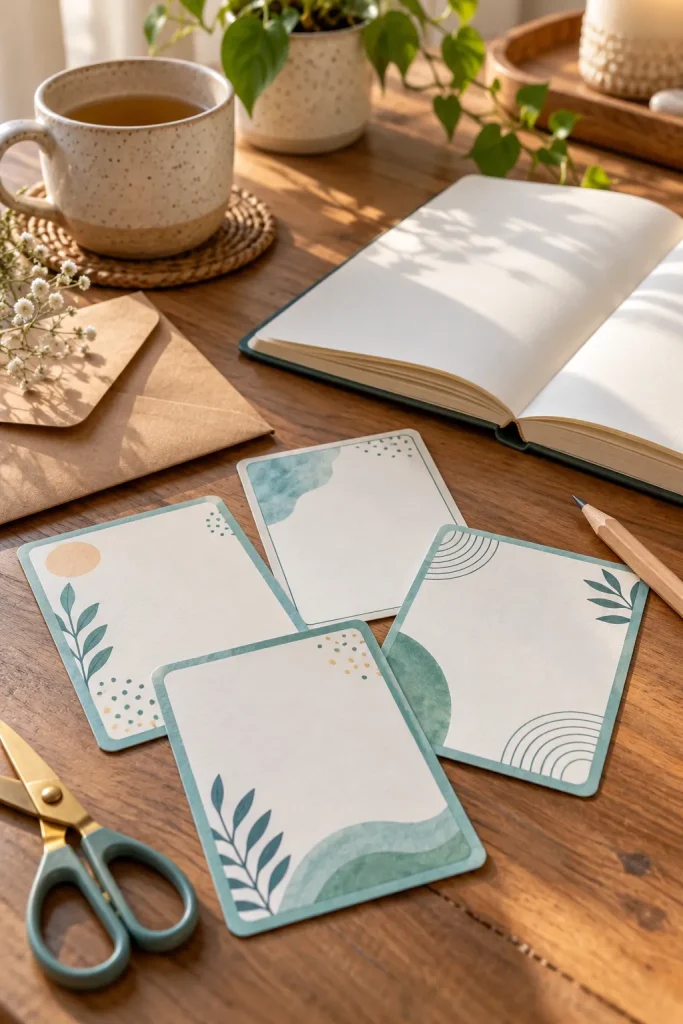
Not everyone enjoys opening a blank journal and deciding what to write. A small card with one thoughtful question can make the first sentence easier.
Self-care journal prompt cards work as a printable deck that buyers can cut out, shuffle, and use whenever they want a quiet moment.
Make Each Card Worth Keeping
Write prompts that encourage gentle reflection, such as:
- What made today feel a little easier?
- What would I like more time for?
- What can I leave unfinished tonight?
Create cards with generous margins and a consistent layout. You could offer a version with simple botanical illustrations and another with plain borders.
Include a printable instruction sheet with cutting guidelines, especially for buyers using standard home printers.
💡 Printable Card Design Tip
Leave a small gap between cards on each page so buyers have room to cut along the edges.
Useful extra: Include one blank card sheet for buyers who want to write their own journal prompts.
7. Printable Affirmation Card Deck
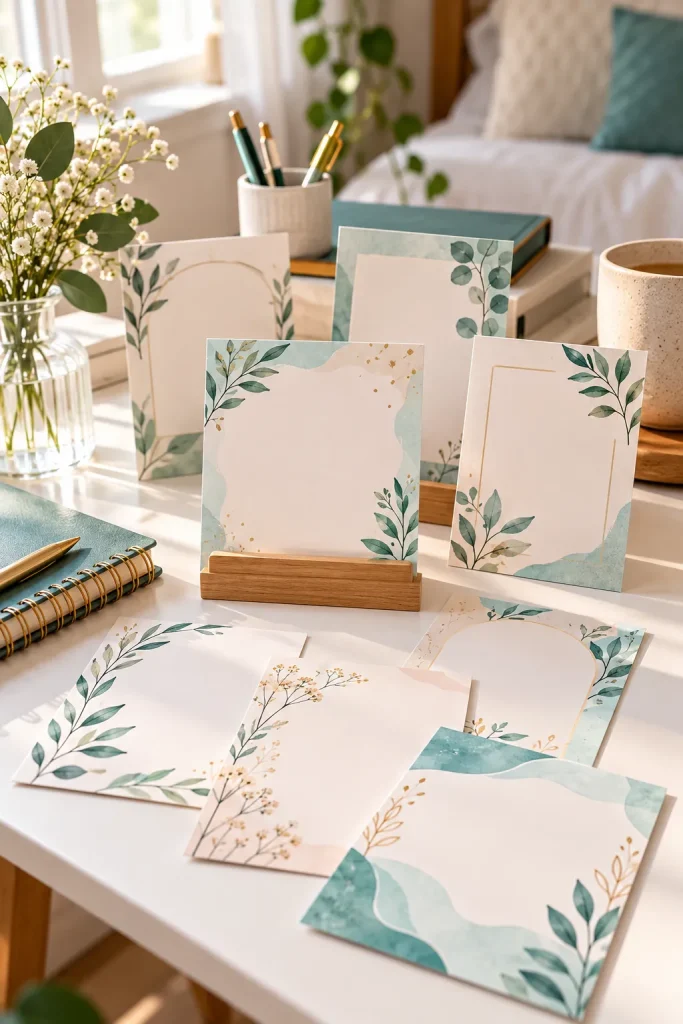
A small affirmation card can sit beside a laptop, inside a notebook, or on a bedroom mirror. That’s part of the appeal. Buyers don’t need to commit to a long journaling session to use one.
Printable affirmation cards are especially suited to people who enjoy encouraging reminders displayed around their home.
Choose Words That Sound Believable
Keep the messages simple and grounded:
- I can take things one step at a time.
- Rest is a reasonable choice.
- I can ask for help when I need it.
Create matching cards with large lettering, consistent spacing, and a limited color palette.
Consider offering both rectangular cards and smaller square versions. Show the card dimensions clearly so buyers know what they’re printing.
Use short statements that feel realistic.
Choose words that are gentle and respectful.
Make each card understandable on its own.
Promises that a statement will change someone's life.
Long paragraphs in tiny lettering.
Messages that dismiss difficult feelings.
8. Morning Routine Planner
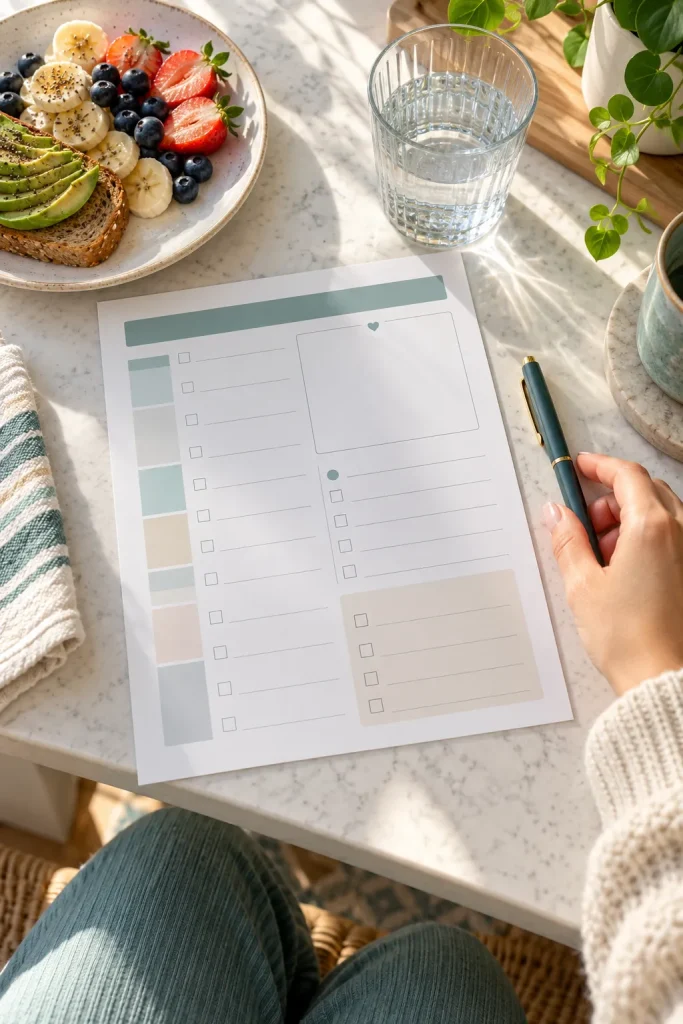
Mornings can get crowded before the day has properly started. A morning routine planner gives buyers a place to decide what they want to do first, without creating a strict minute-by-minute timetable.
Unlike a full daily planner, this printable focuses only on the time between waking up and beginning the day’s main responsibilities.
Offer Two Planning Styles
A time-based layout works for people who enjoy schedules. A flexible checklist suits buyers whose mornings change from day to day.
Include spaces for breakfast, getting ready, a personal activity, and the day’s first priority.
For the design, use a vertical page with a clear reading order. A simple sun icon can distinguish the morning planner from other products in a matching collection.
| Timed Morning Planner | Flexible Morning Checklist |
|---|---|
| Includes spaces for start times | Includes activities without fixed times |
| Useful for predictable weekday mornings | Useful for changing daily schedules |
| Best layout: time slots and notes | Best layout: checkboxes and priorities |
Creator note: Before listing any digital download, check the current rules of your chosen selling platform, including its policies on digital files and design assets.
9. Evening Wind-Down Checklist
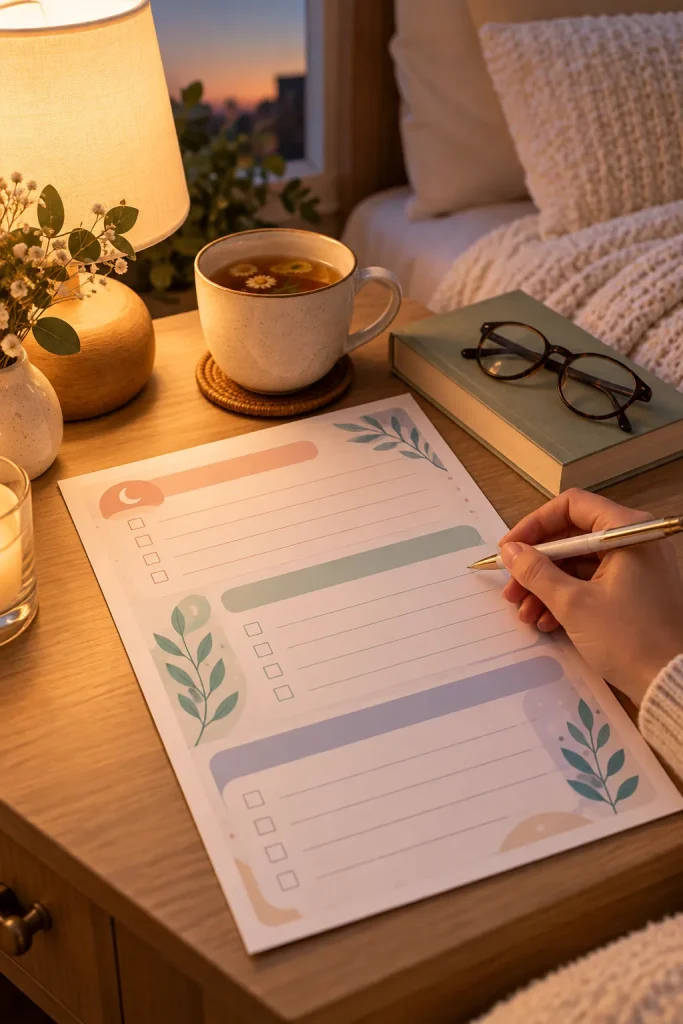
A peaceful evening doesn’t need a complicated routine. Sometimes having a few small activities written down is enough to help someone move away from the day’s unfinished tasks.
An evening wind-down checklist gives buyers a simple page to follow before bedtime. It works well for people who want a little structure without watching the clock.
Make the Checklist Feel Relaxed
Include gentle activities such as:
- Put away work materials.
- Prepare clothes for tomorrow.
- Read a few pages of a book.
- Write down one unfinished thought.
- Choose a quiet activity before bed.
Design the page with roomy checkboxes and calming colors. Add a blank section so buyers can replace any activity with something that suits their own evening.
Design the checklist as a gentle reminder, not another list of chores. Give buyers permission to choose just one or two activities each evening.
10. Self-Care Bingo Cards
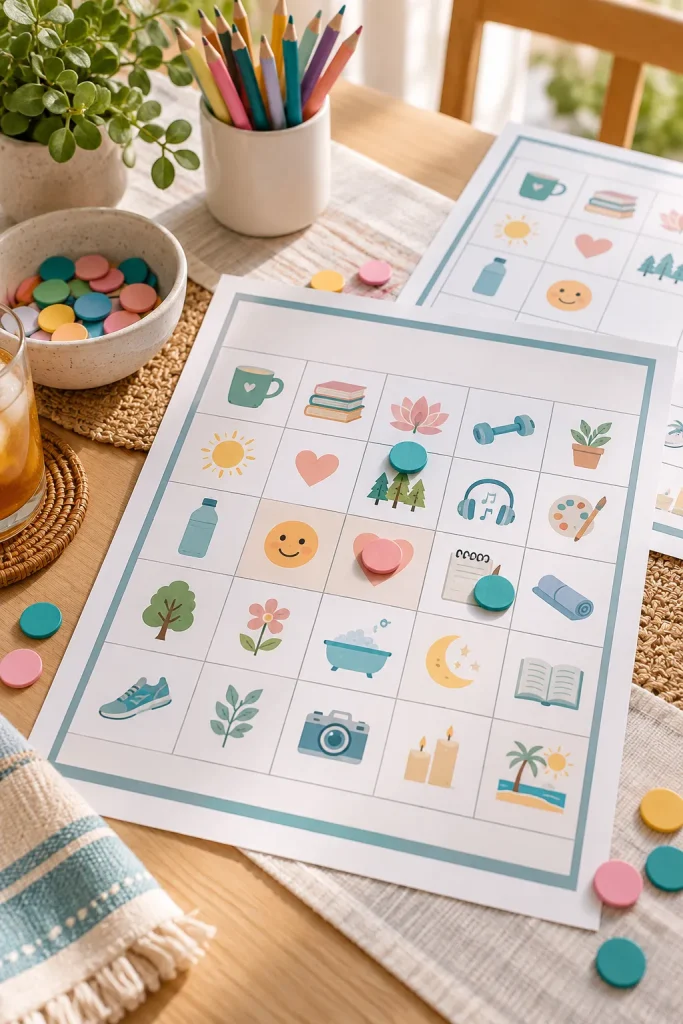
A self-care bingo card turns ordinary activities into a small game. Instead of asking buyers to follow a routine in order, it lets them pick an activity whenever they have a spare moment.
This printable could appeal to people who enjoy challenges, journal activities, or sharing simple goals with friends.
Fill the Squares With Useful Choices
Use a 5-by-5 grid featuring activities such as:
- Listen to a favorite song.
- Spend ten minutes drawing.
- Call someone you miss.
- Take a break from notifications.
- Enjoy a quiet cup of tea.
Place a free-choice square in the center.
Create several versions with different activities so buyers can choose a card that fits their interests. Avoid making every square require a purchase or a long block of free time.
Bingo Card Design Checklist
11. Self-Care Wheel Worksheet
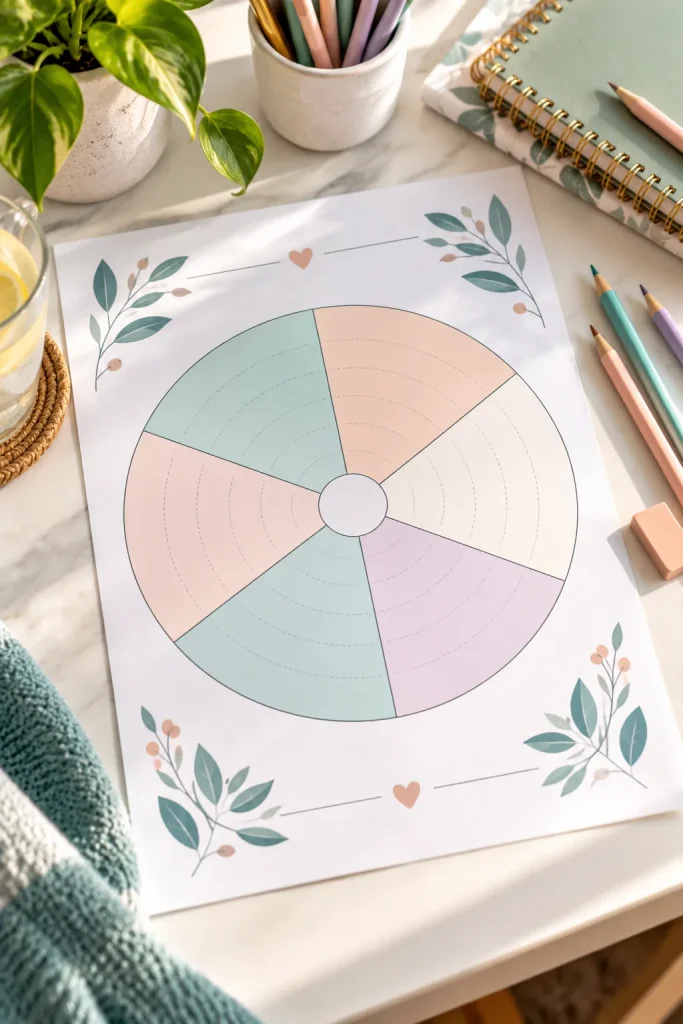
A self-care wheel looks different from a standard planner. The page features a large circle divided into sections, giving buyers a visual way to think about different parts of their lives.
Someone who enjoys journaling or personal reflection might use it to notice which areas need more attention.
Divide the Wheel Into Clear Sections
You could include physical needs, relationships, rest, creativity, personal space, and daily responsibilities.
Ask buyers to shade each section based on how satisfied they currently feel with that area. Leave room beneath the wheel for one small action they want to consider.
Create a labeled version and a blank version with empty sections. Keep the design uncluttered so the wheel remains easy to color after printing.
12. Stress Trigger Reflection Worksheet
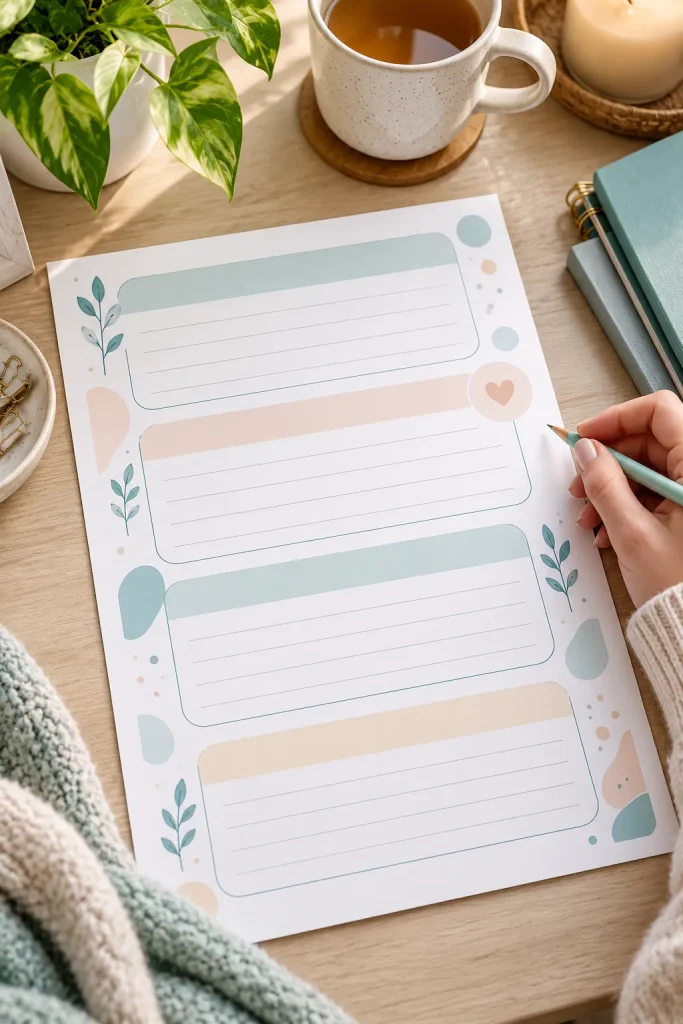
Sometimes a stressful day feels like one long blur. A reflection worksheet gives someone space to describe a difficult moment instead of trying to remember every detail later.
This product suits buyers who prefer guided writing prompts over an empty journal page.
Use Questions That Are Gentle and Specific
Divide the worksheet into four writing areas:
- What was happening?
- What did I notice about my feelings?
- What helped me feel more comfortable?
- What could I try next time?
Leave plenty of lined space beneath each question. A single-page version may be more approachable than a lengthy workbook.
Avoid medical language or promises about managing anxiety. Present the printable as a personal journaling tool, not a replacement for professional support.
📌 Good To Know
Reflection questions should invite users to describe their experiences without telling them what their feelings mean.
Design detail: Include an optional skip space beside each prompt so buyers never feel required to answer every question.
13. Personal Boundaries Worksheet
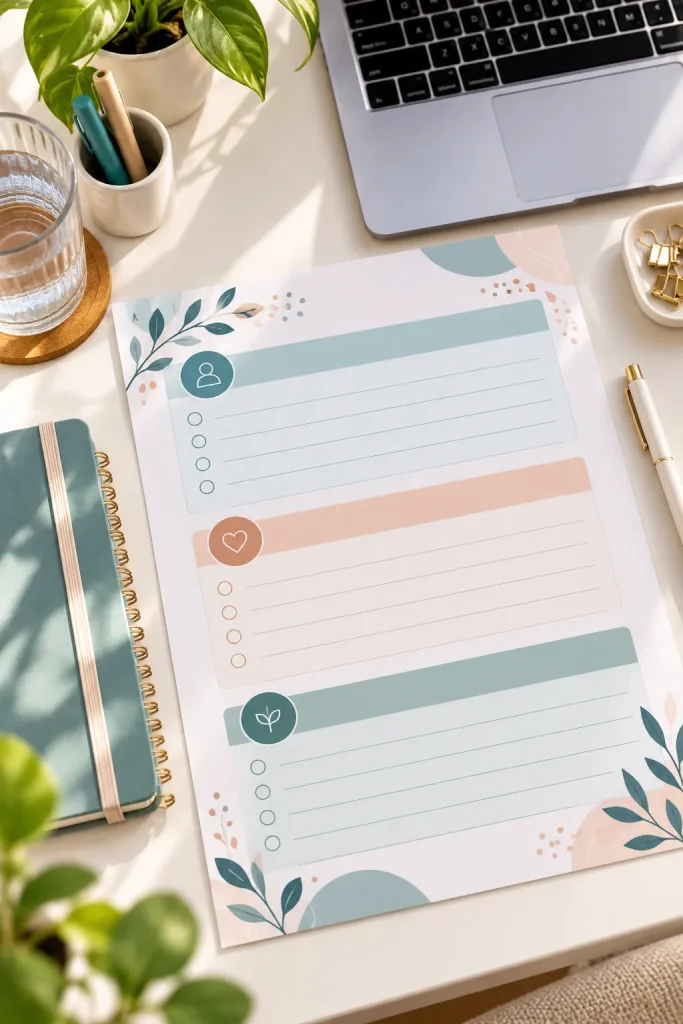
Saying no can feel uncomfortable, especially when someone is used to agreeing before checking their own schedule.
A personal boundaries worksheet helps buyers think about their limits and prepare respectful ways to communicate them. This makes it a different product from a general self-care journal.
Include Practical Writing Exercises
Build the printable around three questions:
- What situations leave me feeling overcommitted?
- What limit would I like to set?
- How could I explain that limit clearly?
Add a few sample responses, such as “I can’t take that on this week” or “I need some time to decide.”
Keep the examples focused on everyday situations involving time, responsibilities, and personal space. Leave room for buyers to write their own responses.
A clear statement about available time.
A polite response that doesn't overexplain.
A request for personal space or time to decide.
Scripts that encourage insulting another person.
Statements that assume every situation is safe.
Rigid rules that leave no room for personal judgment.
14. Self-Care Menu Printable
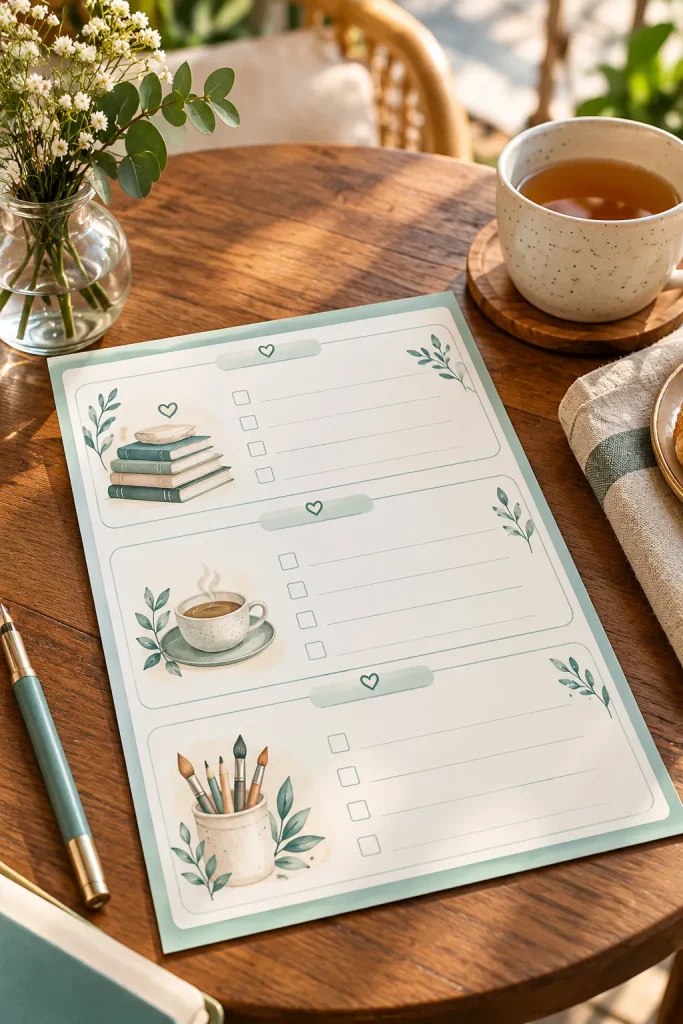
A cafe-style menu is a playful way to present self-care activities without turning them into a fixed schedule.
Instead of checking off tasks, buyers choose something based on how much time and energy they have available. The menu format also makes this printable suitable for displaying on a wall or refrigerator.
Organize Activities by Time
Divide the page into three sections:
- Quick choices: Listen to a song or step outside.
- Short breaks: Read a chapter or draw.
- Longer activities: Work on a hobby or meet a friend.
Use menu-style headings, simple illustrations, and enough contrast for home printing.
Offer a blank version where buyers can add their favorite activities. A printable that reflects personal preferences is more useful than a crowded list of suggestions.
| Menu Section | Activity Suggestions |
|---|---|
| Quick Break | Drink water, stretch, listen to a favorite song |
| A Little More Time | Read, journal, take a leisurely walk |
| A Free Afternoon | Enjoy a hobby, visit a friend, spend time outdoors |
15. Self-Care Budget Planner
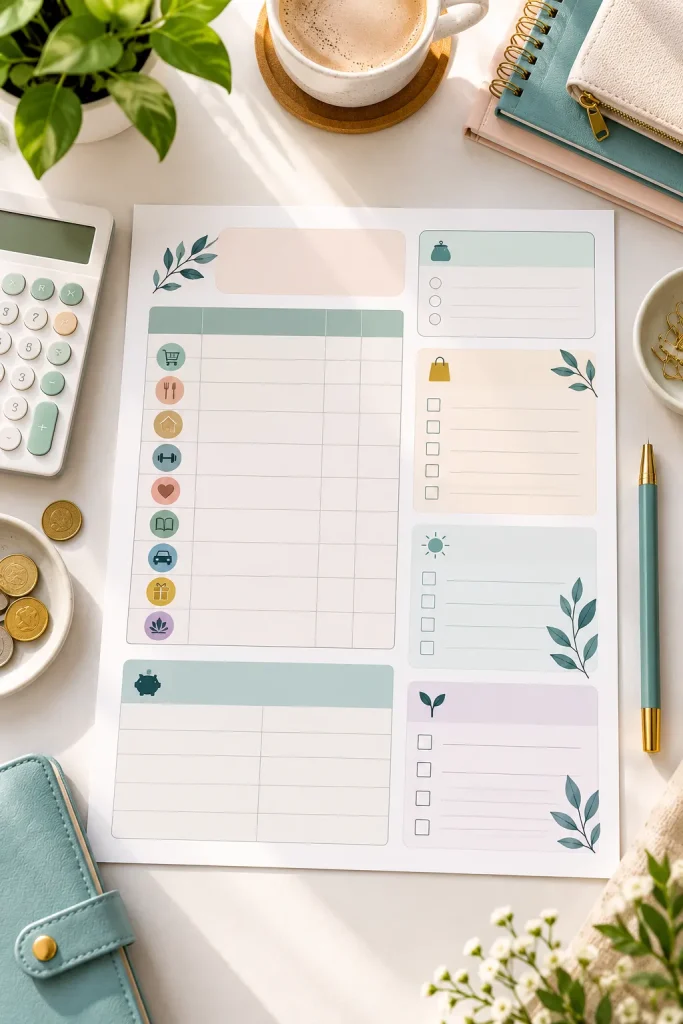
Self-care products don’t always need to encourage more spending. A budget planner can help buyers think carefully about optional purchases while remembering the activities they can enjoy for free.
This printable suits people who like organizing their personal expenses and planning small treats without losing track of other priorities.
Give the Page a Clear Purpose
Include spaces for an available budget, planned purchases, actual spending, and a notes section.
Add a separate area for free activities such as visiting a park, borrowing a library book, or enjoying a favorite hobby.
Keep the layout undated so it can be reused each month. Avoid promising financial savings, since the worksheet simply helps buyers record their own choices.
16. Digital Detox Challenge Tracker
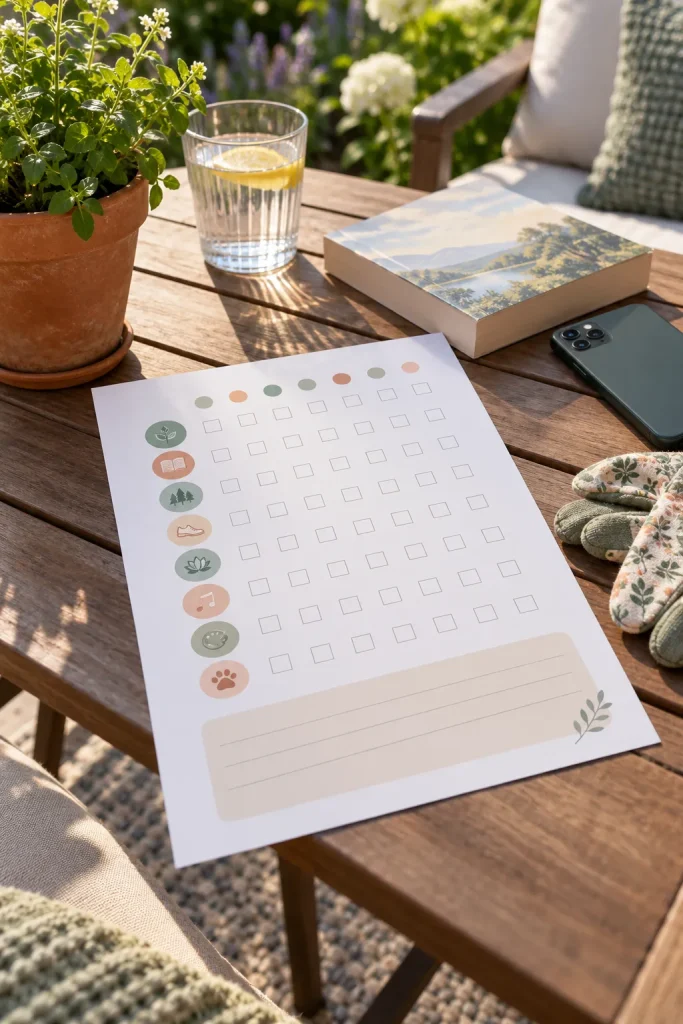
Most people pick up their phones several times throughout the day without thinking about it. A screen-free challenge tracker offers a way to make room for other activities, without treating technology as something bad.
This printable could appeal to students, remote workers, or anyone interested in creating occasional phone-free breaks.
Create a Flexible Challenge
Design the tracker around short activities rather than strict screen-time targets.
Include spaces to choose an activity, mark its completion, and write a short reflection.
Suggest options such as reading a printed book, cooking, gardening, or spending time outdoors.
Make the challenge adjustable so buyers can choose when to participate. Avoid fixed targets that may not suit people who rely on screens for work, accessibility, or communication.
Choose a moment: Leave room for the user to pick a suitable time for a break.
Pick an activity: Provide examples that need little equipment or preparation.
Mark completion: Add an empty checkbox beside each chosen activity.
Reflect: Include a small notes space for activities users might repeat.
17. Sleep Routine Tracker
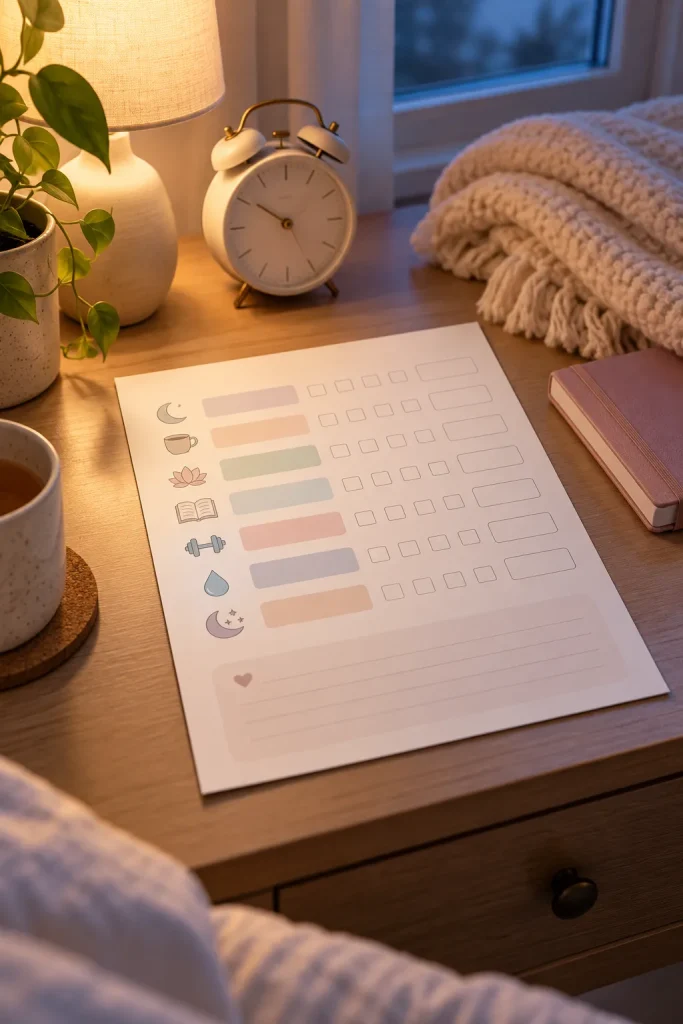
A bedtime routine tracker helps buyers notice what their evenings look like before they go to sleep. Unlike an evening checklist, this printable focuses on recording routine details and reviewing them over several days.
Someone who enjoys tracking personal habits might use it to compare different evening routines and identify which ones feel comfortable.
Build a Simple Tracking Page
Include spaces for:
- Bedtime and wake-up time
- Evening activities completed
- A short morning reflection
- Notes about the previous night
Create a weekly layout with seven rows and a few easy-to-mark checkboxes.
Avoid making promises about better sleep. The printable should help users record their routines, not diagnose sleep problems or replace medical advice.
Evening activities and bedtimes change throughout the week, but the buyer has no written record to look back on.
A weekly tracker shows recorded bedtimes, evening activities, and personal notes together on one page.
18. Gratitude Journal Printable
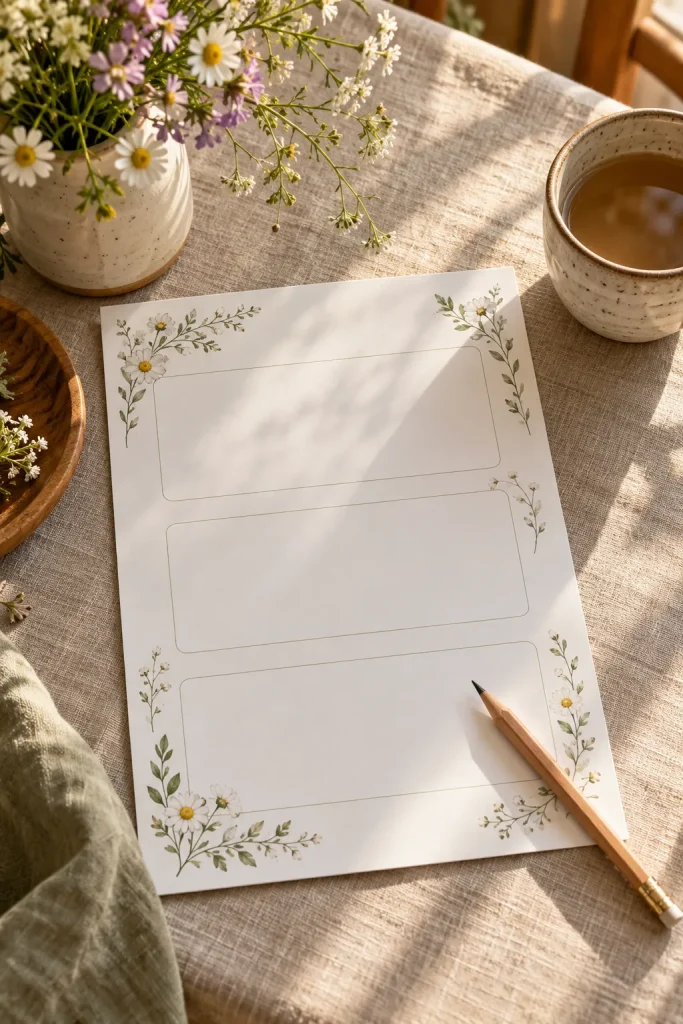
Three small writing spaces can feel much easier to fill than an entire blank journal page. That’s what makes a gratitude journal printable appealing to people who enjoy reflecting on ordinary moments.
The product can be a single reusable page or a collection of different prompts that encourage buyers to notice specific things they appreciate.
Give Each Page a Clear Focus
Instead of repeating the same question, create variations such as:
- Something kind someone did today
- A small moment worth remembering
- Something useful I learned
- A place where I felt comfortable
Leave enough space for handwriting, even when someone writes more than one sentence.
Offer lined and unlined layouts. Buyers who prefer drawing or adding small sketches may appreciate the extra flexibility.
💡 Quick Design Tip
Use three separate writing boxes rather than one large area. Give each box a different prompt so the page feels guided without being crowded.
Useful extra: Include a completely blank reflection page for buyers who prefer writing freely.
19. Self-Compassion Letter Template
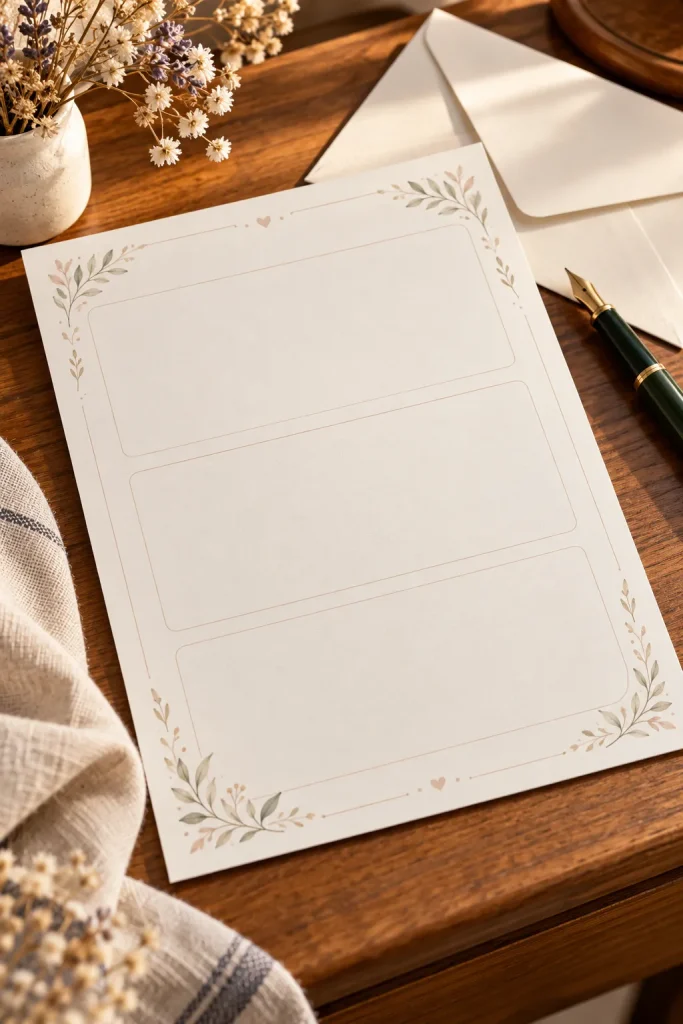
Writing a kind letter to yourself may sound unusual at first. A guided template makes the activity more approachable by providing a starting sentence and enough room to continue in your own words.
This printable could appeal to buyers who enjoy thoughtful journaling and personal writing exercises.
Create a Gentle Letter Structure
Divide the page into three parts:
- Acknowledge: Describe something that felt difficult.
- Respond: Write a few understanding words to yourself.
- Encourage: Finish with a supportive reminder.
Include optional sentence starters such as “Something I want to remember is…”
Use a letter-style layout with a date line, writing space, and optional signature area.
Keep the tone respectful. Avoid suggesting that the exercise can treat emotional distress or replace professional care.
A good letter template offers a starting point without telling someone how they should feel. Keep every prompt optional and leave room for personal words.
20. Self-Care Emergency Comfort Plan
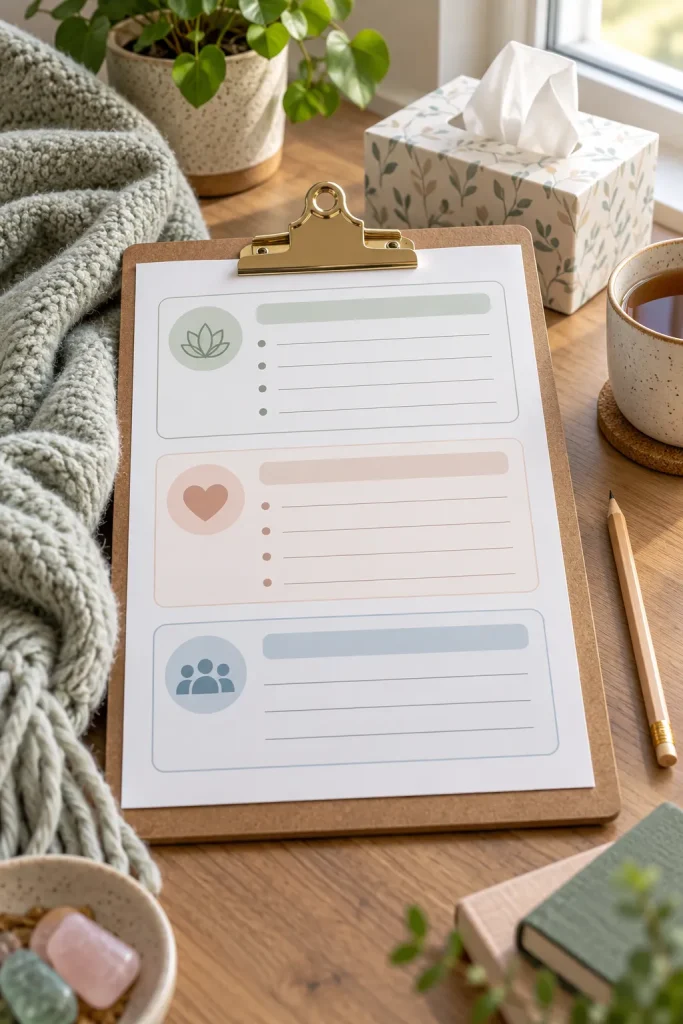
A personal comfort plan brings familiar, supportive choices together on one page. Buyers can fill it out during a calm moment and keep it somewhere accessible for days when they feel overwhelmed.
Unlike a reflection journal, this worksheet is meant to be a quick personal reference.
Include Helpful Personal Details
Create clearly labeled sections for:
- Comforting activities and familiar places
- People the buyer may want to contact
- Items that help them feel comfortable
- Personal reminders they find reassuring
Leave blank spaces rather than filling the page with instructions. People have different needs, and the plan should reflect their own choices.
Label the product as a personal comfort worksheet, not an emergency response or crisis treatment plan. Include a clear reminder that urgent situations require appropriate professional or emergency assistance.
Personal Comfort Plan Checklist
21. Energy Level Check-In Worksheet
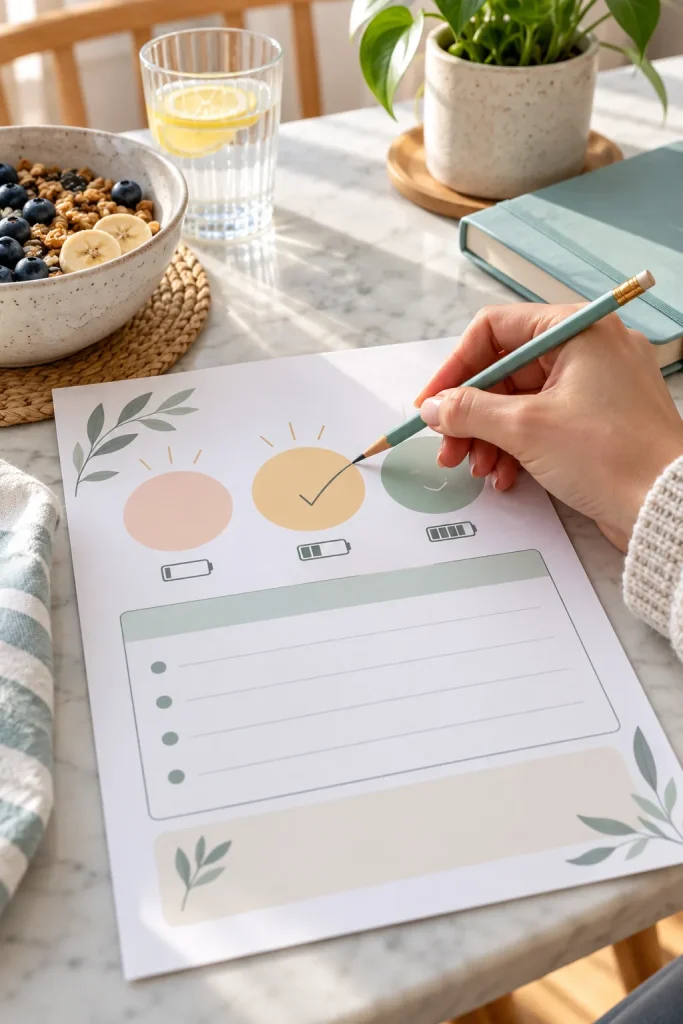
Some days feel busy before the first task is finished. An energy level check-in worksheet helps buyers describe how much energy they feel they have and choose activities that seem manageable.
This idea differs from a mood tracker because it focuses on personal capacity rather than emotions.
Make the Choices Easy to Understand
Create three simple categories:
- Low energy: Choose smaller tasks and allow extra breaks.
- Medium energy: Focus on a few everyday responsibilities.
- High energy: Consider activities that need more attention.
Add a small space for the user’s own energy description, since three categories will not fit everyone.
Use circles or checkboxes rather than complicated scales. Present the worksheet as a planning aid, not a medical assessment.
22. Self-Care Goal Setting Workbook
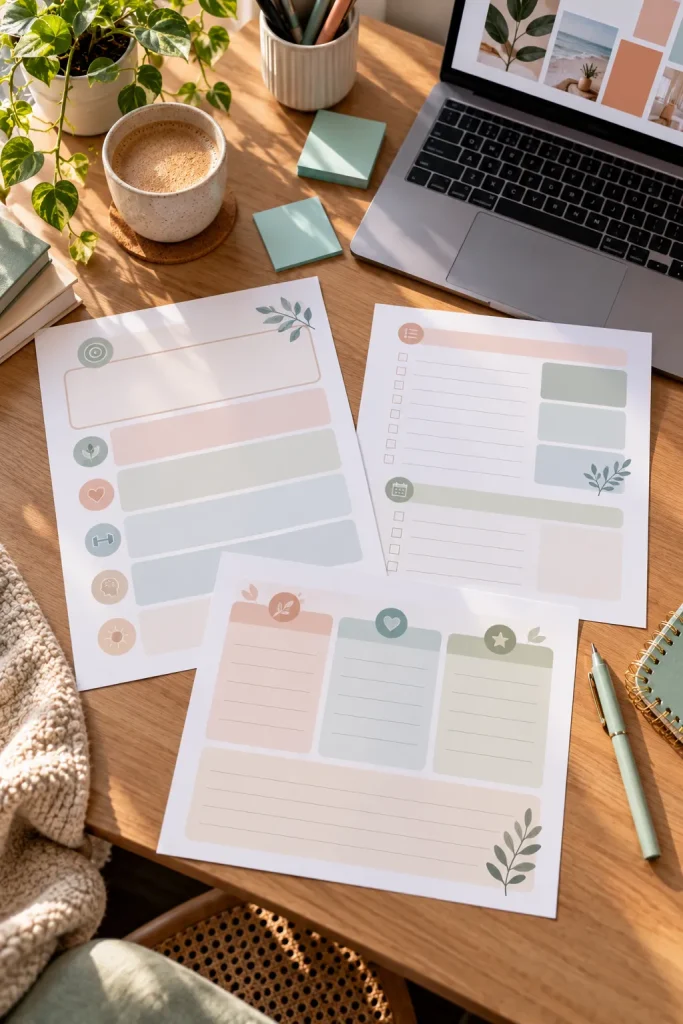
A single goal-setting page can feel cramped when someone wants to plan a new routine. A short workbook offers more room to choose a goal, break it into actions, and review what happened.
This makes it a useful printable bundle for buyers who prefer guided planning.
Build a Clear Page Sequence
Start with a page for choosing one personal goal. Follow it with a simple action plan and a final reflection page.
For example, someone might want to make more time for reading. Their action plan could include choosing a book, deciding where to keep it, and setting aside an occasional reading break.
Use matching headings and plenty of writing space throughout the workbook. An undated design allows buyers to begin whenever they choose.
Goal page: Ask what the buyer wants to make time for and why it matters to them.
Action page: Provide space for small actions, supplies, and possible obstacles.
Review page: Include prompts about what worked and what the buyer may want to change.
23. Self-Care Reward Coupon Book
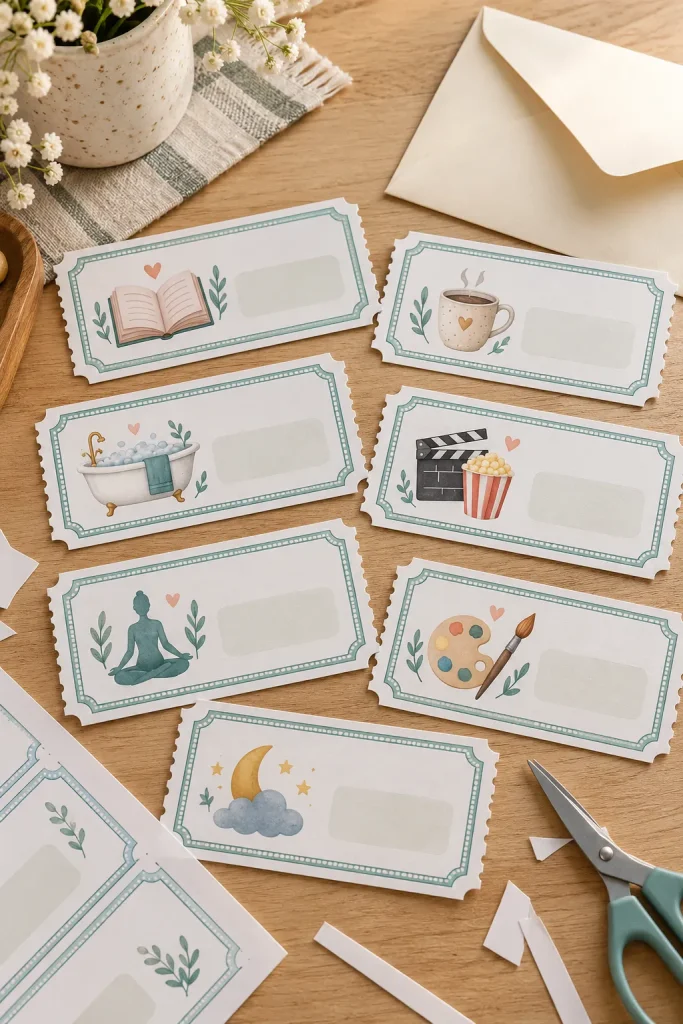
Little paper coupons can turn a self-care activity into something buyers look forward to choosing. Rather than tracking habits, this product offers a collection of personal treats and enjoyable experiences.
The coupons can be cut out, collected in an envelope, or kept in a small booklet.
Create Rewards That Feel Accessible
Include ideas such as:
- An afternoon with no optional chores
- Time for a favorite movie
- A quiet reading session
- A walk somewhere enjoyable
- An hour for a creative hobby
Add several blank coupons for personal activities.
Design each coupon with a short title, a small illustration, and a space to mark when it is used. Make the cutting lines visible without crowding the design.
24. Mindful Coloring Pages
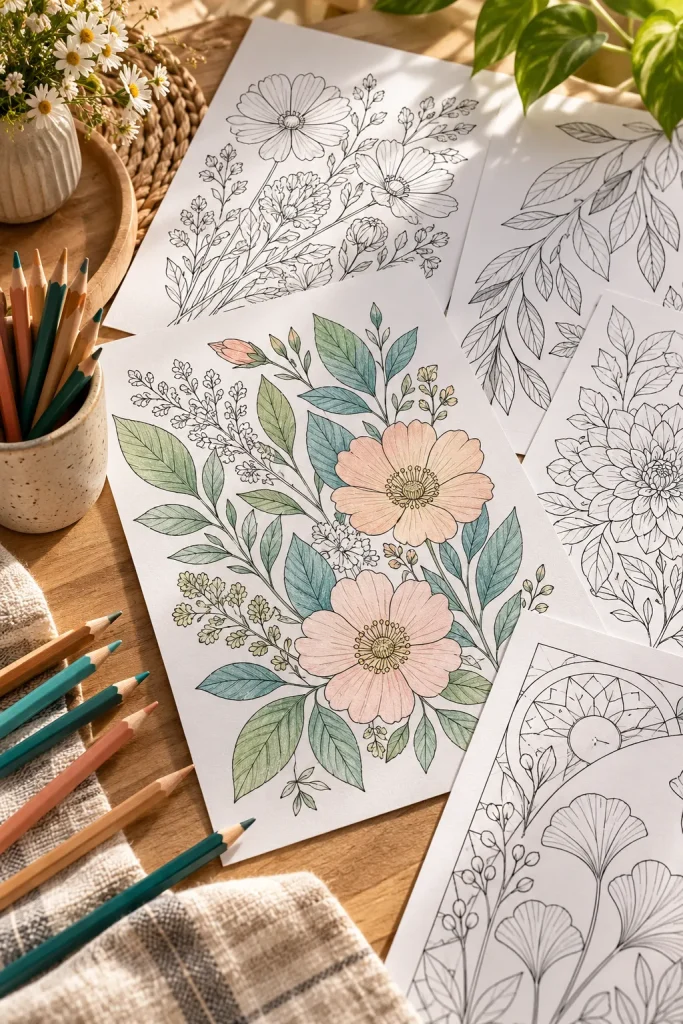
A page of simple leaves, flowers, or repeating shapes gives buyers a creative activity without requiring them to write or plan anything.
Mindful coloring pages appeal to people who enjoy quiet hobbies and printable art activities. They also work as individual downloads or themed collections.
Choose Designs That Print Clearly
Start with bold, clean outlines rather than tiny patterns that become difficult to color.
Create a small collection featuring:
- Botanical leaves and flowers
- Simple geometric patterns
- Garden scenes
- Abstract flowing shapes
Keep the artwork black and white with enough space between the lines for colored pencils or markers.
Use original artwork or assets with suitable commercial-use permissions. Check the current licensing terms of any design platform before selling the finished pages.
💡 Before You List Your Coloring Pages
Print a sample at actual size to check the line thickness, margins, and amount of open coloring space. A pattern that looks clear on a large screen may become crowded on paper.
File tip: Export a print-ready PDF with one full-page design per sheet, and clearly explain what the download contains.
25. Monthly Self-Care Reflection Workbook
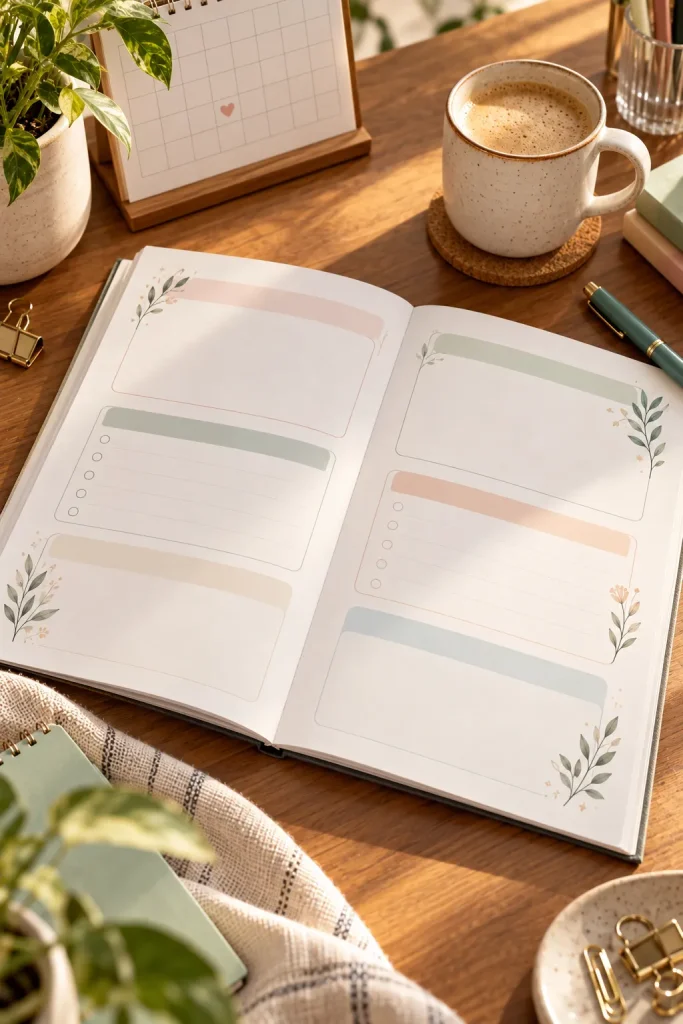
Looking back at an entire month can reveal small details that get forgotten during busy weeks. A monthly self-care reflection workbook gives buyers a place to review their experiences before deciding what they want to focus on next.
Unlike a daily journal, this product encourages a broader look at personal routines and changing priorities.
Organize the Workbook Into Clear Sections
Create separate pages for:
- Monthly highlights: Activities and moments worth remembering.
- Personal challenges: Things that felt difficult or needed attention.
- Helpful routines: Habits the buyer wants to continue.
- Next month’s priorities: A few manageable personal goals.
Use undated pages with generous writing space and simple prompts.
Include a one-page monthly summary for buyers who prefer shorter reflections. It makes the workbook useful even when someone doesn’t want to complete every page.
The month ends without a clear record of meaningful experiences or personal priorities. Scattered notes, forgotten activities, and no dedicated review space.
A monthly workbook keeps reflections, useful routines, and upcoming priorities together. Organized writing prompts, a monthly summary, and space for new personal goals.
Start With One Useful Printable
You don’t need to create an entire product collection before opening a digital shop. Choose one idea that solves a clear, everyday problem, then focus on making it easy to print, understand, and use.
The most useful self care printables give buyers enough guidance to get started without filling every inch of the page. Clear instructions, readable layouts, and thoughtful writing space matter more than complicated decorations.
Once your first product is ready, check your selling platform’s current digital download and licensing rules before listing it. You can build a larger collection gradually, using related designs that serve different needs.
Save this list on Pinterest so you can return to these 25 printable product ideas when you’re ready to create your next digital download.