
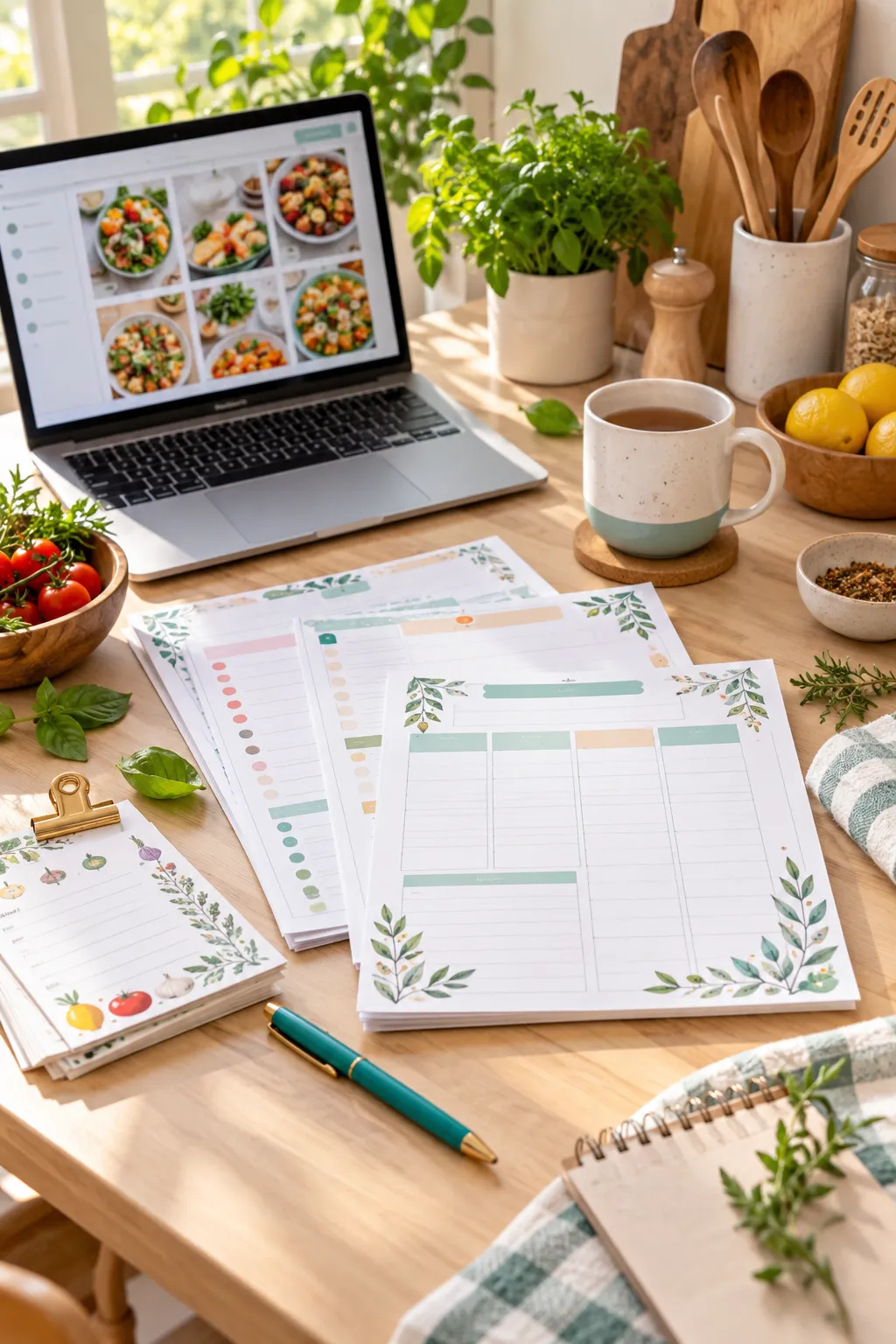
A meal planner can look lovely and still be almost useless. The problem is usually simple: it asks busy people to plan more than they have time to cook. A pretty calendar does not help much when the fridge is half full, three family members want different dinners, and shopping day comes around again.
That gap creates an opportunity for digital product sellers. Home cooks do not need another page filled with tiny boxes. They need practical tools that answer one clear question, like what to make tonight, what is already in the freezer, or which groceries to buy. That is where meal planning printables can be useful. A focused product is easier to understand and use than a large bundle filled with pages nobody needs.
You can design these products in Canva using simple layouts, readable labels, and plenty of writing space. Make sure they print clearly in black and white, too. Before selling, check the current rules of your chosen platform.
Here are 25 printable product ideas designed around everyday kitchen routines.
1. Seven-Day Family Dinner Planner
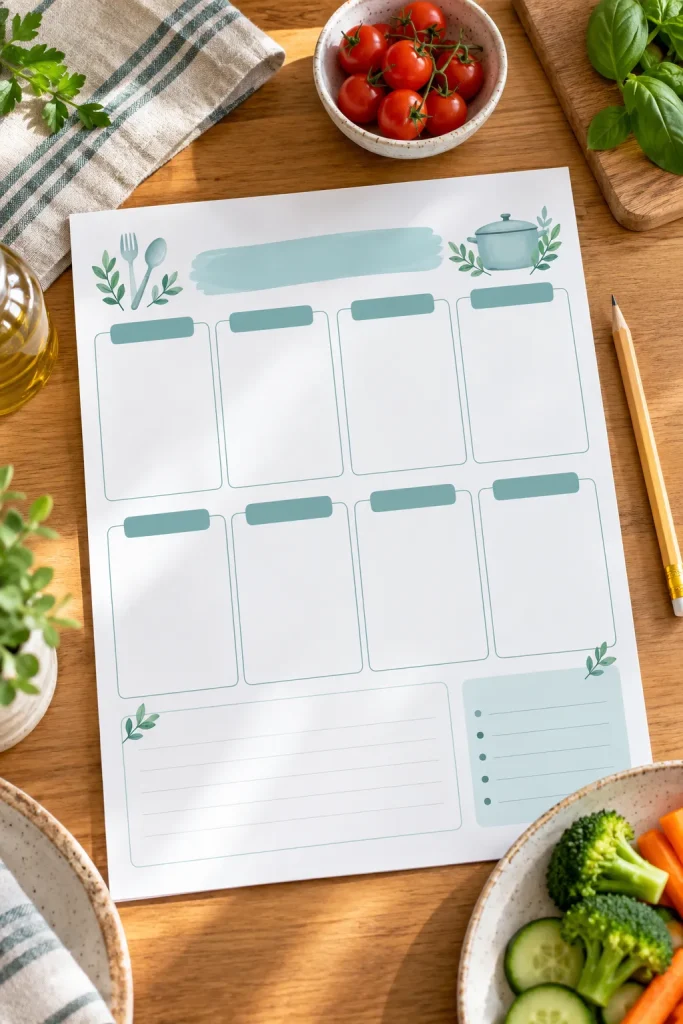
Seven dinner decisions can feel harder than cooking seven meals. A single-page planner gives families one place to write their evening meals and keep the whole week visible.
Build the Page Around Real Routines
Create seven roomy rows, one for each day, with a small space for preparation reminders. Families might need a note to thaw chicken, soak beans, or chop vegetables ahead of time.
Include a flexible spot for leftovers or takeout instead of assuming every dinner will be cooked from scratch.
Offer both Monday-start and Sunday-start versions. Buyers have different weekly routines, and this small choice makes the printable more practical.
Choose meals for the two busiest evenings before filling the rest.
Plan meals with delicate produce earlier in the week.
Keep one simple pantry meal ready for changed plans.
2. Monthly Menu Calendar With Flexible Swap Days
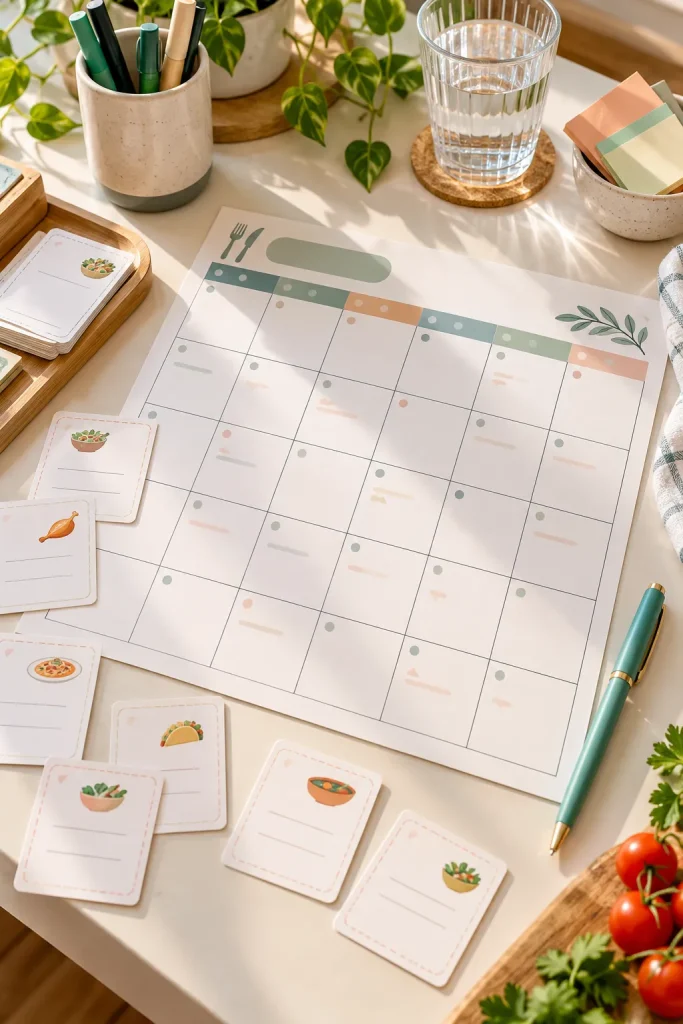
Plans often change by Wednesday. A fixed monthly menu can become frustrating when one busy evening throws several planned meals out of order.
A calendar with flexible swap days gives families room to change their minds without rewriting everything.
Make Meal Swaps Easy
Design a full-month calendar with large date boxes and a narrow side panel for meals that can move to another day.
Add a small key for planned, cooked, and moved meals. This makes the page useful for families who prefer planning several weeks ahead.
Keep the main version undated so customers can reuse it throughout the year.
A second version with larger writing boxes would suit people who like planning on paper rather than digitally.
💡 Smart Calendar Feature
Add a small “Meals on Hold” area beside the calendar. When plans change, move the meal name there instead of crossing it out. Those saved ideas can fill another day without starting over.
3. Grocery Checklist Grouped by Store Section
Walking across the grocery store several times for items scattered across one long list gets old quickly.
A checklist organized by store section helps shoppers find related items together and makes the weekly grocery run easier to manage.
Choose Useful Shopping Categories
Start with produce, dairy, pantry goods, frozen foods, meat or alternatives, and household supplies.
Leave extra blank lines under each category so buyers can write down things you did not include.
Add a small checkbox beside every entry and keep enough space for a quantity, such as two cartons or one bag.
Offer another version with empty category headings. People shop at different stores, and not every supermarket arranges its aisles in the same order.
One Mixed Grocery List
Milk, carrots, rice, yogurt, apples, frozen peas, bread.
Cold items can be scattered between other errands.
Grouped Shopping List
🥕 Produce: carrots, apples
🥛 Dairy: milk, yogurt
🥫 Pantry: rice, bread
❄️ Frozen: peas
Shop chilled and frozen sections near the end when practical.
4. Pantry Inventory Sheet With Use-First Column
Start with the food people already own.
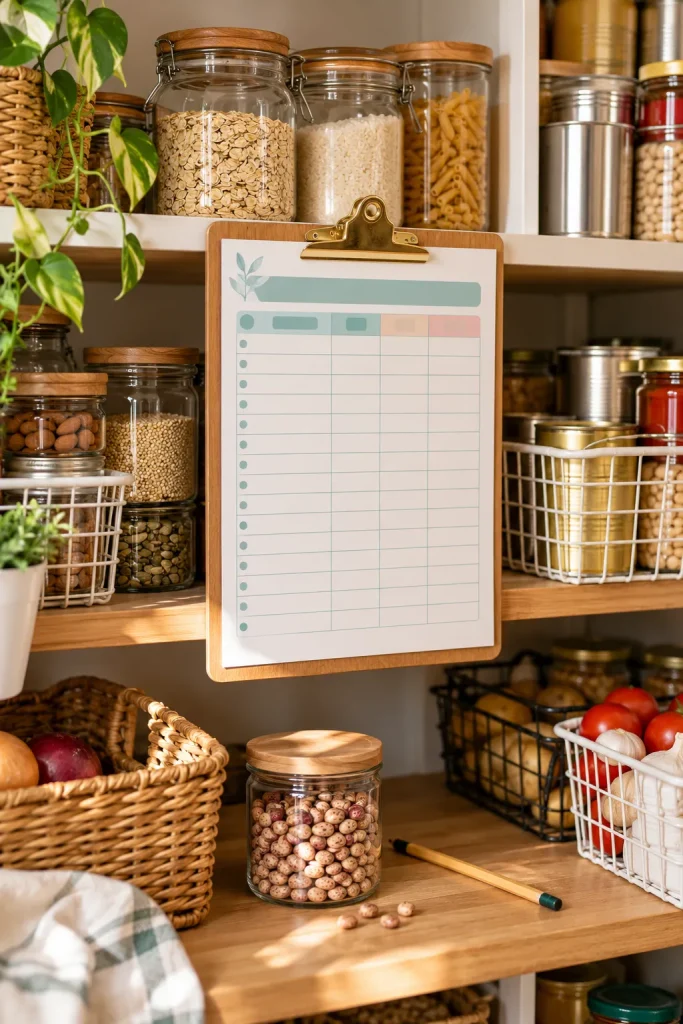
A pantry inventory printable helps home cooks see what is sitting on their shelves before adding more items to the grocery list. It can also bring attention to ingredients that need using soon.
Give Every Column a Purpose
Create spaces for the ingredient name, quantity, storage location, and a simple use-first mark.
Avoid filling the worksheet with too many preset ingredients. A flexible layout works for canned foods, grains, snacks, baking supplies, and other pantry staples.
For the product preview, show one example row filled in and leave the rest empty.
Customers should understand how to complete the worksheet just by looking at it.
📋 Pantry Sheet Design Checklist
5. Freezer Meal Tracker With Thaw Notes
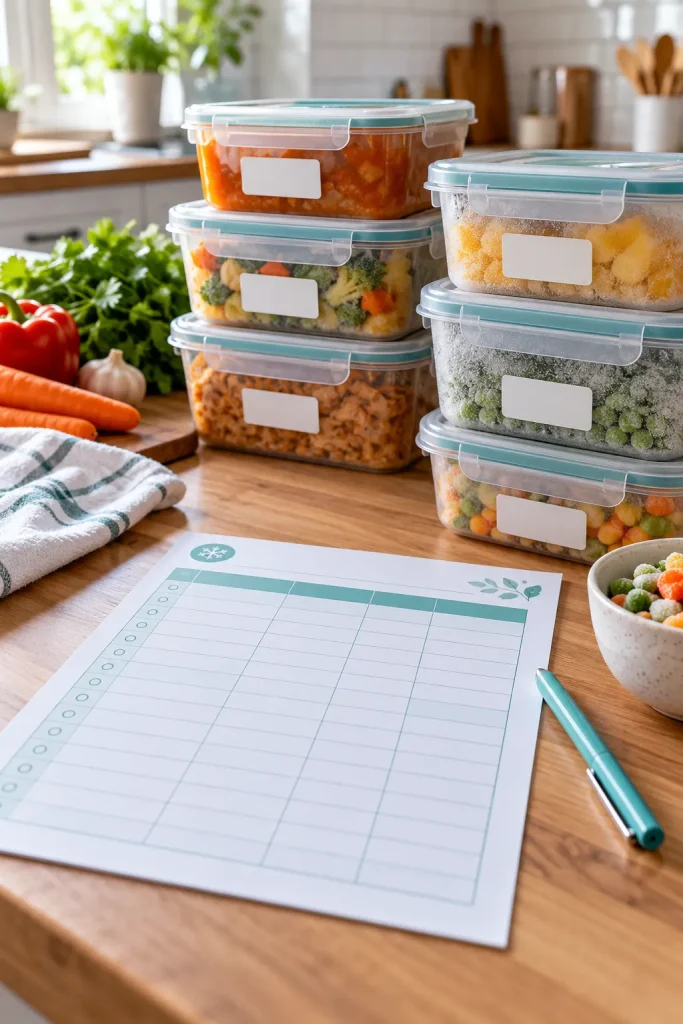
A freezer full of matching containers can hide several completely different dinners. Without a written record, home cooks may forget what they prepared or how many servings are left.
A freezer meal tracker keeps that information visible without opening every container.
Build a Log People Can Update
Include columns for the meal name, portion count, freezing date, and thawing reminders. Add a checkbox for meals removed from storage.
Make the writing spaces large enough for longer meal names, such as chicken and vegetable casserole.
Offer a landscape version for households that freeze meals in larger batches.
Keep thawing notes flexible rather than printing universal instructions that may not suit every food.
6. Recipe Card Set With Prep Notes
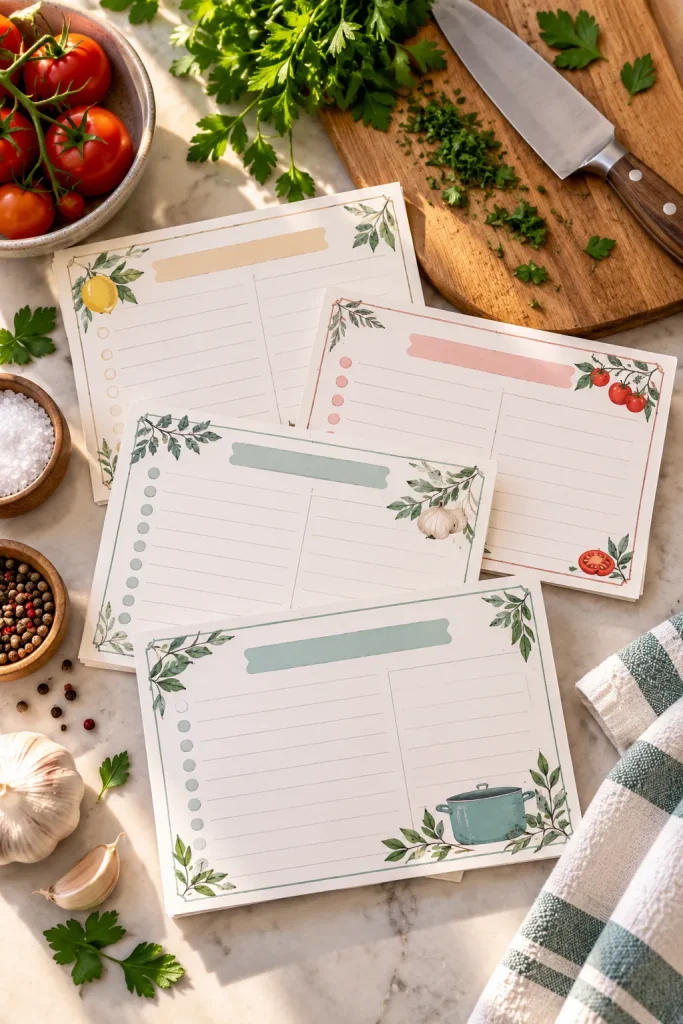
Small recipe cards fit neatly into kitchen drawers, while larger cards give home cooks more room to write detailed preparation notes.
Offering both formats creates a practical product set without requiring complicated designs.
Offer Two Useful Card Styles
Create compact recipe cards for ingredients and basic directions. Then design a larger version with extra spaces for ingredient swaps, preparation notes, and family adjustments.
Keep the cards blank so customers can record recipes they already cook.
Arrange several cards on each printable page, with clear cutting guides outside the finished design.
A matching recipe box divider could make a useful separate product later, but start with cards that are easy to print and trim.
| Compact Recipe Card | Detailed Recipe Card |
|---|---|
| Short everyday recipes | Recipes with several steps |
| Basic ingredients and directions | Ingredients, steps, and extra notes |
| Easy to store in a small card box | Useful in a larger recipe binder |
| More cards fit on a printable page | More handwriting space per card |
7. Family Favorites Dinner Rotation Cards
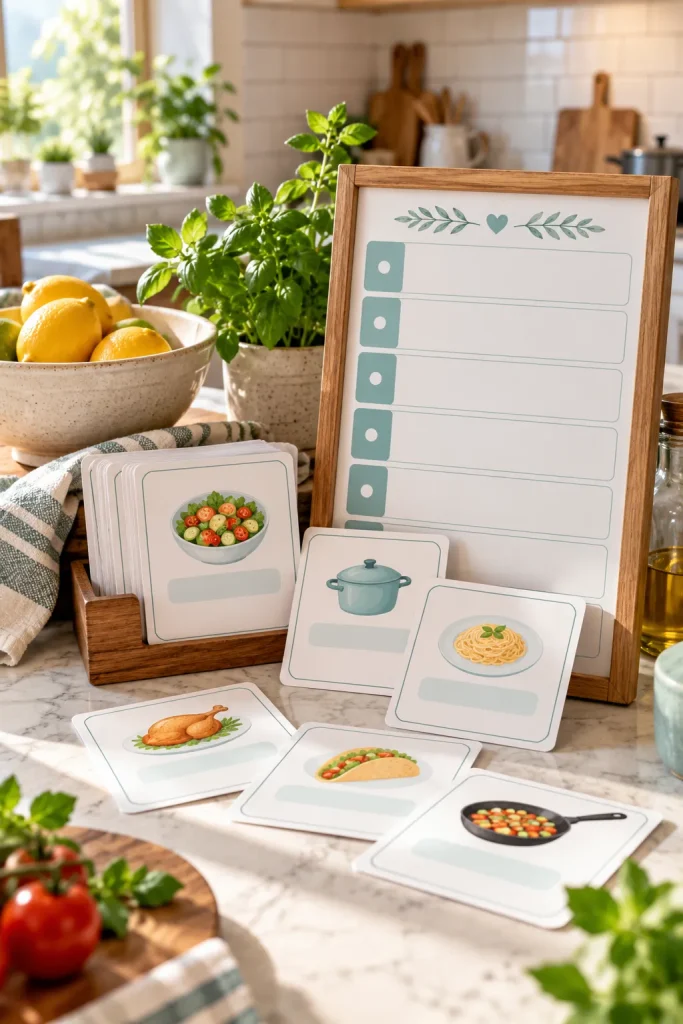
The same familiar dinners often return whenever a household has a busy week. Keeping those meals organized can make choosing dinner much simpler.
A dinner rotation card set turns family favorites into individual printable cards that can be shuffled, sorted, and reused.
Make the Cards Easy to Choose
Give each card a space for the meal name, main ingredients, and a short preparation reminder.
Add small symbols for quick dinners, oven meals, and pantry-based meals. Buyers can choose cards based on how much time they have available.
Design the cards with clear borders and enough white space for handwriting.
A simple storage envelope included in the printable set would make the product feel more complete.
Choose meals with short preparation and little chopping.
Group dishes that can cook while another task gets done.
Pick dinners built around ingredients already in the cupboard.
8. Batch Cooking Day Prep Checklist
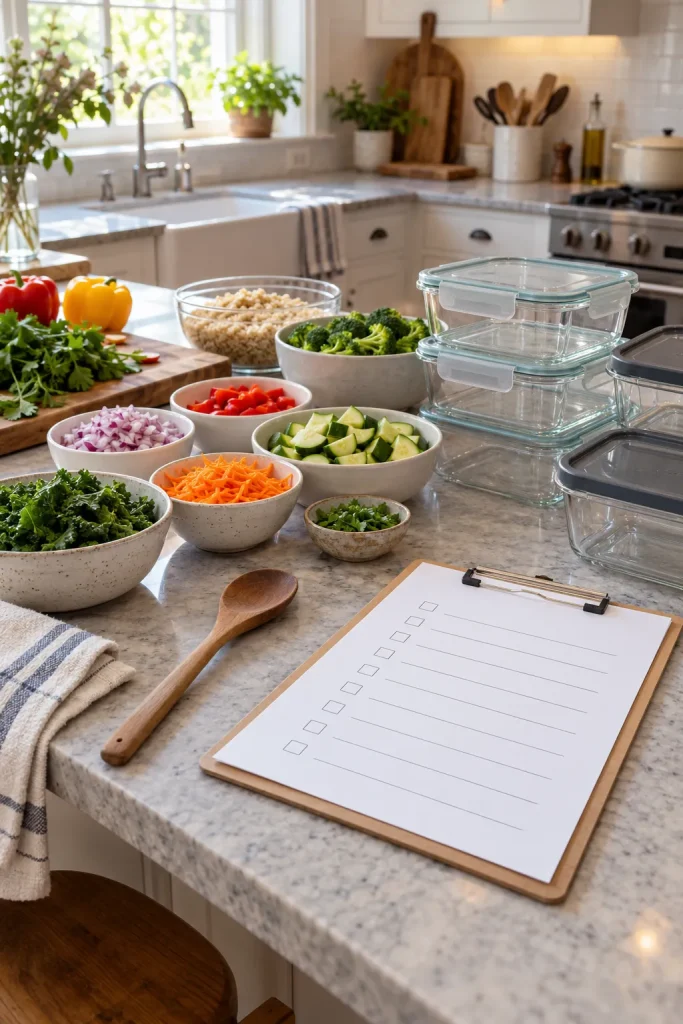
Batch cooking works better when the preparation tasks follow a sensible order. Otherwise, people can spend half their kitchen time looking for containers, washing the same equipment, or checking what comes next.
A printable checklist gives home cooks a clear sequence to follow.
Organize the Preparation Tasks
Start with choosing recipes and gathering ingredients. Then include washing produce, preparing shared ingredients, starting longer cooking tasks, and portioning finished food.
Add checkboxes beside every action and a small notes area for unfinished tasks.
Keep the page spacious enough to read while moving around the kitchen.
Create a simple black-and-white edition alongside the colored version for easy home printing.
🍳 Batch Cooking Workflow
Check ingredients. Compare the recipes with food already in the kitchen.
Group preparation. Wash, chop, and measure ingredients used in several meals.
Cook in a practical order. Begin longer cooking tasks before quick ones.
Finish and record. Follow safe cooling and storage guidance, then update the meal inventory.
9. Leftover-to-Lunch Planning Worksheet
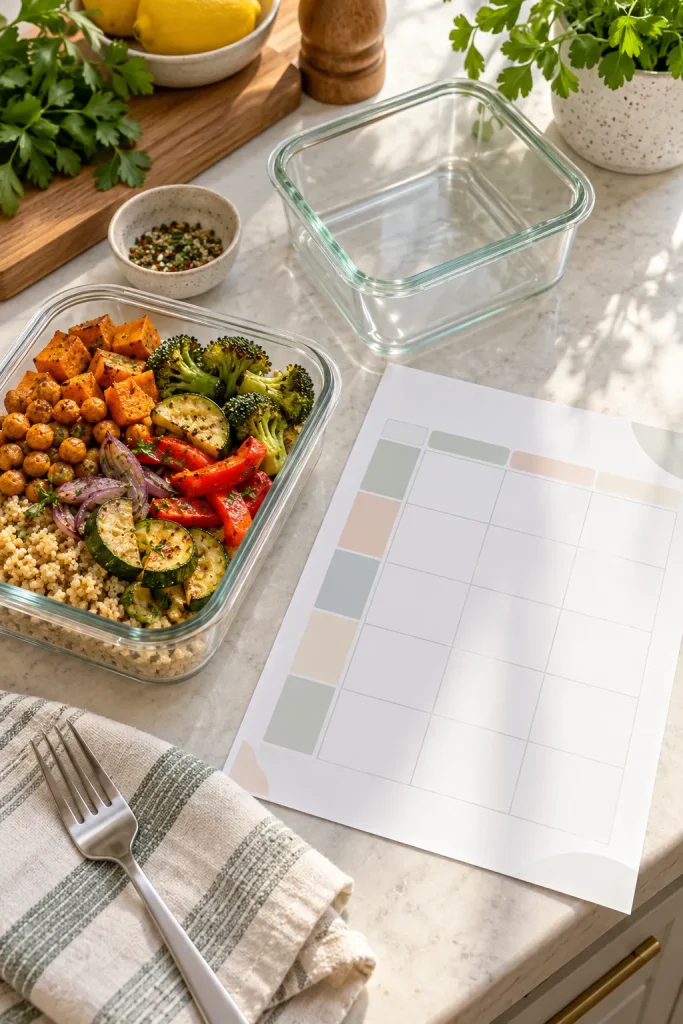
Yesterday’s dinner can become tomorrow’s lunch, but only when someone plans how to use it.
A leftover-to-lunch worksheet helps families turn suitable extra portions into simple lunch ideas instead of forgetting about them in the fridge.
Connect Dinner With the Next Day
Design two columns labeled Dinner Leftovers and Lunch Plan. Add small spaces for the storage date, extra ingredients needed, and who will take the lunch.
For example, leftover roasted vegetables might become a grain bowl with cooked rice and a suitable dressing.
Include checkboxes for packing and labeling containers. Remind buyers to follow safe food storage and reheating guidance.
A compact version would suit people who plan lunches while cleaning up after dinner.
Unplanned Leftovers
A container of roasted vegetables sits in the fridge without a planned use.
Lunch ingredients may be purchased separately.
Planned Lunch
Leftover vegetables + cooked rice + dressing = a planned grain bowl.
The worksheet identifies missing ingredients before shopping.
10. School Lunchbox Combination Planner
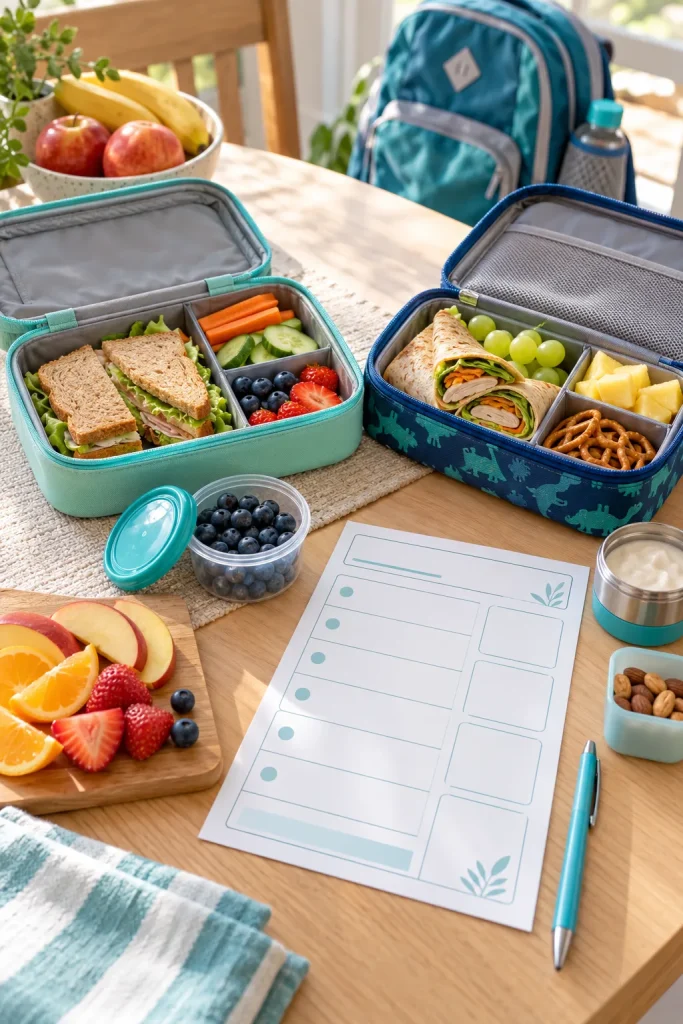
Monday morning arrives, and the lunchbox is still empty. The bread is ready, but nobody can decide what else to pack.
A school lunchbox combination planner helps parents choose different food groups without planning a complicated new lunch every morning.
Create a Simple Lunchbox Builder
Divide the printable into main food, fruit or vegetables, side item, and drink sections. Leave space for families to write foods their children enjoy.
Add a small area for school food restrictions and packing reminders.
Offer a weekly version with separate boxes for each school day.
Parents can use the sheet to plan suitable options ahead of time while checking school policies, food allergies, and safe packed-lunch storage requirements.
🎒 Lunchbox Planner Checklist
11. Breakfast Mix-and-Match Menu Chart
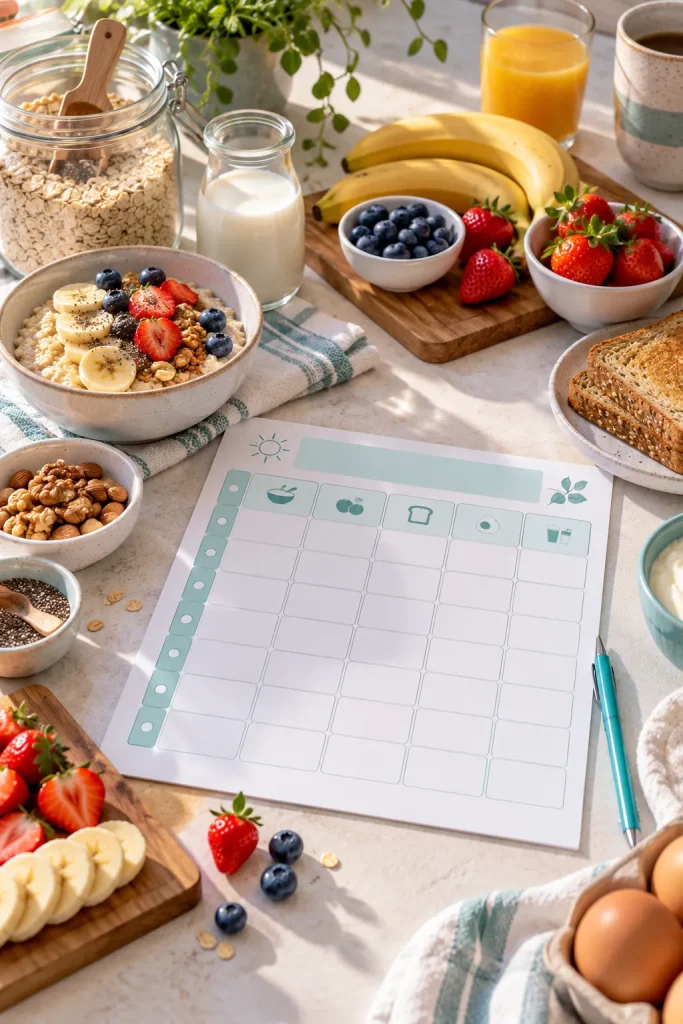
A breakfast planner does not need a different recipe for every morning. Sometimes a small collection of familiar ingredients gives families enough variety.
A mix-and-match breakfast chart helps home cooks combine basic foods into meals they can prepare with less decision-making.
Build Around Flexible Choices
Create separate spaces for a main food, fruit or vegetables, and an optional extra.
For example, a household might choose toast, sliced banana, and yogurt. Another morning could include oats with berries and nuts, where suitable.
Use blank sections rather than fixed meal combinations so buyers can include foods that fit their needs.
This format works well as a colorful kitchen reference sheet or a plain printable for a breakfast binder.
Oats, toast, eggs, or another family favorite.
Banana, berries, tomatoes, or available seasonal produce.
Yogurt, cheese, seeds, or another suitable addition.
12. Family Food Preferences Survey Page
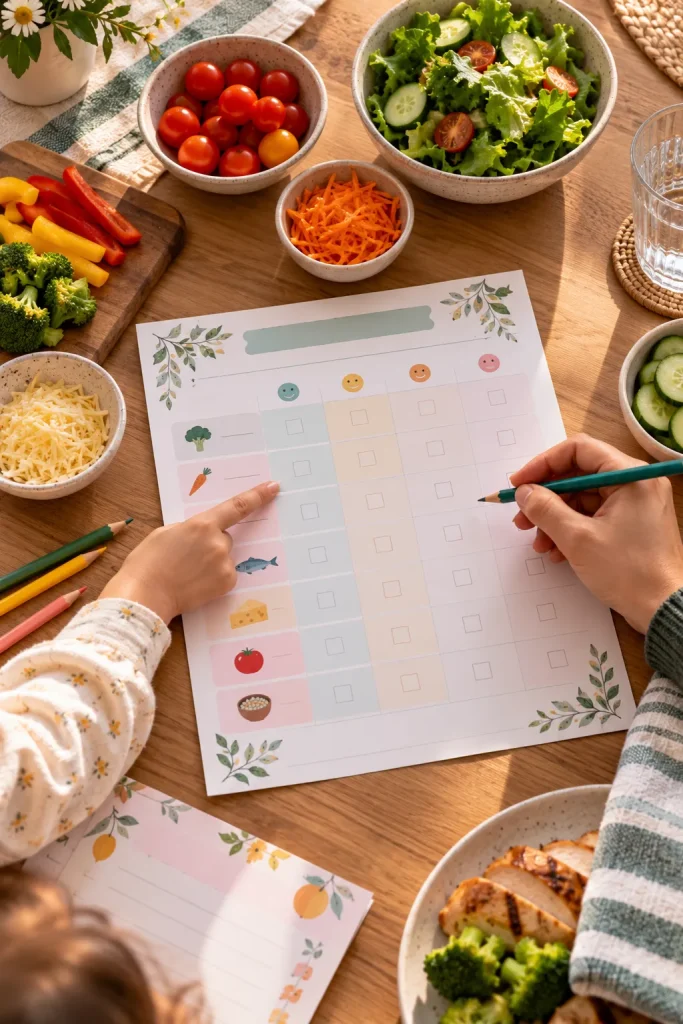
Hand each family member a simple food survey before creating the next meal plan.
The answers can show which dinners everyone enjoys, which ingredients cause complaints, and where a little flexibility might help.
Ask Questions That Lead to Useful Plans
Include spaces for favorite dinners, disliked ingredients, preferred side dishes, and meals someone would like to try.
Keep the survey short enough for children to complete with help from an adult.
A separate section can record dietary restrictions or ingredients that require extra care. Such information should always be checked directly with the person responsible for the meal.
Sell the survey as a standalone family planning page rather than another weekly menu calendar.
💡 Make the Survey Easy for Children
Offer simple answer choices alongside blank writing spaces. Young children may find these easier than a page full of open questions.
Keep allergy and dietary safety information separate from ordinary likes and dislikes.
13. Cook-From-Your-Pantry Dinner Builder
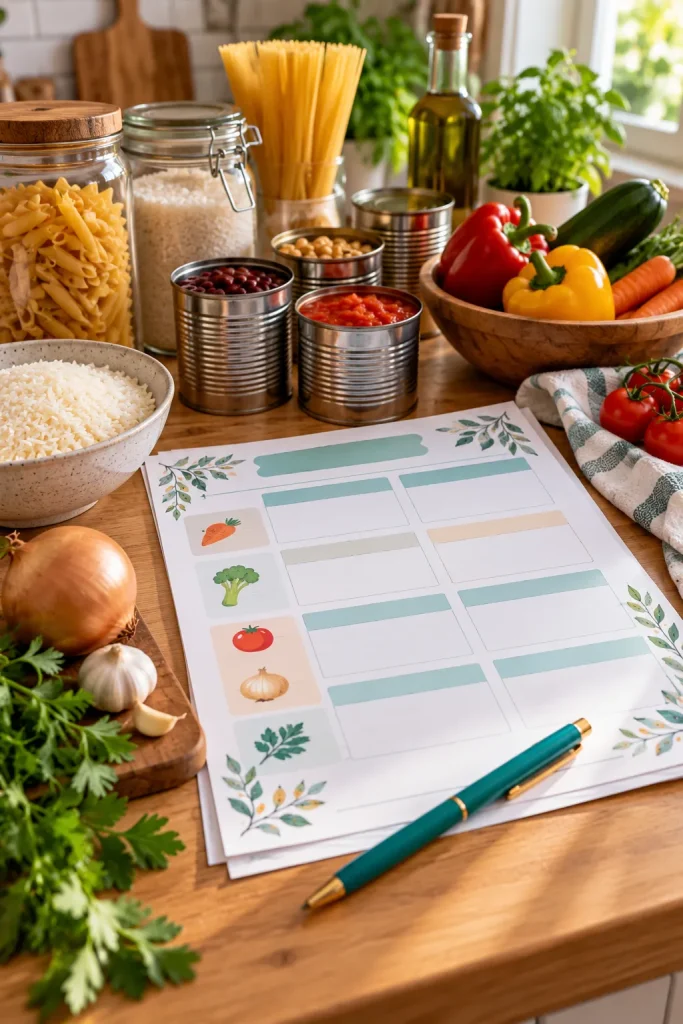
Buying ingredients for a new recipe before checking the cupboards can leave perfectly usable food untouched.
A pantry dinner builder helps home cooks create meal ideas using ingredients they already have.
Design an Ingredient-First Worksheet
Divide the page into pantry staples, available vegetables, protein choices, and possible meal ideas.
Include a blank area where buyers can combine ingredients into a familiar dish.
For example, rice, canned beans, and vegetables could become a rice bowl with suitable seasonings.
Unlike a pantry inventory, this worksheet focuses on turning available ingredients into actual dinner options.
Add a reminder to check food condition and storage dates before choosing ingredients.
Check available ingredients before choosing a meal.
Choose a familiar dish that suits the ingredients.
Write down only the missing ingredients needed to complete it.
Choosing a recipe without checking what is already available.
Assuming every ingredient can be swapped without affecting the recipe.
Using food without checking its condition and storage history.
14. Meal Cost Comparison Worksheet
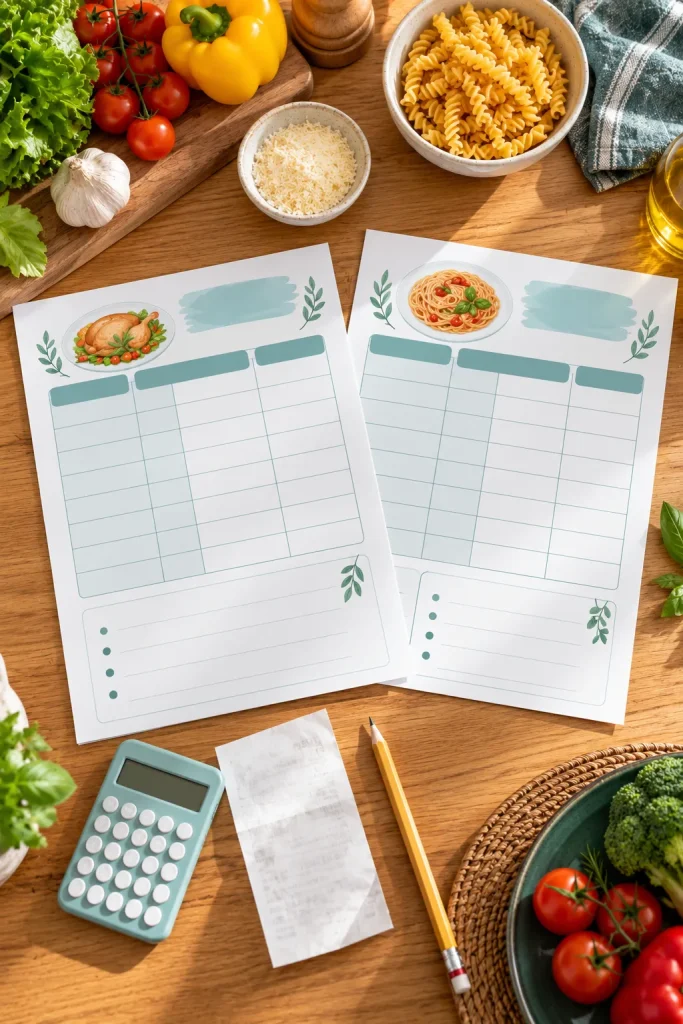
Two dinners can use similar ingredients but require different shopping lists. One might use pantry staples, while another calls for several items that are not already at home.
A meal cost comparison worksheet helps budget-conscious home cooks examine these differences before deciding what to prepare.
Make the Comparison Easy to Complete
Create side-by-side spaces for meal names, ingredients needed, quantities, ingredients already owned, and estimated total costs.
Keep the fields blank so buyers enter amounts that reflect their own grocery stores.
Include a space for the number of servings. Comparing total costs without considering portions can give an incomplete picture.
Offer an ink-friendly version with clear lines and no decorative backgrounds.
| Meal A | Meal B |
|---|---|
| Mainly uses pantry ingredients | Needs additional fresh ingredients |
| Fewer new items to purchase | More items added to the shopping list |
| Check the number of servings | Compare using the same serving basis |
| Enter actual ingredient costs | Enter actual ingredient costs |
📌 A shorter shopping list does not always mean a lower total meal cost. Compare actual amounts and servings.
15. Printable Food Container Label Sheets
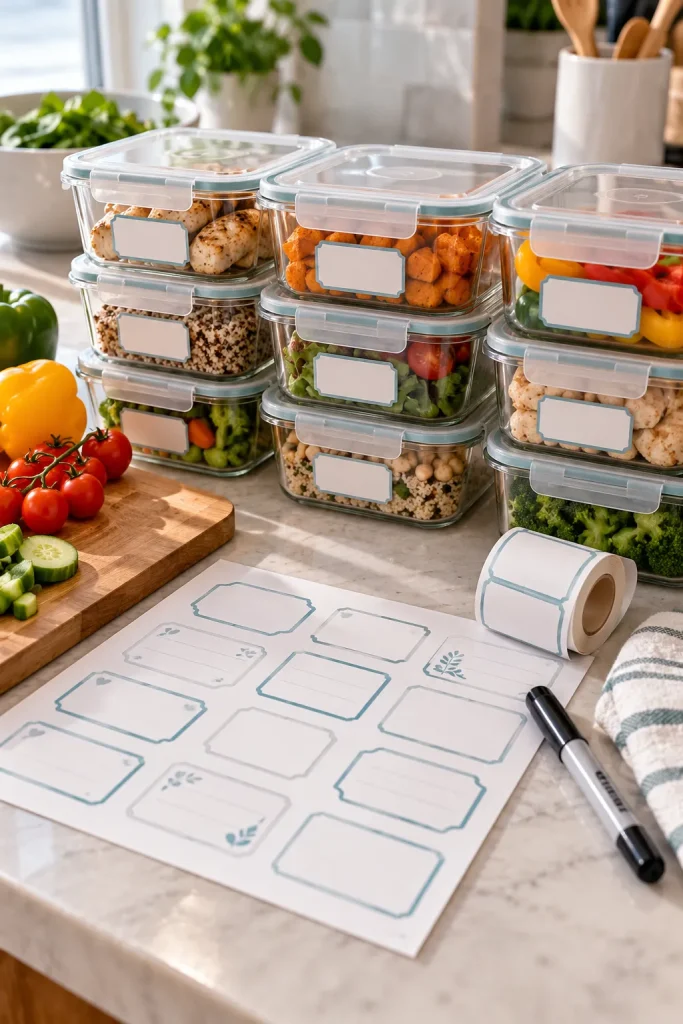
Unmarked food containers can look surprisingly similar after a few days in the fridge or freezer.
Printable food container labels give meal preppers a simple way to record what they stored and when they prepared it.
Keep the Labels Clear and Practical
Design several label sizes for small containers, lunch boxes, and larger batch cooking portions.
Each label should have room for the food name, preparation date, and a short storage note.
Use dark writing lines with a light background so handwritten details remain easy to read.
For sellers, show the labels on plain containers in the product preview. Specify the intended paper type, since regular printer paper does not automatically become waterproof or adhesive.
16. Slow Cooker Meal Schedule Cards
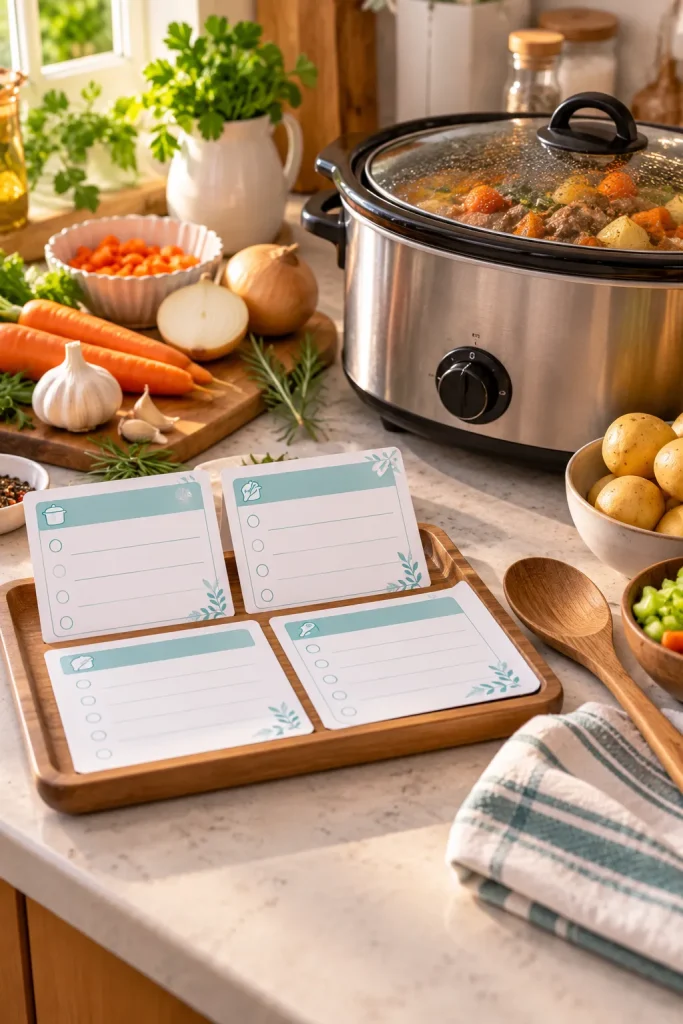
Put slow cooker meals onto individual planning cards so home cooks can organize dinner preparation around their daily schedules.
These cards focus on preparation timing and reminders rather than replacing a full recipe.
Create a Card for Each Planned Meal
Include spaces for the meal name, ingredient preparation, recipe reference, cooking setting, and instructions for when to begin.
Add a reminder to follow the recipe and appliance manufacturer’s guidance instead of printing one cooking time for every dish.
A notes area can help buyers record which ingredients need preparation in advance.
Offer blank cards in both compact and larger formats. They work particularly well for families that choose slow cooker dinners on busy weekdays.
🍲 Slow Cooker Planning Card Setup
Choose the recipe. Record the dish name and where the instructions are kept.
List preparation tasks. Note ingredients that need washing, measuring, or other preparation.
Record recipe timing. Copy the appropriate setting and duration from trusted instructions.
Plan the start. Check the meal against the day’s schedule and safe appliance-use instructions.
17. Theme Night Dinner Idea Deck
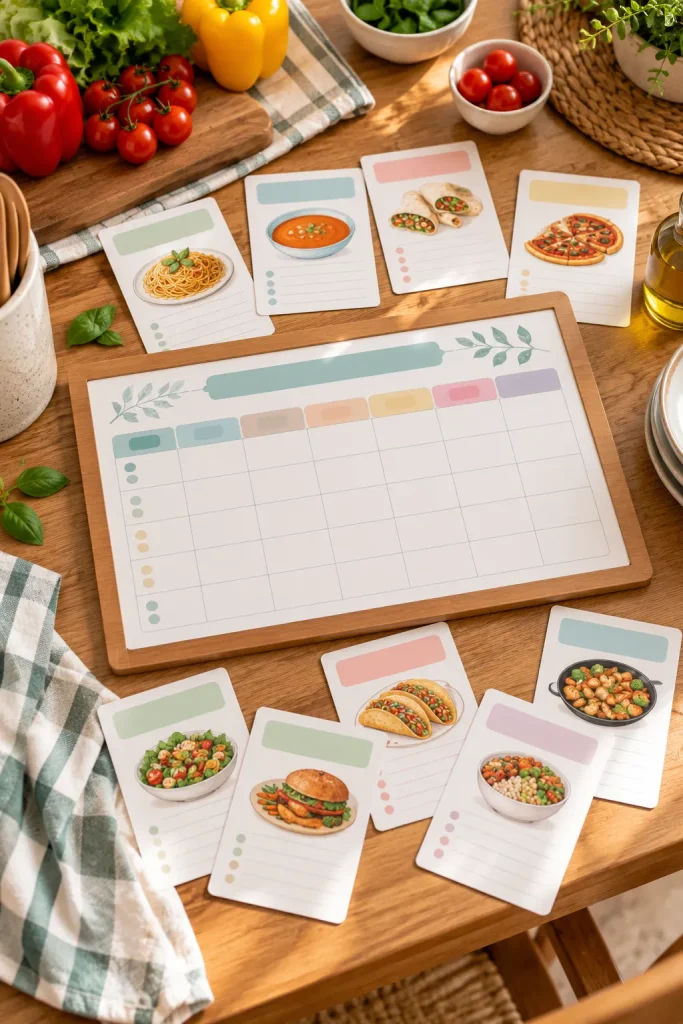
A row of dinner theme cards can make an ordinary meal planning board much easier to use. Instead of choosing a different recipe every evening, families start with a simple theme.
Think pasta night, soup night, or homemade pizza night. The theme stays familiar, while the actual meal can change.
Design Cards Around Dinner Categories
Create individual printable cards with a theme name, a small food illustration, and room for meal suggestions.
Include blank cards so buyers can invent their own themes.
Unlike family favorites cards, this deck organizes broad meal categories rather than specific recipes.
Offer a version with simple black outlines for customers who prefer ink-friendly printing.
Change the sauce, vegetables, or pasta shape.
Choose a vegetable, bean, or other family soup.
Let everyone choose from suitable toppings.
Combine fillings, vegetables, and sauces.
18. Vegetarian Dinner Pairing Planner
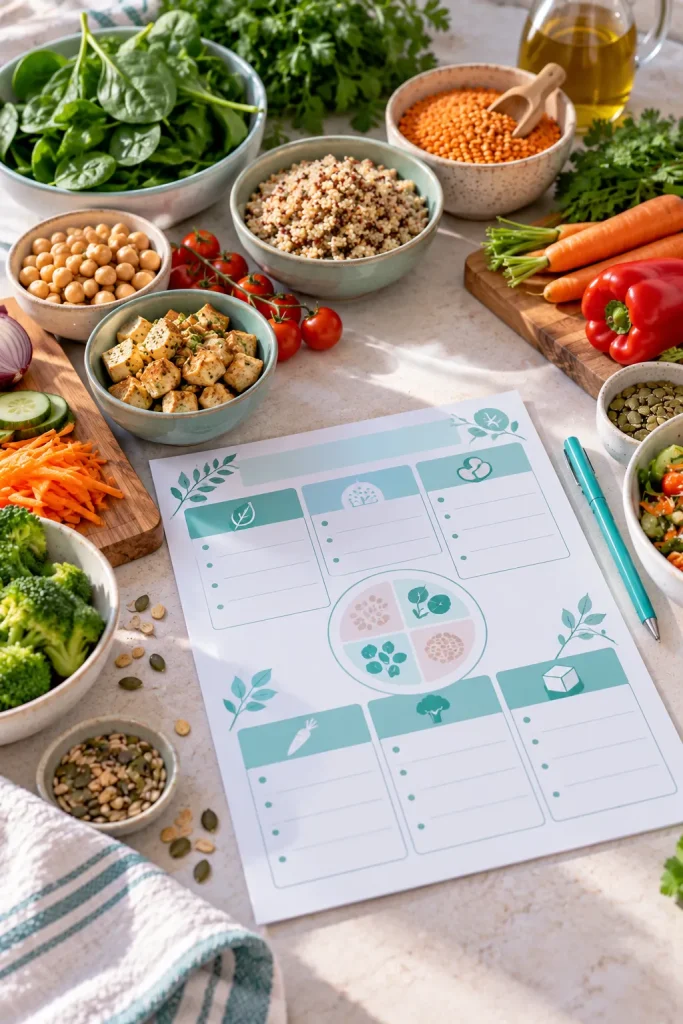
Roasted vegetables and a side of rice might sound like a complete dinner plan, but some households want more variety and substance on their plates.
A vegetarian dinner pairing planner helps home cooks put together meals using several complementary ingredients.
Focus on Building Useful Combinations
Divide the worksheet into protein-rich foods, grains or other bases, vegetables, and sauces or seasonings.
Add a space for the final dish name and any missing ingredients.
For example, lentils, rice, roasted carrots, and a suitable sauce could become one dinner idea.
Leave the food choices editable or blank. Vegetarian households have different tastes, allergies, and dietary needs.
This product suits people who want flexible meal combinations rather than a fixed recipe collection.
🥦 Vegetarian Dinner Builder Checklist
19. Seasonal Produce Meal Planning Map
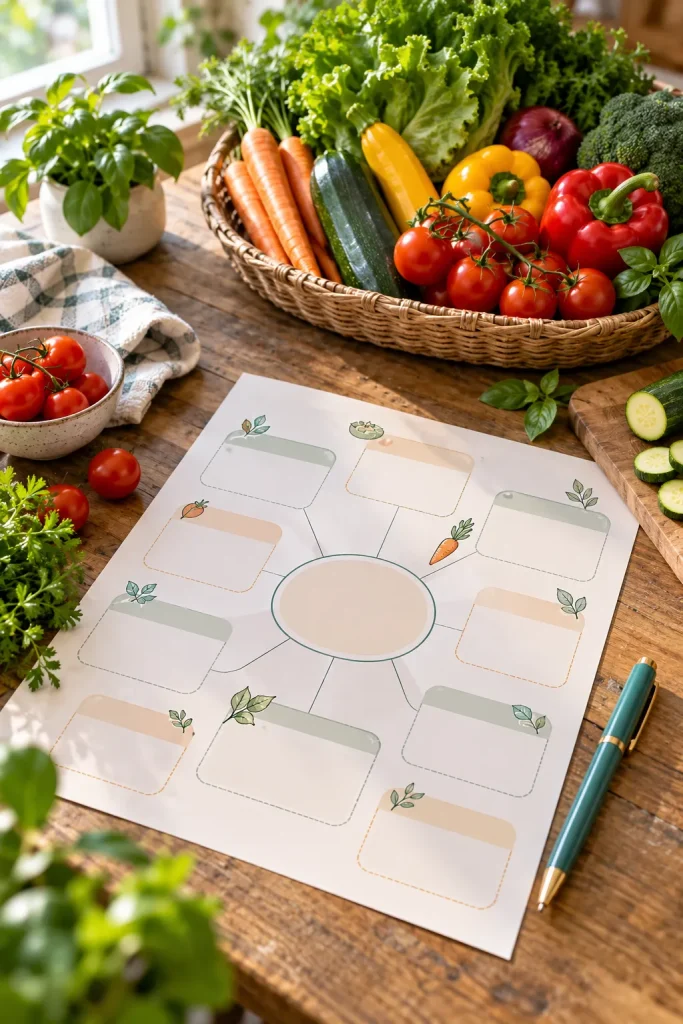
A basket of fresh seasonal produce can inspire several meals, but it is easy to run out of ideas after the first dish.
A seasonal produce meal map helps home cooks connect available fruits and vegetables with practical recipe ideas.
Show How One Ingredient Can Be Used
Design a printable with a large ingredient box in the center and smaller meal idea boxes around it.
For example, zucchini might connect to a vegetable pasta, roasted side dish, or simple soup.
Keep the printable undated so people can use it whenever ingredients are available locally.
Seasonal produce varies by location, so avoid claiming that one fixed calendar applies everywhere.
One Ingredient, One Idea
A home cook buys several zucchini and plans to roast them all.
There is no backup plan if the family wants a different meal.
One Ingredient, Several Uses
🥘 Roasted vegetable side
🍝 Vegetable pasta dish
🥣 Blended vegetable soup
Different meals can use the same available ingredient.
20. Holiday Dinner Cooking Timeline
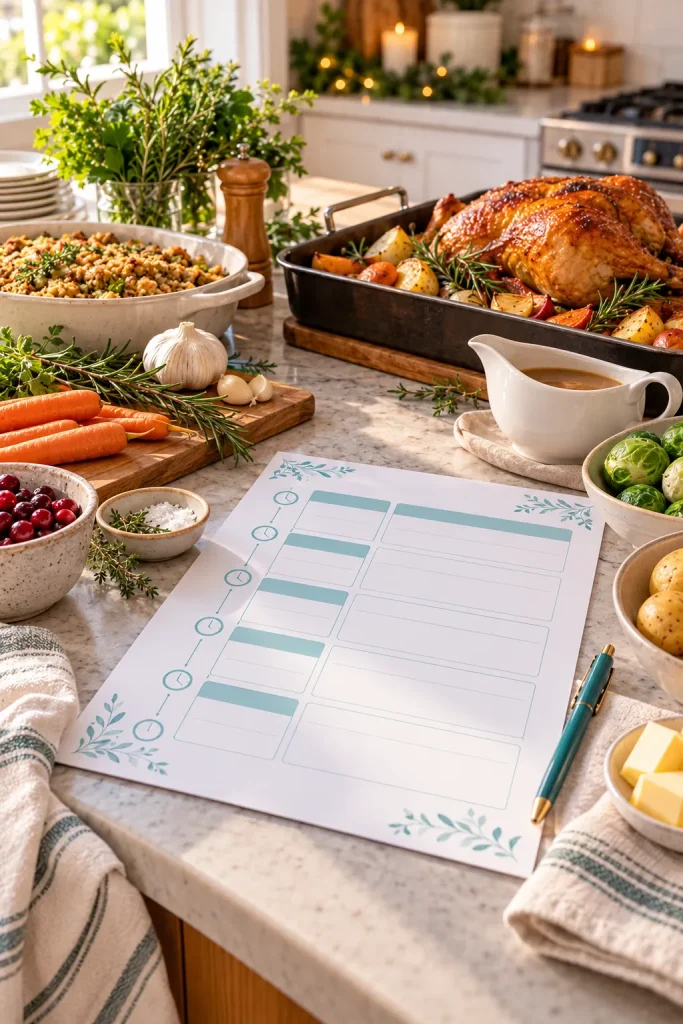
The main dish needs the oven, the vegetables are waiting to be prepared, and guests will arrive soon. Holiday cooking can become stressful when several dishes need attention at once.
A printable cooking timeline helps hosts work backward from the planned serving time.
Build a Schedule Around Cooking Tasks
Create columns for the dish, preparation task, equipment needed, planned start, and finish time.
Include a separate area for jobs that can be completed the day before.
Keep the timing fields blank because recipes, equipment, and meal sizes vary.
Add a small reminder for checking safe food temperatures and storage instructions.
A landscape layout leaves enough room for multiple dishes without squeezing the writing.
🍽️ Holiday Cooking Timeline Setup
Set the serving time. Choose when the meal should be ready for guests.
List cooking durations. Use the correct recipe and food safety guidance for each dish.
Check equipment conflicts. Note which dishes need the oven or stovetop at the same time.
Work backward. Schedule each preparation task and write the plan on the worksheet.
21. Potluck Dish Sign-Up Printable
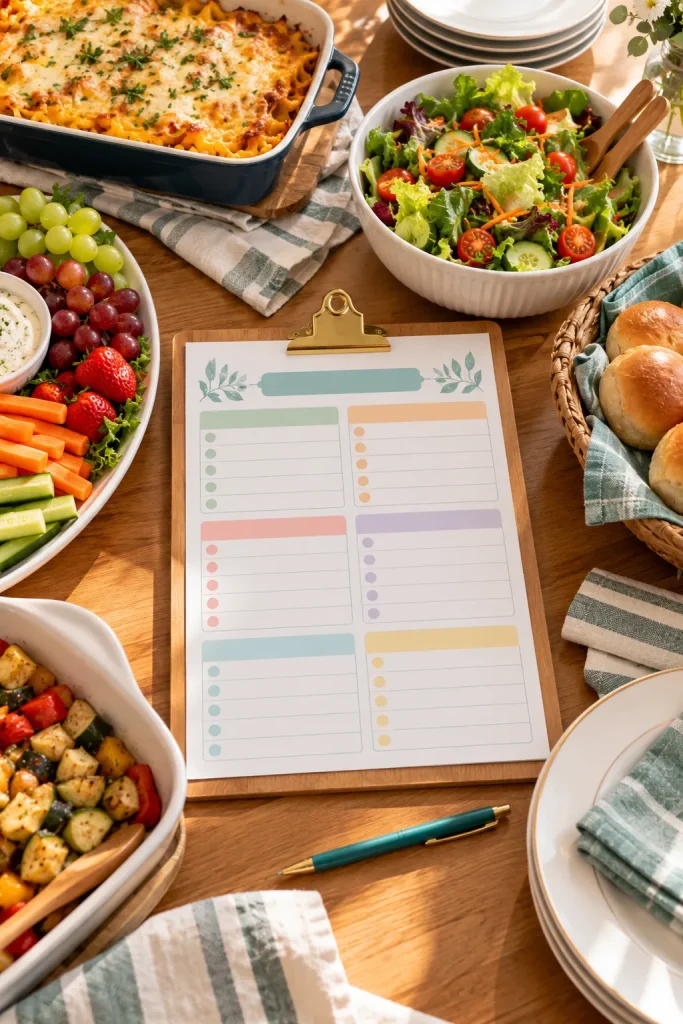
Potluck gatherings can end up with several desserts and hardly any main dishes. The problem usually starts before anyone enters the kitchen.
A potluck dish sign-up printable gives guests a shared way to coordinate what they plan to bring.
Organize Contributions by Dish Type
Create rows for guest names, dish names, food categories, and serving notes.
Include a small space for dietary information, such as ingredients that guests may need to check.
The sheet should also have room for practical details, including whether a dish needs refrigeration or serving utensils.
Offer a full-page version for larger gatherings and a compact format for family events.
Keep all sections easy to scan so the organizer can spot missing categories quickly.
22. Small-Household Portion Planning Sheet
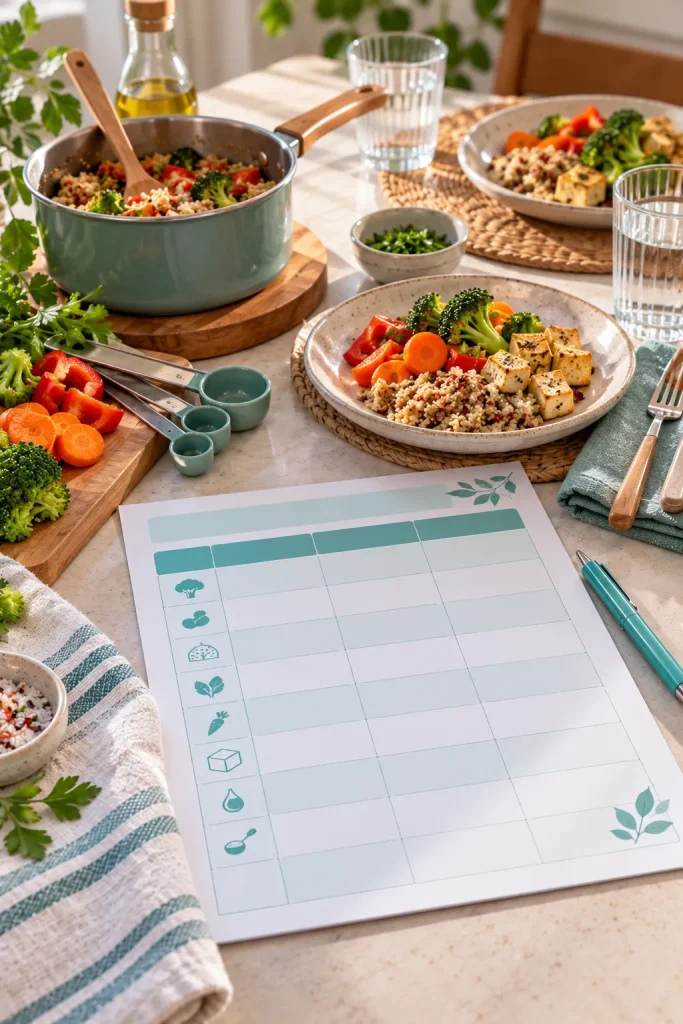
A recipe written for a large family does not always suit someone cooking for one or two people.
A small-household portion planning sheet helps home cooks adjust ingredient amounts before shopping or starting a recipe.
Keep the Math Easy to Follow
Create columns for the original serving count, desired serving count, original ingredient quantity, and adjusted quantity.
Leave room for people to record their own calculations instead of filling every row with fixed conversions.
Add a notes section for ingredients that are difficult to divide, such as whole eggs.
Cooking times, temperatures, and pan sizes may also need separate consideration. These should never be automatically scaled without checking the recipe.
This product is especially useful for singles, couples, and smaller households.
| Original Recipe | Adjusted Household Plan |
|---|---|
| Uses the recipe’s listed serving count | Uses the household’s desired serving count |
| Lists the original ingredient quantities | Records the recalculated ingredient quantities |
| May require a larger cooking dish | May need a smaller pan or container |
| Follows the published cooking instructions | Rechecks cooking time and safe temperature |
📌 Adjust ingredients carefully. Cooking conditions and food safety requirements may not change in the same proportion.
23. No-Cook Lunch Assembly Mats
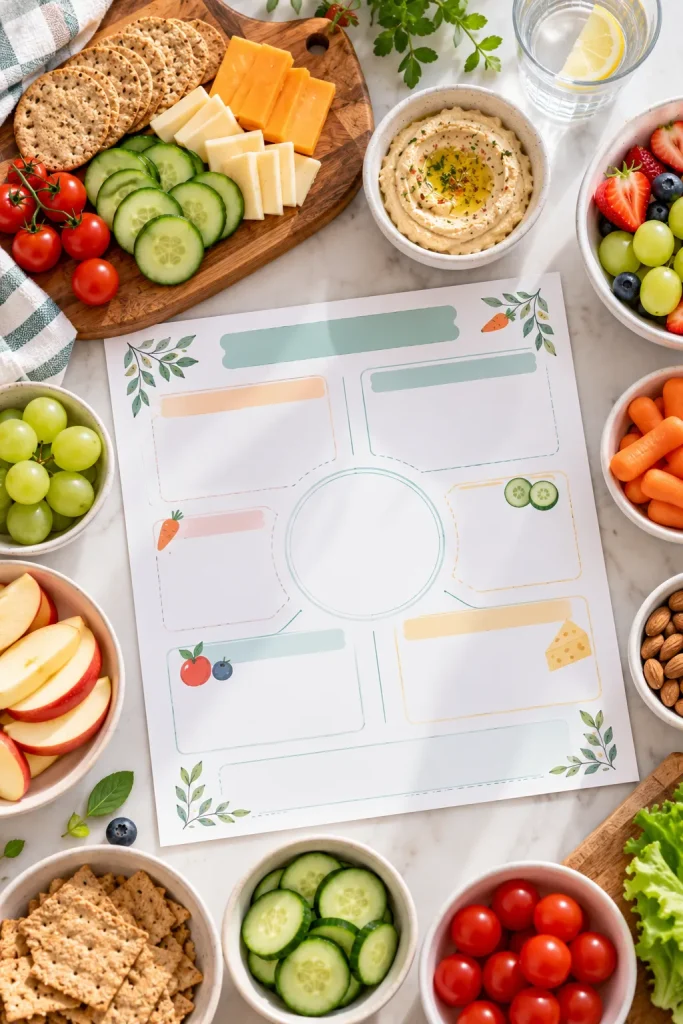
No-cook lunches do not have to mean grabbing random snacks and calling them a meal.
A printable lunch assembly mat helps home cooks arrange ready-to-eat ingredients into practical lunch combinations without needing a stove.
Design a Mat With Clear Food Spaces
Divide the printable into areas for a main item, vegetables or fruit, and a suitable side.
Use simple shapes, such as circles and rectangles, to show where ingredients can be placed.
Include a separate notes area for dips or dressings.
Sell the mat as a planning aid, not as a food-safe surface. Buyers should use an appropriate plate, tray, or container for actual food.
Provide both colorful and plain versions.
Show clear spaces for different lunch components.
Choose foods that are ready to eat or already safely prepared.
Use suitable containers and keep perishable foods properly chilled.
Crowding the printable with tiny sections that are hard to use.
Suggesting ingredients that require cooking before eating.
Treating an ordinary printed sheet as a food-contact surface.
24. Recipe Binder Index and Category Tabs
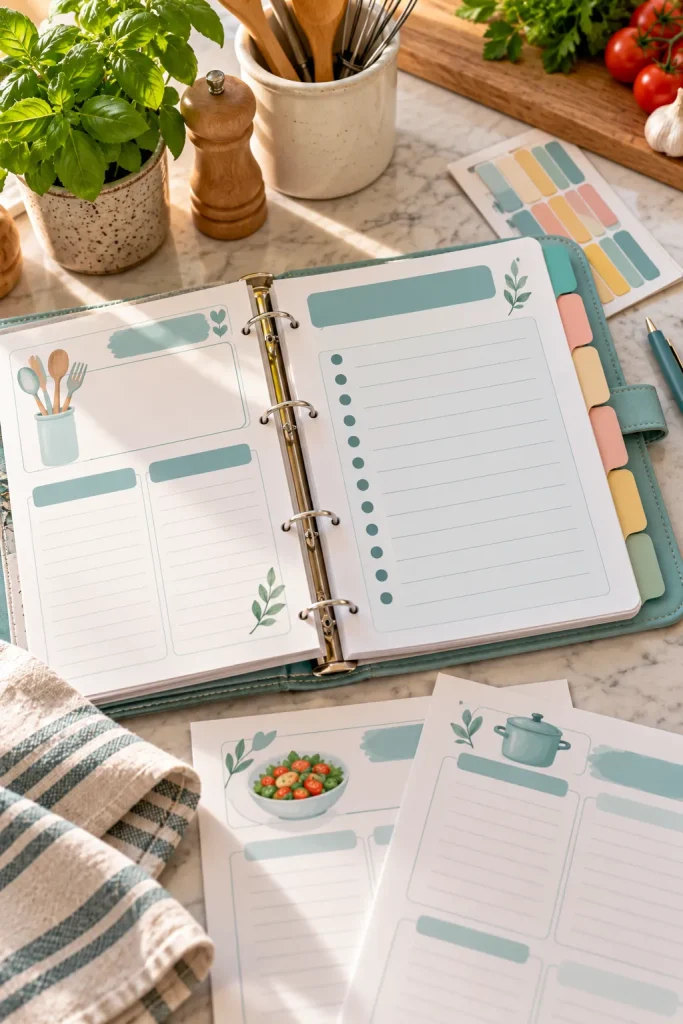
Open a thick recipe binder and finding one favorite dinner can become a slow search through loose pages.
A printable binder index and category tab set helps home cooks locate their recipes without sorting through everything.
Keep the Binder System Simple
Create an index page with columns for recipe name, category, and page number.
Add matching divider tabs for common categories such as breakfast, lunch, dinner, sides, and baking.
Make the tabs large enough to trim and label by hand. Include instructions for printing at the correct size.
This product is different from recipe cards because it organizes an existing collection.
Before listing the digital files, check current marketplace rules and any applicable template licensing terms.
📚 Recipe Binder Product Checklist
25. Reusable Weekly Menu Board Card Kit
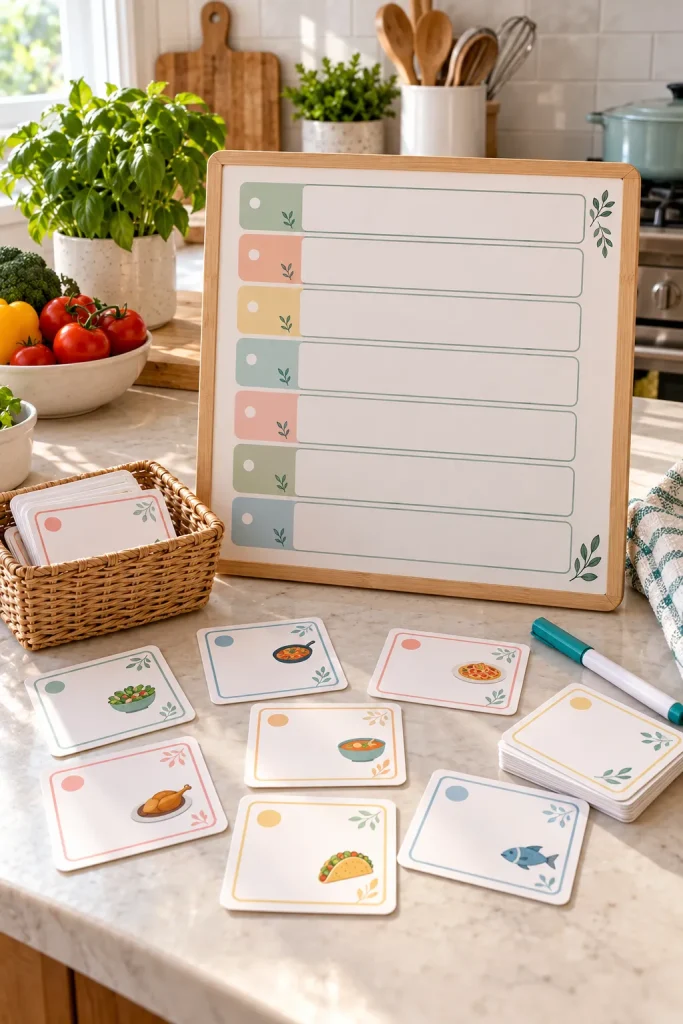
A reusable menu board gives families a clear view of the week’s meals without printing a new planning sheet every time.
Instead of writing dinner names into fixed boxes, buyers can arrange individual meal cards on a weekly board and move them when plans change.
Create a Printable Card-and-Board Set
Design a weekly board with seven labeled spaces and matching blank meal cards. Include a few extra cards for leftovers, eating out, and quick backup dinners.
Keep the cards large enough for handwriting and easy to cut out.
Buyers can laminate the pieces or use suitable card holders for repeated use.
Show the finished board in your product preview so customers understand how the pieces work together.
Design the cards and the weekly board as one matching system. Families should be able to change a meal without replacing the entire page.
Useful Pieces to Include
📅 Seven-day menu board
🍽️ Blank dinner cards
🔄 Meal swap and backup cards
✂️ Simple printing and cutting instructions
Start With One Useful Meal Planning Product
You do not need to create a large printable bundle to start a digital product shop. Choose one everyday kitchen problem and design a page that helps someone handle it.
A grocery checklist, freezer tracker, or family dinner planner is a manageable starting point. Keep the layout readable, test the printed page for clarity, and explain what buyers will receive.
As you build more meal planning printables, keep each product focused on a different task. That makes your collection easier for shoppers to understand. Check current platform rules and design licensing terms before listing your files.
Save this list to your Pinterest board so you can return when you are ready to create your next product.