
Introduction
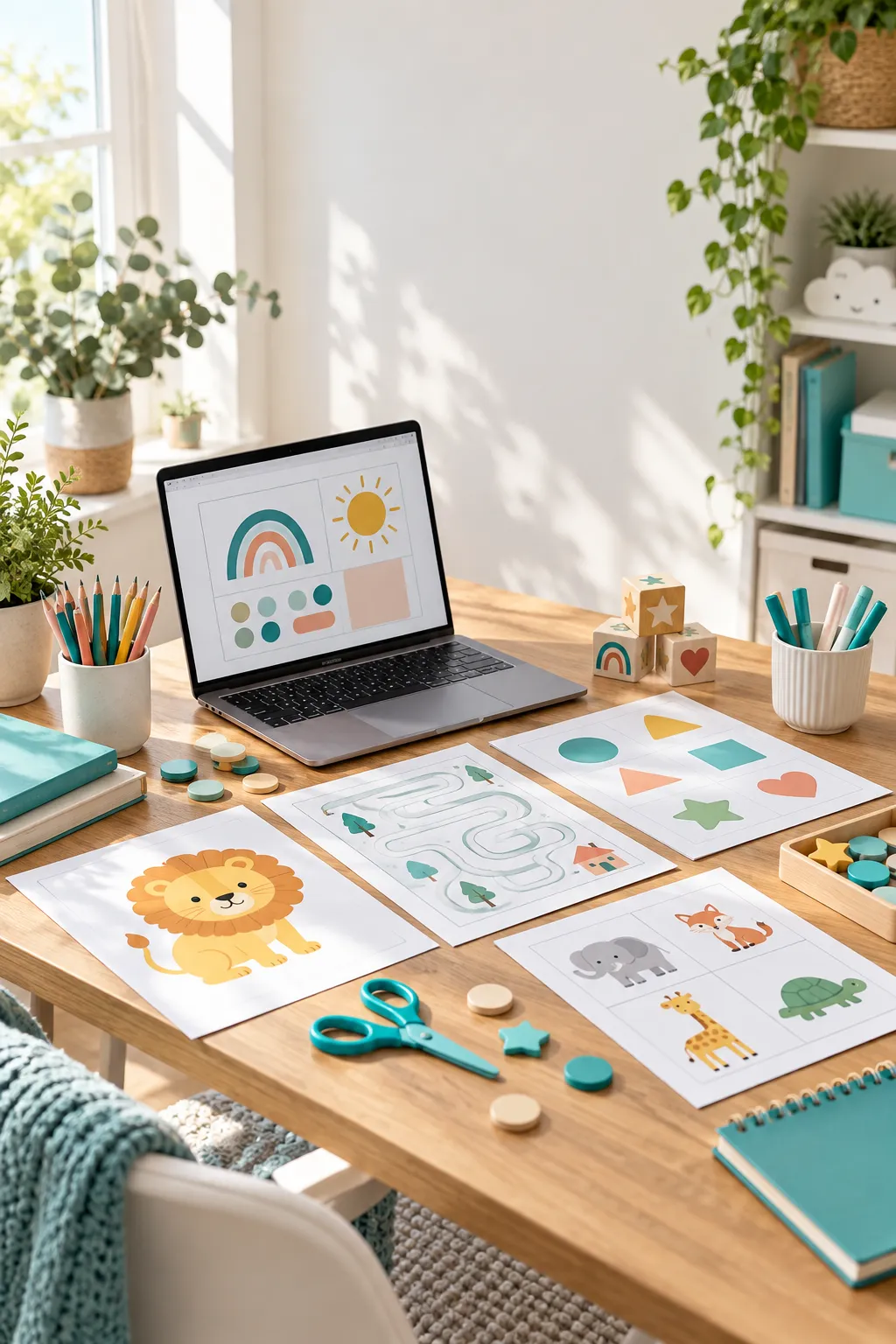
Creating kids’ printables sounds simple until you sit down to design one. Parents need activities that are easy to print and understand, while teachers look for clear layouts that fit real lessons. A page packed with tiny pictures or confusing directions can be hard to use, even when the idea is good.
The good news is that printable kids activities can cover many different needs, from early literacy and counting to creative play, travel, and seasonal crafts. You do not need to build a huge bundle at once. Start with one activity, decide who it is for, and make the instructions and print layout easy to follow.
In this guide, you will find 25 beginner-friendly product ideas that can be designed in Canva or another familiar layout tool. Think about how a buyer will use each printable: at the kitchen table, in a classroom center, on a road trip, or during a birthday party. Before listing anything for sale, check the current rules of your chosen marketplace and make sure any artwork, fonts, and other assets are licensed for your intended use.
1. Alphabet Letter Tracing Mats for Early Writing Practice
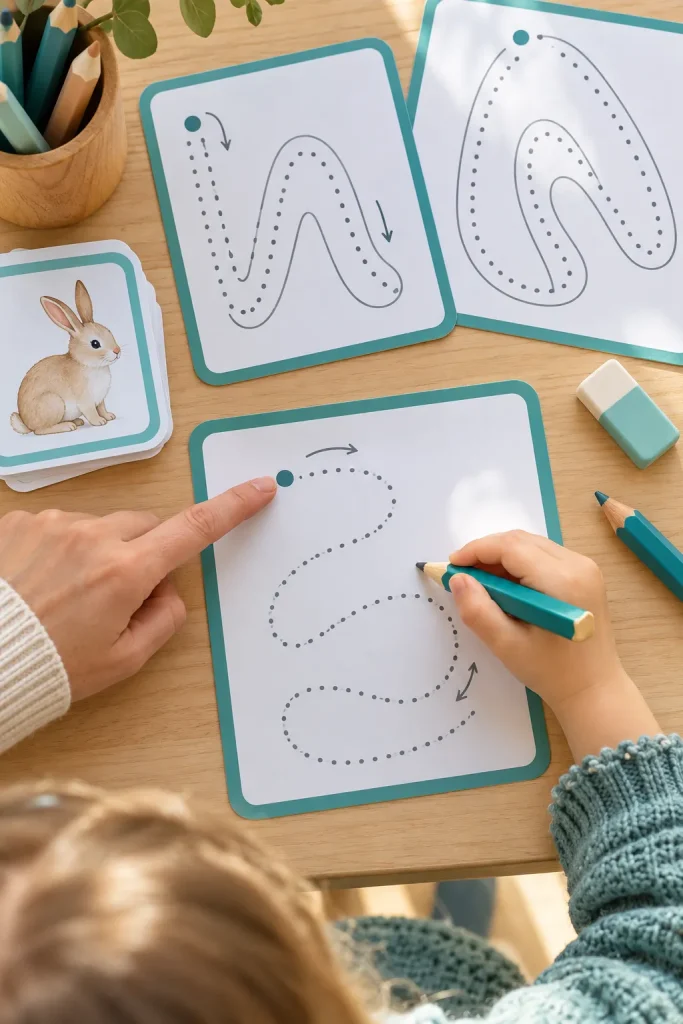
Thick tracing lines are easier for small hands to follow than tiny dotted letters crowded onto a page. Create tracing mats with large letters, clear starting dots, and enough space for children to repeat each shape. Add a simple picture that begins with the target sound, but keep the letter practice as the main focus.
Offer uppercase and lowercase versions, plus a blank practice area for extra tries. Use dark, uncluttered lines so the sheets remain useful when printed in grayscale. Parents can use the mats for short practice sessions, while teachers can place them in writing centers.
Make the First Mark Obvious
2. Counting Ten Frame Cards With Number Challenges
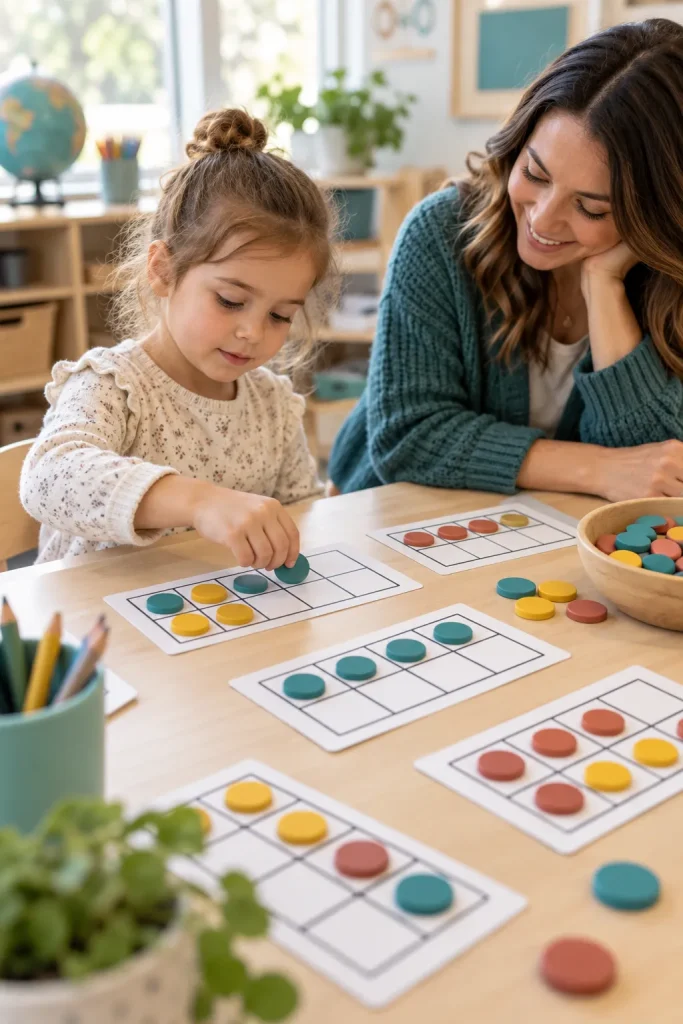
Counting cards work best when a child can move something, not only look at numbers. Ten frames provide a clear place to put counters as children count objects or represent a number. Make a set with empty ten frames, number challenge cards, and simple picture prompts.
Keep the boxes large enough for small counters and include a few cards with completed examples. You can offer a reusable version for dry erase sleeves or a paper version for quick classroom activities. Check that every challenge has a clear answer and that the frames are easy to count.
Make the Pieces Easy to Use
A Simple Counting Set
| Part | Purpose |
|---|---|
| Ten frame | Gives counters a clear place to go. |
| Number card | Sets the counting challenge. |
| Picture prompt | Connects the number to a familiar object. |
3. Shape Scavenger Hunt Pages for Home and Classroom
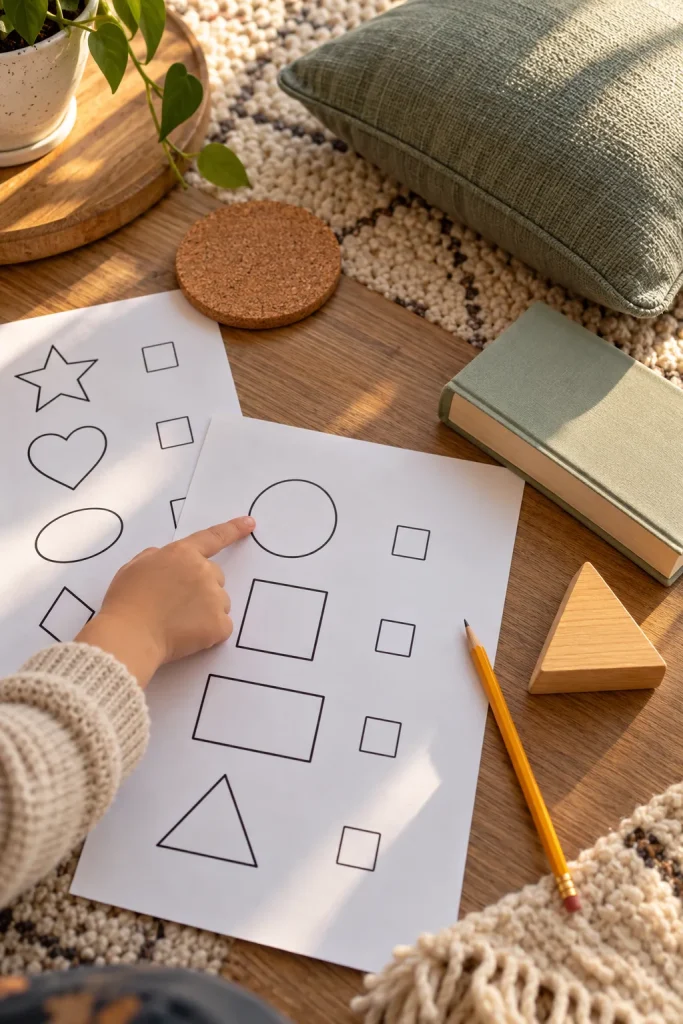
An ordinary shapes worksheet asks children to name a circle or square. A scavenger hunt gets them looking around the room for those shapes in everyday objects. Design pages with simple shape icons, large check boxes, and room to draw or record a discovery.
Include familiar examples such as a round plate, a rectangular book, or a square cushion, but let children find their own objects too. Parents can use the sheets at home, while teachers can adapt them for a classroom walk. Keep the activity safe by asking children to observe objects without climbing or handling anything fragile.
Connect the Page to Real Objects
Children identify a shape from a printed picture.
Children look for the same shape in their surroundings and mark what they find.
4. Color Sorting Mats With Matching Picture Pieces
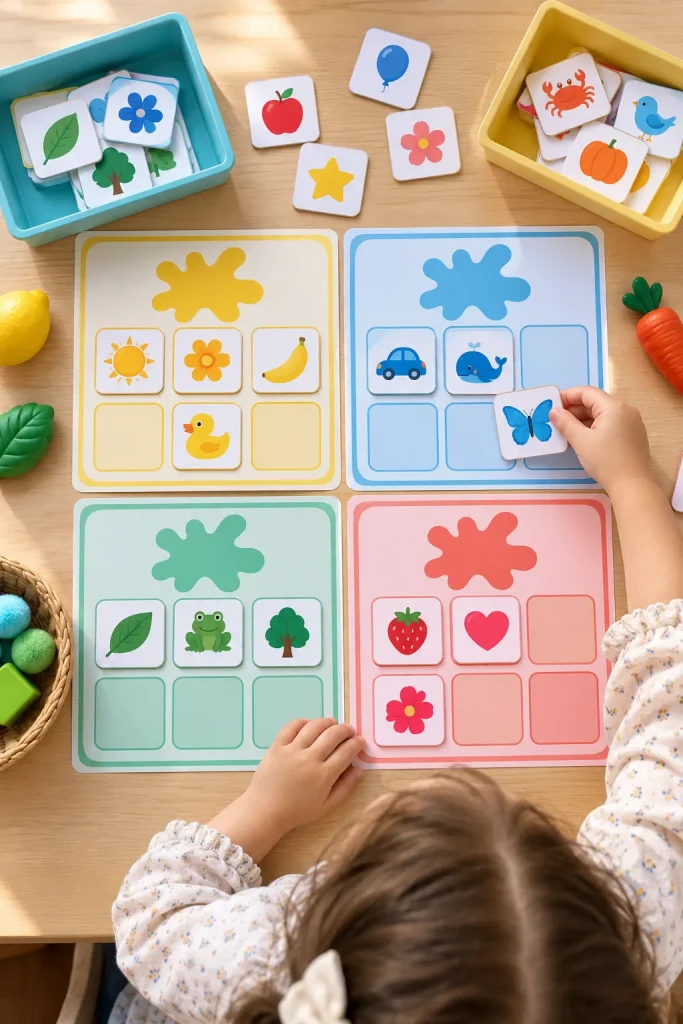
Color sorting mats are simple to make, but the picture pieces need to be easy to recognize. Create separate mats for a few clear colors and add matching objects such as fruit, toys, clothing, or everyday household items. Keep each cutout large enough for easy handling.
Include a blank sorting mat for teachers or parents who want to add their own picture pieces. Use strong color contrast and simple outlines so the activity still works when printed in grayscale with labels or shape cues. A small storage envelope page can help buyers keep the pieces together.
Add More Than Color
Color Sorting Design Check
5. Rhyming Domino Cards With Picture Clues
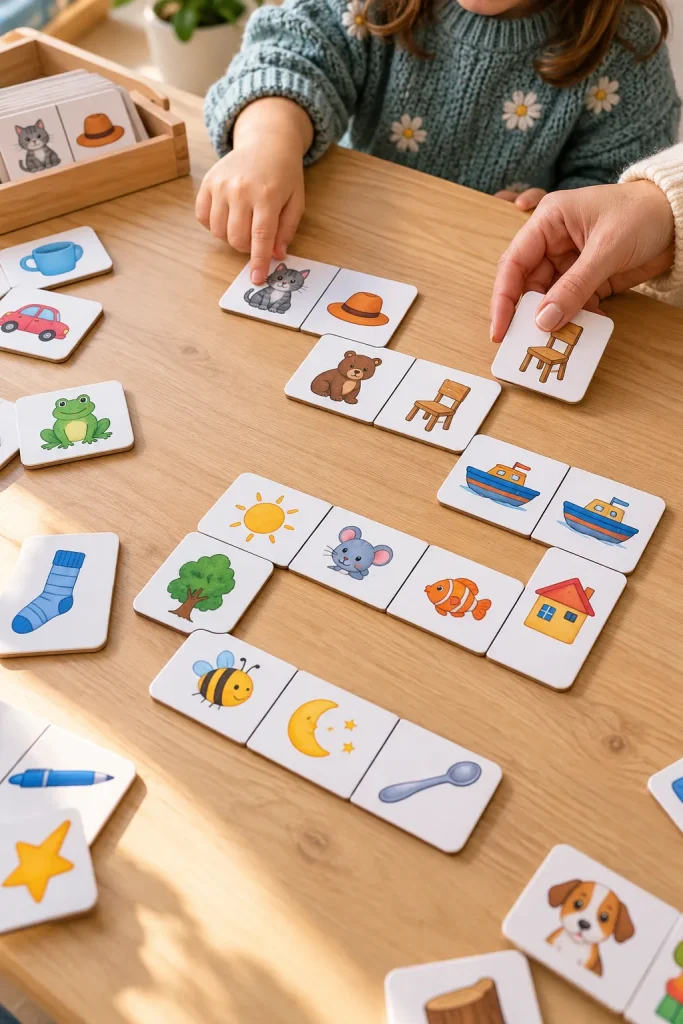
Rhyming dominoes turn sound practice into a table game. Each card shows two pictures, and players connect cards when the pictured words rhyme. A cat picture can meet a hat picture even when the images look nothing alike.
Choose familiar one-syllable words with easy-to-recognize pictures. Before arranging the cards on a printable sheet, check that they can form a complete chain. Include a picture key with the intended words, especially for drawings that might have more than one name. If one picture has two likely names, replace it rather than adding a long explanation.
Keep the Word Choices Clear
Match words by their spoken ending sounds, such as bear and chair.
Do not match words only because their endings look alike. Cough and though do not rhyme.
6. CVC Word Building Strips With Letter Tiles
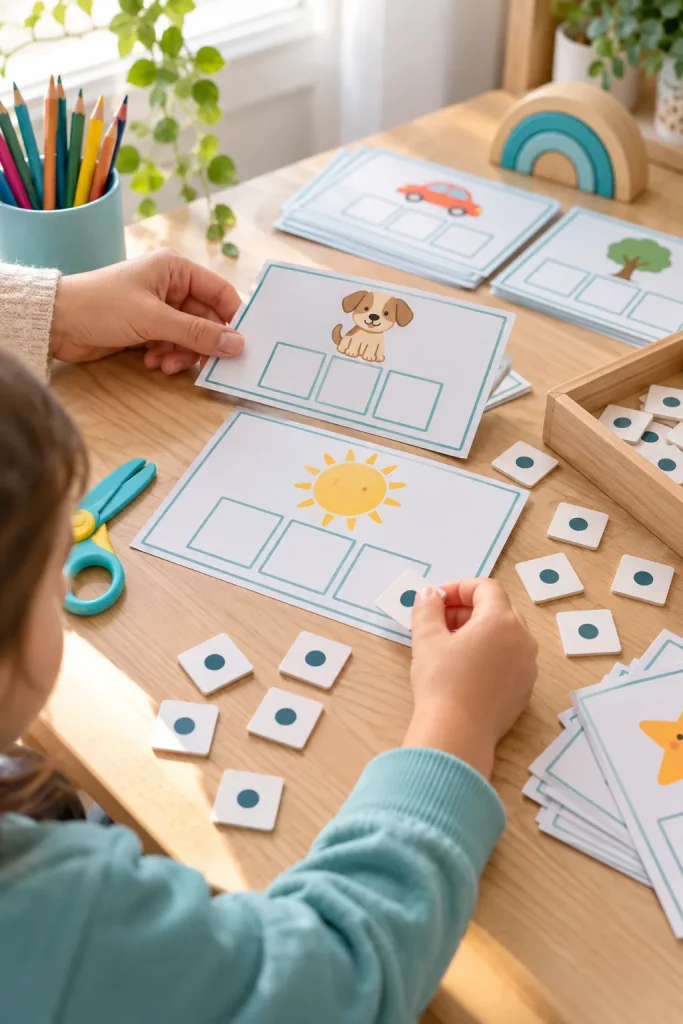
Start a word building strip with three empty boxes beneath a simple picture. Children can place one letter tile in each box, then blend the sounds to read a short word. The movable pieces make the printable more interactive than a page of copied words.
Begin with familiar consonant-vowel-consonant words such as sun, map, and pig. Include cutting guides for the letter tiles and a separate answer page for adults. A blank strip lets teachers use their own word lists later. Show one completed example beside an empty strip in your product preview.
Build a Small Word Family
Prepare the Word Building Set
| Step | What to do |
|---|---|
| 1 | Print the strips and tile sheets at actual size. |
| 2 | Cut the letter tiles along their borders. |
| 3 | Store each tile group in a labeled envelope. |
7. Sight Word Bingo Boards With Calling Cards
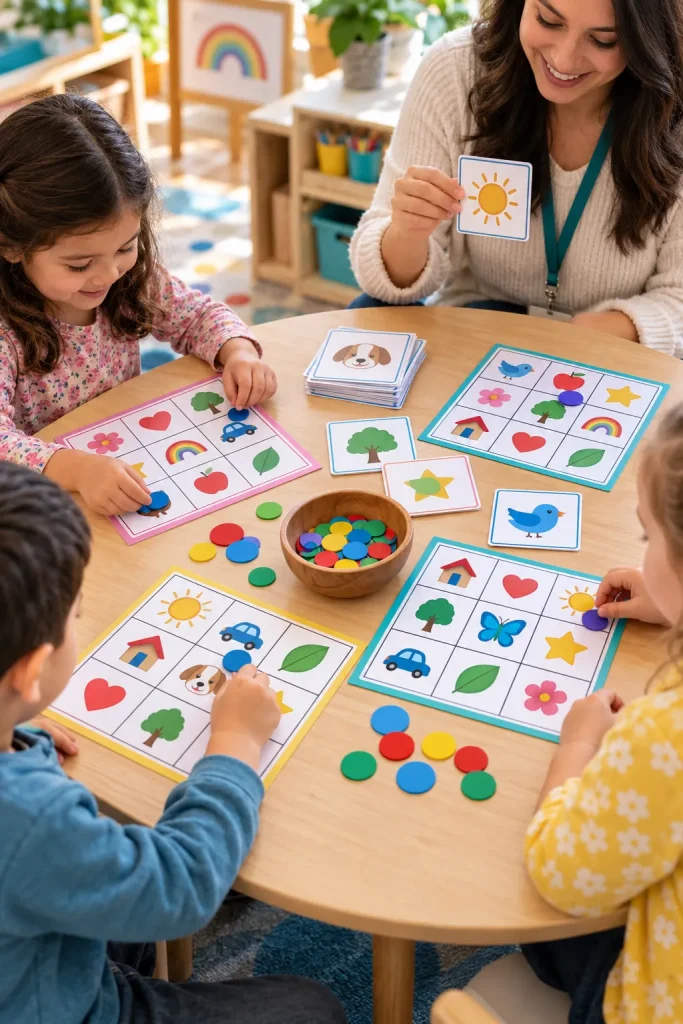
Sight word bingo gives repeated word reading a simple game format. Create several bingo boards with words placed in different positions, then make a matching set of calling cards. Large type matters more than decorative backgrounds because children need to find each word quickly.
Start with a small grid for early readers and a larger grid for children ready for more words. Check that every word on a board appears in the calling deck. Include straightforward directions for marking a line and deciding when a player wins, plus a caller key so no word gets skipped.
Prepare Different Board Sizes
8. Story Sequencing Cards With Picture Scenes
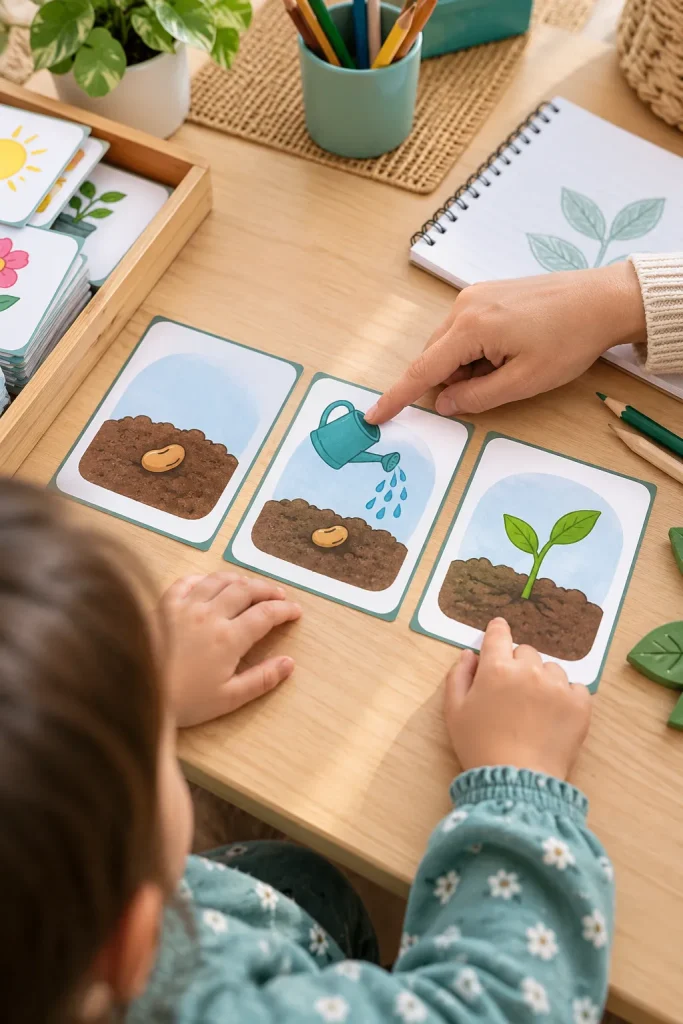
Three cards show a seed going into soil, a watering can tipping, and a new sprout reaching up. When children arrange these scenes, they can practice explaining which event happened first and what followed. Each picture should offer a visual clue without needing a written caption.
Make separate mini sets for everyday routines, simple nature events, and playful situations. Keep the card size consistent so pieces from different sets store neatly together. Add an adult answer sheet and a few conversation questions, such as what happened first or what might happen next.
Give Buyers More Than One Story
Three Prompts for Story Sequencing
| Step | Prompt |
|---|---|
| Look | What is happening in each picture? |
| Arrange | Which scene must happen first? |
| Explain | What clues show the order? |
9. Emotion Face Cards With Feeling Prompts
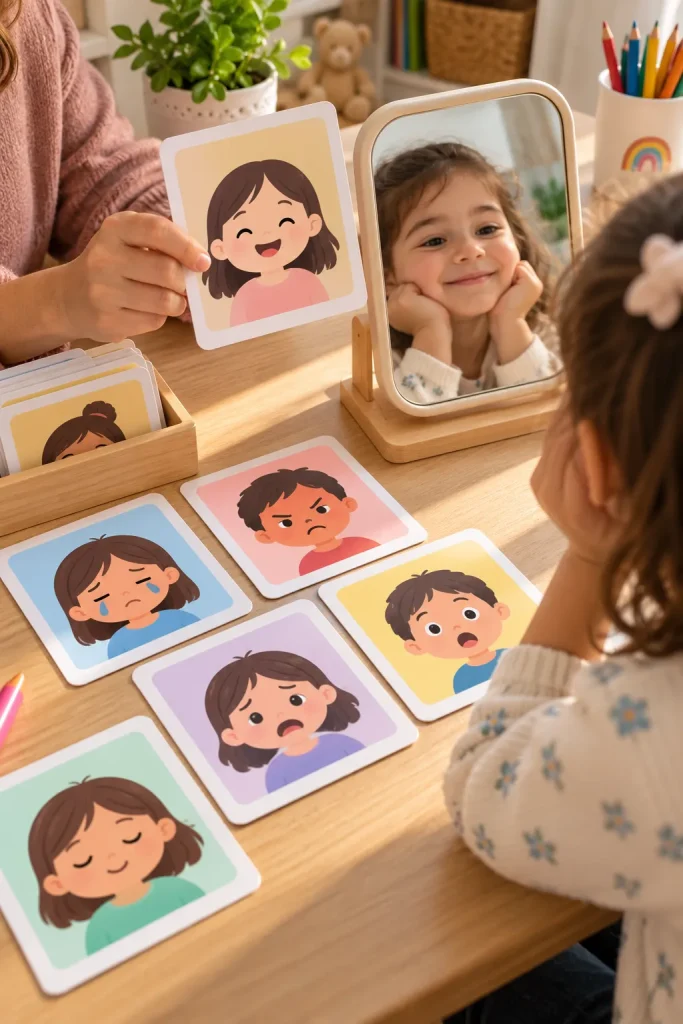
Emotion cards do not need dozens of exaggerated faces to be useful. A small set with clear expressions gives children a starting point for naming feelings and talking about them. Begin with happy, sad, angry, surprised, scared, and calm.
Place one illustrated face on each card, with the feeling word printed underneath. On a separate question sheet, include prompts about when someone might feel that way. Keep the expressions clear without turning every emotion into a fixed rule. Two people can show the same feeling differently, so leave room for children to explain their own answers.
Add Simple Conversation Prompts
10. Morning Routine Schedule Cards for Young Kids
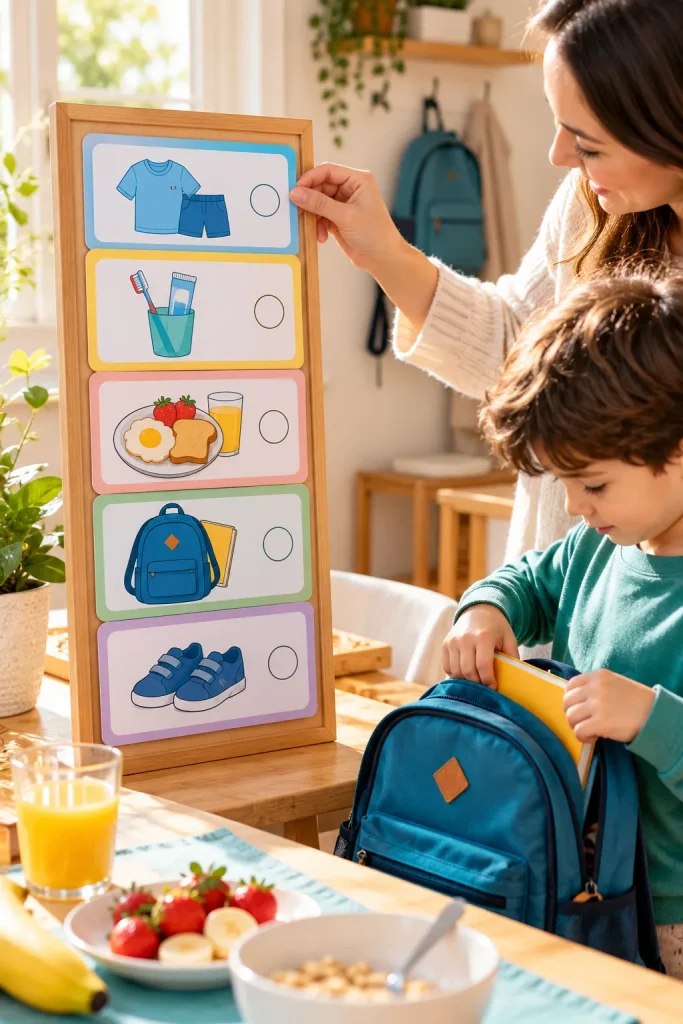
Morning instructions are easy to forget when they are only spoken once. A picture schedule gives children a simple way to see what comes next without asking an adult to repeat every step.
Make individual cards for getting dressed, brushing teeth, eating breakfast, packing a bag, and putting on shoes. Include a blank schedule board where parents can arrange the cards in their preferred order. Add a few empty cards so buyers can create steps that fit their household, since school mornings and weekends may look different.
Build a Flexible Routine Set
What to Include in the Download
11. Daily Weather Observation Journal Pages
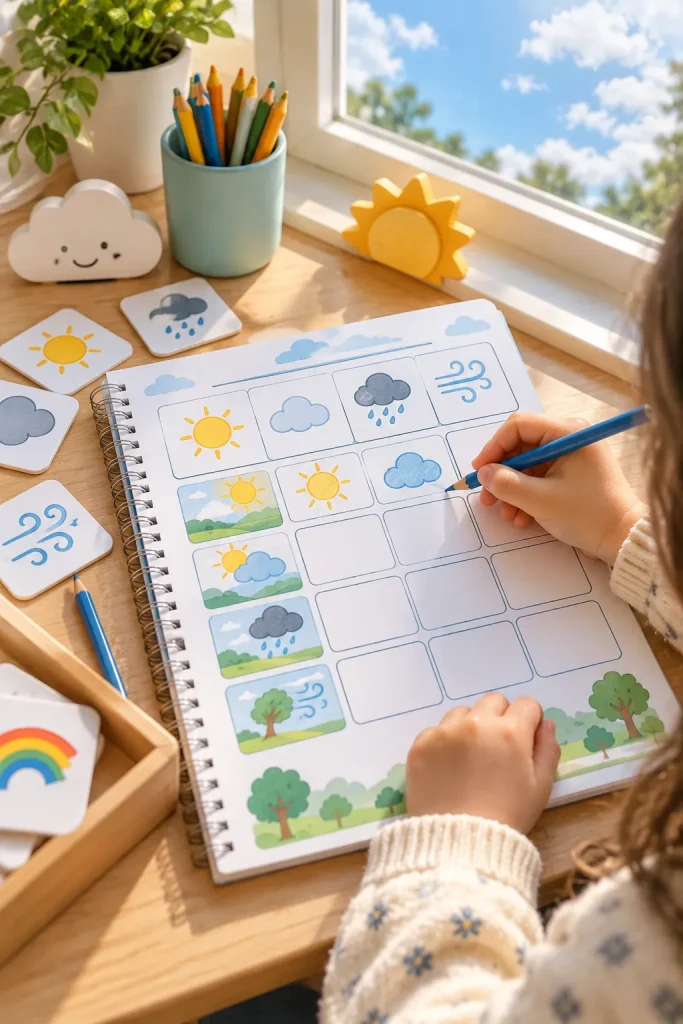
A rainy Monday starts with a child drawing a cloud beside the date. On Tuesday, the sun appears. By the end of the week, those small marks create a simple record children can look back at.
Design a page with spaces for the date, weather symbol, temperature if an adult can provide it, and one short observation. Include a weekly review sheet where children can compare sunny, rainy, cloudy, and windy days. Leave plenty of drawing space for children who are not writing full sentences yet.
Keep the Journal Small
Weather changes are noticed during the day but not recorded.
Daily symbols and notes create a record children can compare at the end of the week.
12. Nature Walk Bingo Sheets With Outdoor Finds
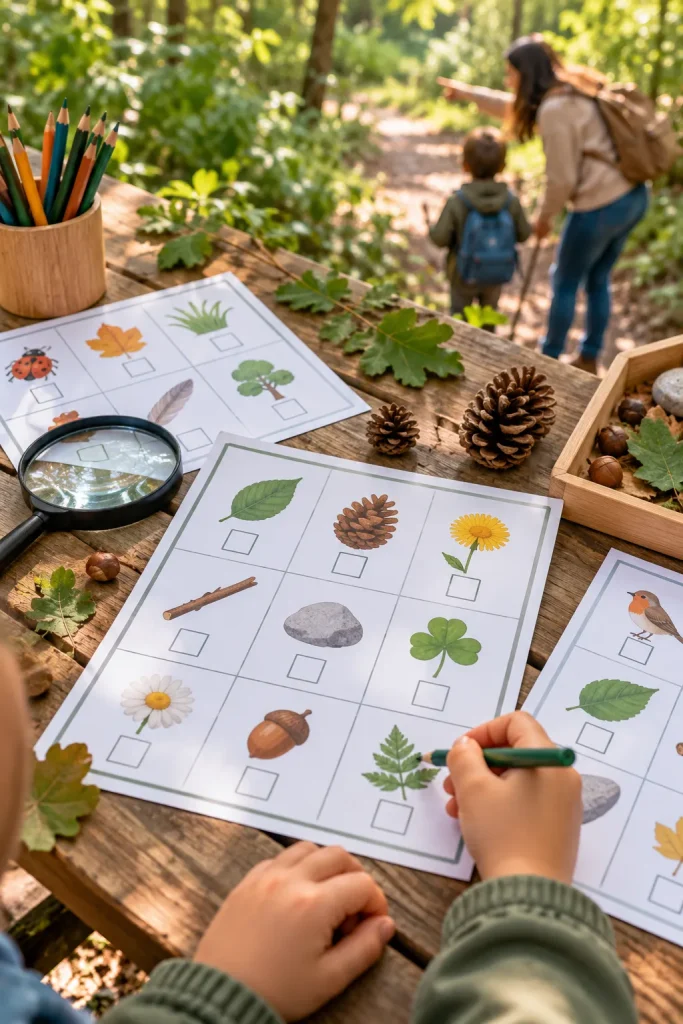
Make a nature bingo sheet with things children can spot without collecting anything. Leaves, birds, clouds, tree bark, and flowers are useful starting points because each one gives children something specific to look for.
Create a simple picture board for younger children and a more detailed board for older kids. Keep the drawings recognizable and include a pencil-friendly marking area. An optional blank square lets children record an unexpected discovery. Avoid activities that ask children to touch unknown plants, insects, or mushrooms. Observation is enough for this game.
Offer Two Hunt Versions
Quick Tip: Make Bingo Work Anywhere
Include broad clues, such as something rough, something green, or something moving. They let children participate even when a specific plant or animal is missing.
Tip: Look with your eyes, mark what you find, and leave natural objects where they are.
13. Animal Habitat Foldable Mini Books
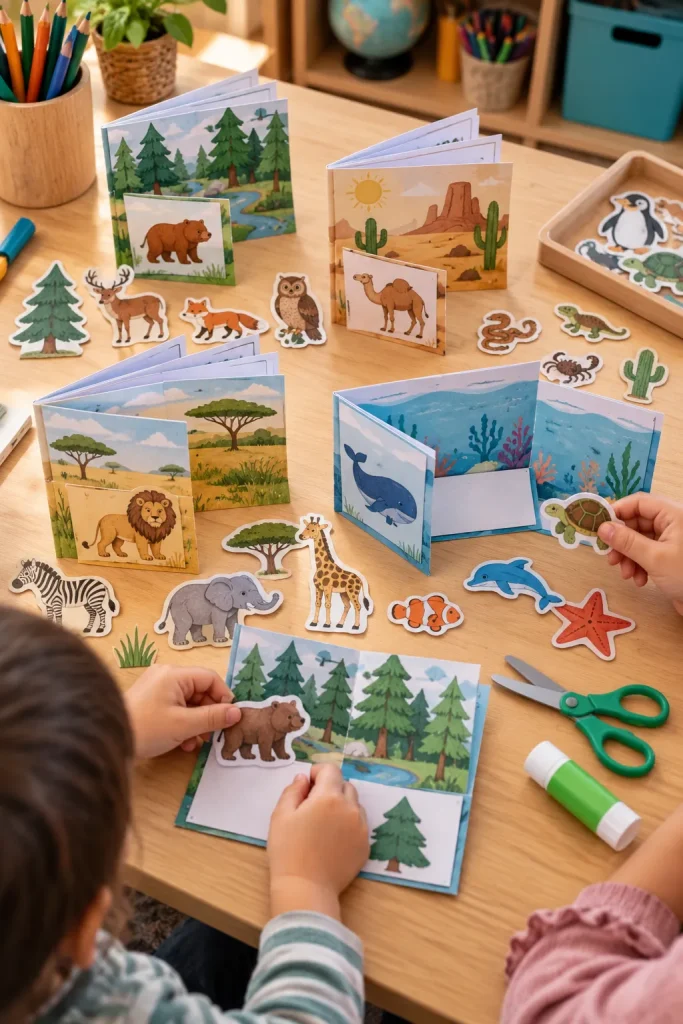
Keep one habitat on each foldable page so young readers can focus on where animals live. A forest page might feature a deer and a squirrel, while a desert page could show a camel and a lizard.
Design a small booklet with simple habitat pictures, animal illustrations, and a short sentence about each environment. Include cutting and folding marks that are easy for adults to follow. Make a completed sample for the product preview and include an answer guide. Double check animal locations and habitat facts before publishing, especially when using unfamiliar species.
Use Clear Matching Clues
Show animals in habitats where they naturally belong, such as a camel in a desert scene.
Do not mix animals from different regions without an explanation. Polar bears and penguins live in different polar regions.
14. Dinosaur Fossil Matching Puzzle Cards
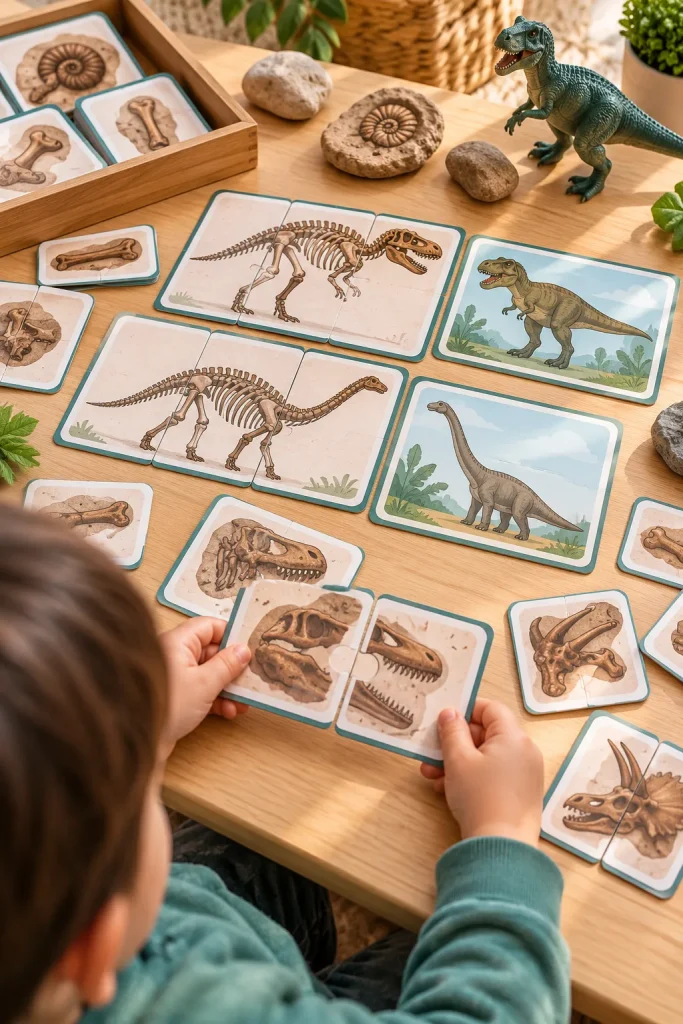
A dinosaur themed matching puzzle can feel like a little museum activity. One card shows a simplified fossil drawing, while its partner shows a matching skeleton detail or dinosaur illustration. The challenge is finding visual clues that connect the pieces.
Begin with clear outlines and a small number of distinct pairs. For harder cards, use silhouettes and matching bone arrangements rather than relying only on colors. Include an answer sheet so adults can check the pairs without guessing. Stylized puzzle artwork should not be presented as an accurate fossil identification guide unless the details have been checked.
Make the Matches Solvable
Choose a Puzzle Level
| Beginner Set | Challenge Set |
|---|---|
| Large pictures with clear color clues | Detailed outlines with fewer color hints |
| A small group of clearly different pairs | More pairs with similar looking details |
| Simple picture matching | Match and explain the visual clue |
15. Outer Space Maze Adventure Worksheets
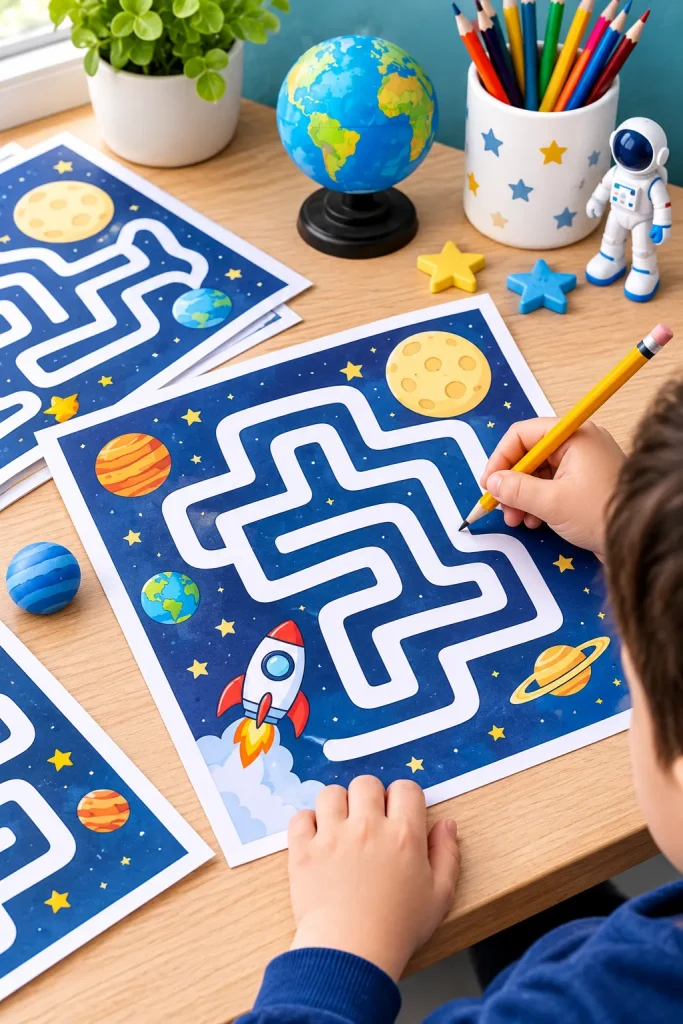
A little rocket sits at the entrance of a winding path, with the moon waiting at the finish. Planets, stars, and small space objects decorate the edges without blocking the route. That is enough to turn a simple maze into a themed printable activity.
Create several pages with different path layouts. Start with wide routes and fewer turns, then offer more challenging mazes with extra dead ends. Build the mazes in Canva or another drawing tool, and check the route before exporting the PDF. Include an answer key showing the correct path.
Draw Clear Routes
16. Road Trip I Spy Activity Sheets
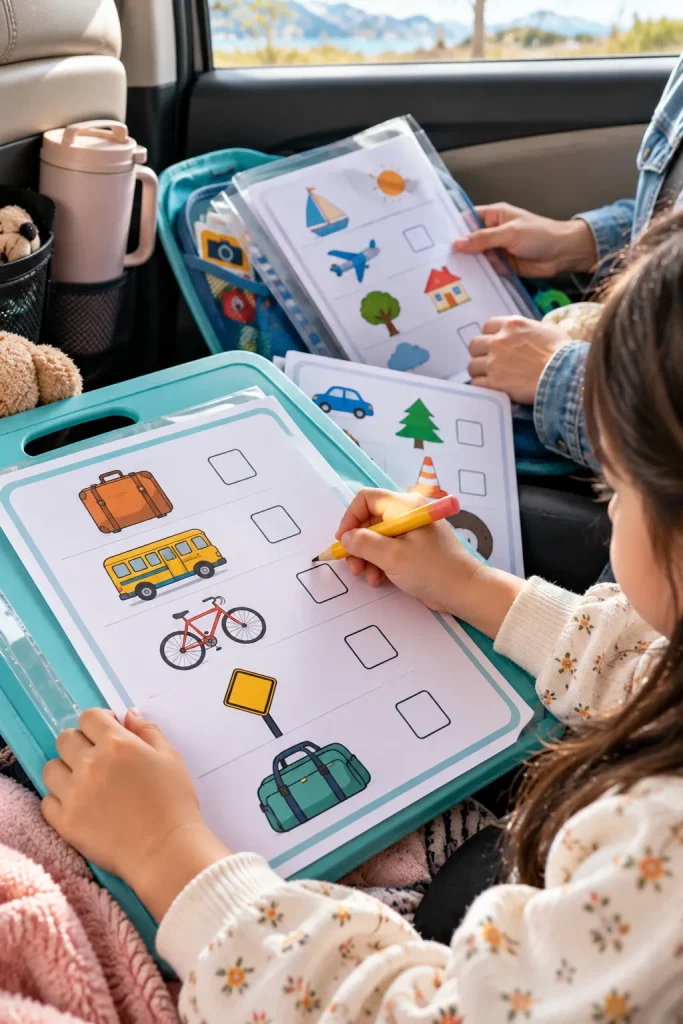
Tiny pictures scattered across a crowded activity page can make a road trip game harder than it needs to be. Children sitting in a car have limited writing space, so a clean layout matters.
Create themed search sheets with familiar travel objects, such as suitcases, road signs, buses, and bicycles. Use large check boxes and clear drawings that do not require careful coloring. Parents can print several sheets before a journey and keep them on a clipboard. Keep the activity simple enough to use while seated, without reaching for objects or moving around the vehicle.
Plan for Small Spaces
Road Trip Printable Packing Checklist
17. Restaurant Activity Placemats for Kids
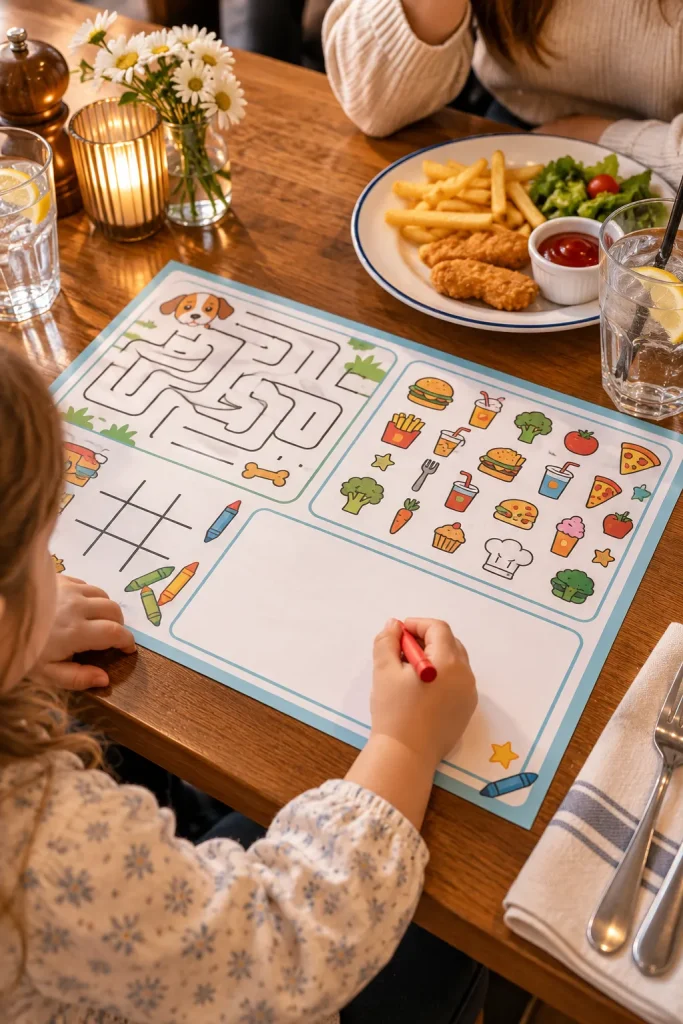
A blank sheet beside a child’s plate can become a small activity station with the right layout. Design a printable placemat that combines a short maze, a picture search, and an open drawing area. Each activity should be simple enough to start without lengthy instructions.
Use a landscape page with wide margins and bold black outlines. Keep the main activities away from the edges, where plates and cups might cover them. Include both a colorful version and a black and white version. Avoid tiny puzzle details that become difficult to see under restaurant lighting.
Design Around the Table
18. Birthday Party Treasure Hunt Clue Cards
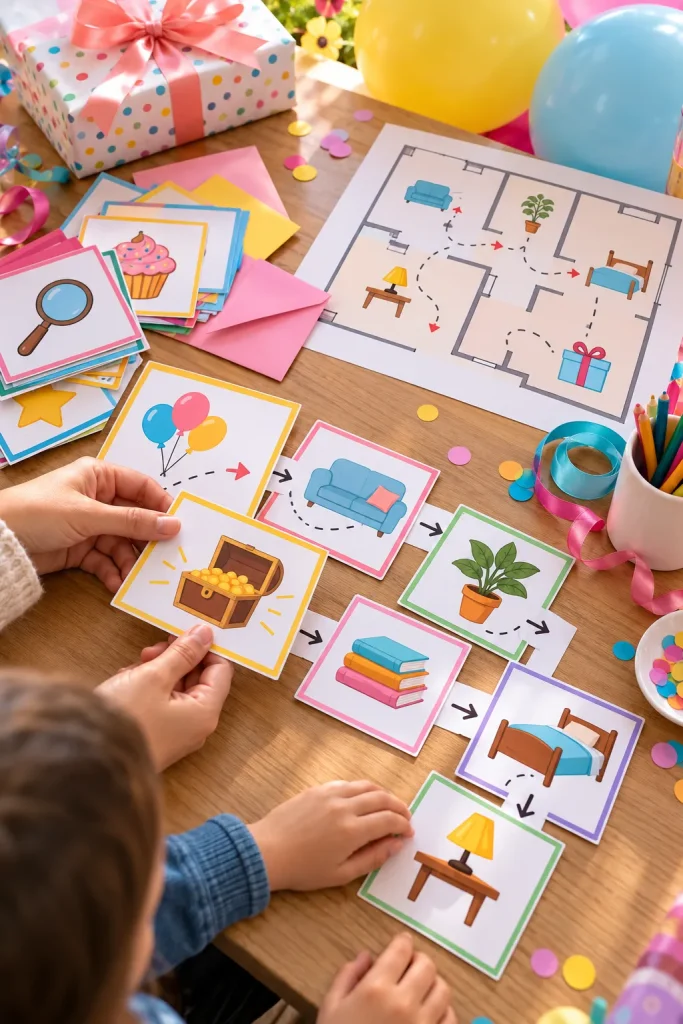
Birthday treasure hunts are easier to organize when every clue leads somewhere specific. Create printable cards that guide children through a simple indoor adventure, ending with a small birthday surprise.
Start with familiar locations such as a bookshelf, sofa, or toy basket. Write short clues that children can understand, and number the backs so adults know where each card belongs. Include a setup sheet showing the correct hiding order. Choose safe hiding spots that do not require climbing, opening cupboards with dangerous items, or entering restricted areas.
Build a Connected Clue Trail
Set Up a Birthday Treasure Hunt
| Step | Action |
|---|---|
| 1 | Choose the final surprise location, then work backward. |
| 2 | Hide each card where the previous clue points. |
| 3 | Walk through the entire trail before guests arrive. |
19. Seasonal Cut and Paste Craft Templates
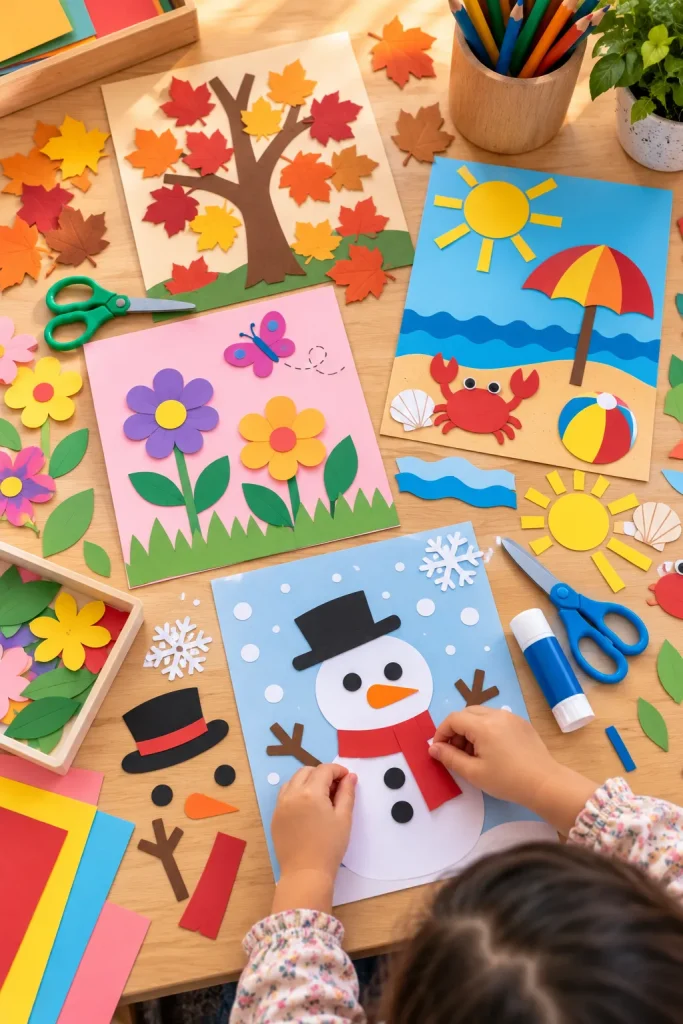
A paper snowman with a separate scarf, hat, and buttons gives children a craft they can assemble in their own way. The same product format works for spring flowers, autumn trees, and summer beach scenes.
Create a main background page with separate shapes that children cut out and glue into place. Use thick cutting lines and large pieces for younger age groups. Provide a finished example as a guide, but leave room for children to arrange their pieces differently. Include a coloring version with plain outlines so buyers can print without using much colored ink.
Make Every Piece Easy to Handle
The Craft Page Formula
A cut and paste craft needs three clearly separated parts: the background, the pieces to cut, and an example of the finished project.
Tip: Keep cutting lines visible after grayscale printing, and remind adults to supervise scissors and glue use.
20. Paper Doll Dress Up Outfits and Accessories
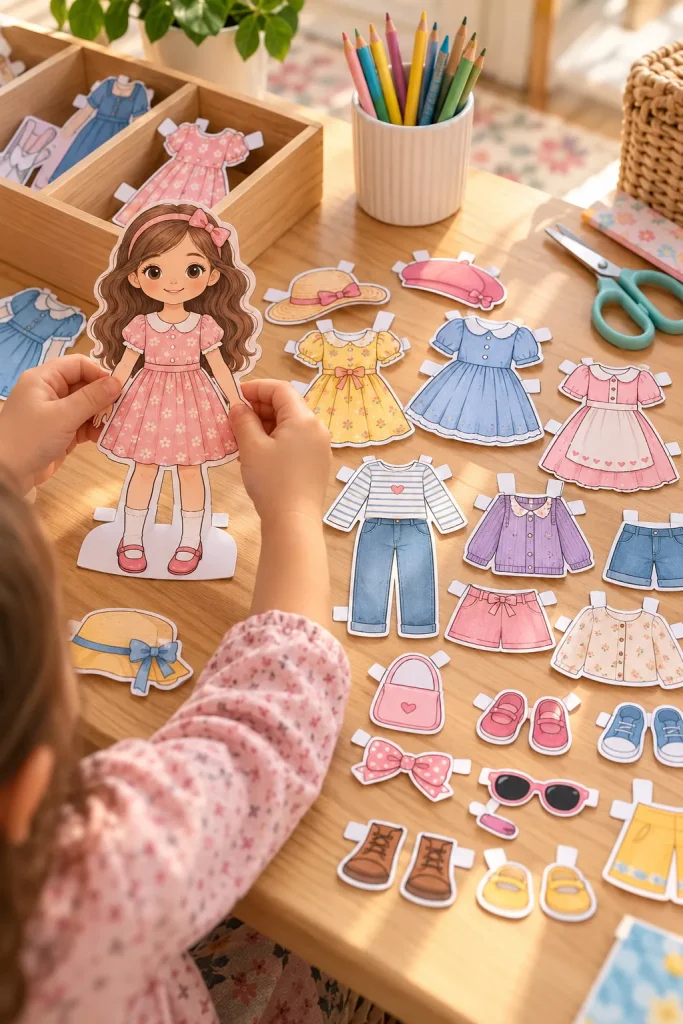
Paper dolls offer more play choices when the clothing pieces actually fit the figure. A beautiful dress illustration will not help much if its tabs are too small or its shoulders do not line up.
Start with one standing doll and several interchangeable outfits. Draw clothing pieces against the same body outline, leaving room for foldable tabs along the edges. Add accessories such as hats, bags, and shoes, but keep tiny details limited for easier cutting. Show a dressed doll beside the loose outfit pieces in your product preview.
Create a Matching Outfit Collection
Quick Tip: Check the Outfit Fit
Print the doll and one outfit at actual size. Cut both out and check whether the clothing covers the intended body area.
Tip: Place tabs where they can fold behind the figure without covering the face, hands, or shoes.
21. Scissor Skills Practice Strips With Cutting Paths
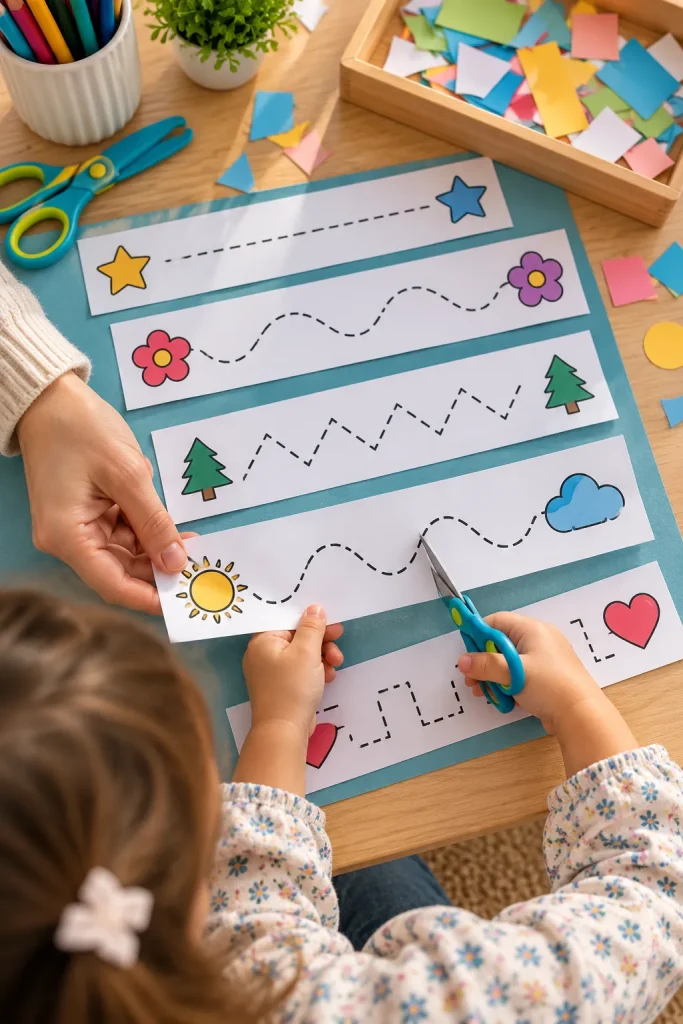
Straight lines are a useful starting point before children move on to curves and zigzags. Create narrow printable strips with bold paths that gradually become more challenging. Keep enough blank space around each path for children to hold the paper comfortably.
Begin with short straight cuts, then introduce gentle curves, corners, and simple shapes. Place only a few cutting paths on each page so the layout does not feel crowded. Add clear cutting guides and a simple instruction page. Remind adults to use age appropriate child safety scissors and supervise cutting activities.
Organize the Cutting Levels
A crowded worksheet has long, detailed cutting paths with little room to hold the paper.
Separate strips introduce patterns gradually with generous holding space.
22. Fingerprint Art Prompt Sheets for Creative Play
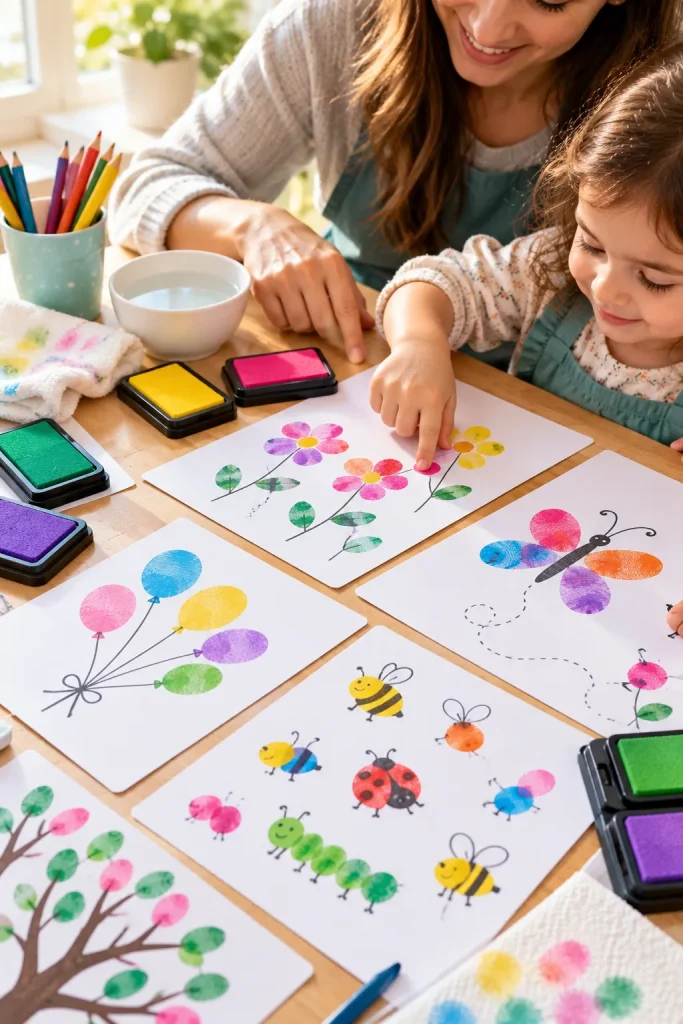
A tiny fingerprint can become a ladybug, flower petal, or balloon with a few pencil marks. Fingerprint art sheets give children a starting shape while leaving plenty of room for their own drawings.
Make separate pages with simple prompts, such as turning fingerprints into insects, animals, or garden scenes. Use light outlines and open areas so the finished marks remain visible. Include an illustrated example sheet and a blank practice page. Mention washable, child appropriate art materials, checking product labels, and hand cleaning afterward.
Leave Space for Creative Choices
Fingerprint Art Supply Checklist
23. Symmetry Drawing Challenge Worksheets
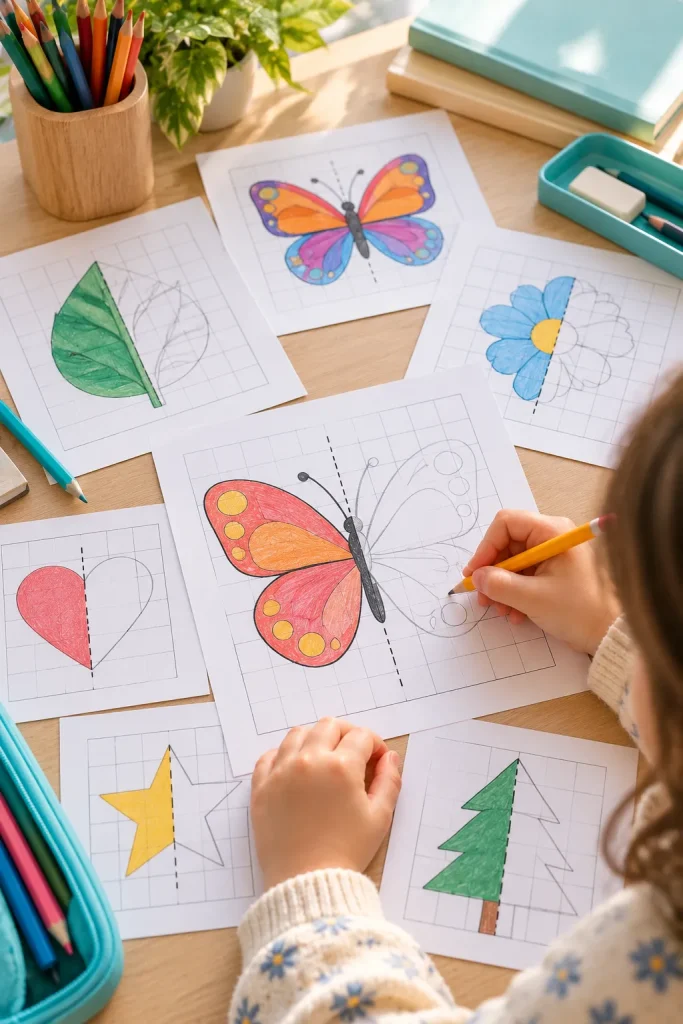
Half a butterfly on one side of a dotted line invites children to complete the missing wing. The task is to look at the shapes and recreate them on the opposite side.
Create beginner pages using hearts, leaves, and basic geometric shapes. Add a vertical center line and a light square grid to help children judge where each part belongs. For harder pages, use butterflies, flowers, and decorative patterns with more details. An answer page can show the intended reflection without limiting creative coloring choices.
Start With Simple Designs
Count grid squares to place matching details the same distance from the center line.
Do not copy the missing half in the same direction. Reflect it across the line.
24. Dice Addition Roll and Cover Games
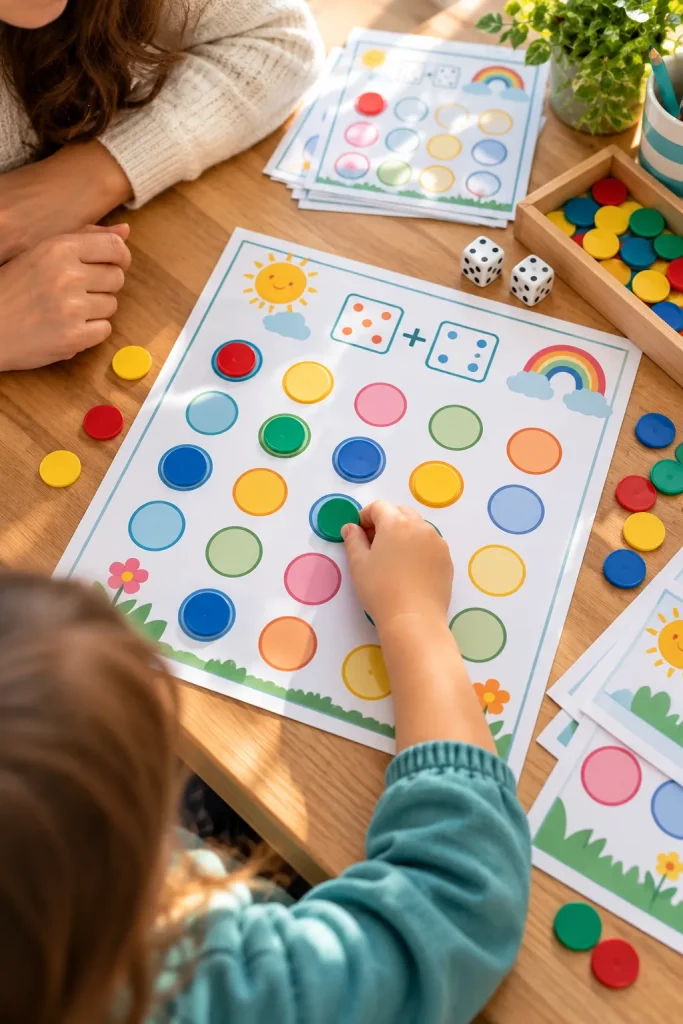
Rolling dice gives children a new addition question each turn, so the same printable board can be played more than once. A roll and cover game works by adding the numbers on the dice, finding the matching total, and covering it with a small counter.
Start with one die for number recognition, then make an addition board using two standard six sided dice. Include totals from two through twelve so every possible sum has a place. Add clear rules for turns, winning, and repeated numbers. Make answer spaces large enough for counters without hiding neighboring totals.
Create Boards for Different Levels
Choose a Dice Game
| One Die Board | Two Dice Board |
|---|---|
| Recognize numbers 1 through 6. | Add two numbers for totals 2 through 12. |
| Roll once and cover the matching number. | Roll both dice, add the dots, and cover the sum. |
| Focus on number recognition. | Focus on basic addition practice. |
25. Telling Time Clock Matching Puzzles
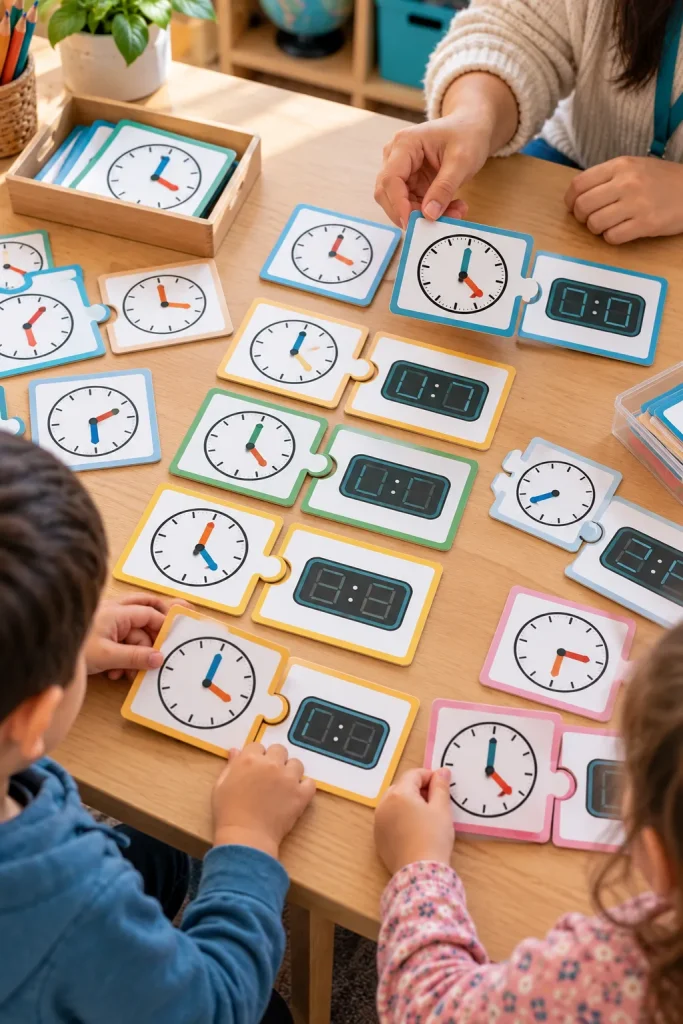
A clock showing half past three should match a card displaying 3:30. That simple pairing turns telling time into a hands-on puzzle children can work through at their own pace.
Start with whole hours, then add half hours and quarter hours as separate sets. Use large analog clock faces with clear hour and minute hands. Pair each clock with a digital time card that has an easy-to-read number display. Include an answer sheet and label each difficulty level. Keep the hour hand correctly positioned between numbers for times past the hour, especially on half-hour and quarter-hour cards.
Build the Matching Levels
Start With One Kids Activity Printable
A useful digital product does not need dozens of pages. It needs a clear purpose, simple instructions, and a layout that makes sense when printed.
Choose one idea from this list and create a small, complete set. Check the answers, print a sample, and make sure the cutting lines, pictures, and directions are easy to follow. Before publishing, review the current rules of Etsy or whichever selling platform you choose.
These printable kids activities give you different ways to serve parents and teachers without making every product look the same. Start with the idea you can explain most clearly.
Save this list to your Pinterest board so you can return when planning your next printable product.