
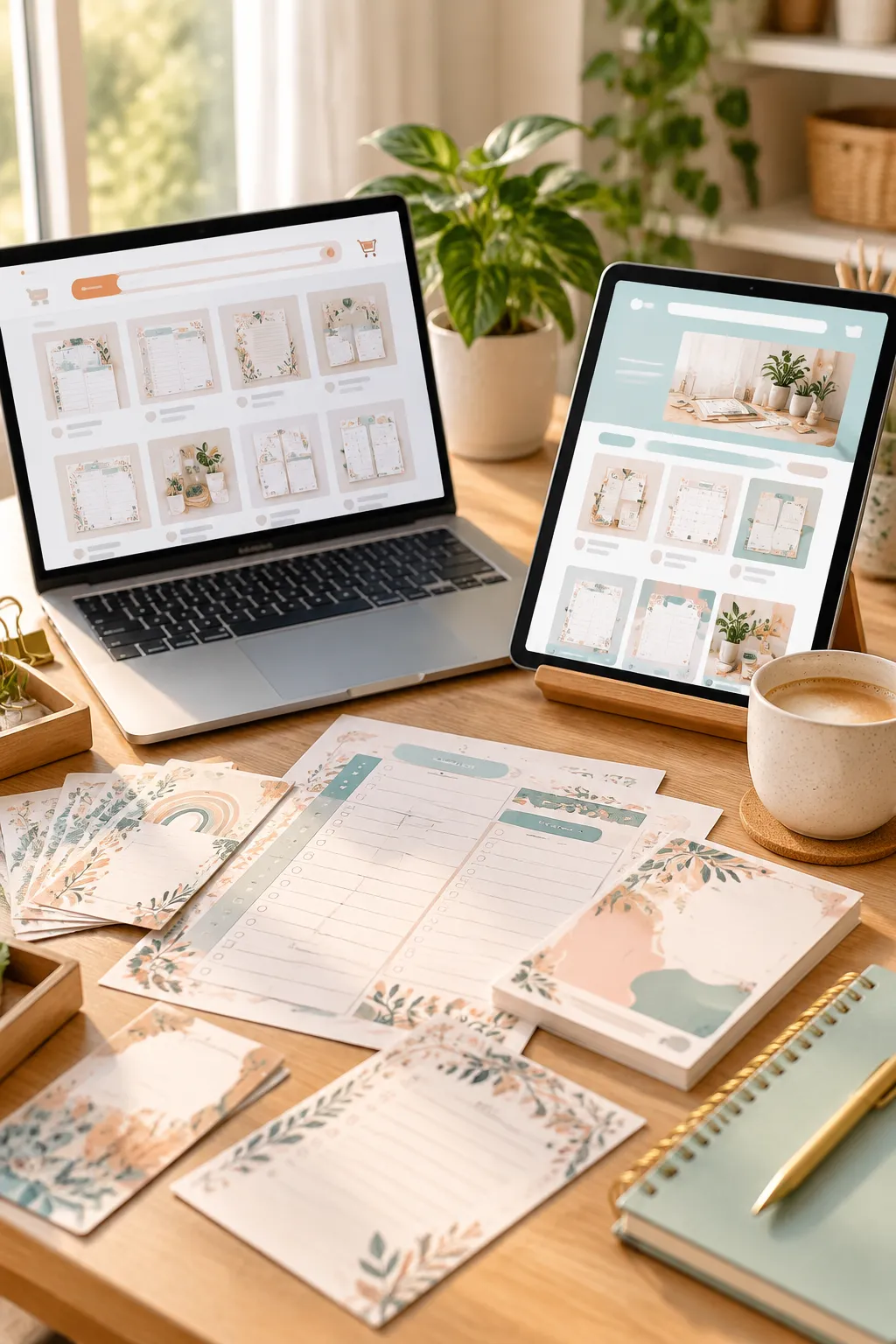
Choosing where to sell a printable can feel like a bigger decision than making the printable itself. Etsy offers a place where shoppers already search for downloads, but opening a shop does not mean those shoppers will find you. A website gives you more say over your store, but you need a plan to bring people there.
The common mistake is picking a platform because someone else calls it the easiest or cheapest. A simple planner, a wedding invitation template, and a bundle of classroom worksheets can each need a different sales setup. Your budget, time, and comfort with marketing matter just as much as the product.
If you are weighing Etsy vs own website, look past the opening steps. Think about fees, how customers discover your listings, who handles delivery, and how much control you want over your business. You do not need a complicated setup to get started, but you do need to know which jobs you are taking on.
Here is how the two choices compare, factor by factor.
1. Compare the Costs Before You Open a Shop

A shop that costs less to open may not cost less to keep running. That is why it helps to compare the full list of expenses before choosing a platform.
Etsy has listing fees, transaction fees, and payment processing fees. Other charges may apply depending on your account, location, and services used. Your own website may have a recurring store subscription, domain costs, payment processing fees, or extra tools.
Make a Simple Cost List
Write down these categories before you spend anything:
– Starting expenses: Account setup, domain, or store plan.
– Selling expenses: Fees connected to each order.
– Optional expenses: Advertising, apps, or design tools.
Verdict: Etsy may need less initial setup spending, while a website gives you different cost choices. Neither is automatically cheaper.
| Etsy | Your Own Website |
|---|---|
| Listing fees can apply even before a product sells. | A store plan or hosting may create ongoing costs. |
| Marketplace and payment fees can apply to sales. | Payment processing and app fees may apply. |
| Check your Etsy account for current fees. | Check your chosen website tools for current fees. |
2. Decide How Buyers Will Find Your Products

Having a product ready to sell is one thing. Getting someone to see it is another.
Etsy has a built-in search system where shoppers look for items such as printable calendars and editable invitations. Your listings can appear in those results, but they compete with other sellers.
An independent website starts with a different challenge. People need a reason and a way to reach it.
Think About Your Traffic Plan
For Etsy, focus on accurate listing titles, useful search terms, and clear product photos.
For your website, consider Pinterest, search engines, email marketing with permission, or an audience you already have.
Verdict: Etsy gives beginners access to marketplace search. A website works better when you have a plan for attracting visitors.
3. See Which Store Is Easier to Set Up and Run

Start by counting the jobs between finishing your printable and making it available to buy.
On Etsy, you create a shop, prepare your product listing, upload your digital files, and complete the required seller settings.
A website may involve choosing a store platform, connecting a domain, setting up payments, and arranging digital file delivery.
Check Your Comfort Level
Before choosing, ask yourself:
– Can I write a clear product description?
– Am I comfortable changing website settings?
– Do I want to manage extra apps and store updates?
– How much time can I give to setup?
Verdict: Etsy generally has fewer technical decisions for a new seller. An independent website offers flexibility but may take more work to prepare.
✅ Before Your First Sale
4. Look at How Much You Can Customize Your Shop

Two stores can sell the same printable planner and look completely different.
On Etsy, sellers can create product images, shop branding, descriptions, and other details within the marketplace’s available layout. That keeps the shopping experience familiar, but your design choices have limits.
With your own website, you can usually make bigger changes to the colors, menus, page layouts, and overall shopping experience.
Match the Design to Your Products
A seller offering a few printable worksheets may not need many design features.
Someone creating a larger collection of planners, templates, and matching digital products might want dedicated collection pages or a more personal brand experience.
Verdict: Your own website generally wins on design freedom. Etsy wins if you prefer a more structured storefront.
5. Compare How You Keep in Touch With Buyers

A buyer cannot open a planner file and sends a quick message. How you respond matters, but so does how you handle that customer’s information afterward.
Etsy has its own messaging tools for answering questions and helping with orders. Sellers must follow its rules about buyer information and promotional messages.
With your own website, you can choose customer support and email marketing tools that fit your needs.
Think Beyond the First Purchase
If you want to tell customers about a new planner collection, build a proper email signup process. Give people a clear choice about receiving marketing emails.
Verdict: Etsy provides convenient customer messaging. A website offers more options for building an email audience, but you must handle privacy and consent correctly.
💡 Email List Reminder
A customer’s purchase does not automatically give you permission to send promotional emails. Use a clear, voluntary signup process and follow applicable privacy and platform rules.
6. Check Who Handles Payments and File Delivery

Selling a digital download removes the need for shipping boxes, but buyers still need a smooth checkout and a working file.
On Etsy, supported instant digital downloads can be delivered through the marketplace after payment is confirmed. Made-to-order products follow a different delivery process.
For your own website, the setup depends on the store platform and tools you choose. Some website builders offer checkout features and digital delivery apps that handle much of the work.
Test the Buying Experience
Before publishing, check how customers pay, receive their download, and find help if something goes wrong.
A missing file or unclear download instruction can lead to customer questions.
Verdict: Etsy has convenient built-in options for eligible digital downloads. Your own website can provide automated delivery too, but the setup is your responsibility.
7. Think About Platform Rules and Business Risk

A selling platform can change its rules, and your business plan needs room for that.
Etsy sellers must follow marketplace policies about eligible products, listings, customer communication, and other shop activities. Account restrictions or policy changes can affect how a shop operates.
Your own website removes some marketplace limits, but it does not remove outside responsibilities. Hosting services, payment providers, website tools, and privacy requirements still matter.
Protect Your Selling Options
Keep backup copies of your original digital files, product images, and descriptions.
Check current seller policies before adding new product types. For example, do not assume every Canva template or downloadable design is allowed under every platform’s rules.
Verdict: A website offers more independence from marketplace policies, but neither choice is completely free from outside rules or service risks.
| Etsy Risk | Website Risk |
|---|---|
| Marketplace policy changes can affect listings. | Website service terms and provider changes can affect operations. |
| Account restrictions may interrupt selling. | Technical problems can interrupt checkout or downloads. |
| Keep listings compliant and back up your files. | Maintain your tools, security, and file backups. |
8. Choose the Better Starting Point for Your Business

Choose a starting point based on what you can manage, not what looks more impressive.
Etsy may suit a beginner who wants to start with a smaller collection of eligible digital products and learn how marketplace listings work.
An independent website may suit someone who already has an audience or wants more control over branding, page design, and customer relationships.
What About Selling on Both?
Using both is possible, but it also means maintaining separate selling channels.
You need to keep product details accurate, handle customer questions, and follow each platform’s rules.
Verdict: Etsy is often the simpler starting point for beginners without an audience. A website makes more sense when you have a traffic plan and want greater control. Both can work when you are ready to manage them.
Choose this if you want a marketplace storefront with built-in search and digital listing tools.
Choose this if you have a traffic plan and want more control over your store experience.
Choose this if you have the time to maintain separate channels and serve their customers properly.
Pick the Store That Fits Your Next Step
Your Etsy vs own website decision does not have to be permanent. Start with the option whose daily work you can actually manage.
If you want to test a small set of printable products and learn how marketplace listings work, Etsy can be a sensible first step. If you already have readers, an email audience, or a clear plan for bringing visitors to your store, your own website may fit better.
Some sellers eventually use both, with a separate purpose for each. Before you commit, check current fees, payment availability, and seller rules for your location.
Save this comparison on Pinterest so you can come back to it before opening your digital product shop.