
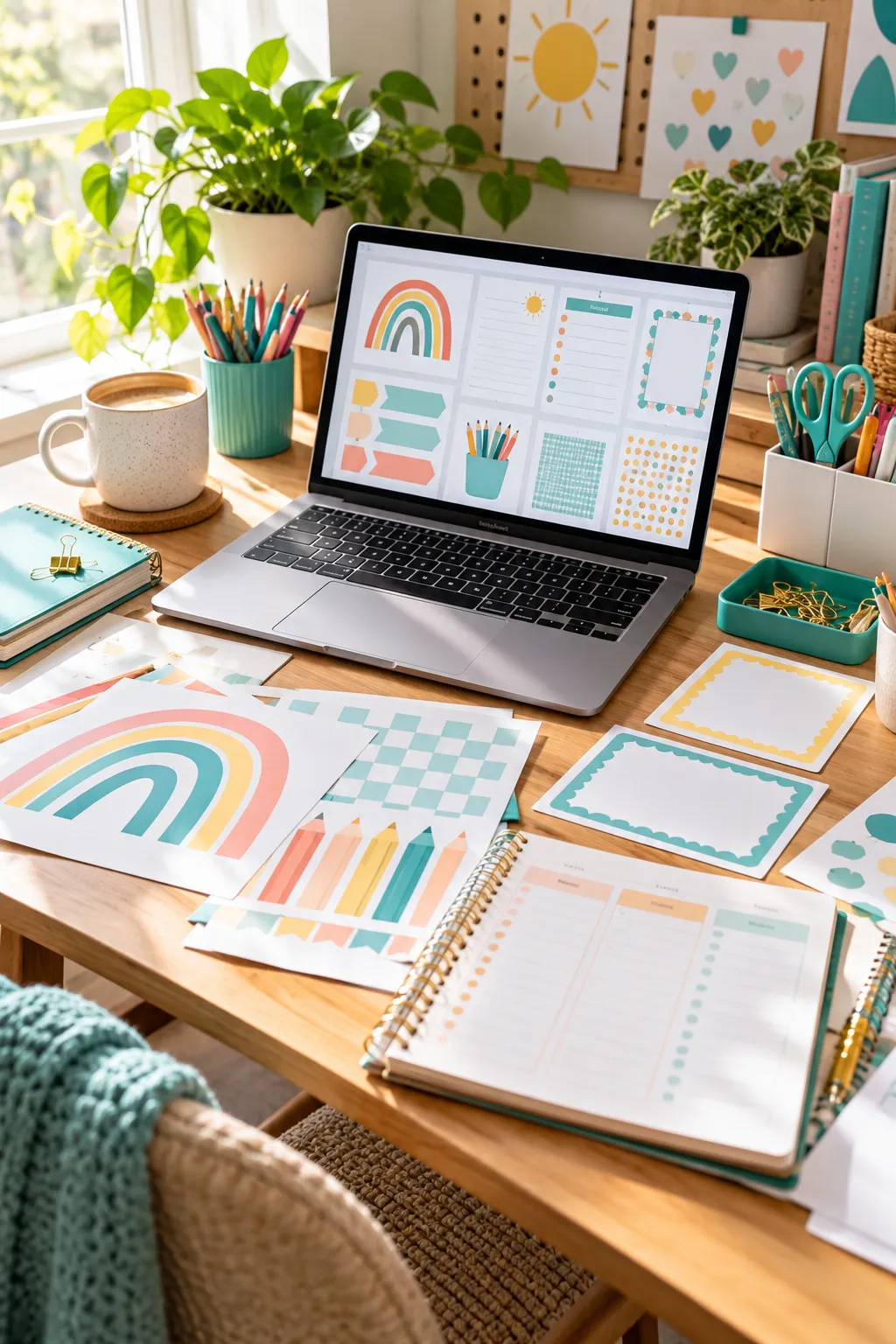
Having the first week of school organized on paper can make a busy morning feel a little less rushed.
For printable sellers, that is a useful place to start. A parent may want a backpack checklist that a child can follow without being reminded four times. A teacher may need a stack of simple name plates before students walk through the door. The designs do not need fancy artwork. They need clear labels, room to write, and a layout that prints well.
The challenge is picking products that solve different problems, rather than making twenty versions of the same planner. These back to school printables cover small, specific jobs, from first-day photos to classroom routines. Each idea includes a likely buyer and a simple way to build or package it.
Start designing well before families and teachers are preparing for the new term. Use easy-to-read fonts and offer a printer-friendly version where it makes sense. Before listing anything on a marketplace, check its current rules for digital downloads, file formats, and permitted content. Then choose the product you can make clear and useful first.
1. First-Day-of-School Photo Signs
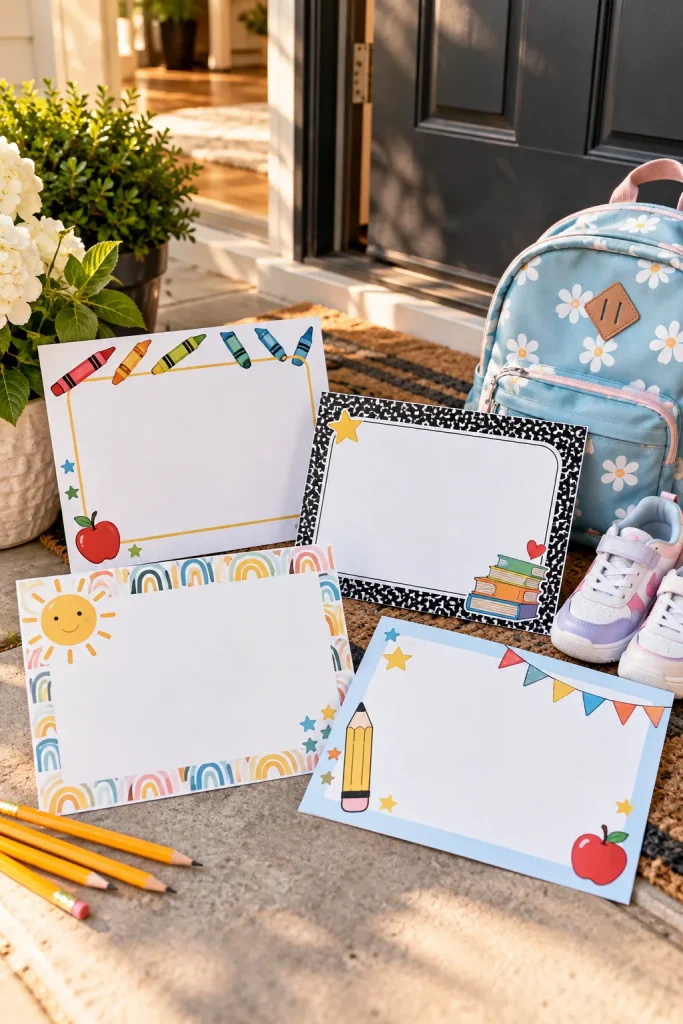
A photo sign gives parents a quick way to mark the first day of a new grade. It is usually held in front of a backpack or beside the front door, so large letters matter more than tiny decorations.
Make the Page Easy to Personalize
Create a simple design in Canva with blank spaces for the child’s name, grade, and date. Offer a colorful version and a lower-ink version in a standard paper size. A matching last-day sign could be a separate, clearly labeled companion product.
Before publishing, print a sample at full size to check that the grade can be read from a few steps away.
2. Grade-by-Grade School Supply Shopping Lists
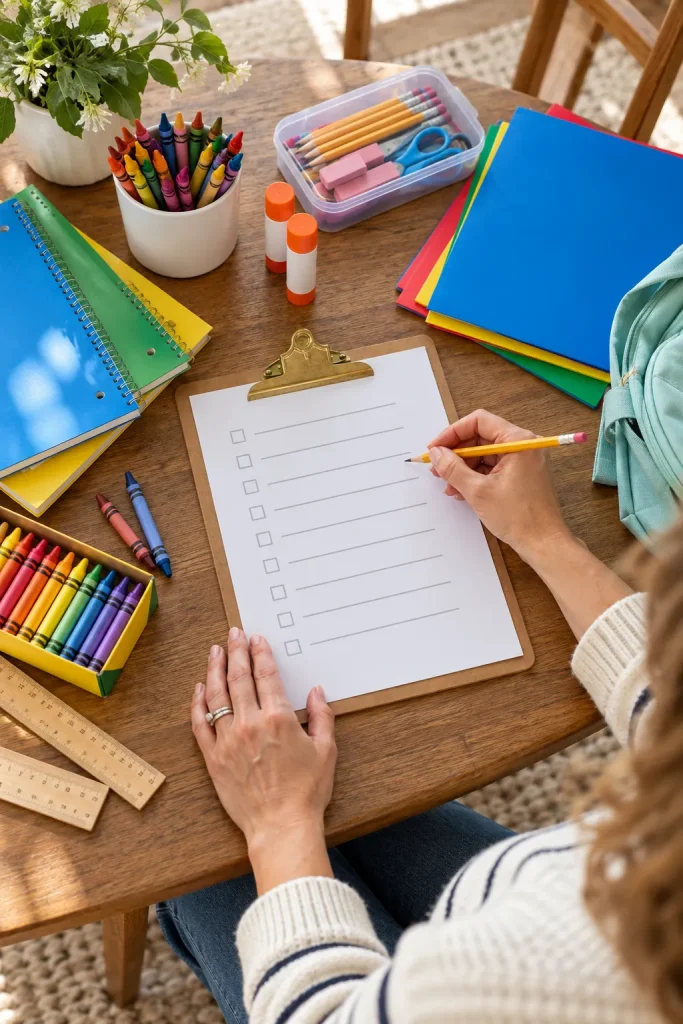
A single shopping trip can turn into two when a supply list is hard to follow. Parents buying pencils, notebooks, glue, and folders need a page they can mark while moving through a store.
Sort Items in the Order People Shop
Build grade-labeled templates with checkboxes and sections for writing tools, paper, art supplies, and classroom extras. Keep the list editable or leave blank lines, since schools set different requirements.
Add a small space for quantities and another for items already at home. Package a blank master sheet with sample layouts rather than presenting any list as the official requirements for a grade.
🛒 Before the School Supply Trip
3. Backpack Packing Checklists for Busy Mornings
A packing list that reads like a paragraph is easy to ignore, especially when a child is trying to leave the house.
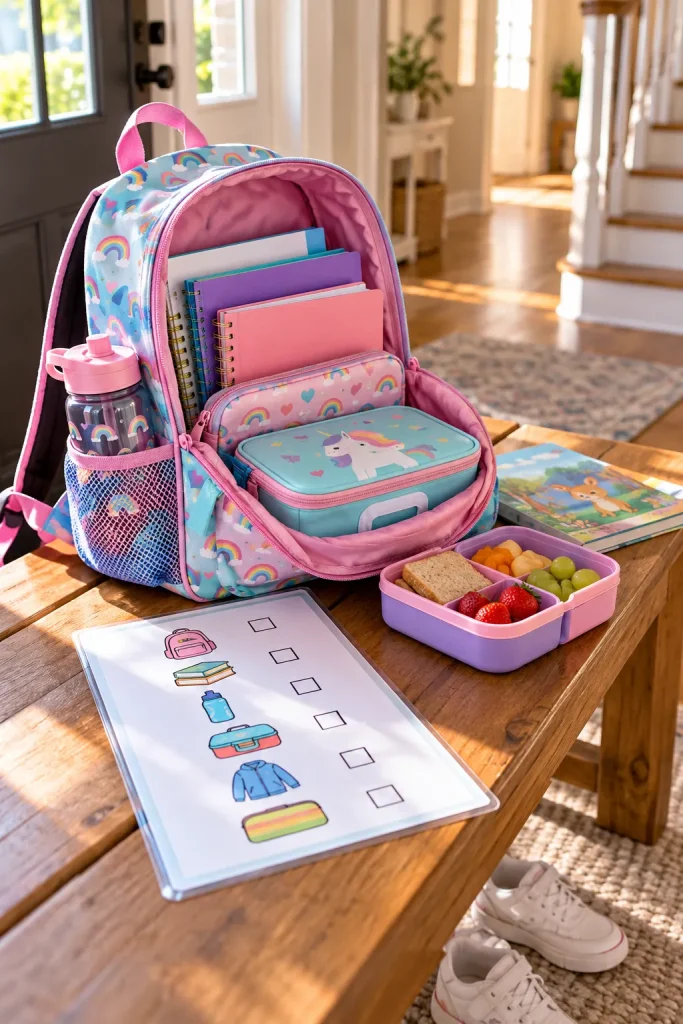
Give the page one item per row, with a small picture next to each word. A teacher folder, water bottle, lunchbox, and library book each get their own box. Parents of younger children are the main buyers, so a large-print layout helps.
Make It Reusable
Design a one-page checklist that fits inside a clear sleeve. Include a blank version for families with sports gear or different school supplies. Show the finished page beside an open backpack in the product preview so buyers can see the purpose at once.
Everything goes into the bag from memory. A library book stays on the kitchen table, and the water bottle is forgotten.
A short picture checklist sits by the backpack. The child checks each item while packing, including anything needed for that day’s activities.
4. Morning Routine Charts with Picture Cues
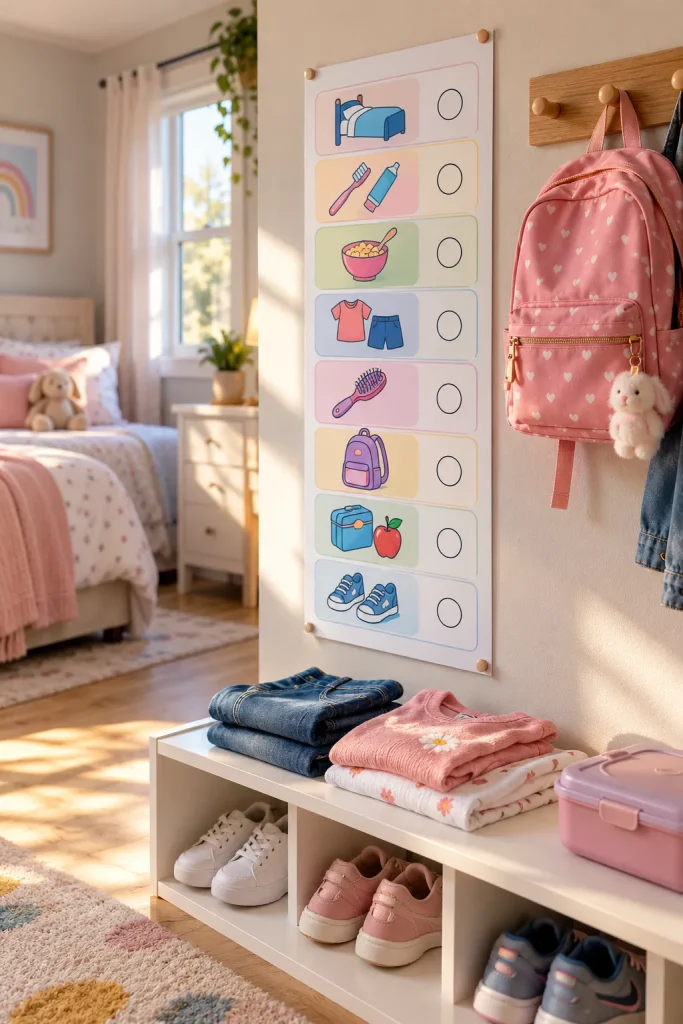
Start with the steps a child actually needs to finish before leaving, not every task that happens in the house.
Parents of early elementary students may find picture cues easier to use than a wall of text. Make small icons for getting dressed, brushing teeth, eating breakfast, and picking up a bag. Use the same square size for each action so the row stays neat.
Offer a Layout for Different Homes
Put the routine in a vertical strip and a horizontal row, with empty picture cards for custom tasks. Add check circles large enough for a child to mark. Avoid fixed clock times since school starts vary.
☀️ How Families Can Use the Chart
Print the chart and let the child choose a place for it.
Hang it at a height the child can see and reach.
Mark each task when finished, then clear the marks for the next school morning.
5. Printable Lunchbox Notes with Short Messages
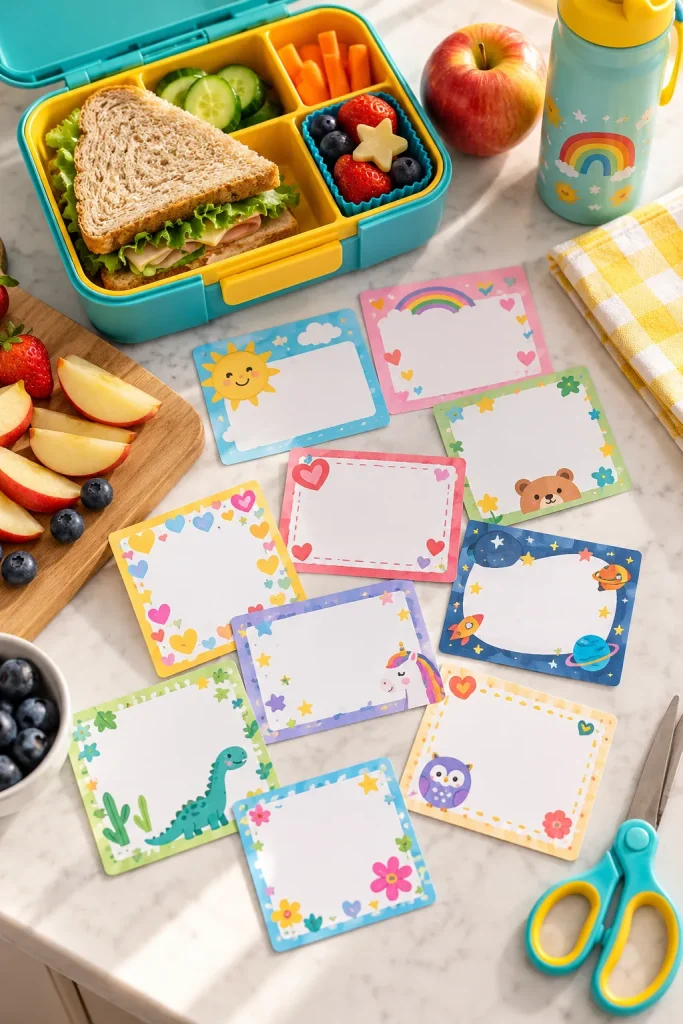
Small squares of color scattered next to a lunchbox make a simple product preview, and they also show exactly what a parent is buying.
Parents who pack school lunches can cut out a set of short notes and tuck one under a sandwich lid or next to a napkin. Make several styles, such as a kind reminder, a quick joke, and a blank card for a handwritten message.
Keep Cutting Easy
Lay the cards out on one page with clear gaps and faint trim marks. Provide a black-and-white sheet for easy printing. Keep the messages short enough to fit on a card without shrinking the type.
6. Weekly School Lunch Menu Planners
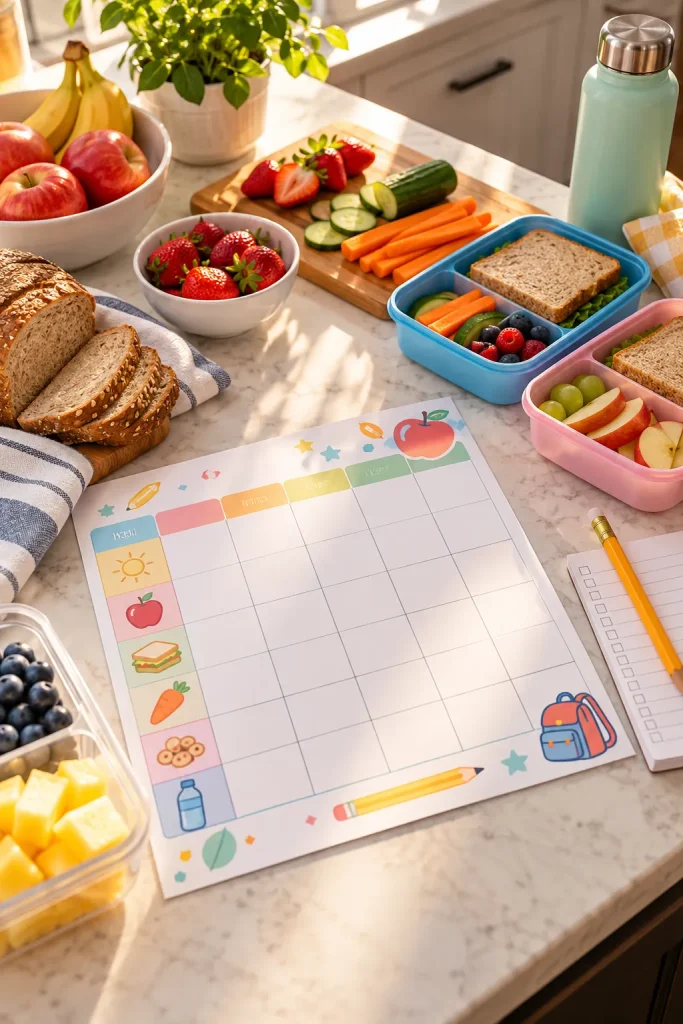
A weekly meal grid and a daily packing sheet solve different lunch problems. Parents who want to plan five school days at once need space for meals; parents who pack at dawn may also want a quick item check.
Combine Planning with Enough Writing Room
Build a Monday-to-Friday page with columns for main food, fruit or vegetable, snack, and a small note. Keep a separate compact version with larger boxes for one day.
Include a blank template rather than prefilled meal suggestions so it works for different families. Show both pages in the listing preview, and avoid heavy backgrounds that make pencils hard to read.
| Weekly Planner | Daily Packing Sheet |
|---|---|
| Fill out before the school week begins. | Fill out while preparing the next school lunch. |
| Keep on the refrigerator to guide grocery planning. | Keep beside the lunch containers as a packing reminder. |
| Add a grocery reminder box for missing ingredients. | Add checkboxes for utensils, drinks, and napkins. |
7. Homework Assignment Trackers for Students
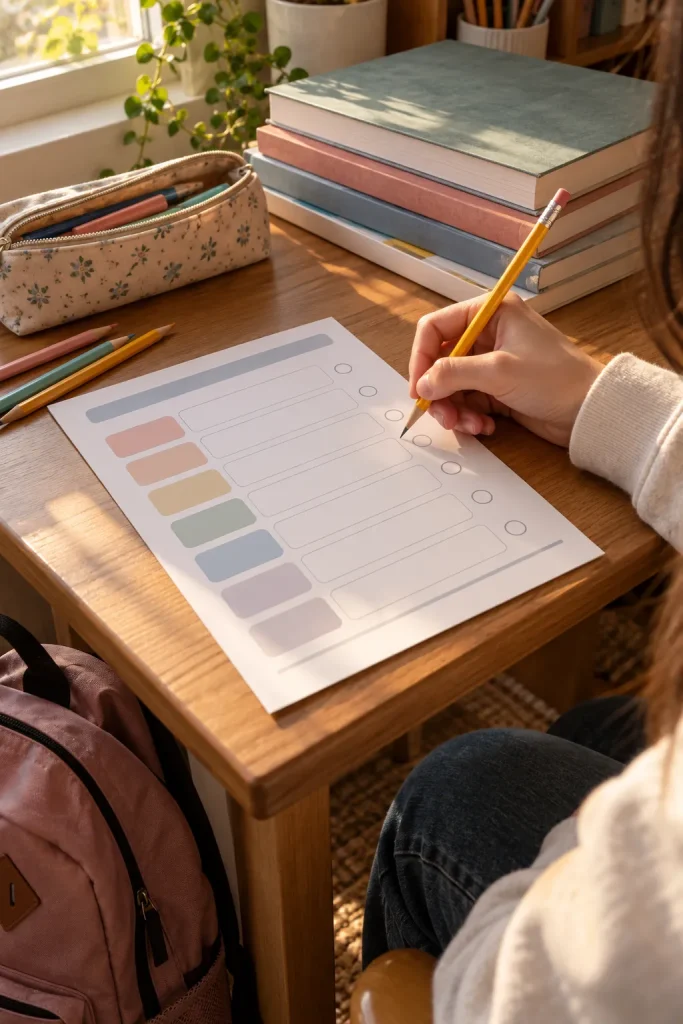
Give every homework assignment its own row. When subjects, due dates, and completed tasks get squeezed into a single box, students have to guess what belongs where.
Parents buying for older elementary or middle school students may want a clean tracker that works across subjects. Make a printable with columns for class, assignment, due date, and done. Leave extra height for long project names.
Keep the Page Simple to Update
Offer a one-week sheet and an undated version that can be reused any month. A small corner box marked “Bring tomorrow” can help keep finished work separate from work still in progress.
8. After-School Routine Charts for Kids

The backpack lands by the door, shoes come off, and a snack starts before anyone thinks about homework.
That is the moment an after-school routine chart can help. Parents can put a small sequence of tasks on the fridge: put shoes away, wash hands, unpack school papers, take a break, then begin study time.
Make the chart with movable picture cards so families can choose the order that fits their afternoons.
Build in Time to Rest
Include optional cards for outdoor play, reading, and clubs. Keep the template undated, since after-school schedules can change during the week. A chart should guide the afternoon, not fill every spare minute.
💡 Quick Tip: Add a Flexible Slot
Include one blank space labeled “Today’s Change” in the printable. Families can use it for a club meeting, a playdate, an appointment, or an unexpected change in plans without rearranging the entire routine.
9. Family School-Year Calendar Pages
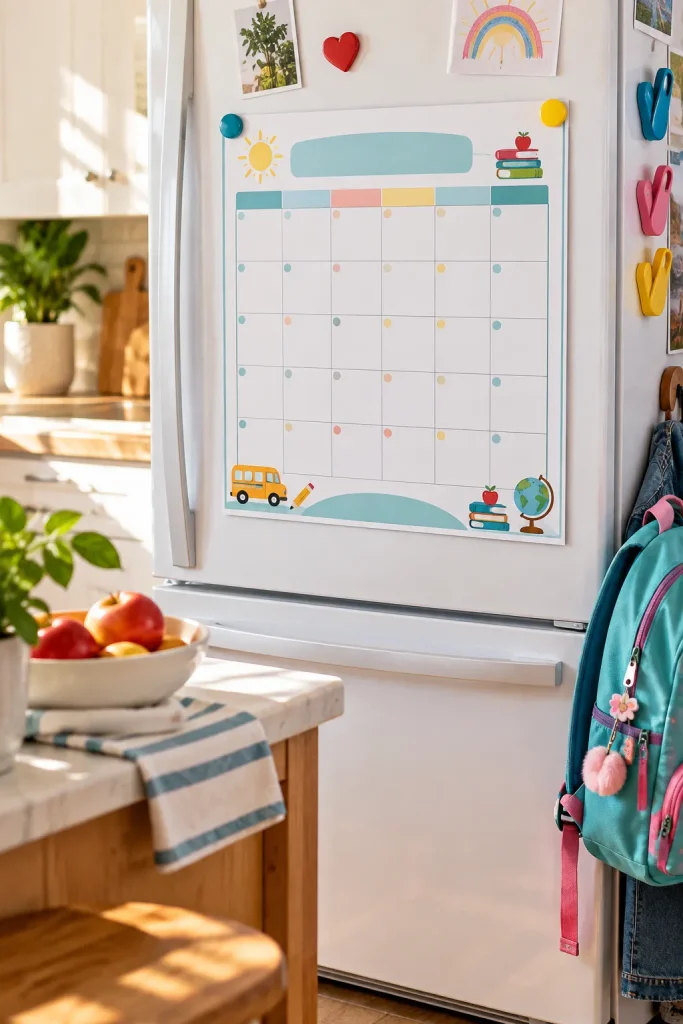
The refrigerator often becomes the place where school reminders pile up. A family calendar gives parents one clear spot for important dates instead of keeping track of several loose notes.
Parents with children in different grades may want room for school events, holidays, appointments, and activity days. Create monthly calendar pages with large writing boxes and a small notes section.
Leave Room for Different School Schedules
Offer an undated version so buyers can fill in their own school year. Add a simple color key for each child, but keep the colors optional for black-and-white printing.
A separate page for important school contacts can make the calendar set more useful without cluttering the monthly layout.
Leave enough space to write two events on a busy school day.
Use clear weekday labels and include a small area for reminders.
Filling each calendar square with illustrations that leave little writing room.
Printing school holiday dates that may not apply to the buyer’s district.
10. Back-to-School Spending Tracker Worksheets
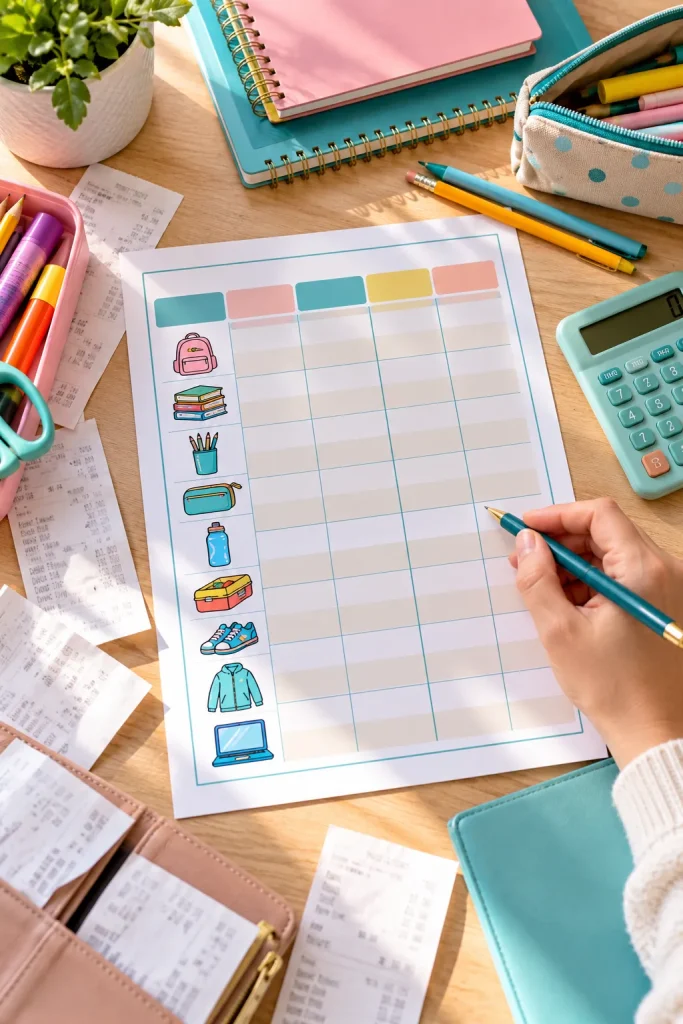
Receipts disappear into shopping bags, and it becomes difficult to remember which school items have already been purchased.
A spending tracker helps parents keep school shopping records in one place. Unlike a supply checklist, this printable focuses on recording purchases rather than deciding what to buy.
Keep the Worksheet Practical
Build a page with columns for:
- Item purchased and category
- Planned spending amount
- Actual amount paid
- Purchase date and notes
Include a blank summary area where buyers can add their totals. Offer separate sheets for clothing, classroom supplies, and other school expenses.
Use clear number boxes and light borders so handwritten amounts remain easy to read.
🧾 Spending Tracker Design Checklist
11. Student Getting-to-Know-You Forms
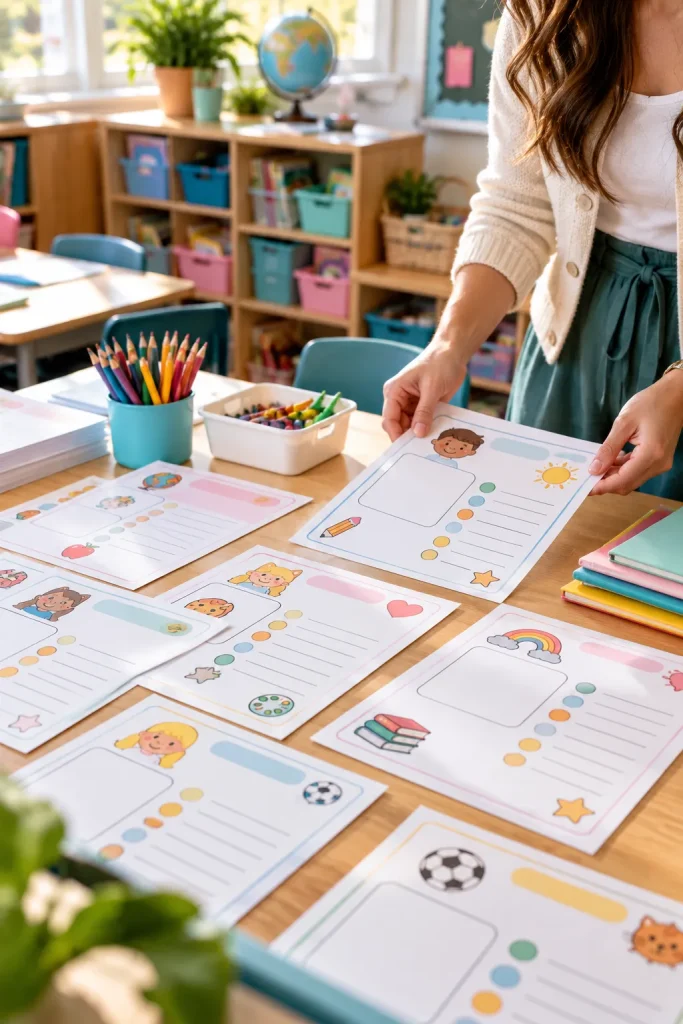
A new classroom can feel unfamiliar when students and teachers are still learning each other’s names.
Getting-to-know-you forms give teachers a simple way to learn about students’ interests and classroom preferences during the first week. This makes them a useful printable idea for elementary teachers.
Ask Questions Children Can Answer
Create a friendly worksheet with short prompts about favorite books, activities, and things students enjoy learning.
For younger grades, include drawing boxes alongside written responses. Older students can use a version with longer answer lines.
Keep personal questions optional and avoid asking children for sensitive family details. A spacious page with a few thoughtful prompts is more useful than a crowded questionnaire.
12. Meet-the-Teacher Welcome Handouts
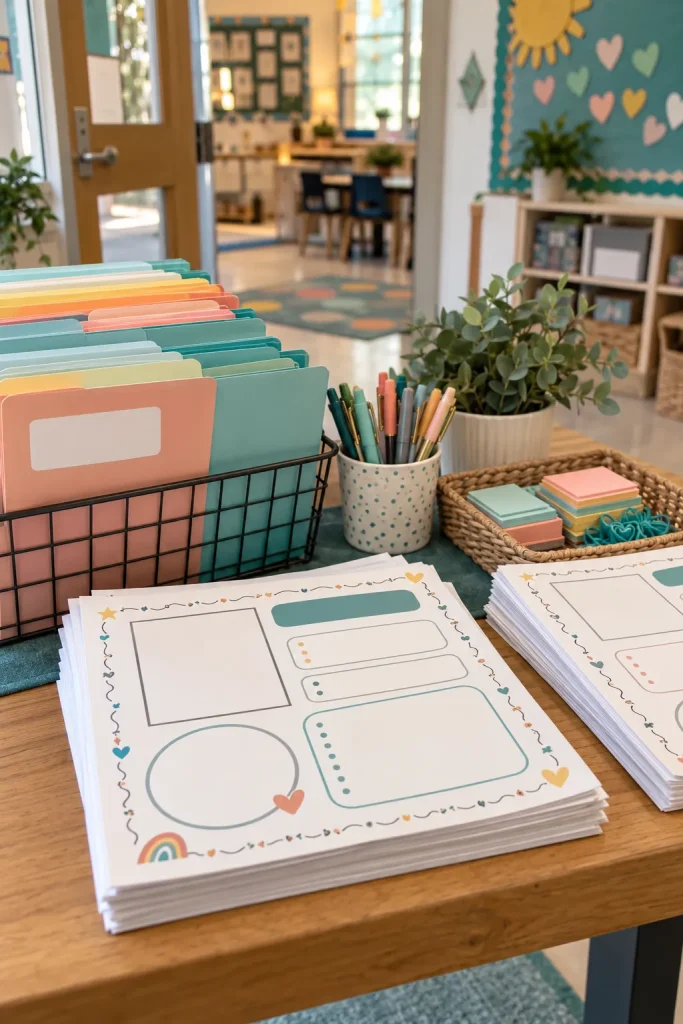
A student introduction form tells the teacher about the child. A meet-the-teacher handout works the other way around, helping families learn about the person leading the classroom.
Teachers preparing for orientation or open-house events may want a friendly, one-page introduction they can personalize.
Make Important Details Easy to Find
Design a template with spaces for a teacher photo, short introduction, classroom information, and preferred communication method.
Include an optional section for supplies families should bring to the first meeting. Keep this separate from a full school supply list.
Offer a color design and a printer-friendly version. Leave contact fields blank so teachers can enter only information their school permits them to share.
🍎 Prepare a Welcome Handout
Personalize the teacher introduction and classroom details.
Check communication details against school guidelines before sharing.
Print a sample and check that important information is readable at normal paper size.
13. Printable Student Desk Name Plates
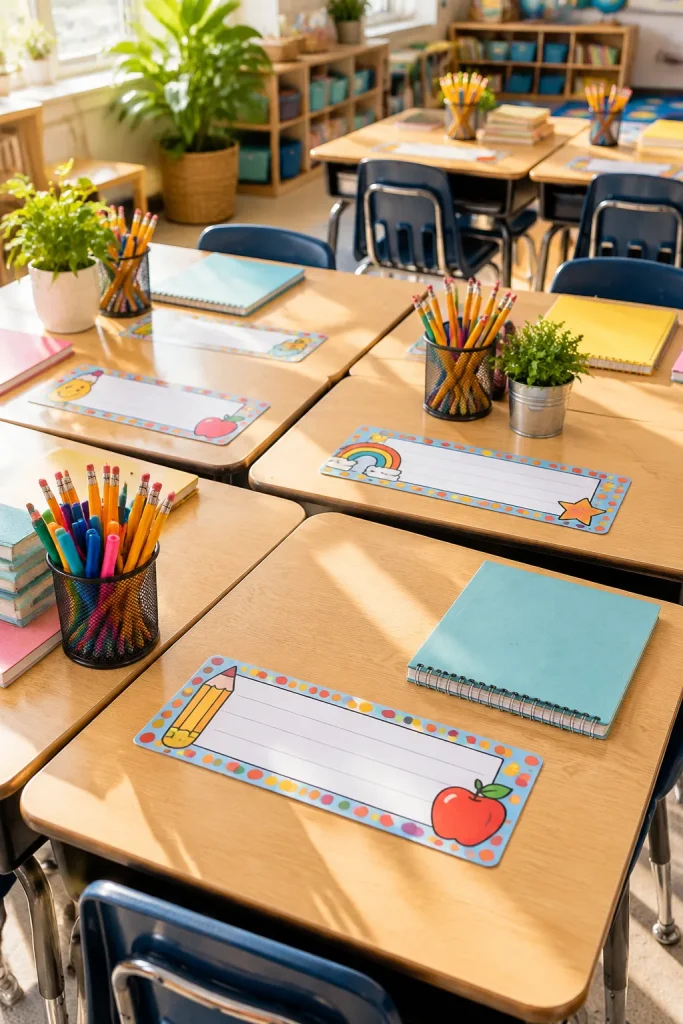
A classroom desk name plate can do more than show where a student sits.
Elementary teachers often use name plates to help children recognize their names and find their assigned seats. Some designs also include a small learning reference that students can check during lessons.
Design for Different Grade Levels
Create simple name plates with large blank areas where teachers can write student names. Offer a version with handwriting guidelines for younger students and a cleaner version for older grades.
Add optional alphabet strips or number lines, but keep the main name area easy to see. Arrange multiple plates on one printable sheet with cutting guides.
A plain background matters because busy patterns can make handwritten names difficult to read.
14. Classroom Visual Schedule Cards
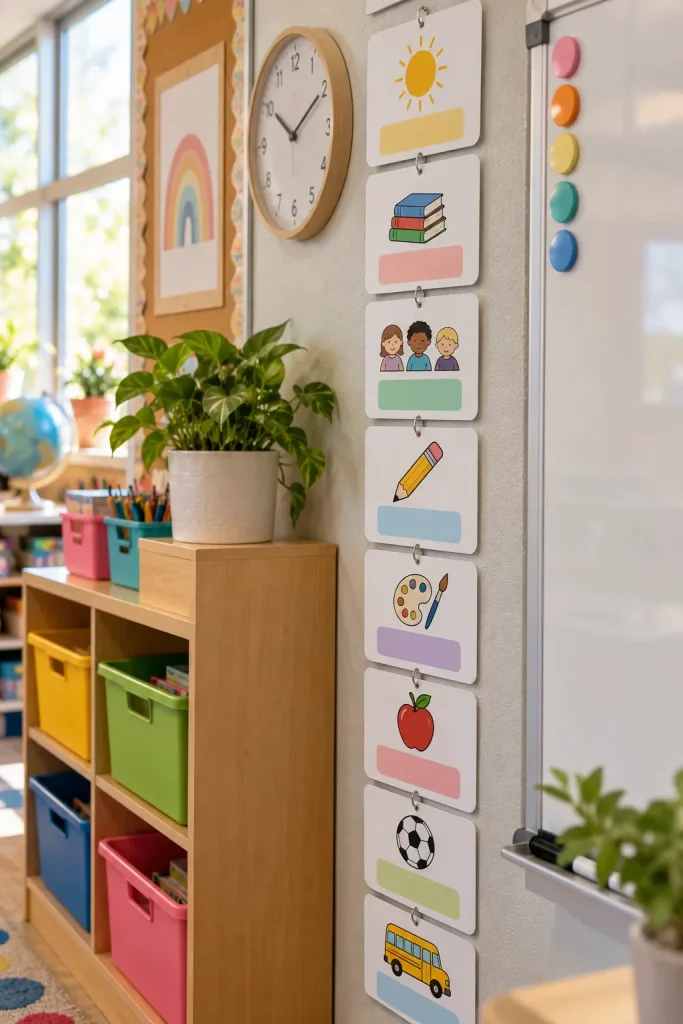
Wall schedules need to be readable from across a classroom, not just from the teacher’s desk.
Visual schedule cards show the order of classroom activities using pictures and short labels. Teachers can display them on a board and rearrange them when the daily timetable changes.
Unlike a home routine chart, this printable follows the school day, with activities such as morning meeting, reading, math, lunch, and dismissal.
Create a Set That Can Change
Design matching cards in the same size, with simple illustrations and bold labels. Include blank cards for activities that are not part of the standard set.
Give each card enough white space around the image. This makes the schedule easier to scan when several cards hang together.
📋 Visual Schedule Pack Checklist
15. Classroom Job Rotation Cards
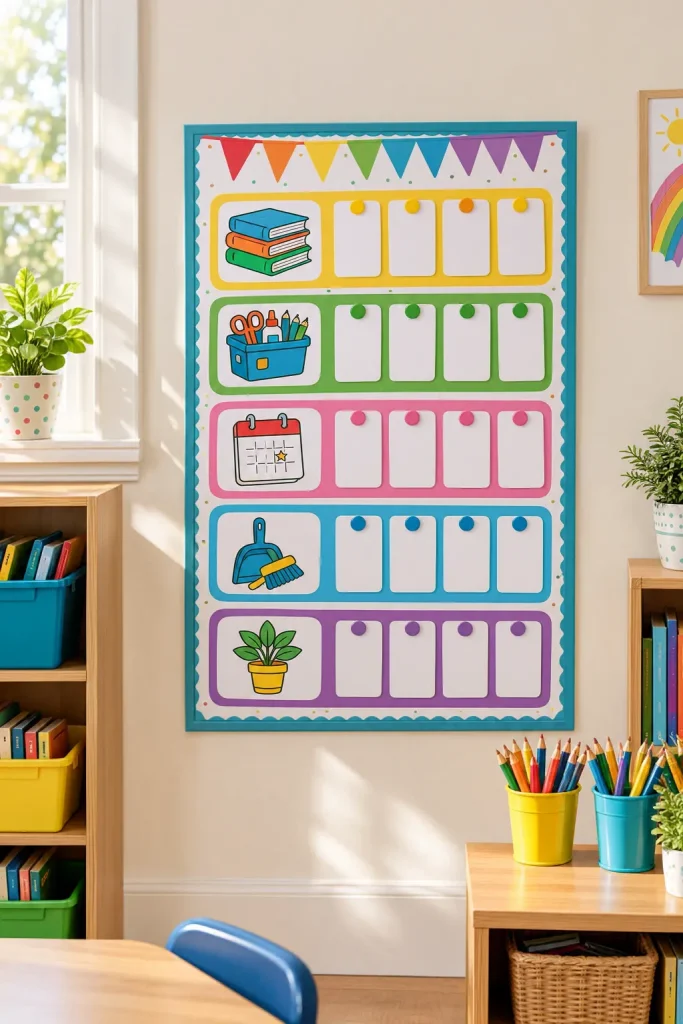
Changing classroom jobs can become confusing when the teacher has to rewrite names every week.
A set of reusable job cards gives teachers a simple way to organize classroom responsibilities. Each card names one task, while a separate space displays the student assigned to it.
Keep the Jobs Clear and Age-Appropriate
Create cards for classroom librarian, line leader, calendar helper, and supply organizer. Use a small picture to help younger students understand each role.
Teachers can move name labels between cards rather than printing a new board every time assignments change.
Include blank job cards so buyers can add duties that fit their classroom. Avoid assigning tasks that require adult supervision or access to private student information.
Job assignments are written on separate notes. Names and responsibilities have to be rewritten whenever students change roles.
Each classroom job has a permanent card. Removable student name labels can be switched without replacing the entire display.
16. First-Week Icebreaker Question Cards
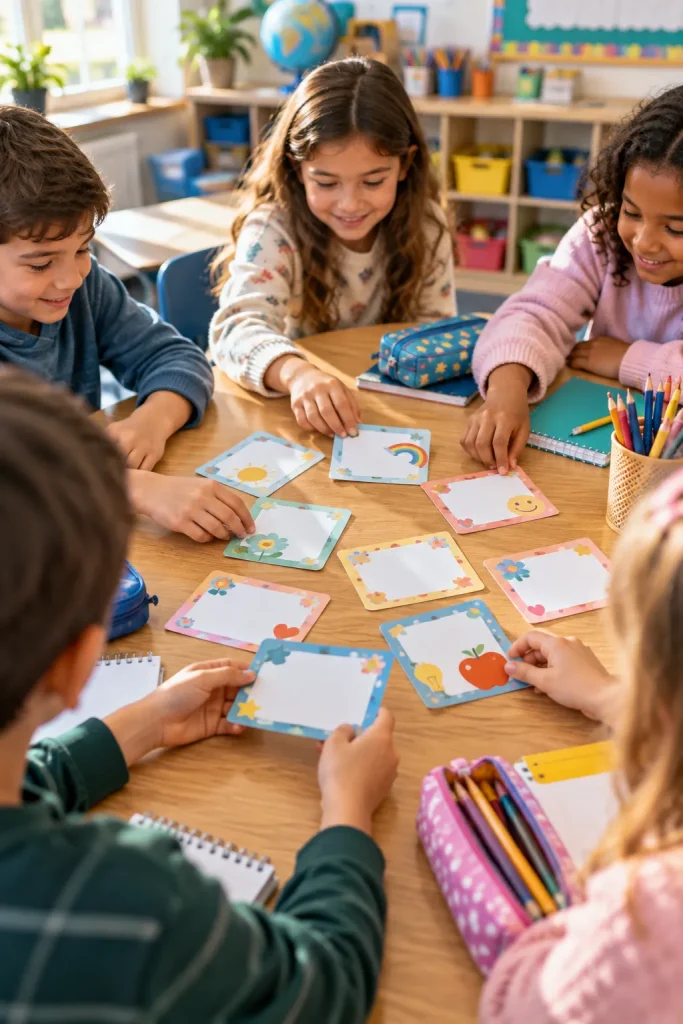
The first classroom conversation is easier to start when students have something simple to talk about.
Icebreaker cards give teachers a ready set of light questions for partner activities or small groups. Unlike individual introduction worksheets, these cards are meant to encourage students to speak and listen to one another.
Write Questions That Feel Comfortable
Use prompts about favorite activities, books, hobbies, or imaginary adventures.
Keep questions short enough for students to read aloud. Make a set with illustrated picture prompts for younger children and a second set with open questions for older students.
Add a few blank cards so teachers can write their own questions. Students should always be allowed to pass on a question.
💬 A Simple Icebreaker Card Activity
Place the cards face down in the middle of a small group.
Invite one student to pick a card and read the question aloud.
Let students answer, choose another card, or pass without explaining why.
Shuffle the cards before the next group activity to change the questions.
17. Printable Classroom Expectations Posters
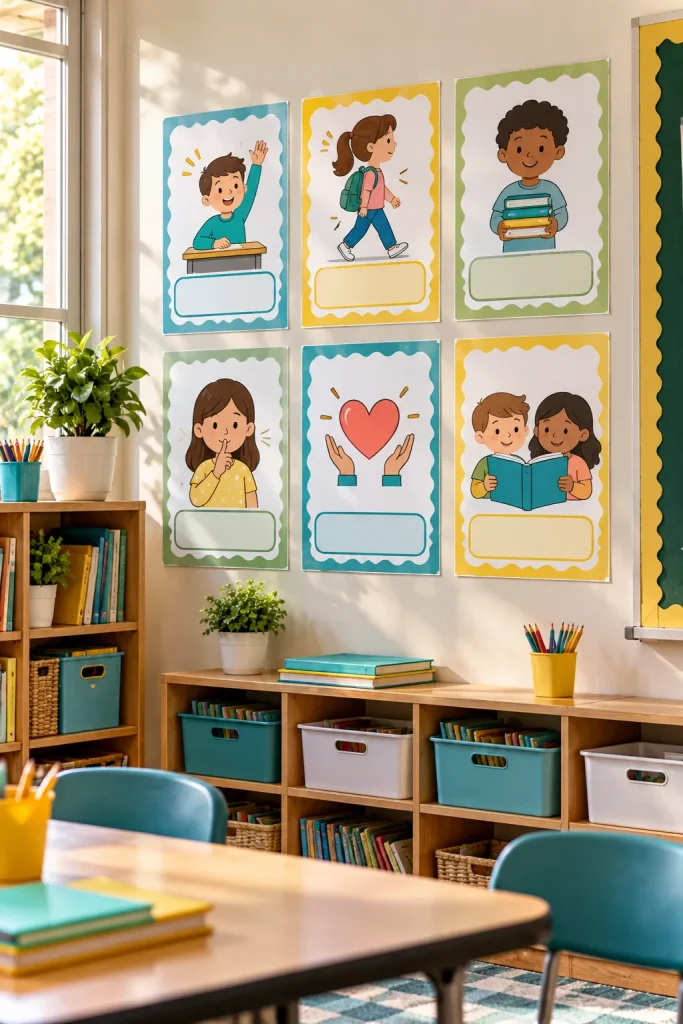
Classroom rules are easier to understand when children can see what each expectation looks like. A poster showing someone raising a hand can be clearer than a long list of instructions.
Teachers preparing elementary classrooms may want matching posters for listening, caring for supplies, walking indoors, and treating classmates kindly.
Show the Behavior, Not Just the Rule
Create one illustrated poster per expectation, with a large picture and a short phrase. Offer full-page and half-page versions, plus a simple set that uses less printer ink.
Keep the wording flexible so teachers can match their school’s policies. A blank poster template also lets them add an expectation that matters in their classroom.
Show a child walking calmly with the phrase “Walking Feet.”
Use one clear picture and one short message per poster.
Using vague instructions such as “Behave Properly” without showing what they mean.
Crowding several rules, tiny pictures, and long sentences onto one sheet.
18. Back-to-School Reading Log Bookmarks
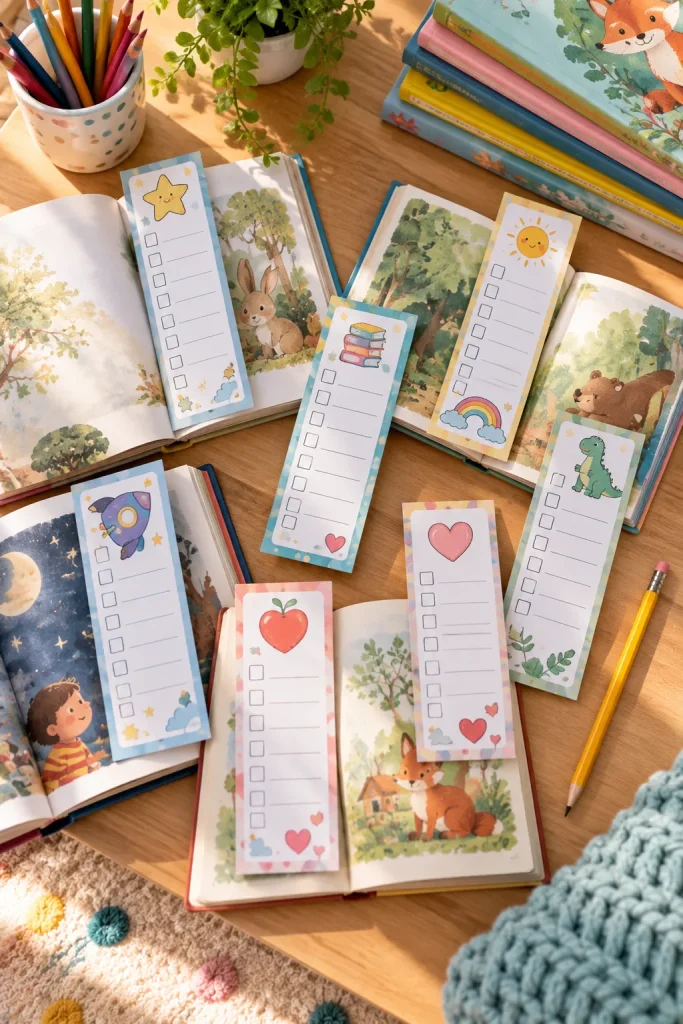
A bookmark can hold more than a page number. Give it a few small spaces for reading notes, and it becomes a simple record students can keep inside their current book.
Teachers and parents may want these bookmarks for children beginning a school reading routine. They work differently from homework trackers because they focus only on reading progress.
Make the Writing Spaces Useful
Design a narrow printable with a place for the book title and small rows for reading dates or pages completed.
Offer a daily reading version and a book-completion version. Add light cutting guides and leave enough room along the edges for trimming.
Keep the design simple so it still works inside a paperback.
| Daily Reading Bookmark | Finished Book Bookmark |
|---|---|
| Record each reading date. | Record the book title and author. |
| Track pages read or a short reading session. | Mark the date the book was completed. |
| Use throughout the week with the same book. | Add a small space for a favorite character or moment. |
19. Student Goal-Setting Worksheets
A goal such as “do better in school” sounds positive, but it gives a student very little direction.
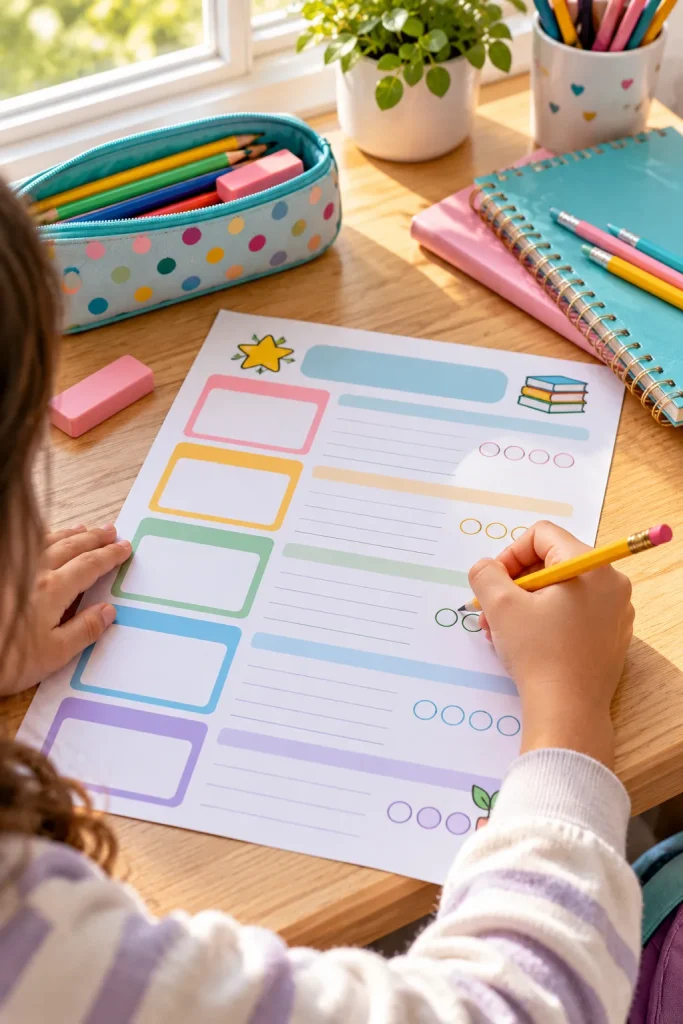
Goal-setting worksheets help children turn broad wishes into small actions they can practice during the school year. Teachers may use them during the first week, while parents can keep copies at home.
Make Each Goal Easy to Break Down
Create a worksheet with spaces for one goal, a reason it matters, and a few steps toward it.
Add a small check-in section where students can write what they tried and what they might change.
For younger students, include drawing boxes and sentence starters. Leave room for goals that are not about grades, such as making friends or learning a new skill.
A useful goal worksheet connects a child’s wish to an action they can actually try. Leave space to review the effort, not just mark the goal as finished.
20. Parent-Teacher Communication Log Sheets
A quick conversation at pickup time can be difficult to remember several weeks later, especially when teachers are managing many students and family messages.
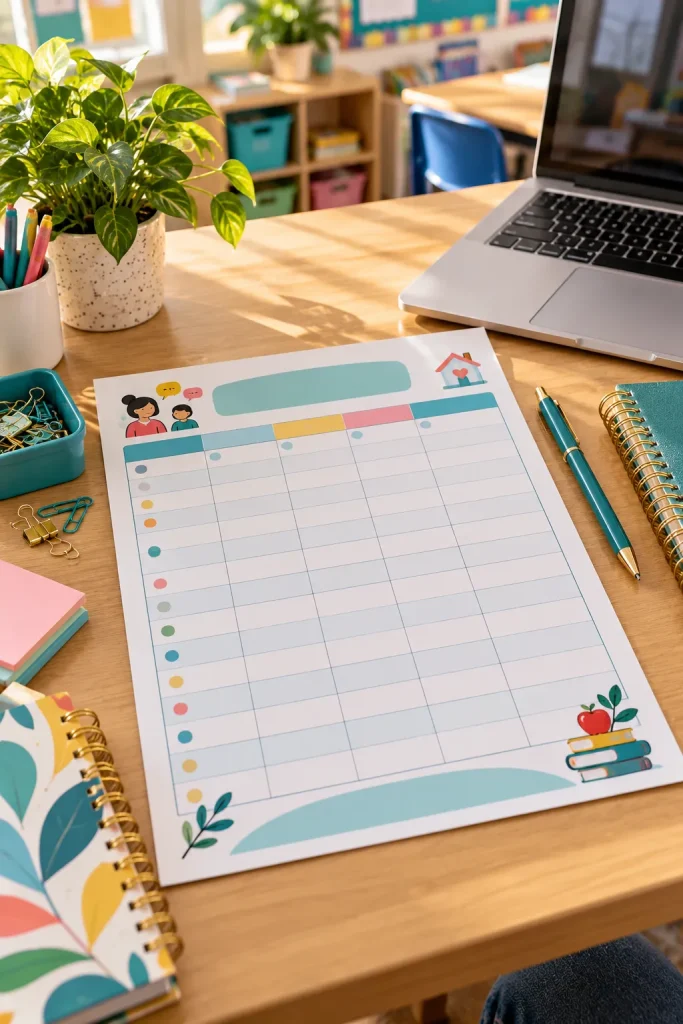
A communication log gives teachers a place to record necessary details about school-related contact with parents or guardians.
Keep Records Clear and Private
Design a printable with fields for the date, student reference, contact method, general topic, and any follow-up needed.
Use short column headings and enough writing space for notes. Offer a full-page version for longer records and a compact version for brief contact entries.
Avoid encouraging teachers to record unnecessary sensitive information. Remind buyers to follow their school’s recordkeeping and privacy rules, especially when storing or disposing of completed sheets.
📌 Good to Know: Protect Student Information
A communication log may contain private school information once completed. Keep the printable template blank, avoid displaying filled examples with real details, and remind teachers to store records according to school policy.
Start With One Printable That Solves a Problem
The strongest product idea is often the one that handles a small, everyday job clearly. A parent needs a checklist by the door. A teacher needs cards that can move around the classroom.
Before building a large bundle, choose one of these back to school printables and make a sample page. Print it at actual size, check the writing spaces, and create a preview that shows buyers what they will receive.
Prepare seasonal products well before classes begin, and check the current rules of any platform you plan to use.
Save this list on Pinterest so you can return when you are ready to design your next school-season printable.