
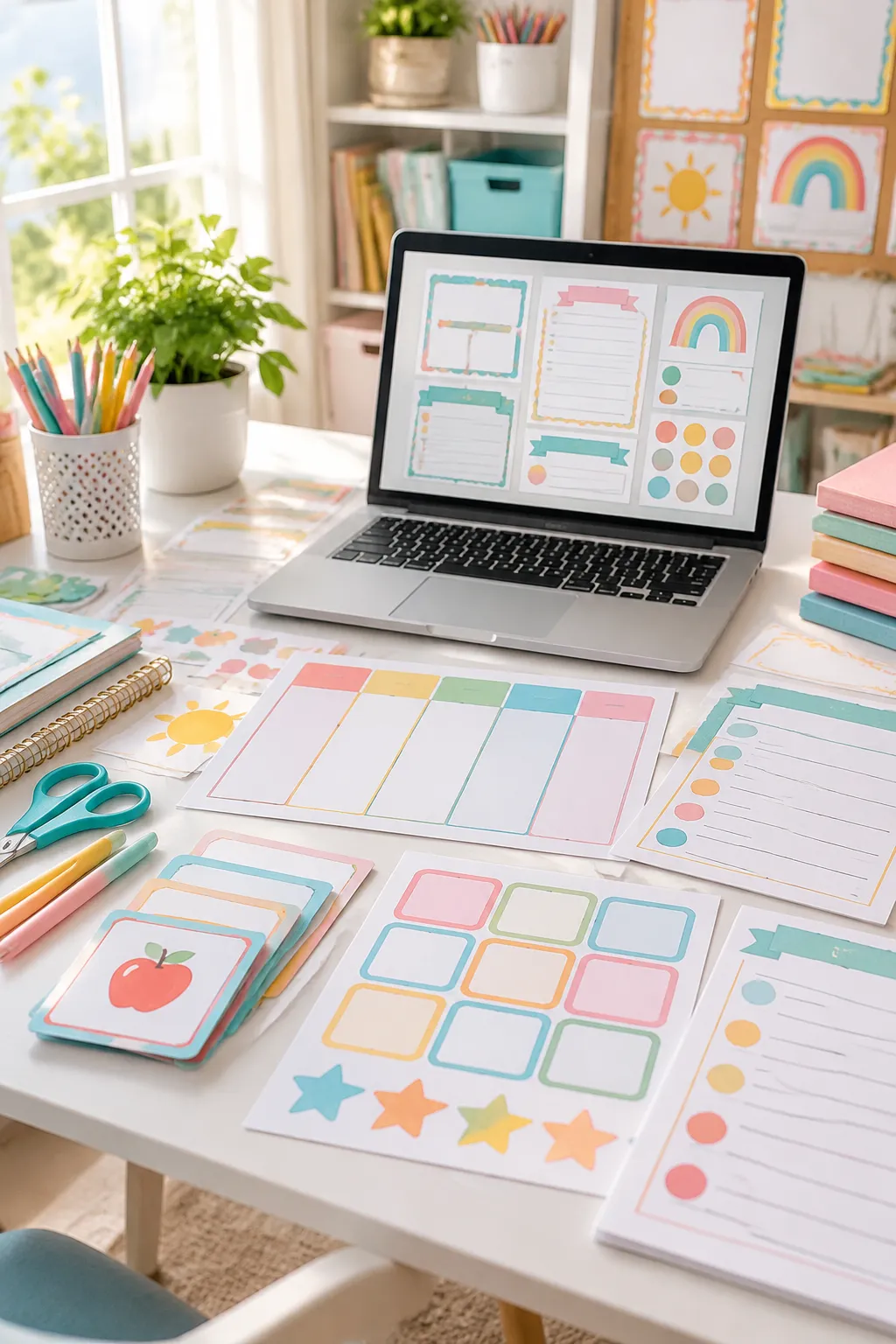
Teachers know how quickly classroom paperwork piles up. Between planning lessons, tracking student progress, and keeping parents informed, there is always another sheet to prepare. That daily need creates a useful starting point for anyone interested in making digital products for educators.
The mistake many beginners make is designing something that looks cute but does not solve a real classroom problem. Teachers often need resources they can print quickly, understand at a glance, and use without spending half their planning period setting them up.
That is where printable products for teachers come in. A clear lesson planner, a simple reading log, or a set of classroom job cards can help with a specific part of the school day. You do not need complicated design skills to start creating these resources. A tool like Canva can help you build clean layouts, while a PDF makes the finished pages easy to print.
Below are 25 product ideas worth considering for an Etsy shop, a teacher resource store, or your own website.
Daily Classroom Schedule Cards
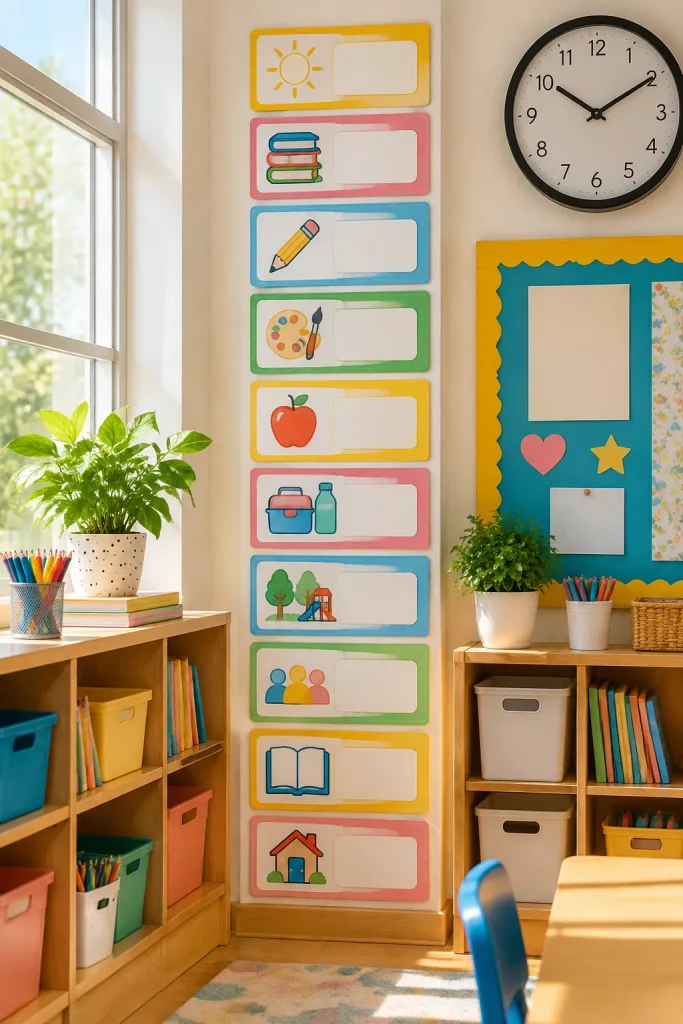
A classroom schedule should be easy to change without making a new poster every morning. Printable schedule cards let teachers arrange subjects and activities in the order they happen throughout the day.
What to include in the set
Create individual cards for reading, math, lunch, recess, art, and other common classroom activities.
• Use large words that students can read from a distance.
• Add simple icons to help younger children recognize activities.
• Include blank cards for teachers to customize.
Design the cards in Canva with matching borders and consistent sizing. Offer a color version and a printer-friendly version.
Kindergarten and elementary teachers are a natural audience because visual schedules can help children follow daily routines.
Editable Weekly Lesson Planner Pages
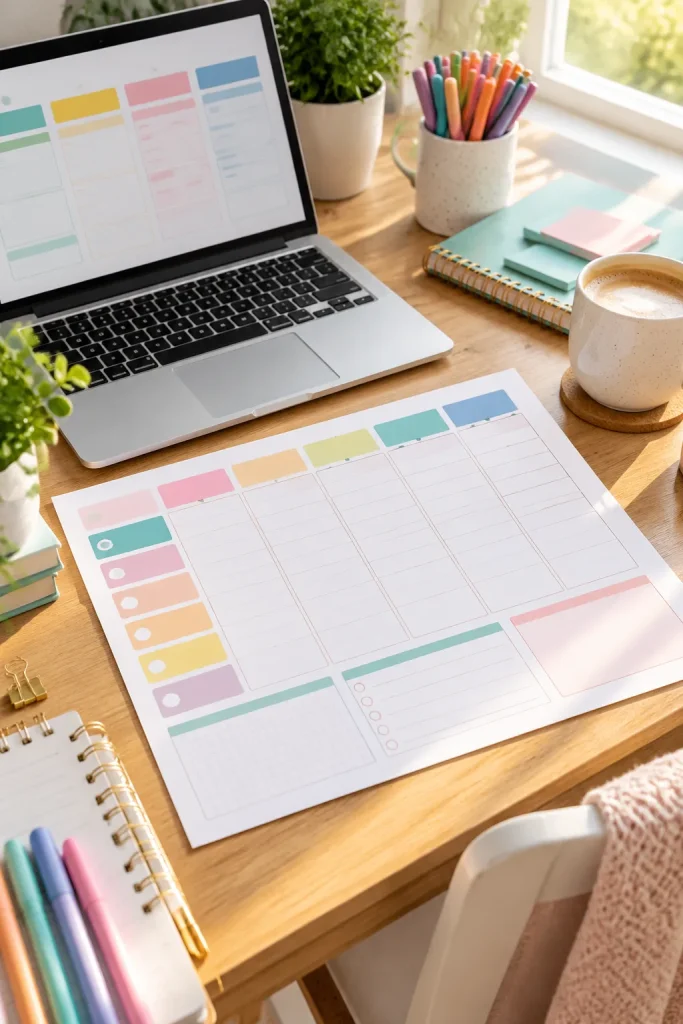
Planning five school days on scattered sticky notes gets confusing fast. A weekly lesson planner gives teachers one place to organize subjects, activities, and materials before Monday arrives.
Build a printable layout with weekdays across the top and subject sections underneath.
Make the planner flexible
Some teachers work with one grade all day, while others teach several classes. Give buyers a choice between a subject-based planner and a blank weekly grid.
Leave enough writing space for lesson goals, homework, and reminders. An editable Canva version can be useful alongside the printable PDF, provided your template and its included elements meet Canva’s current licensing rules.
Keep the design simple so it remains readable when printed in black and white.
Printable Pack Checklist
Student Behavior Tracking Sheets
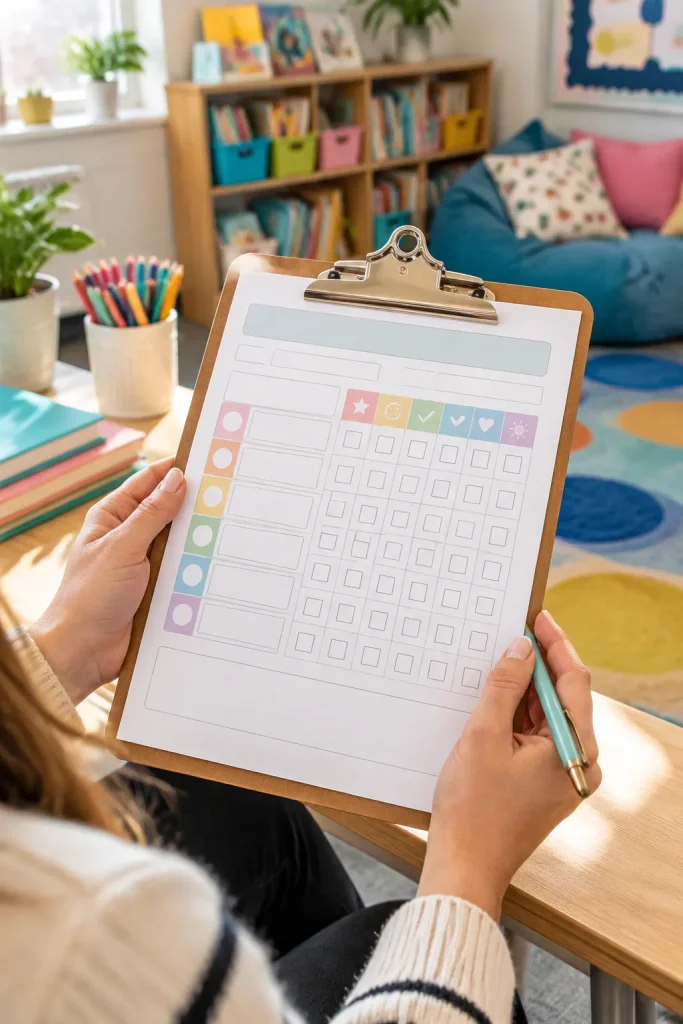
A teacher may notice a student struggling during certain activities but forget the exact details by the end of a busy week.
Behavior tracking sheets provide a consistent place to record observations without relying on memory.
Keep the tracking factual
Include spaces for the date, activity, observed behavior, possible trigger, teacher response, and follow-up.
A useful design encourages teachers to write what actually happened rather than label a child as difficult or disruptive. For example, recording that a student left their seat three times during independent work is more specific than writing that they behaved badly.
These sheets can serve classroom teachers and learning support staff. Use a clean, confidential record layout without decorative graphics that crowd the writing space.
Notes scattered across sticky notes and notebooks. Descriptions such as difficult morning with few details.
Observations organized by date and activity. Clear descriptions help staff review patterns and next steps.
Parent Teacher Conference Forms
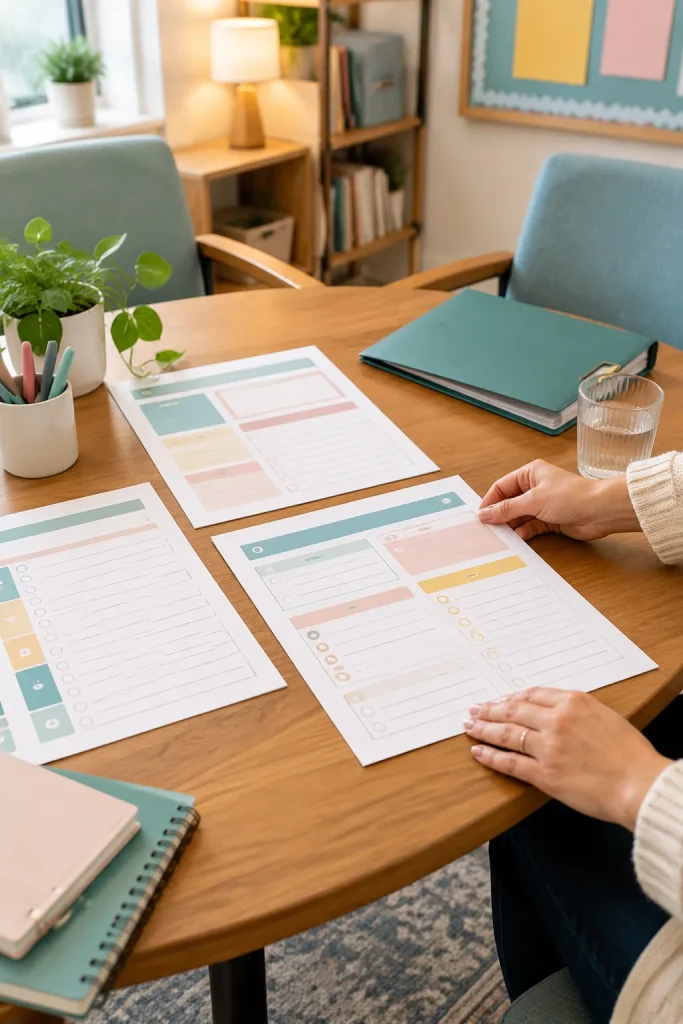
Parent conferences can cover a lot in a short meeting. Without a simple plan, teachers may spend too much time searching for notes instead of discussing the student’s progress.
A printable conference form helps organize the conversation before parents arrive.
Build a practical meeting sheet
Start with spaces for the student’s name, date, learning strengths, areas needing support, and questions from parents.
Add a small action-plan section where the teacher can record agreed next steps.
You can also include a separate meeting summary page for follow-up notes. Keep the layout professional, with plenty of room for handwriting.
Teachers preparing for scheduled school conferences are the main audience for this type of resource.
Begin with strengths. Record what the student is doing well
Review current work. Note specific learning needs or concerns
Invite parent input. Make room for questions and observations
Agree on next steps. Write down actions and follow-up
Printable Classroom Job Cards
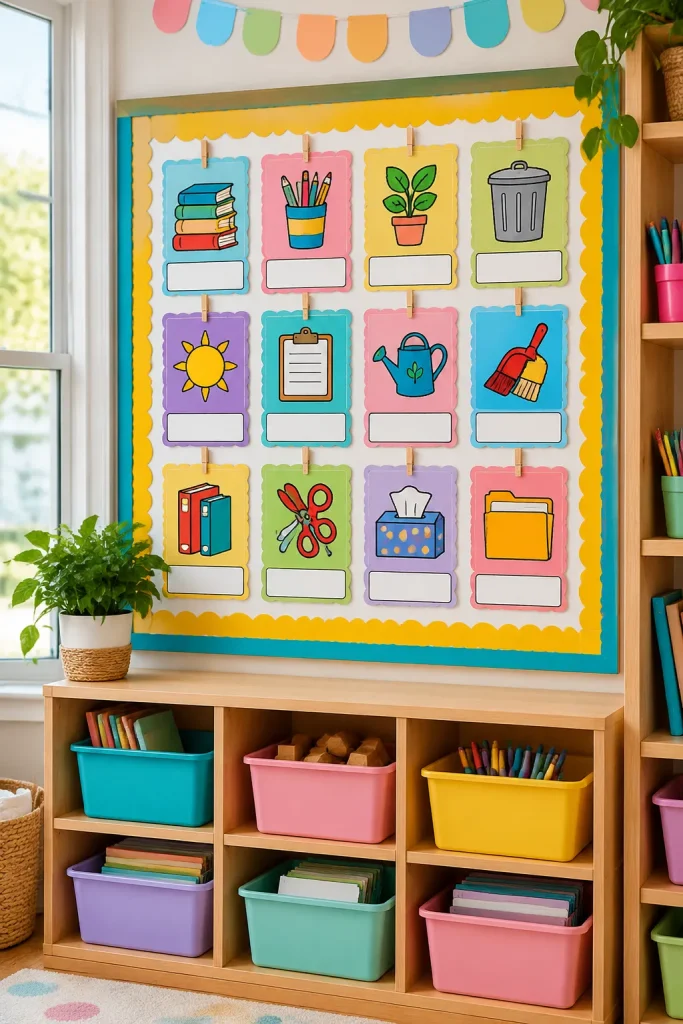
Little classroom jobs often become big arguments when nobody knows whose turn it is to help.
A set of printable job cards gives teachers a visible way to assign responsibilities and rotate them throughout the week.
Create cards for line leader, door holder, materials helper, board cleaner, and other familiar jobs.
Design for quick changes
Make each card the same size so teachers can arrange them on a bulletin board or pocket chart. Add matching student name labels that can be moved when jobs change.
Younger students may benefit from an icon beside each job title.
Elementary teachers and homeschool educators may find these sets useful. Include blank job cards so buyers can add responsibilities that fit their classrooms.
Student Reading Log Templates
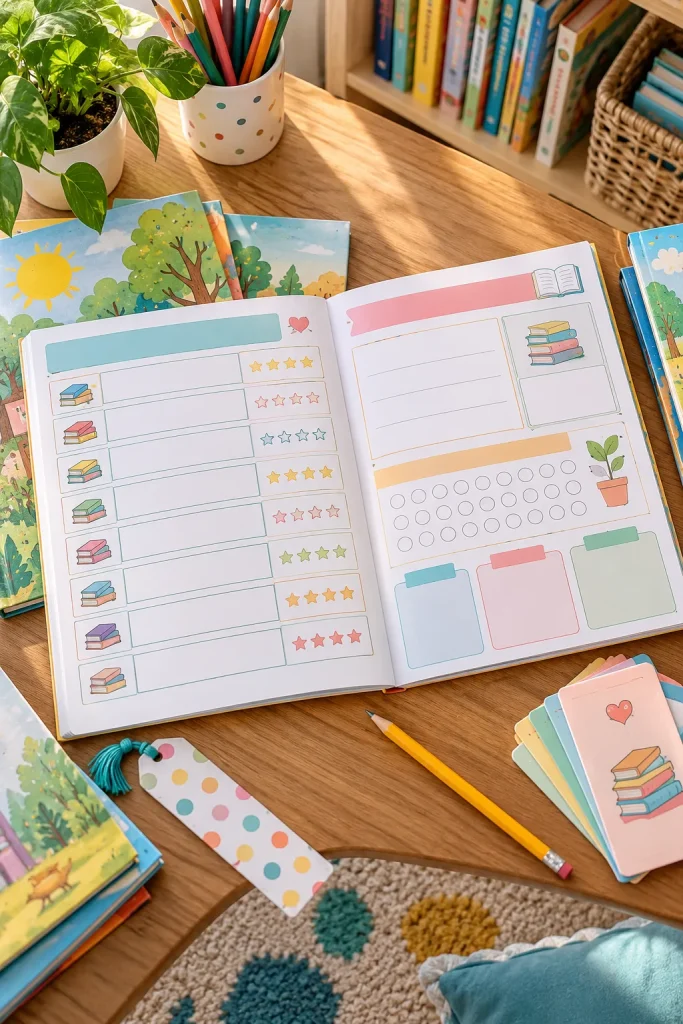
A reading log does not need to turn every book into another homework assignment. For younger readers, a simple record of books finished can be enough.
Design printable reading logs with spaces for the book title, author, reading date, and a small response.
Offer different reading levels
Early readers might use a page where they color a book icon after finishing a story. Older students may prefer a log with reading minutes, page numbers, and a short reflection.
Teachers, reading tutors, and homeschool families are possible buyers.
Keep the writing boxes large enough for children who are still learning to form letters. A crowded page is especially frustrating for students who need more time to write.
💡 Product Design Tip
Create two reading log versions in one download. Use a picture-based tracker for early readers and a written response page for older students. Label each version by reading activity.
Substitute Teacher Binder Pages
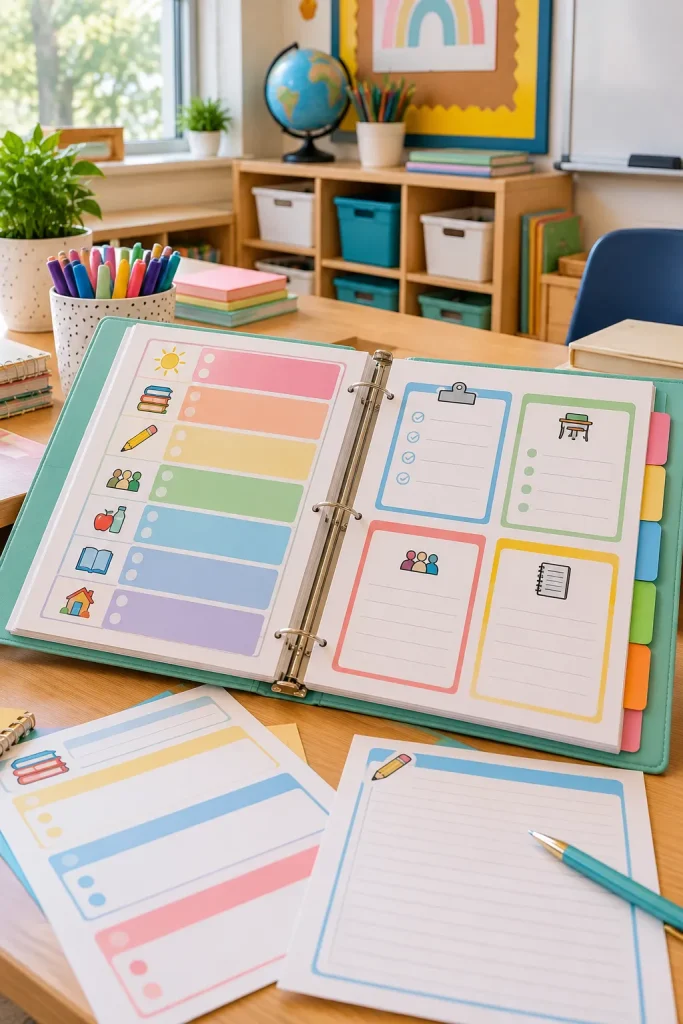
An absent teacher cannot always explain classroom routines over the phone. A substitute teacher binder puts essential information in one organized place.
This printable product can include daily routines, lesson notes, classroom procedures, and a simple end-of-day report.
Organize the binder by purpose
Use separate pages for the schedule, classroom expectations, student support instructions, and important school contacts.
Create a clearly marked space for school-approved emergency procedures rather than filling those details in yourself.
Include a substitute feedback form where the visiting teacher can record completed lessons and anything that needs attention.
Keep student-specific information out of promotional mockups. Teachers should complete sensitive sections privately and store them according to school policies.
Homework Assignment Tracker Sheets
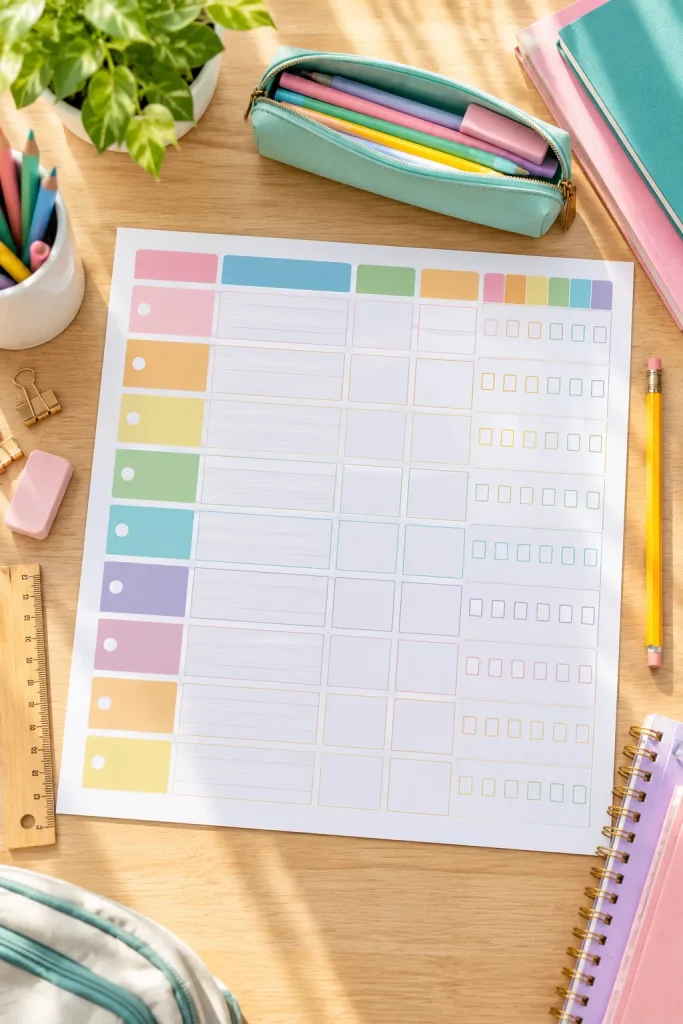
Homework can disappear between the classroom and the kitchen table, especially when students have assignments for several subjects.
A printable homework tracker helps students record what needs to be done and mark work as completed.
Keep each assignment easy to find
Create a weekly sheet with separate columns for the subject, assignment, due date, and completion status.
A second version can use one page per day for younger students who need larger writing spaces.
Teachers may use these pages in student planners, while homeschool families can use them to organize independent work.
Leave a small area for important reminders, but avoid filling the page with stickers or decorations. The assignment itself should be the first thing students notice.
| Daily Tracker | Weekly Tracker |
|---|---|
| More writing room for each task | Entire school week on one page |
| Helpful for younger students | Helpful for multiple subjects |
| Space for daily reminders | Easy view of due dates |
Printable Sight Word Flashcards
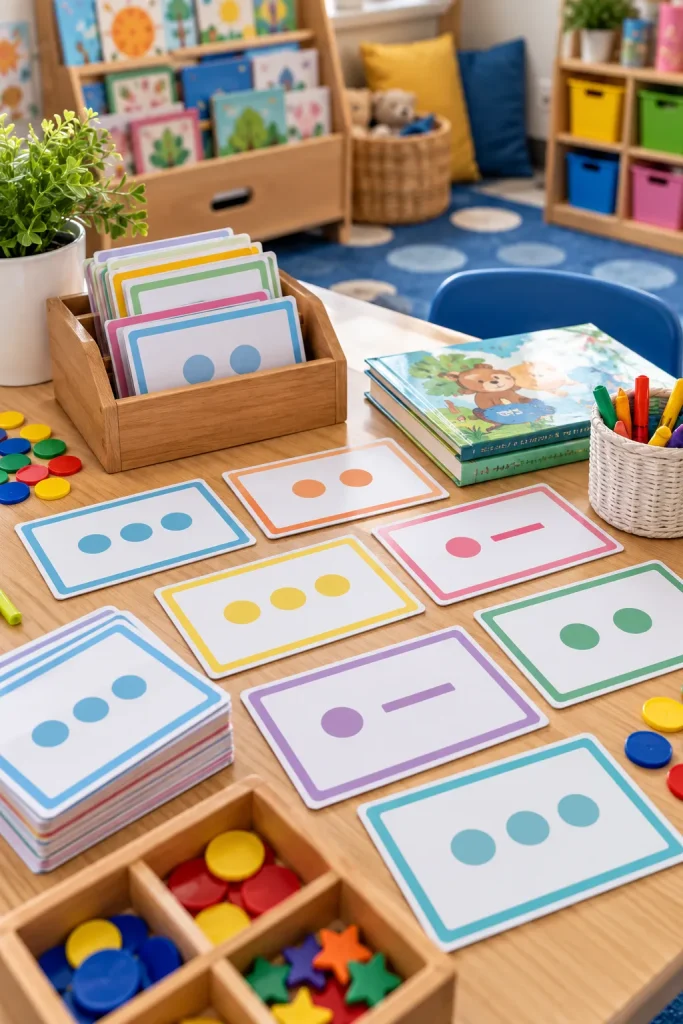
Large, easy-to-read words on individual cards give teachers a flexible resource for short reading activities. Sight word flashcards can be used during small-group lessons, classroom centers, or extra practice at home.
Make the cards easy to handle
Choose a recognized word list or clearly state which reading level the cards cover. Use large lettering, plenty of white space, and a consistent card size.
Include a few blank cards so teachers can add words from their own lessons.
Early elementary teachers, reading tutors, and homeschool parents are potential buyers.
Avoid placing distracting illustrations beside every word. The printed word should remain the main focus, especially when students are practicing word recognition.
Use large, clear letters with strong contrast.|Keep card dimensions consistent for cutting.|Group words into clearly labeled practice sets.
Avoid decorative fonts, busy backgrounds, and mixing unrelated reading levels without labels.
Math Fact Practice Worksheets
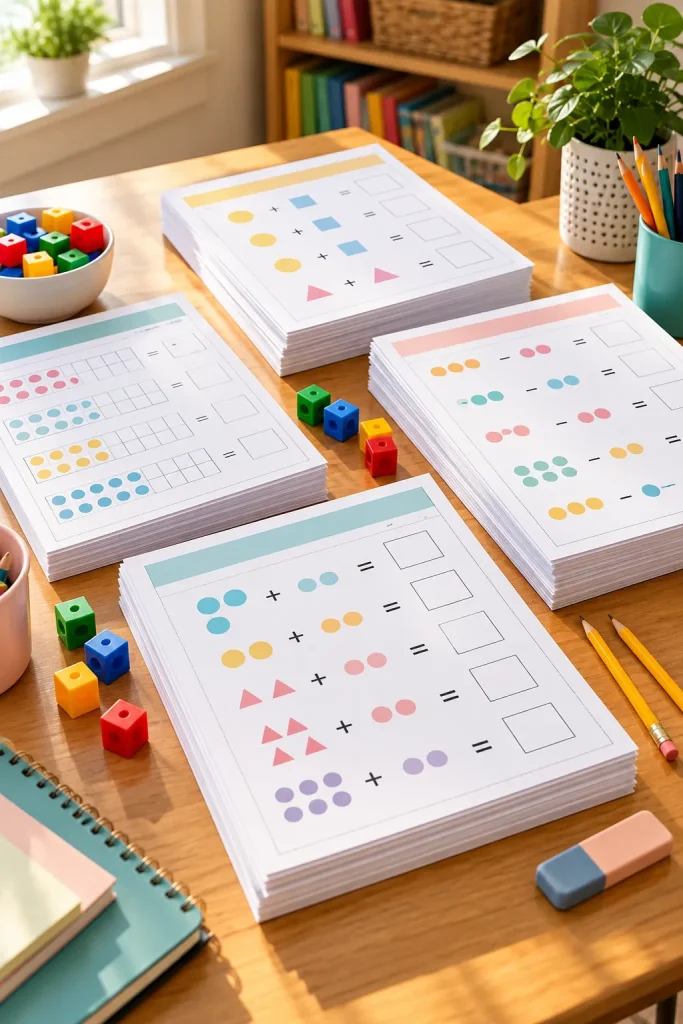
Start with one math skill instead of trying to squeeze every operation onto the same worksheet. A focused practice page gives students enough space to work through similar problems without jumping between unrelated tasks.
For example, create separate worksheets for addition within 10, subtraction within 20, and basic multiplication facts.
Build a useful worksheet pack
Organize the pages by operation and difficulty. Include a simple instruction line, evenly spaced questions, and a separate answer key.
Elementary teachers, homeschool families, and tutors may use these pages for independent practice or review.
You can design the worksheets in Canva or a document editor. Check that every math problem and answer is correct before preparing the final PDF.
Printable Pack Checklist
Classroom Birthday Display Printables
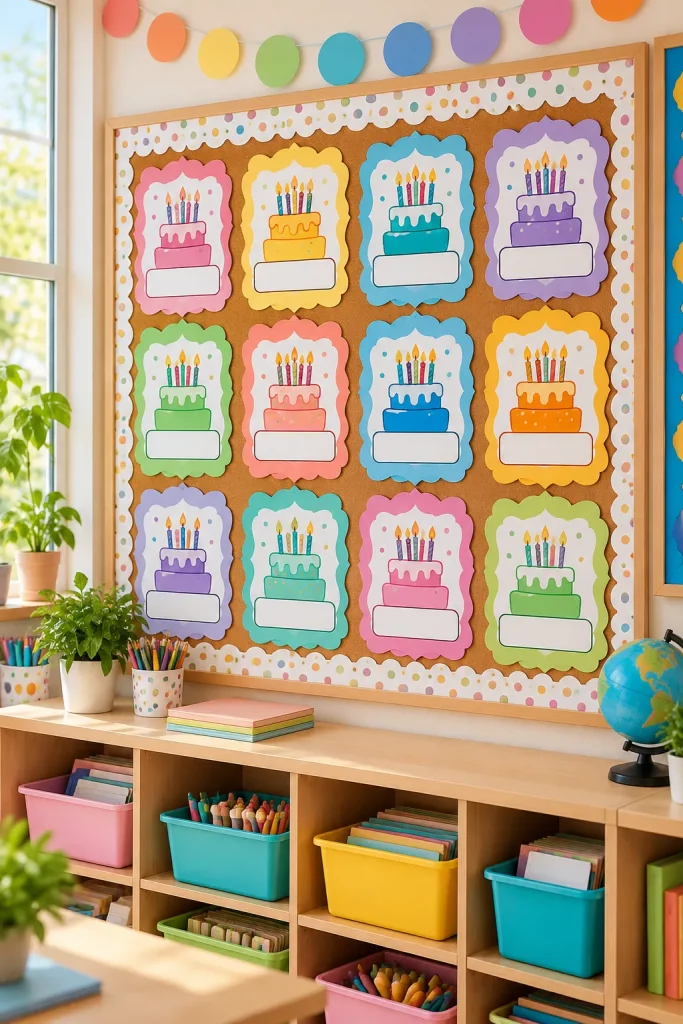
A birthday display gives students a little place of their own on the classroom wall. Teachers can use printable monthly cards to organize birthdays without making a new decoration every school year.
Design twelve matching month posters with room for student names and dates. Add separate name tags that teachers can attach beneath each month.
Create a coordinated display
Choose a simple theme such as colorful pencils, cheerful stars, or notebook paper. Keep the month names large enough to read from across the classroom.
Elementary and preschool teachers are likely audiences for this product.
Include a few different sizes so the display can fit a large bulletin board or a smaller classroom corner. Avoid requiring teachers to share students’ full birth dates publicly.
Student Goal Setting Worksheets
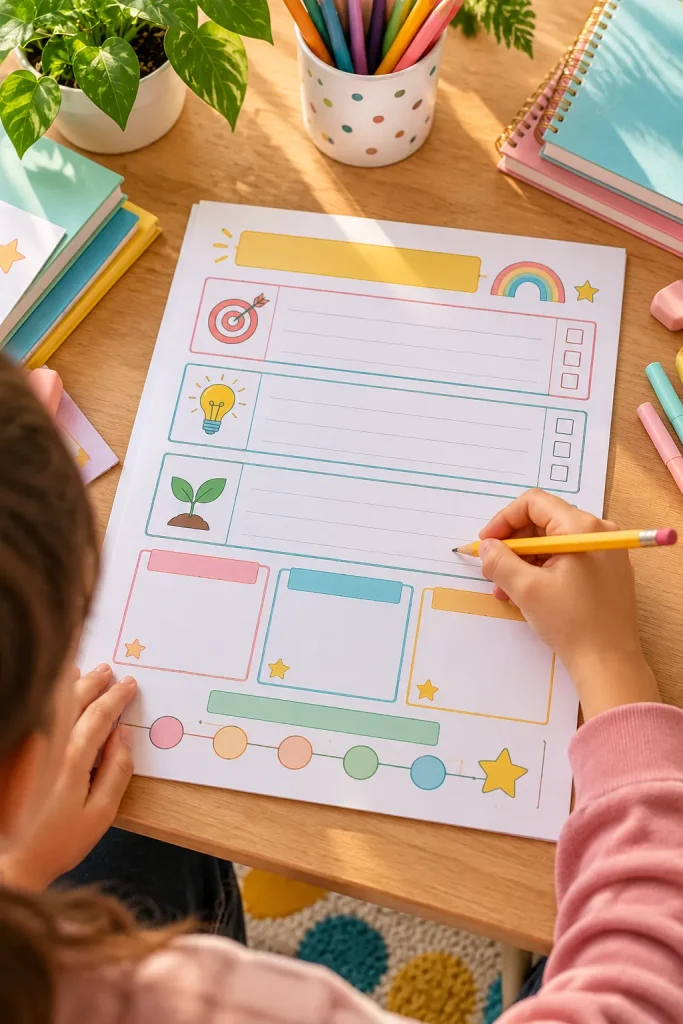
Students sometimes write goals such as “get better at math” without knowing what to do next. A goal setting worksheet helps turn that broad idea into smaller actions they can understand.
These printables can be used at the beginning of a term, after an assessment, or during student reflection activities.
Guide students toward specific goals
Start with a space for the goal itself. Follow it with questions about what the student will practice, how often they will work on it, and how they will recognize progress.
Include a short reflection section where students can review what worked.
Teachers, school counselors, and homeschool families may find these pages useful. Use age-appropriate wording and leave enough space for handwritten answers.
Choose a goal. Improve multiplication facts
Pick an action. Practice a small group of facts
Check progress. Record which facts are easier
Reflect. Decide what to practice next
Printable Exit Ticket Slips
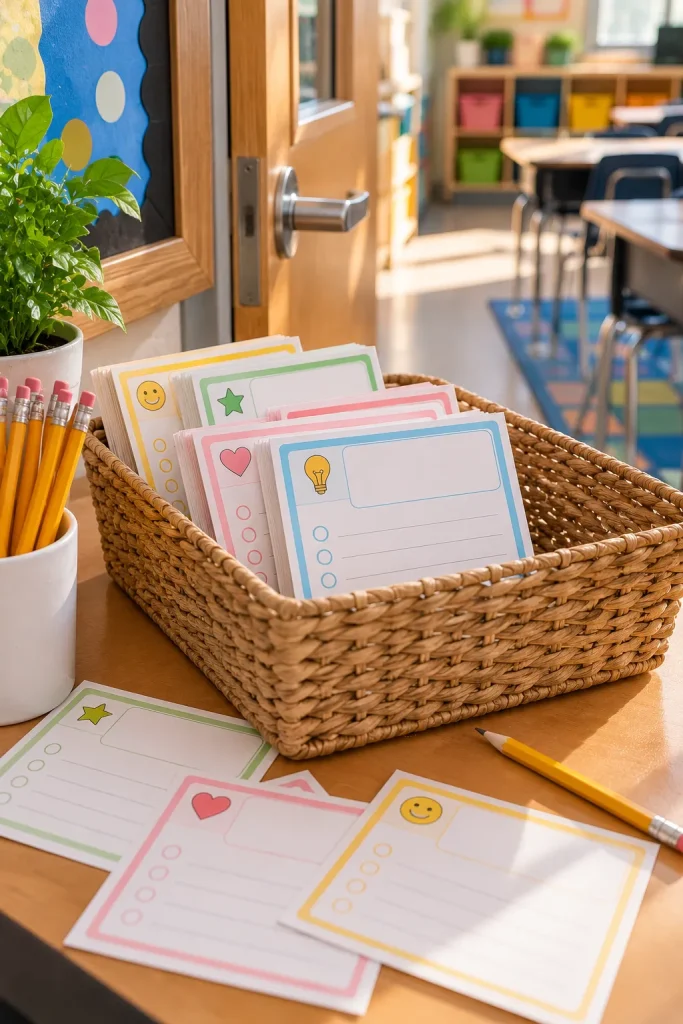
A few minutes before the bell rings, teachers need a quick way to see what students understood. Exit tickets make that possible without collecting another full worksheet.
Each small slip asks students to respond to a question or reflect on the day’s lesson.
Design slips for different subjects
Create templates with one question, a short-answer area, and a name field. Include blank versions so teachers can write their own prompts.
A useful bundle might contain comprehension checks, math problem spaces, and student reflection slips.
Teachers across several grade levels can use these printables, depending on the questions.
Arrange multiple slips on one page to reduce paper use. Keep enough space for meaningful answers rather than shrinking everything into tiny boxes.
The lesson ends with a general question such as Does everyone understand? Students may not share what confused them.
Students answer a focused prompt such as What is one part of today’s lesson you still need help with?
Teacher Gradebook Tracking Pages
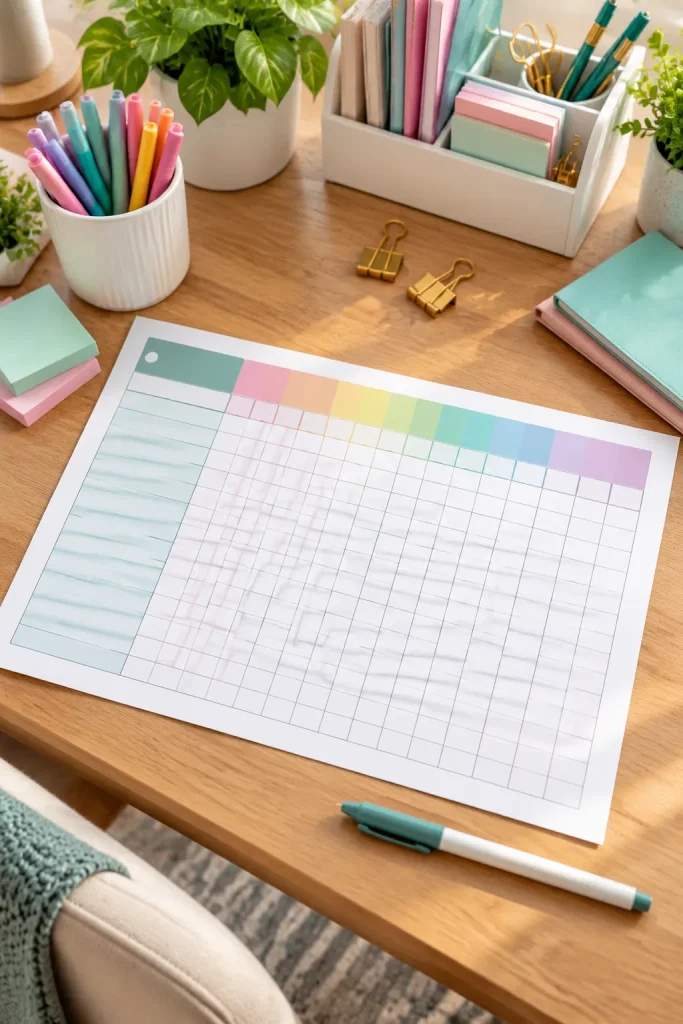
Rows of student names and assignment scores need a layout that stays readable even after weeks of use. Printable gradebook pages offer teachers a way to organize assessment records on paper.
Create a landscape-style sheet with student names along the side and assessment headings across the top.
Offer different tracking layouts
One version can record individual assignment scores. Another can track completion, assessment dates, or learning standards.
Include a blank heading row so teachers can write their own subjects and assessment names.
Classroom teachers and tutors who prefer paper-based records may be interested in these pages.
Use generous column spacing and clear lines. Since grades are private student information, remind buyers to store completed sheets securely and follow school recordkeeping policies.
| Score Tracking | Completion Tracking |
|---|---|
| Records assessment marks | Records completed or missing work |
| Useful for graded assignments | Useful for activity checklists |
| Needs clear score headings | Needs a simple status key |
Classroom Rules Poster Sets
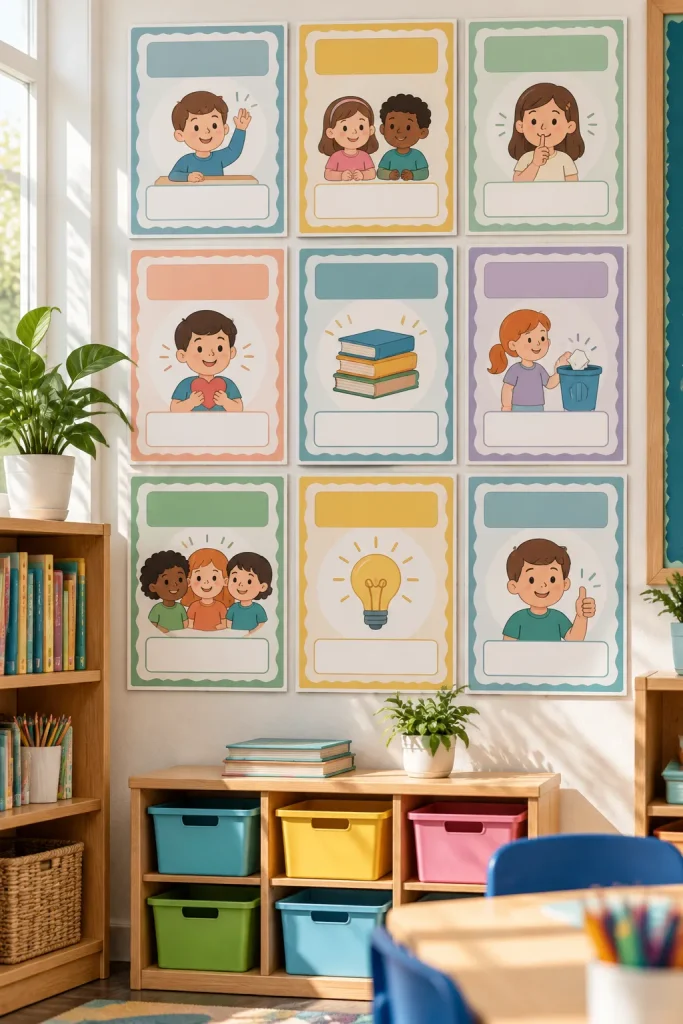
Bright classroom posters catch attention, but the wording matters more than the decoration. A useful rules poster tells students exactly what behavior is expected.
Instead of filling a wall with long instructions, create a coordinated set of short, readable statements.
Focus on clear classroom actions
Use rules such as “Raise your hand to speak,” “Keep shared supplies organized,” and “Listen when someone is talking.”
Give each rule its own printable poster with a simple matching illustration.
Elementary and preschool teachers may use these sets during classroom setup or when introducing routines.
Offer full-color and ink-saving versions. Make the design flexible enough to fit different classrooms, and include an editable wording option where licensing permits.
Write rules as clear, observable actions.|Choose large lettering and simple pictures.|Keep wording consistent across the set.
Avoid vague statements, long paragraphs, and decorations that compete with rule text.
Student Reward Coupon Cards
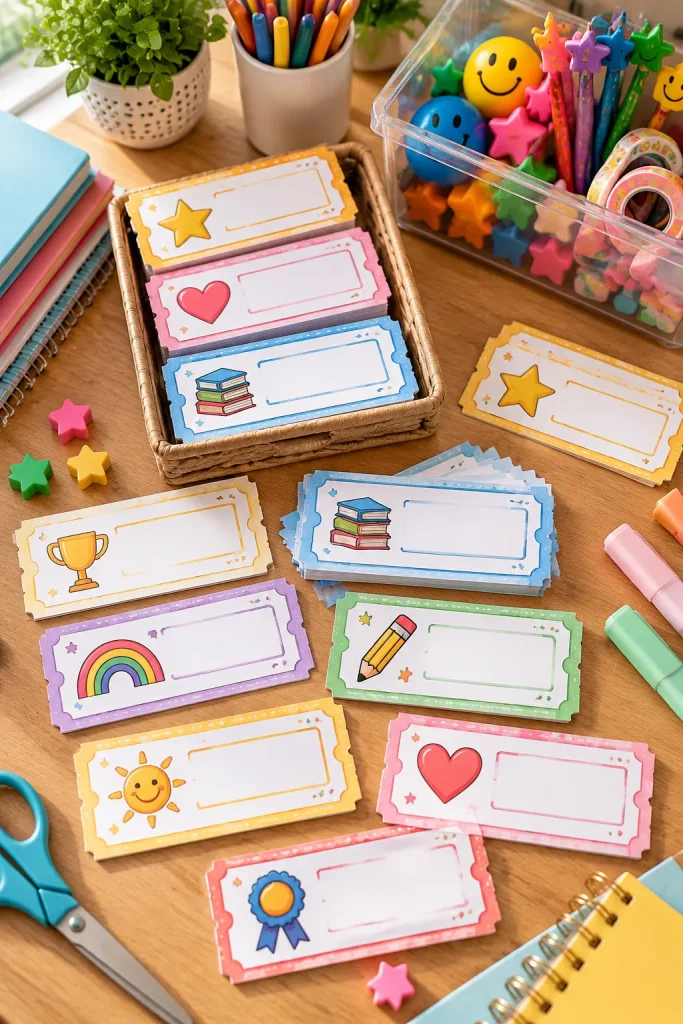
A reward does not have to be a toy or a piece of candy. Printable coupons can give students a small classroom privilege or special responsibility without requiring teachers to keep a prize drawer stocked.
Create a matching collection with rewards such as choosing a classroom read-aloud, being the line leader, or selecting a brain-break activity.
Make rewards manageable
Each coupon should have a clear reward name and a space for the teacher to approve or record when it is used.
Elementary teachers are a natural audience for these products.
Include blank coupons so educators can choose privileges that suit their classroom rules. Avoid rewards that remove necessary learning time or create unfair expectations among students.
💡 Product Design Tip
Place several coupons on one printable page with light cutting guides. Include teacher approval space, date redeemed field, and blank customizable coupons.
Printable Science Observation Journals
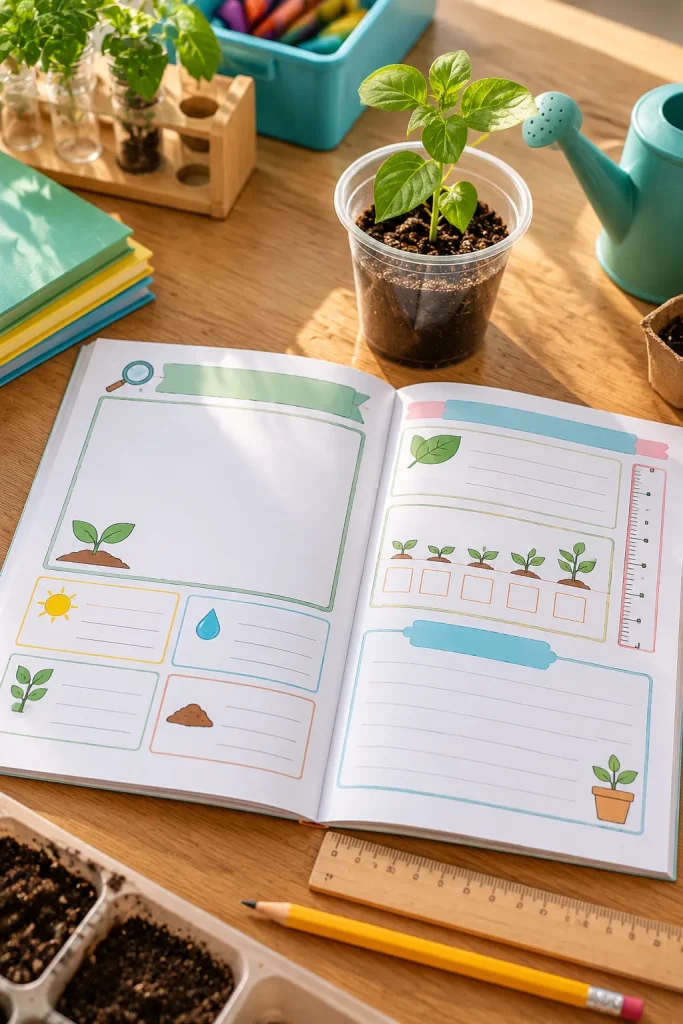
A seed growing in a clear cup can become a science lesson when students record what changes each day. Printable science observation journals give children a place to draw, describe, and compare what they notice during classroom experiments.
Build pages around real observations
Create separate spaces for the date, observation, labeled drawing, and questions. Include a prediction section so students can compare what they expected with what actually happened.
• Add a large drawing box for younger learners.
• Use lined writing spaces for short explanations.
• Include measurement fields when an activity requires them.
Elementary science teachers and homeschool educators may use these journals for plant growth, weather observations, and simple investigations.
Keep the pages open-ended so one journal works for several experiments.
Writing Prompt Task Cards
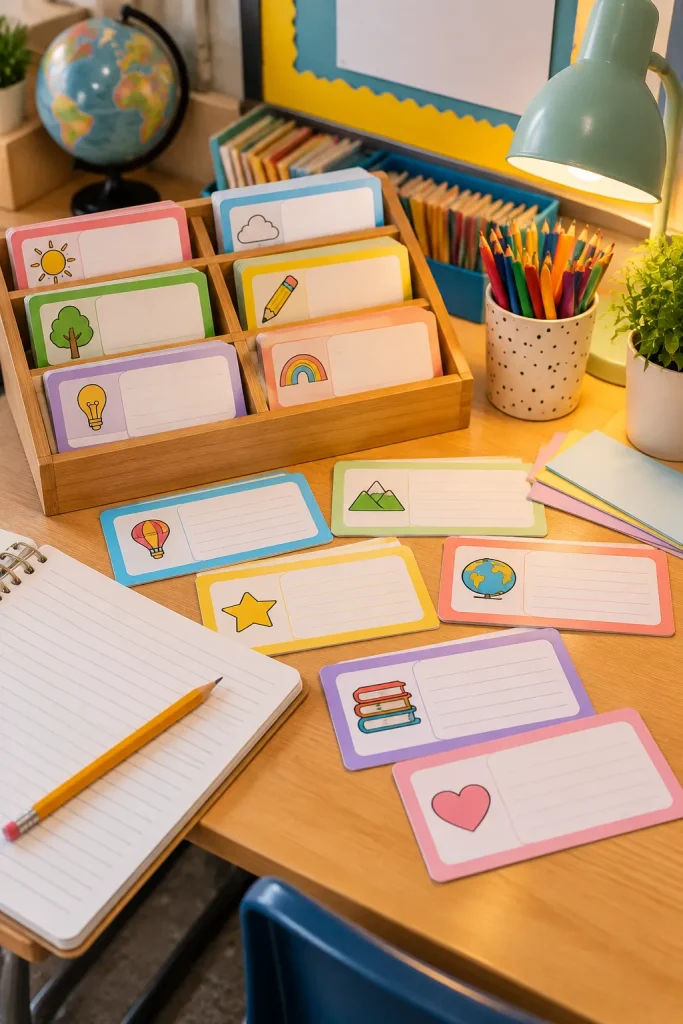
Some students spend more time choosing a writing topic than actually writing. A stack of printable prompt cards gives them a specific starting point without requiring the teacher to prepare a new activity every day.
Each card can contain a short story idea, a question, or a situation students can develop into a paragraph.
Create prompts with variety
Mix several writing styles in one collection:
• Narrative prompts about characters and unexpected events.
• Descriptive prompts about familiar places or objects.
• Opinion prompts that ask students to explain their choices.
Elementary language arts teachers, writing tutors, and homeschool families are possible buyers.
Print several cards on each page and include cutting guides. Keep the instructions short enough for students to read independently.
Printable Pack Checklist
Printable Classroom Seating Charts
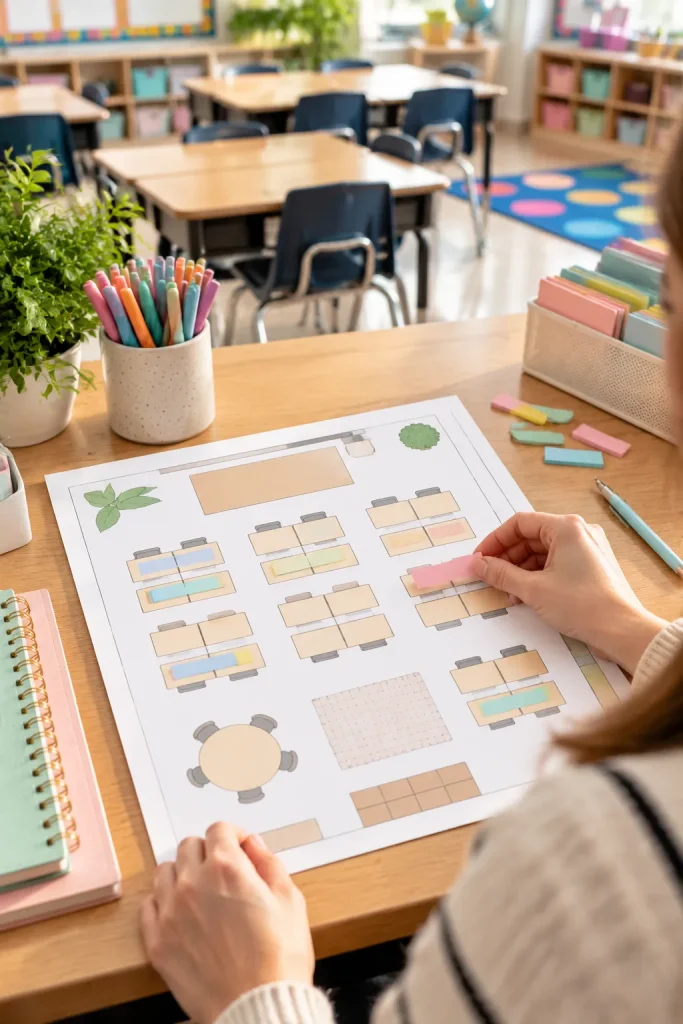
A seating chart written in pen becomes frustrating when students change desks or the classroom layout changes halfway through the term.
Printable seating charts give teachers a cleaner way to plan where students sit and keep track of different seating arrangements.
Include several room layouts
Design pages with rows of desks, grouped tables, and a blank classroom grid.
Teachers can write student names directly into the spaces or use small removable name labels.
Add room for the teacher’s desk, entrance, and other fixed classroom features.
These pages may appeal to classroom teachers who need a seating reference for daily lessons or substitute coverage.
Keep the desk shapes large enough for handwritten names. A flexible blank version is especially useful for classrooms with unusual furniture arrangements.
Student names squeezed into fixed desk layout. Crossed-out names after changes.
Choose layout that matches classroom furniture. Use movable name labels or print a new chart.
Teacher Meeting Notes Templates
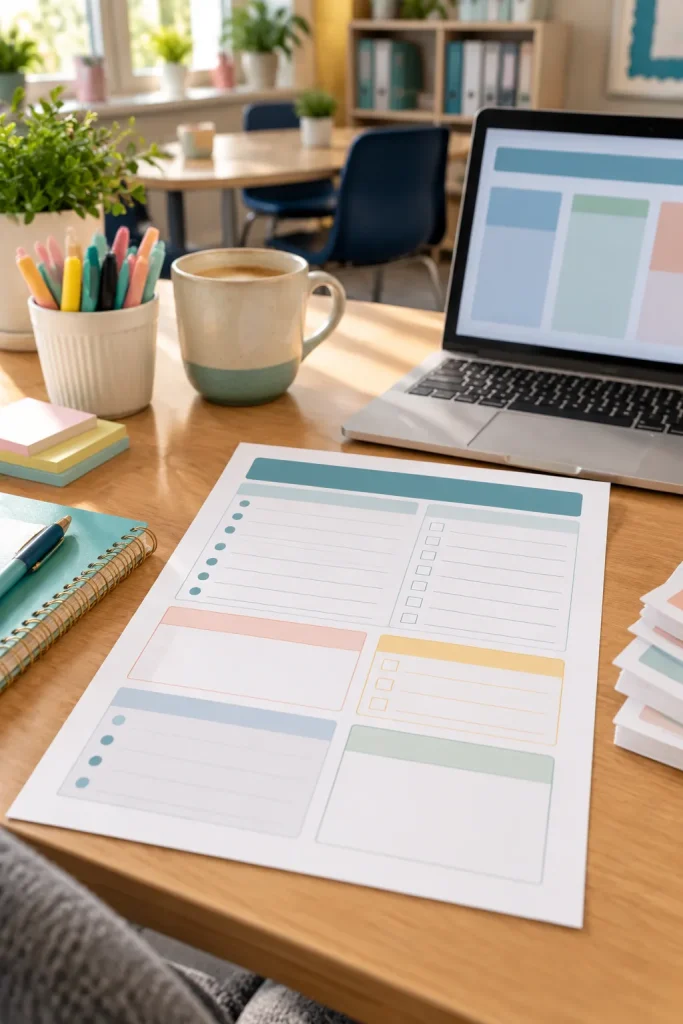
Staff meetings often include small tasks that are easy to forget once the school day gets busy again. A printable meeting notes template helps teachers keep discussion points, decisions, and follow-up work together.
The product can be used for department meetings, lesson planning discussions, or general staff updates.
Arrange the page by meeting flow
Start with the meeting date, topic, and attendees. Add a larger section for notes, followed by action items and deadlines.
You can also include a separate page for tracking unfinished tasks across several meetings.
Teachers and school team leaders may find these pages useful.
Avoid making the design too decorative. A practical meeting sheet needs open writing space and headings that are easy to locate during a discussion.
Record the details. Date, topic, attendees
Capture key points. Decisions and discussion notes
Assign next steps. Tasks, owners, due dates
Review later. Check unfinished tasks
Alphabet Tracing Worksheet Packs
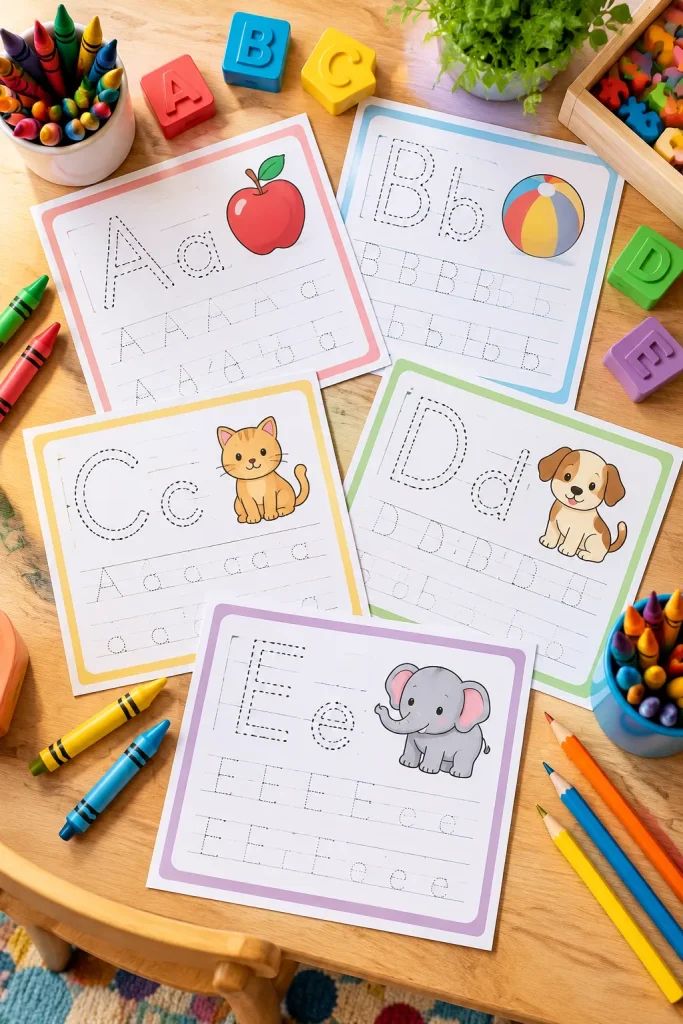
Dotted letters, wide writing lines, and a small picture make a familiar early-learning worksheet. Alphabet tracing packs give young learners space to practice forming letters while recognizing their shapes.
Create individual pages for uppercase and lowercase letters, with large examples at the top.
Keep the practice age-appropriate
Use clear starting points and directional arrows where helpful. Include a small section for independent letter writing after the tracing practice.
Preschool teachers, kindergarten teachers, and homeschool parents may use these worksheets.
Choose familiar objects for letter examples, such as apple for A or ball for B. Make sure the word and picture match the sound being taught.
Avoid crowding the page with too many tracing rows. Young children need space to control their pencil movements.
Printable Classroom Newsletter Templates
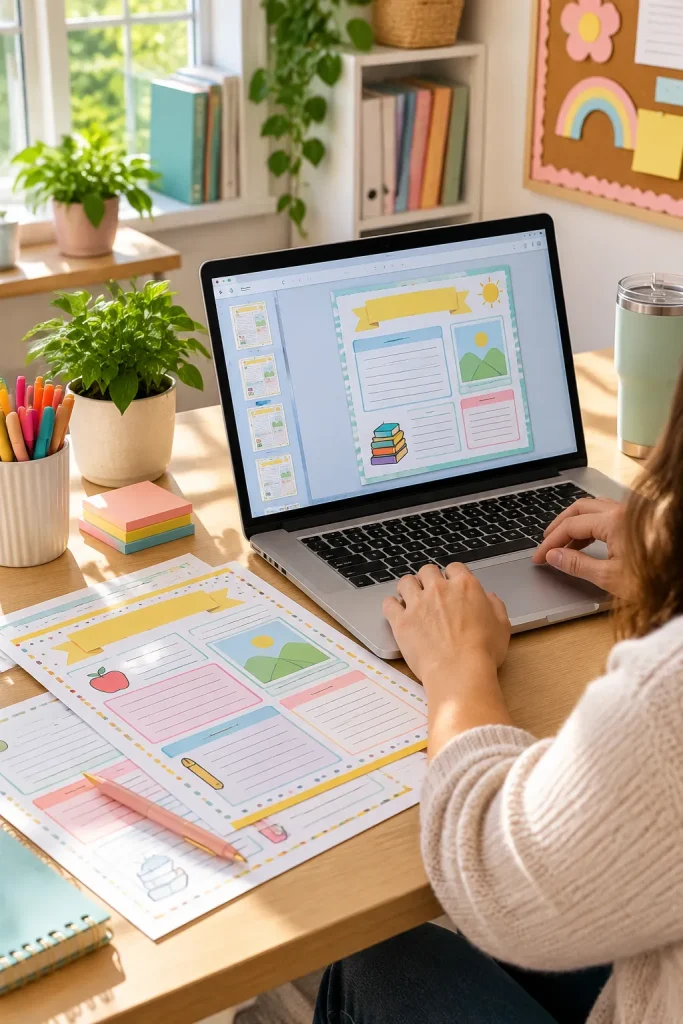
Parents cannot keep track of classroom updates if important details are buried in long messages. A simple classroom newsletter gives teachers a familiar format for sharing upcoming events, reminders, and learning highlights.
Create an editable newsletter template with separate spaces for announcements, important dates, and classroom news.
Design for regular updates
Offer both a weekly and a monthly layout. The weekly version can focus on homework reminders and upcoming activities, while the monthly version can leave more room for class highlights.
Elementary teachers and homeschool group organizers may be interested in these designs.
Make the headings easy to recognize and leave enough space for teachers to replace sample content. Avoid including student photographs or personal details in your product previews.
| Weekly Newsletter | Monthly Newsletter |
|---|---|
| Short reminders | Broader updates |
| Upcoming weekly activities | Monthly events and dates |
| Compact one-page layout | Room for learning highlights |
Student Book Report Templates
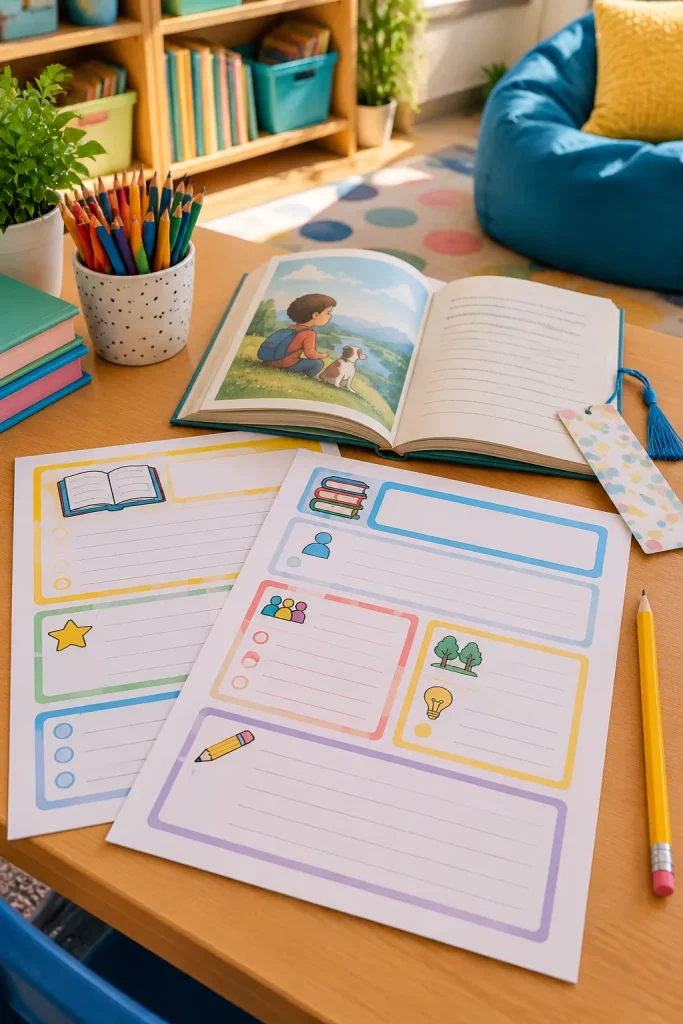
Book reports become more useful when students explain what they read instead of filling a page with copied details. A printable book report template can guide them through characters, events, and their own thoughts about a story.
Create a simple layout with spaces for the title, author, main characters, setting, and story summary.
Match the page to the reader
Younger students may need picture boxes and short sentence starters. Older readers can use prompts about character choices, conflicts, and evidence from the book.
Teachers, tutors, and homeschool families can choose the version that matches their students’ writing abilities.
Include a separate nonfiction report page for facts, main ideas, and interesting discoveries. Keep the directions clear so children know what each section asks them to do.
Include specific prompts, answer space, and fiction/nonfiction layouts.
Avoid broad prompts, tiny answer boxes, and treating every book as fiction.
Printable Classroom Supply Labels
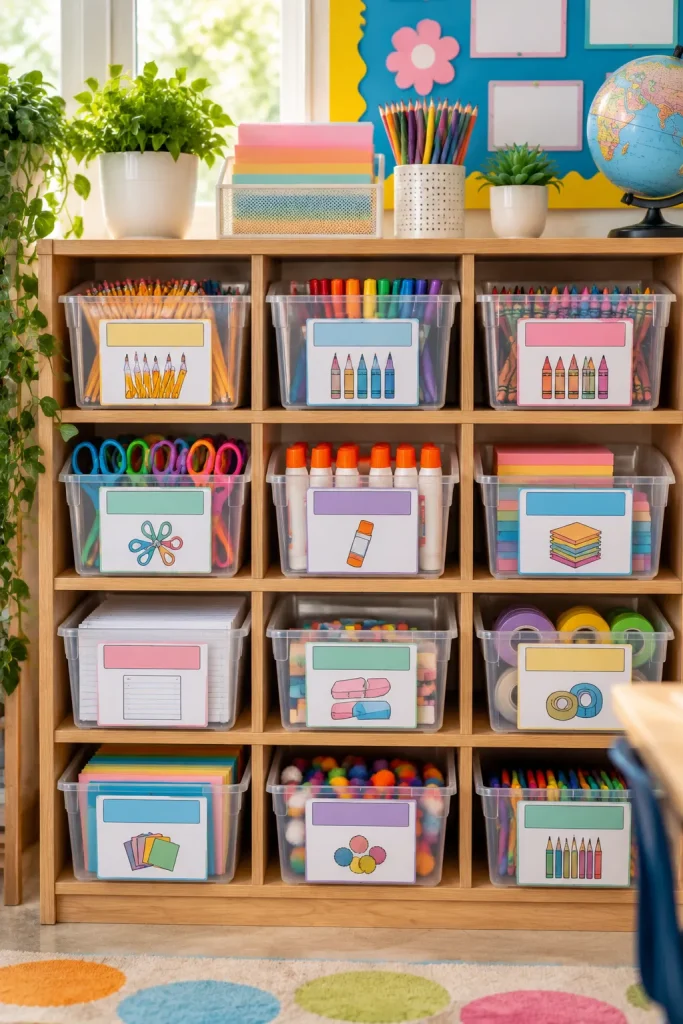
Open a classroom supply cabinet and you may find pencils, glue sticks, markers, and scissors stored in containers that all look alike. Printable supply labels make it easier to identify where each item belongs.
Create matching labels for common classroom materials, with a short item name and a simple picture.
Make the labels fit different containers
Offer several sizes for small drawers, plastic bins, and larger storage baskets.
Include a blank label sheet so teachers can add supplies that are not part of the standard set.
Preschool and elementary teachers, along with homeschool families, are possible buyers.
Use bold lettering and clear images rather than detailed decorations. Test-print your layouts at actual size before listing them so the labels remain readable on smaller containers.
💡 Product Design Tip
Provide a regular-paper version with cutting guides. State finished dimensions and print at actual size. Include small, medium, and large label options.
End of Year Student Memory Books
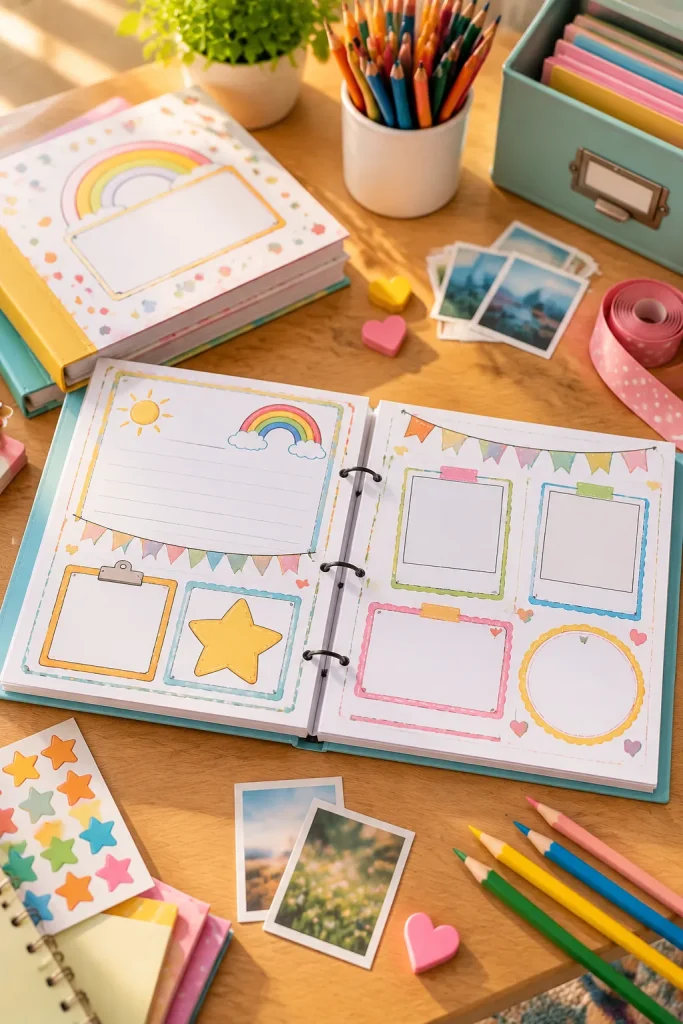
The last weeks of school are filled with activities, classroom cleanups, and goodbyes. A printable student memory book gives children a way to collect their favorite moments before moving to the next grade.
Design a small booklet with pages for favorite lessons, classroom friendships, proud achievements, and hopes for the coming year.
Make the booklet personal
Include spaces for drawings, short written answers, and optional photographs. Add a cover page where students can write their names and school year.
Elementary teachers and homeschool families may use these books as end-of-year activities or keepsakes.
Offer versions with and without photo spaces. That gives teachers flexibility when photographs are unavailable or school privacy rules limit their use.
A memorable student keepsake leaves room for the child’s own stories, drawings, and favorite moments. Include achievements, friendships and a message to their future self.
Start With One Useful Printable
A successful printable product begins with a real classroom need, not a complicated design. Choose one idea from this list and think about how a teacher would use it during an ordinary school day.
You can start with a simple PDF, clear instructions, and a few useful layout options. Before listing anything for sale, check the current rules of your selling platform, along with the licenses for any fonts, graphics, or templates you use.
These printable products for teachers offer different starting points, from classroom organization to student learning activities. Focus on making one resource genuinely useful before building a larger collection.
Save this list to your Pinterest board so you can return to these product ideas when you are ready to create your next printable.