
Introduction
Starting a printable business sounds simple until you sit down to decide what to make. There are so many ideas online, but not every pretty design solves a problem someone wants to pay for.
The trick is to start with something useful. Think about the busy parent planning meals, the teacher organizing lessons, or the small business owner trying to keep track of orders. These people need simple tools that make everyday tasks easier.
You also don’t need expensive software or advanced design skills to get started. Canva is one option for creating printable pages with clear layouts, readable fonts, and useful sections. Start with a small product, make sure it prints properly, and build from there.
This list brings together 25 practical printable ideas to sell, from home planners and kids activities to business forms and party bundles. Each idea includes who might buy it and what to include, so you can spend less time guessing and more time creating something people can actually use.
1. Create a Weekly Meal Planner With a Grocery List
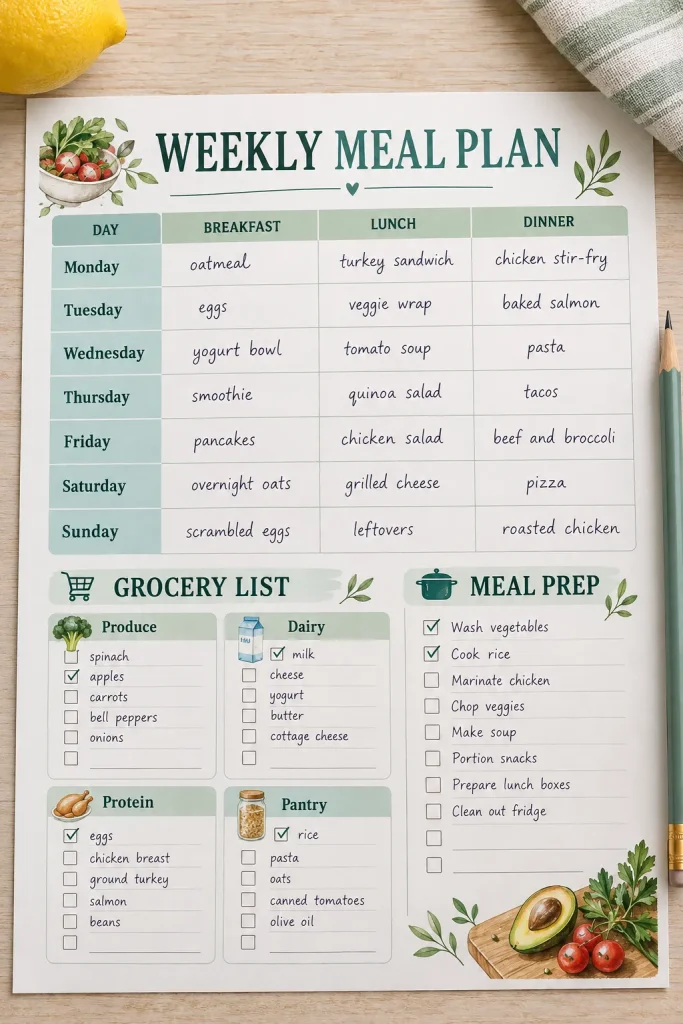
Meal planning gets frustrating when the grocery list is on one page and the dinner plan is somewhere else. A weekly meal planner that keeps both together can solve that small problem.
Design a printable with seven daily sections, a grocery checklist, and a little space for meal prep notes.
Keep the layout practical:
- Add breakfast, lunch, and dinner rows.
- Divide the grocery list into food categories.
- Include a small section for ingredients already at home.
Busy parents, students, and anyone trying to organize weekly meals could use this printable. Offer a full-page version and a simpler one-page design for people who want less writing.
2. Make a Monthly Budget Binder for Household Spending
A budget binder is more useful when it helps people see where their money needs to go before the month begins.
Instead of making a single expense sheet, create a small printable bundle with separate pages for income, bills, daily spending, and savings goals.
Someone organizing household expenses can print the pages they need and reuse the same system each month.
A helpful design detail: Put payment dates beside the bill names so upcoming expenses are easier to spot. Leave enough room for handwritten amounts, especially in the spending tracker.
Use clear labels and simple tables. A buyer should understand each page without needing a long instruction guide.
3. Design a Kids Chore Chart Set for Daily Routines
Getting kids to remember everyday tasks can mean repeating the same reminders all morning. A simple chore chart gives them something they can check for themselves.
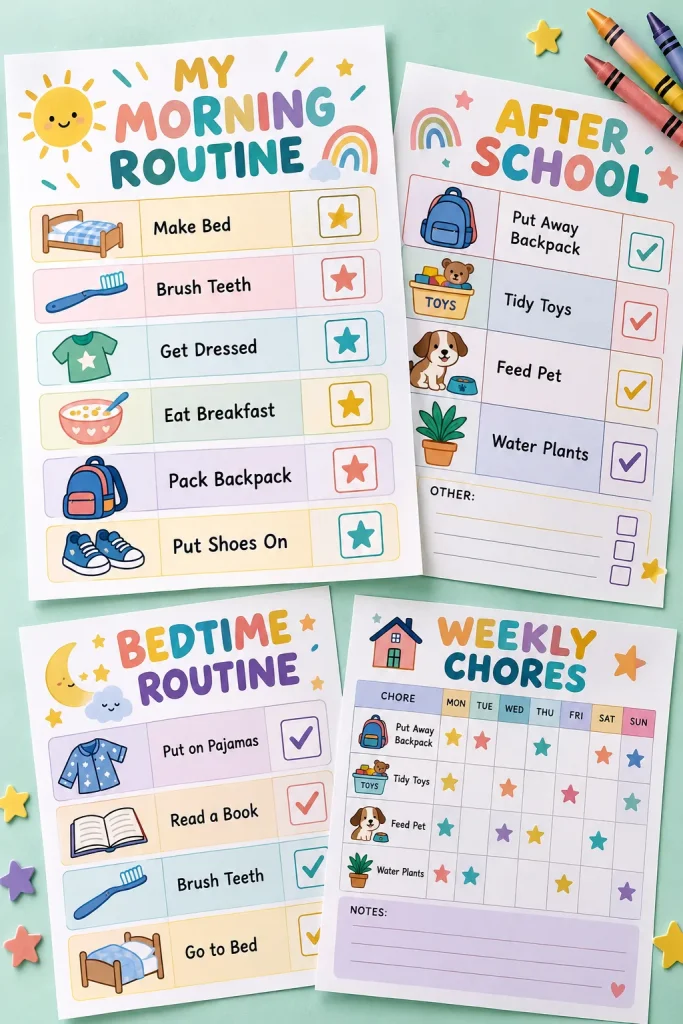
Create a set with separate morning, after-school, and bedtime routines. Add small pictures beside activities such as brushing teeth, putting toys away, and packing a school bag.
For younger children, use fewer tasks and larger checkboxes. Older kids may prefer a weekly chart with room for chores that change each day.
Parents and caregivers can print fresh copies when routines change. Include an editable name area and an ink-friendly version, since colorful charts are not always practical for home printers.
4. Build a Home Cleaning Schedule by Room
A long cleaning checklist can feel overwhelming, especially when every task looks equally urgent.
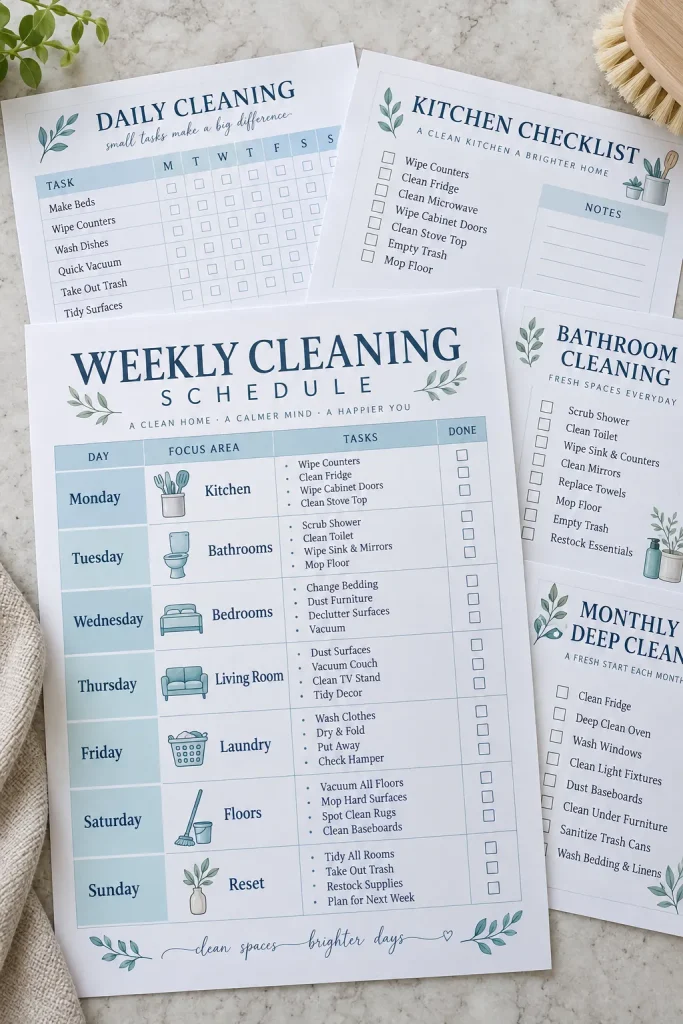
Make a printable schedule that separates quick daily chores from weekly and occasional deep-cleaning jobs. Then give each main room its own checklist.
A kitchen page might cover wiping counters, cleaning the sink, checking the fridge, and washing cabinet fronts. The bathroom page can have a completely different set of tasks.
Make it easy to reuse: Include a blank version so households can add their own jobs or skip tasks that don’t apply.
This product is useful for busy families, new homeowners, and people setting up a regular cleaning routine. Keep the design simple enough to read while moving around the house.
5. Sell a Wedding Planning Checklist Bundle
Wedding planning involves dozens of small decisions, and it is easy to lose track of what still needs attention.
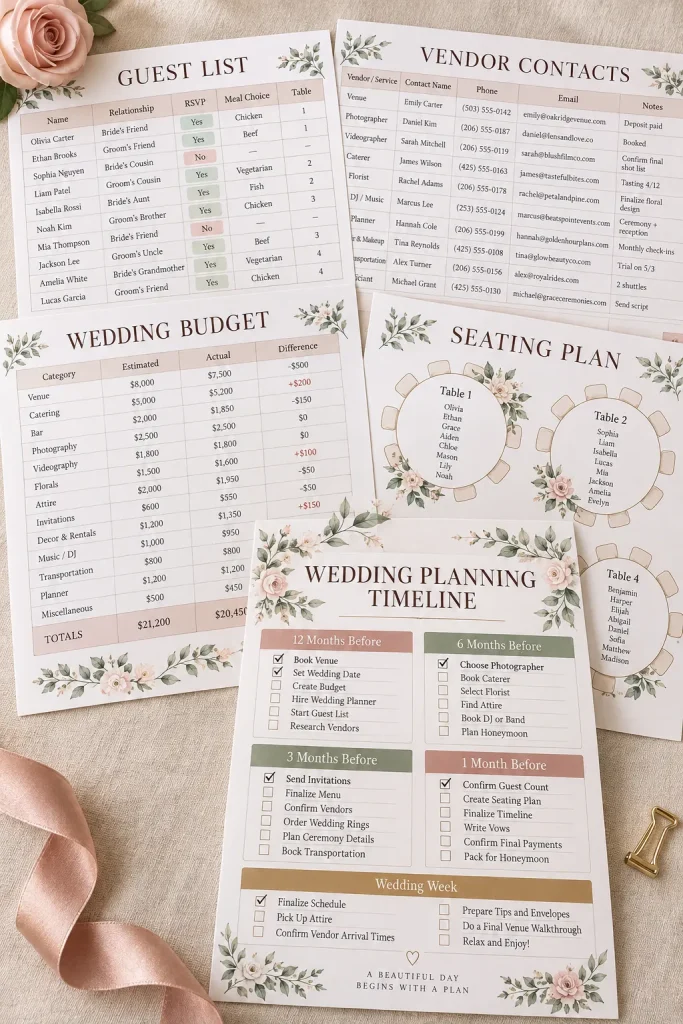
A printable wedding checklist bundle helps couples organize the details in one place. Start with a planning timeline, then add pages for the guest list, vendor contacts, budget, seating arrangements, and wedding day schedule.
One useful feature: Give each checklist a column for deadlines and another for completed tasks. It helps buyers see what needs attention without checking several different pages.
Keep the design elegant but easy to print. Soft colors, readable headings, and plenty of writing space work better than pages crowded with decorations.
Vendor numbers scattered, guest updates on loose notes, and unfinished tasks not clearly tracked
Separate pages for vendors, guests, deadlines, and spending with completion checkboxes
6. Create a Baby Shower Game Pack
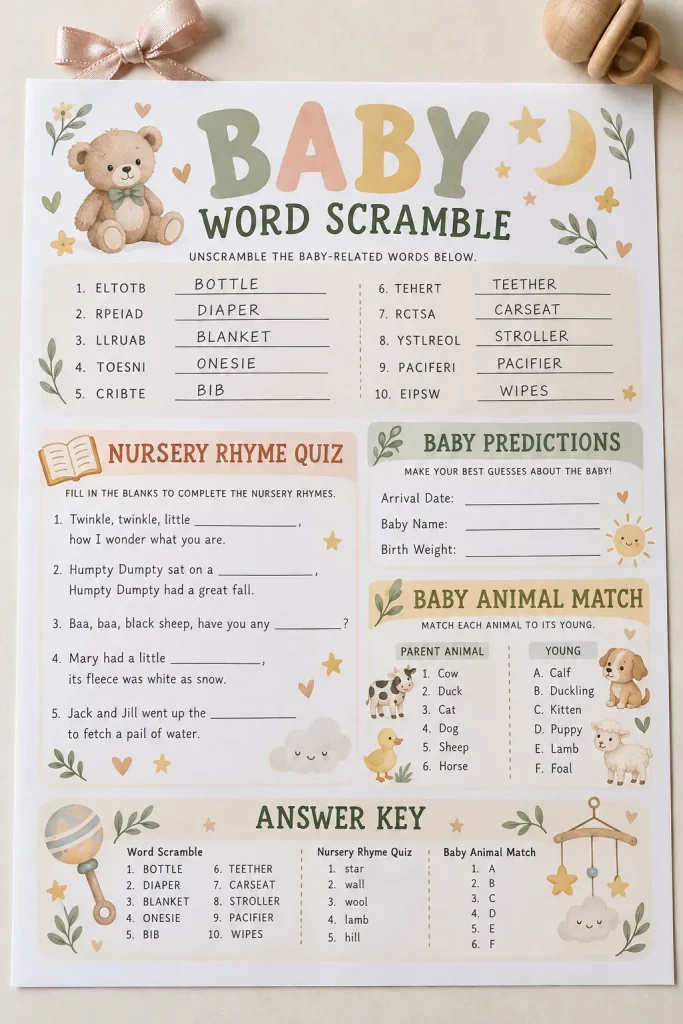
Baby shower hosts often need activities that guests can enjoy without buying extra supplies or preparing complicated games.
A printable game pack gives them several ready-to-use options. You could include baby word scramble, nursery rhyme trivia, baby predictions, and a matching game.
Choose one simple theme and carry it across the whole bundle. Matching colors and headings make the individual pages feel like a complete set.
Think about the guests, too. Add clear instructions at the top of every game and provide answer keys when needed.
These printables can appeal to family members, friends, and party planners organizing baby showers. Include an easy-to-print version with a white background to save ink.
| Type | Details |
|---|---|
| Baby Word Scramble | Unscramble baby-related words |
| Nursery Rhyme Quiz | Complete missing nursery rhyme words |
| Baby Predictions | Guess arrival date and baby details |
| Baby Animal Match | Match animals with their young |
7. Make a Printable Birthday Party Planner
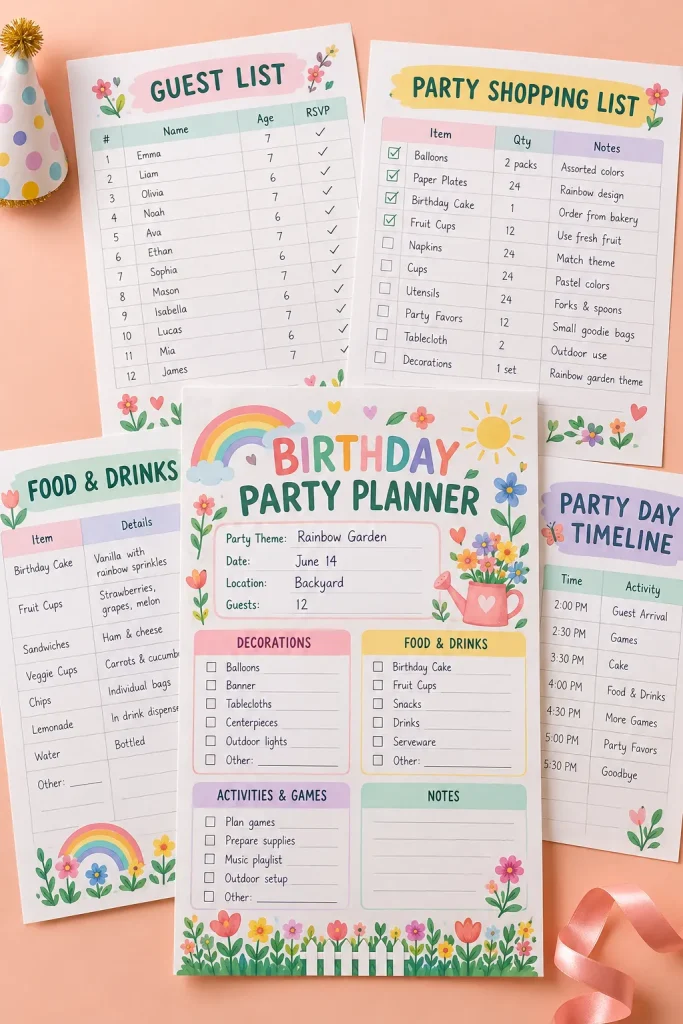
A birthday party can start with a simple guest list and quickly turn into several shopping trips, forgotten decorations, and last-minute errands.
Create a party planner that keeps those details organized from the first invitation to the final cleanup.
Include a guest tracker, food planning sheet, decoration checklist, shopping list, activity schedule, and party day timeline.
Parents planning children’s birthdays and people hosting parties at home may find this useful.
A small detail worth adding: Give the shopping list separate columns for items to buy and items already owned. It can help prevent duplicate purchases and keeps the preparation list shorter.
Make the pages flexible enough to work with different party themes.
Separate RSVP sheet, quantities beside food, simple party timeline
Crowded pages, tiny checkboxes, overly narrow party themes
8. Design a Homeschool Lesson Planner
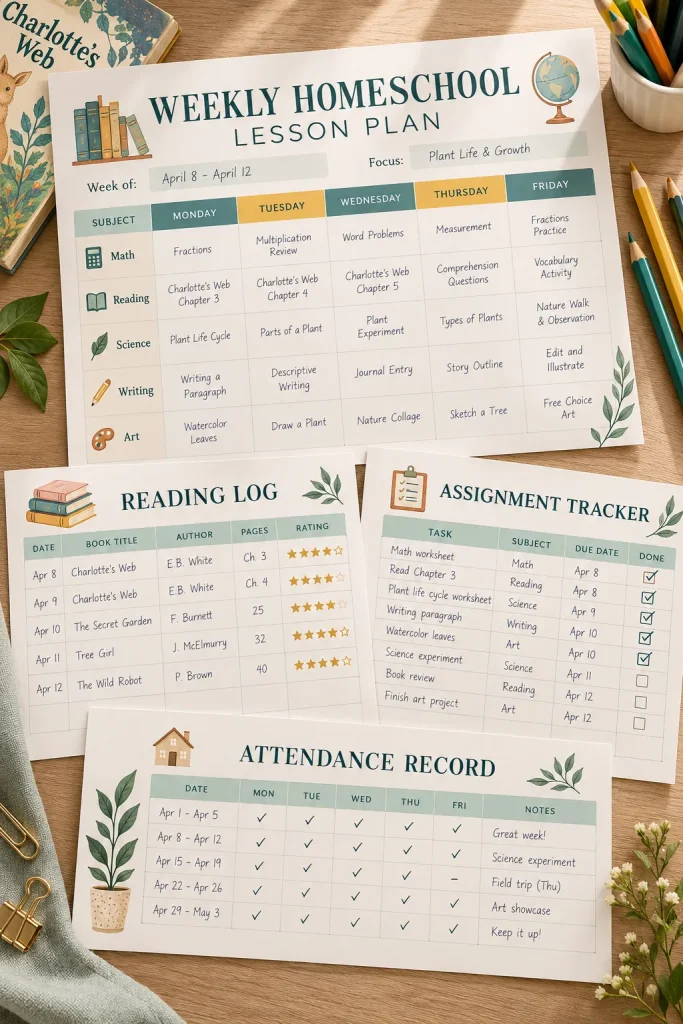
Homeschool families often need more than a standard weekly calendar. Different subjects, reading assignments, and hands-on activities all need their own space.
A printable lesson planner can help parents organize the school week without rewriting the same headings every day.
Start with a weekly overview, then include subject planning pages, reading logs, assignment trackers, and attendance records.
Keep the lesson boxes large enough for a short description, materials needed, and any follow-up work.
Consider different teaching styles. Some families plan each day in detail, while others prefer a flexible weekly schedule. Offering both layouts makes the bundle more useful without requiring a completely different product.
9. Build a Teacher Substitute Binder Pack
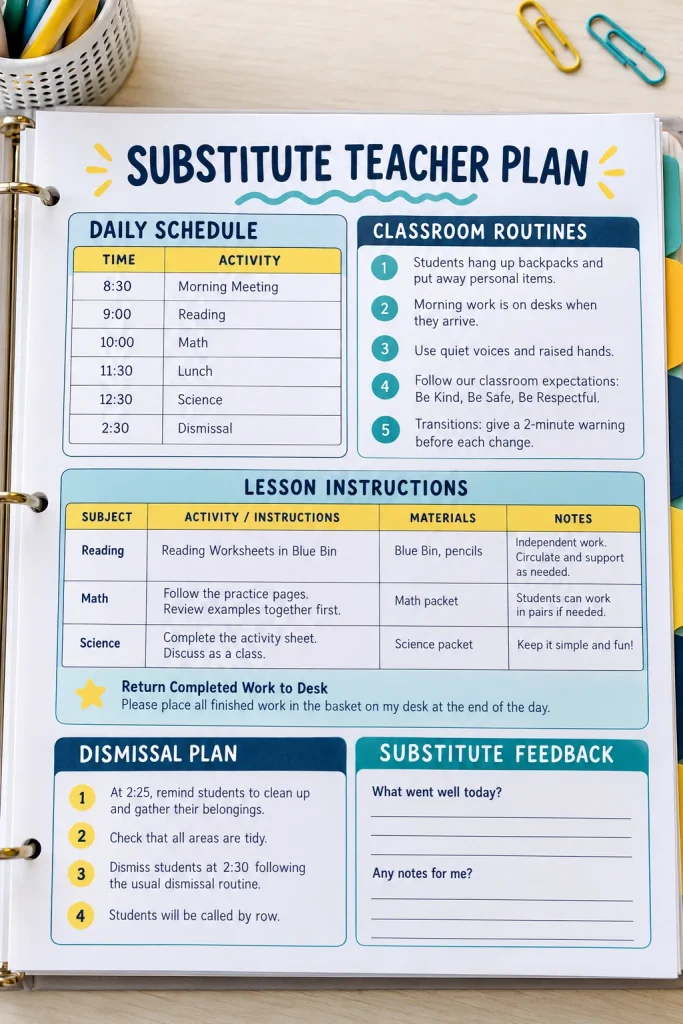
A substitute teacher should not have to search through classroom drawers to find the day’s lesson plan or dismissal instructions.
A well-organized substitute binder puts the important details in one easy-to-follow place. Teachers can prepare it before they need time away from the classroom.
Include these useful pages:
- Daily class schedule and lesson instructions.
- Classroom rules and regular routines.
- Materials needed for each activity.
- Emergency procedures and dismissal instructions.
This printable is useful for classroom teachers who want a reusable system. Include a confidential information section that reminds users to follow their school’s rules for storing student details.
Keep the layout clear enough for someone unfamiliar with the classroom to understand quickly.
Organize in order needed: Arrival, daily schedule, lesson instructions, dismissal, end-of-day notes
Add contents page: Clear section names make instructions easy to find
10. Create a Small Business Order Tracker
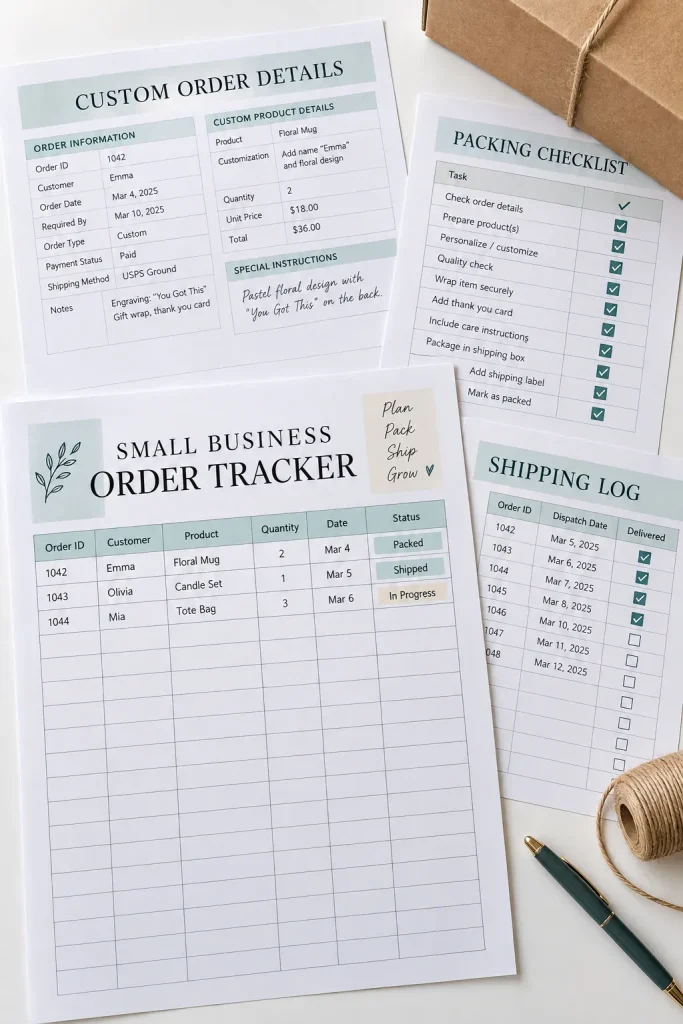
Orders can become difficult to manage when customer details, production notes, and shipping information are written in different places.
A printable order tracker helps small shop owners follow each sale from the first order to final delivery.
Design one main tracking sheet with space for the order number, customer name, product, quantity, order date, and status. Add separate pages for custom requests and packing checklists.
This could appeal to handmade sellers, home-based product businesses, and small shops that prefer working on paper.
Make status tracking simple. Use clear options such as New, In Progress, Packed, Shipped, and Completed. Leave extra room for notes about changes or delayed orders.
11. Make a Printable Social Media Content Planner
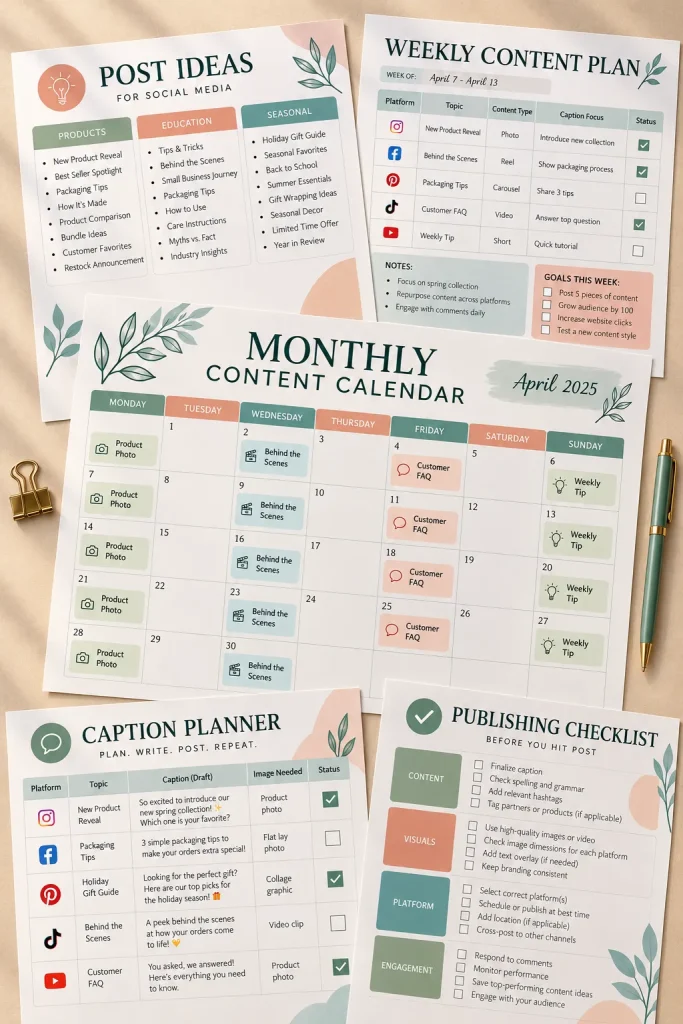
Posting regularly is easier when ideas are already organized instead of being chosen at the last minute.
A printable social media content planner gives business owners and creators a place to collect post ideas, plan dates, and track what has been published.
Start with a monthly content calendar. Then add a weekly planning sheet with columns for the platform, topic, caption idea, image needed, and posting status.
Add a separate idea bank so users can save content topics without assigning them a date right away.
Bloggers, online sellers, and small business owners may find this useful, especially if they like planning on paper before creating content on a computer.
12. Design a Product Inventory Planner for Small Shops
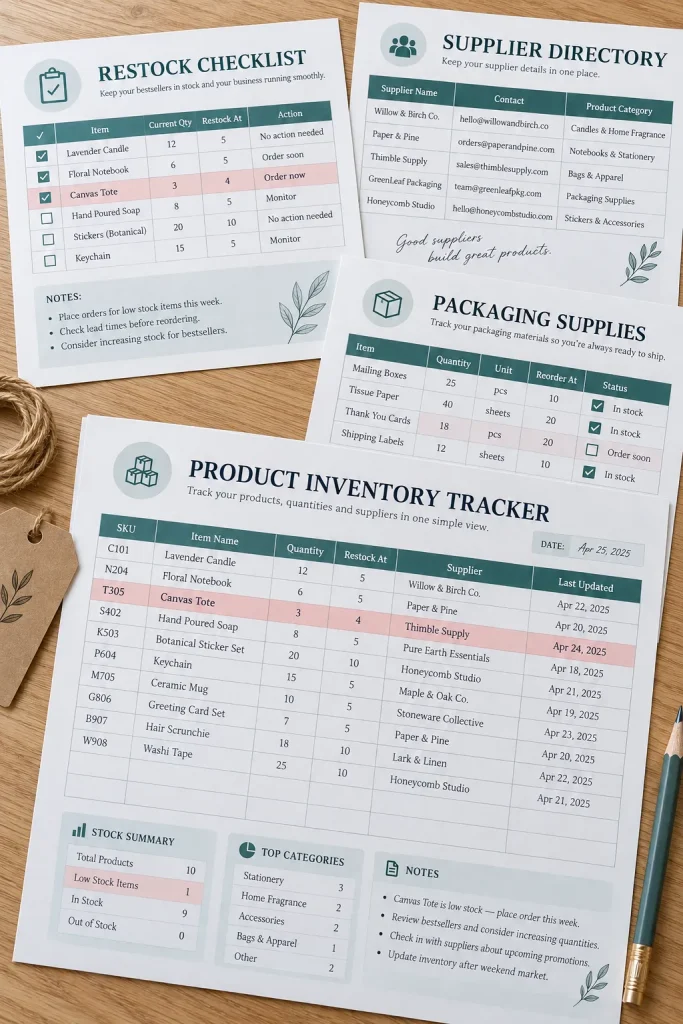
Running out of a popular product is frustrating. So is ordering more supplies when there are already plenty sitting in storage.
A printable inventory planner helps small shop owners see what they have and what needs attention.
Create a table with product names, SKU or item codes, quantities on hand, restock levels, supplier details, and last updated dates.
You can also add a supplies tracker for packaging materials, labels, and other items used when preparing orders.
This is different from an order tracker because it focuses on available stock rather than individual purchases.
Keep one row per product variation. Different sizes or colors may need separate quantities, even when they belong to the same product.
13. Create a Client Intake Form Pack for Service Businesses
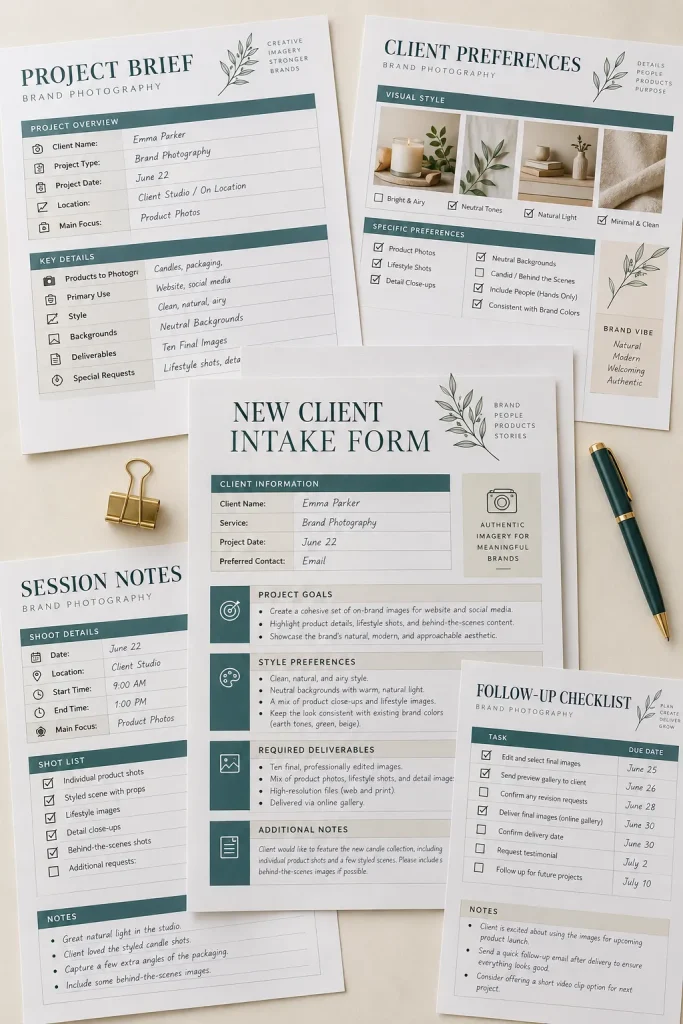
Before starting a client project, a service provider needs to understand what the customer wants, when they need it, and how to contact them.
A printable client intake pack keeps those details organized from the first inquiry.
Design forms for basic contact information, project requirements, customer preferences, appointment notes, and follow-up questions.
Photographers, organizers, tutors, and freelance service providers could adapt these pages to their own work.
Include a short instruction page explaining which forms to use at each stage. Avoid requesting sensitive information that is not necessary for the service.
A clean layout with clearly labeled fields is more useful than decorative forms with tiny writing spaces.
14. Make a Habit Tracker Bundle With Different Layouts
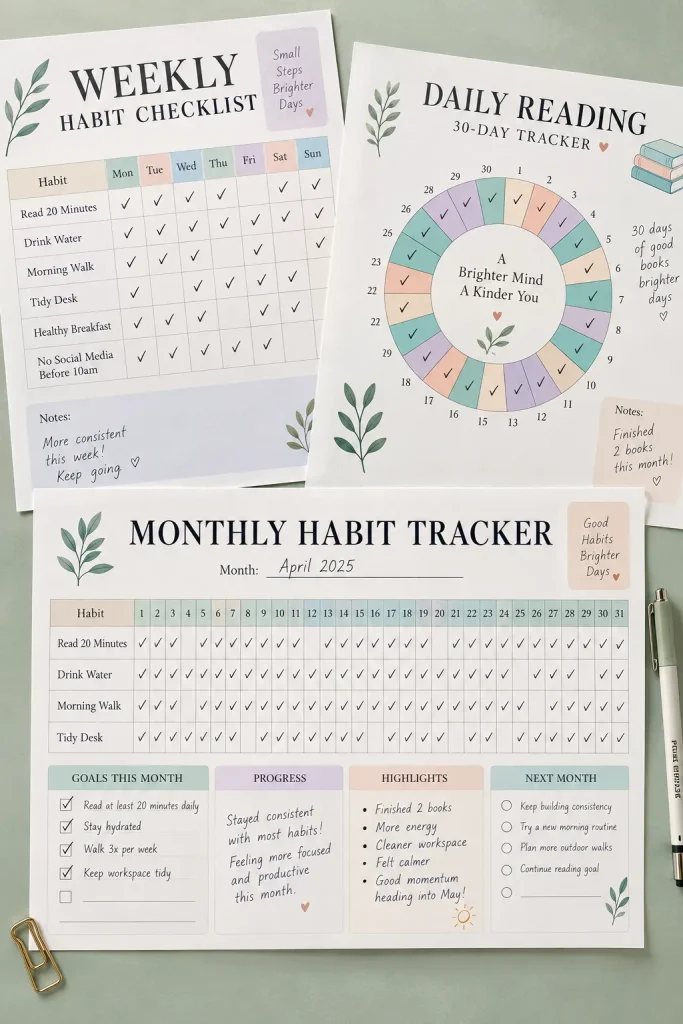
Some people like checking off habits every day, while others prefer a simple weekly overview. A single tracker layout may not suit both.
Create a printable bundle with several ways to record routines. Include a monthly grid, a weekly checklist, a circular tracker, and a simple one-habit page.
People tracking reading, daily walks, household routines, or personal goals can choose whichever format feels easiest.
Add a blank habit name field rather than filling every page with preset activities. It makes the same design useful for different routines.
Choose readable grids, clear date labels, and enough space for pencil marks. The point is to make tracking simple, not turn every missed day into a problem.
| Type | Details |
|---|---|
| Monthly Grid | See checkoffs for a whole month |
| Weekly Checklist | Follow several habits during one week |
| Circular Tracker | Color one segment per day |
| Single-Habit Page | Focus on one routine with notes |
15. Design a Printable Fitness Challenge Tracker
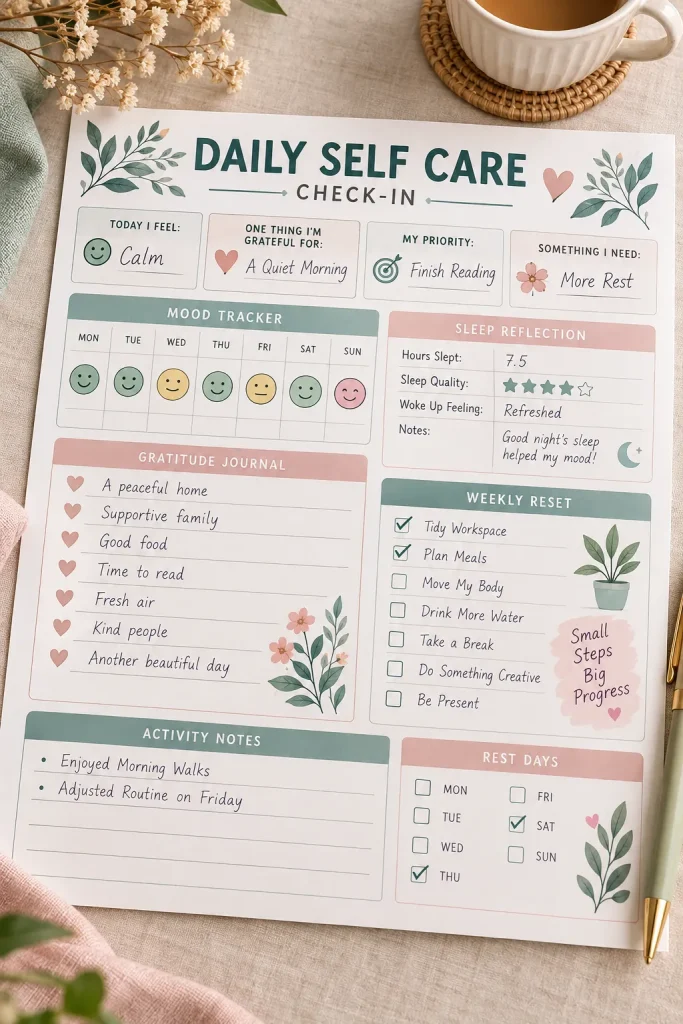
A fitness challenge tracker is different from a general habit chart because it follows a planned series of activities over a set period.
Design a printable with daily activity boxes, rest days, completion checkmarks, and space for personal notes.
Someone following a walking challenge or simple movement routine can use the page to record what they have completed.
Keep the activity fields flexible. A printable that lets users enter their own exercises is more useful than one that assumes everyone follows the same routine.
Include a weekly reflection area for energy, enjoyment, and adjustments. Avoid promising weight loss or other physical results. The product should help users organize their chosen activities, not prescribe a fitness program.
Activities kept in memory and rest days overlooked
Dated activities, marked rest days, and reflection notes
16. Create a Self Care Journal Page Bundle
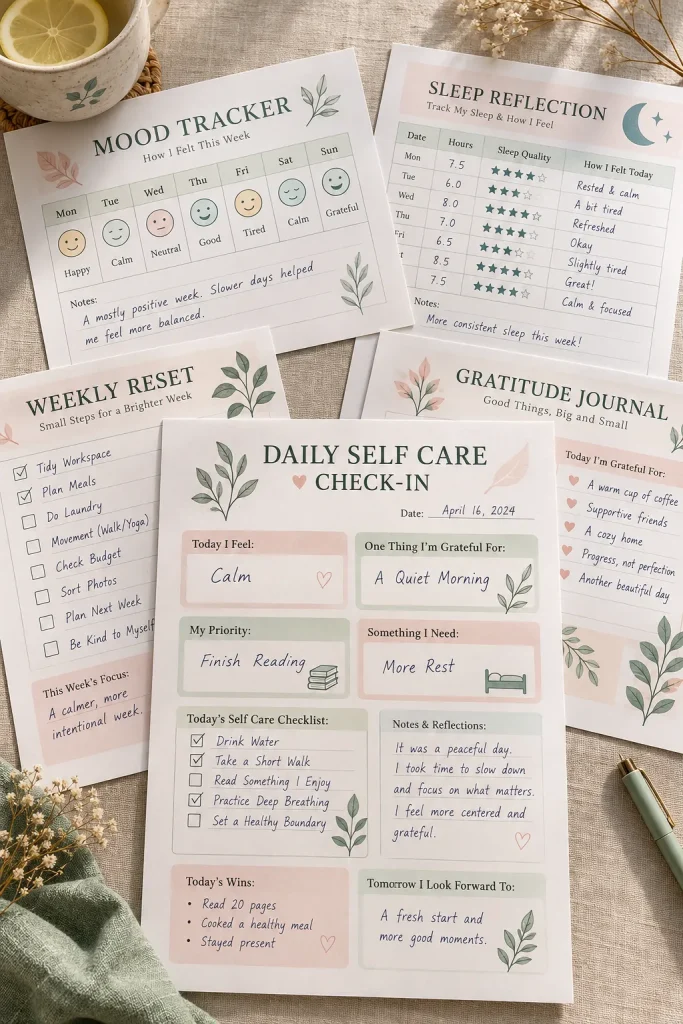
A self care journal does not need long writing prompts or pages full of complicated questions. Sometimes a few thoughtful sections are enough.
Build a printable bundle around simple daily check-ins. Include mood notes, gratitude prompts, sleep reflections, personal priorities, and a weekly reset page.
This type of product may appeal to journal lovers, busy parents, and people who enjoy using paper to reflect on their routines.
Keep most answers short, with room for a sentence or two rather than a full page of writing.
One helpful addition: Include a completely blank reflection page for days when the preset questions do not fit. The journal should feel flexible, not like another task to finish.
17. Make a Printable Travel Planner Pack
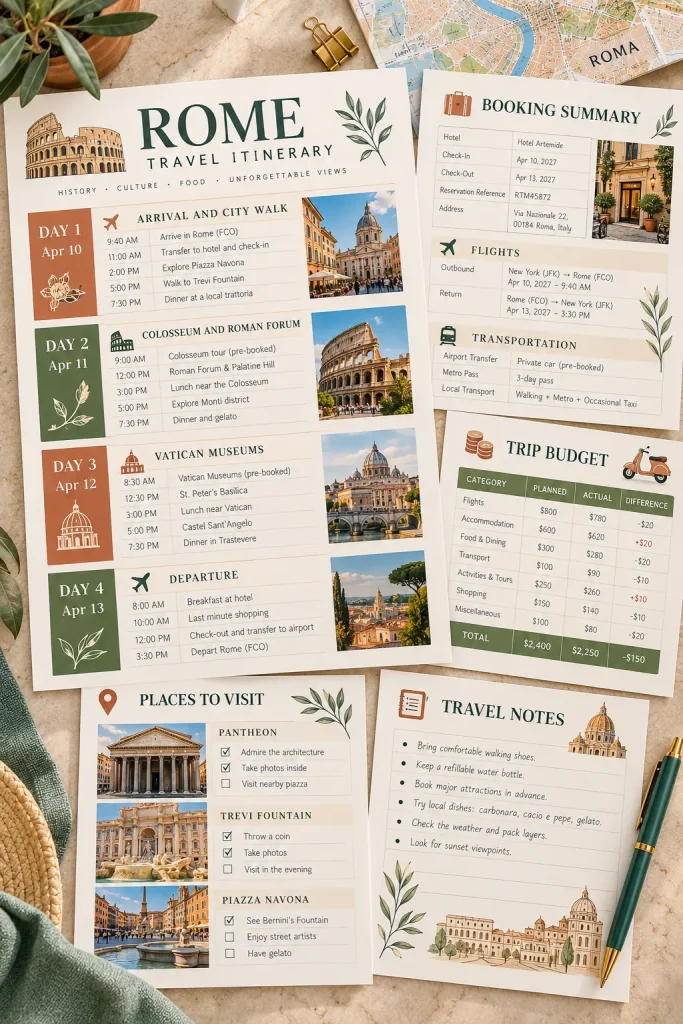
Travel plans often end up scattered across booking emails, phone notes, and screenshots. A printable travel planner gives everything a clear place before the trip begins.
Create a bundle with a trip overview, reservation summary, daily itinerary, sightseeing list, and travel spending tracker.
Make each page useful:
- Add confirmation number fields beside bookings.
- Include addresses and check-in times.
- Leave space between activities for travel notes.
Families, couples, and people planning longer vacations may find this product helpful. Use undated pages so buyers can print them for different trips.
A good itinerary also leaves room for changes. Nobody wants a vacation schedule that feels impossible to follow.
Keep bookings together, flexible time blocks, contact sheet
Rigid schedules, tiny booking fields, crowded single sheets
18. Design a Packing Checklist Set for Different Trips
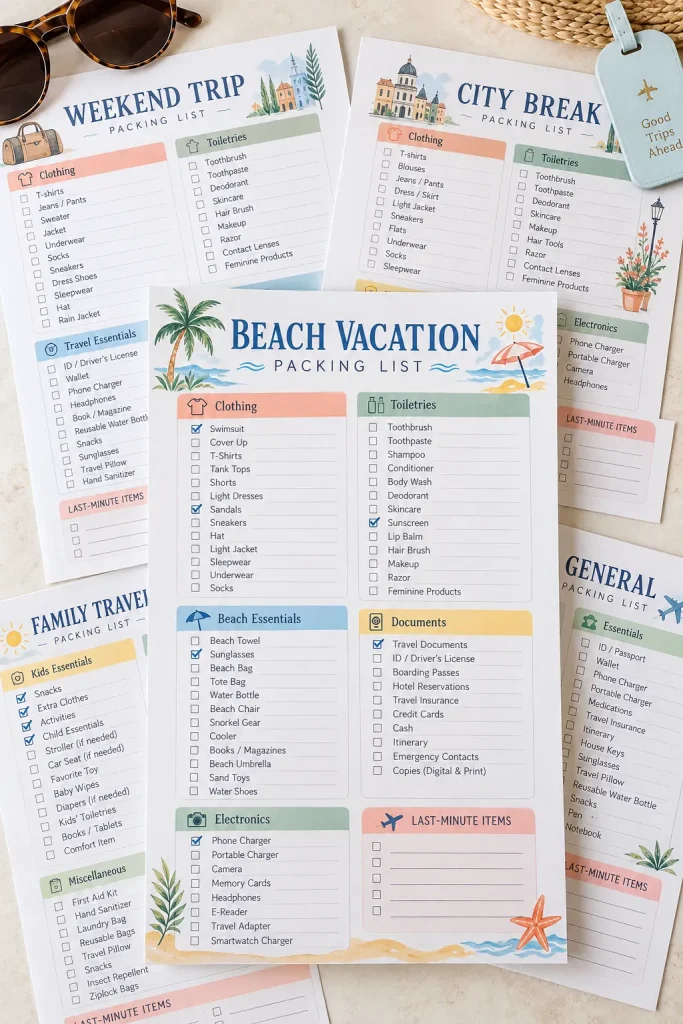
A weekend city break needs a different packing list from a beach vacation or a trip with young children.
Instead of selling one general checklist, create a bundle with separate printable lists for different types of travel.
Include everyday essentials, clothing, toiletries, electronics, and destination-specific items. A family version can have extra sections for children’s supplies, snacks, and travel documents.
This product is useful for travelers who prefer checking items off while packing.
One detail makes a real difference: Add columns for packed items and last-minute items. Chargers, medication, and everyday toiletries are often needed until the day of departure.
Use large checkboxes and keep the lists easy to print in black and white.
19. Create a Reading Journal for Book Lovers
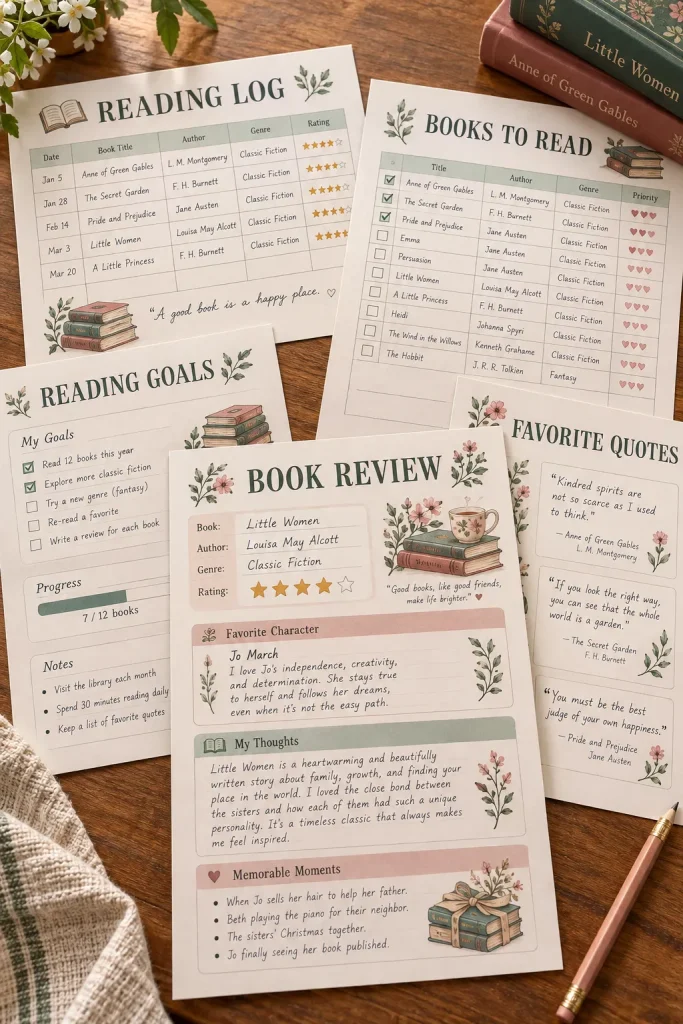
A reading journal gives book lovers a place to remember more than just the titles they have finished.
Design a printable with a reading log, book review pages, favorite quotes section, reading goals, and a list of books to read next.
Book club members and regular readers may enjoy using it to organize their thoughts after each book.
Keep the review page simple. Include the title, author, genre, rating, favorite character, and a short space for personal notes. Not everyone wants to write a full review.
You could also add a bookshelf-style tracker where readers color a small book spine after finishing a title.
Make the pages undated so they stay useful throughout the year.
Simple book log: Record title quickly
Personal thoughts: Allow longer reflection on favorite books
Reading wish list: Title, author, and recommendation source
20. Make a Kids Activity Sheet Bundle
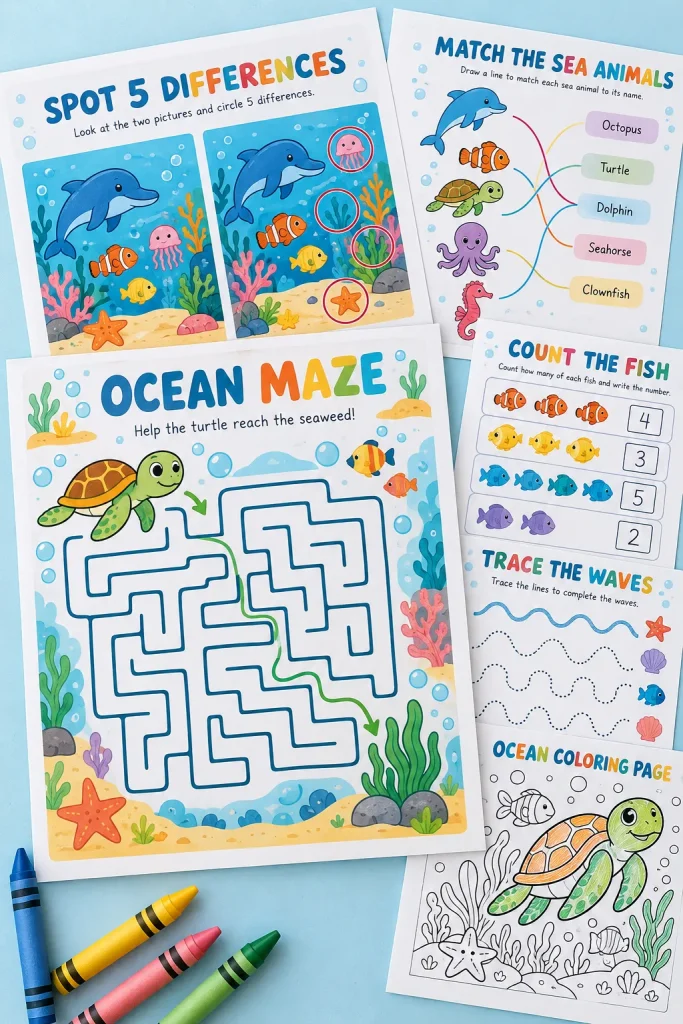
Rainy afternoons, restaurant waits, and quiet time at home are all moments when parents may want simple activities that don’t require much setup.
A printable activity bundle can include mazes, spot-the-difference pictures, matching games, word searches, coloring sheets, and easy puzzles.
Choose a clear theme, such as animals, space, or under-the-sea adventures, so the pages feel like one product.
Match the activities to the age group. Younger children need larger pictures and simpler puzzles, while older kids may enjoy more detailed challenges.
Include answer pages for puzzles that have fixed solutions. Parents and caregivers should be able to print the bundle and use it without gathering extra supplies.
21. Design a Preschool Learning Worksheet Pack
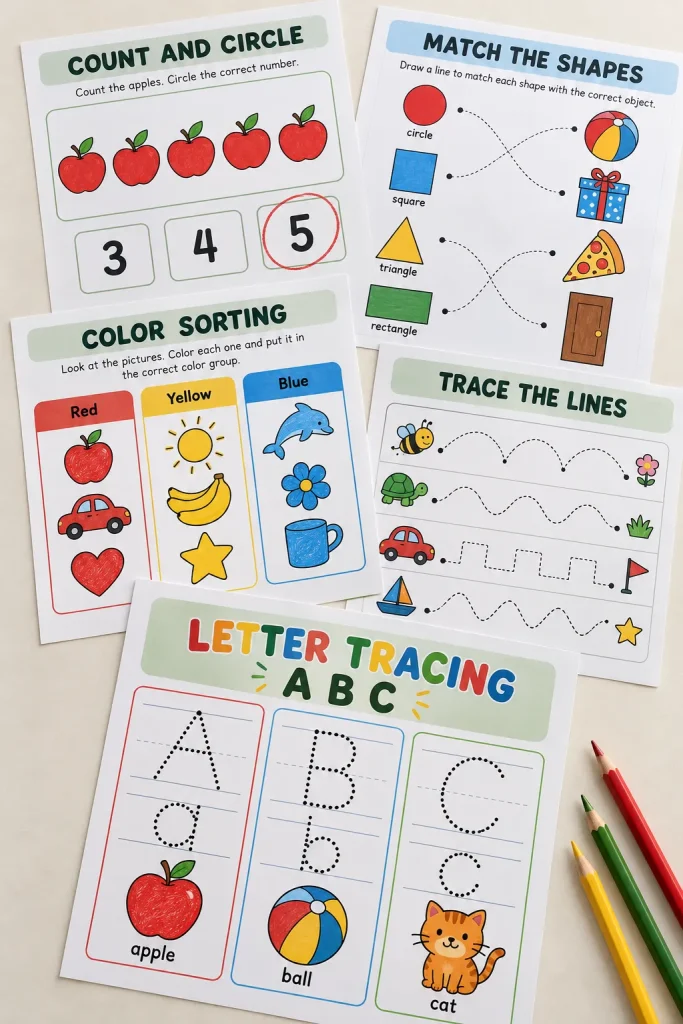
Little learners need plenty of room to trace, circle, count, and match. Tiny instructions and crowded pages only make those activities harder.
Create a preschool worksheet bundle with simple activities for letters, numbers, shapes, colors, and early counting.
Divide the product into learning groups:
- Alphabet tracing and letter recognition.
- Number tracing and counting pictures.
- Shape identification and matching.
- Simple patterns and color sorting.
Parents, preschool teachers, and homeschool families may use these worksheets for short learning sessions.
Start with familiar objects like apples, stars, and animals. Keep instructions short enough for an adult to explain quickly, and include an answer key for activities that need one.
22. Create a Printable Flashcard Set for Early Learning
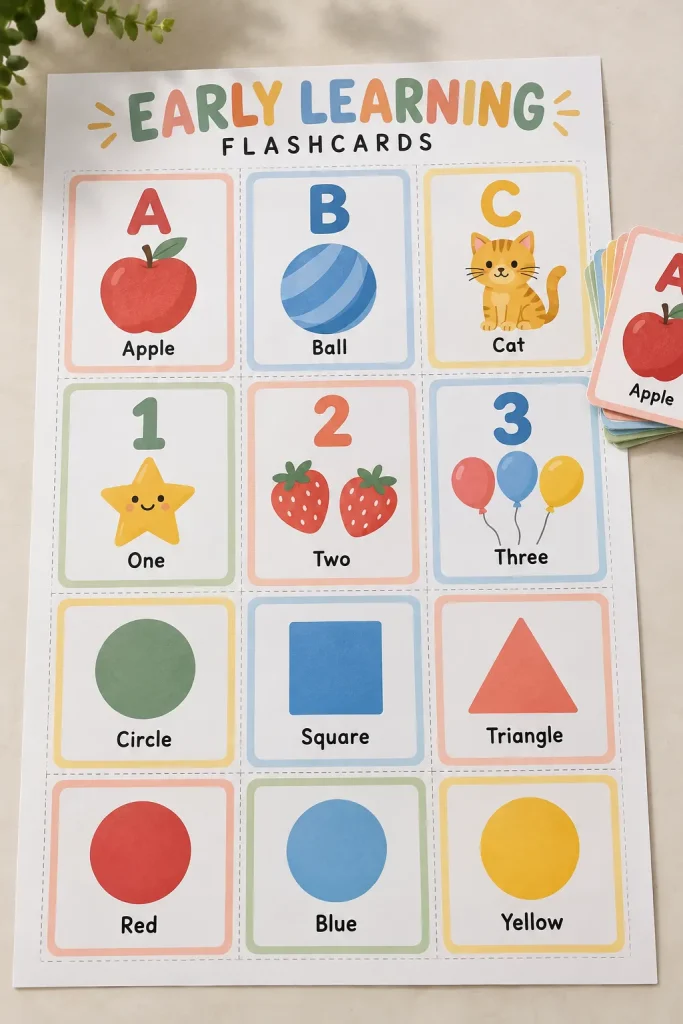
Flashcards work best when a child can recognize what is on the card without being distracted by too many decorations.
Design separate printable sets for letters, numbers, shapes, colors, and familiar objects. Use one large picture or symbol on each card with a short, readable label underneath.
For example, an alphabet card could show a large letter A, a clear apple illustration, and the word Apple.
Parents, tutors, and early learning teachers can cut out and reuse the cards for matching, sorting, and recognition games.
Pay attention to print size. Leave cutting margins around each card and offer a layout with fewer, larger cards per page for younger learners.
| Type | Details |
|---|---|
| Alphabet Cards | Letter, matching object, short word |
| Number Cards | Numeral and matching object count |
| Shape Cards | Shape and name |
| Color Cards | Color sample and name |
| Object Cards | Familiar illustration and label |
23. Make a Printable Recipe Card Bundle
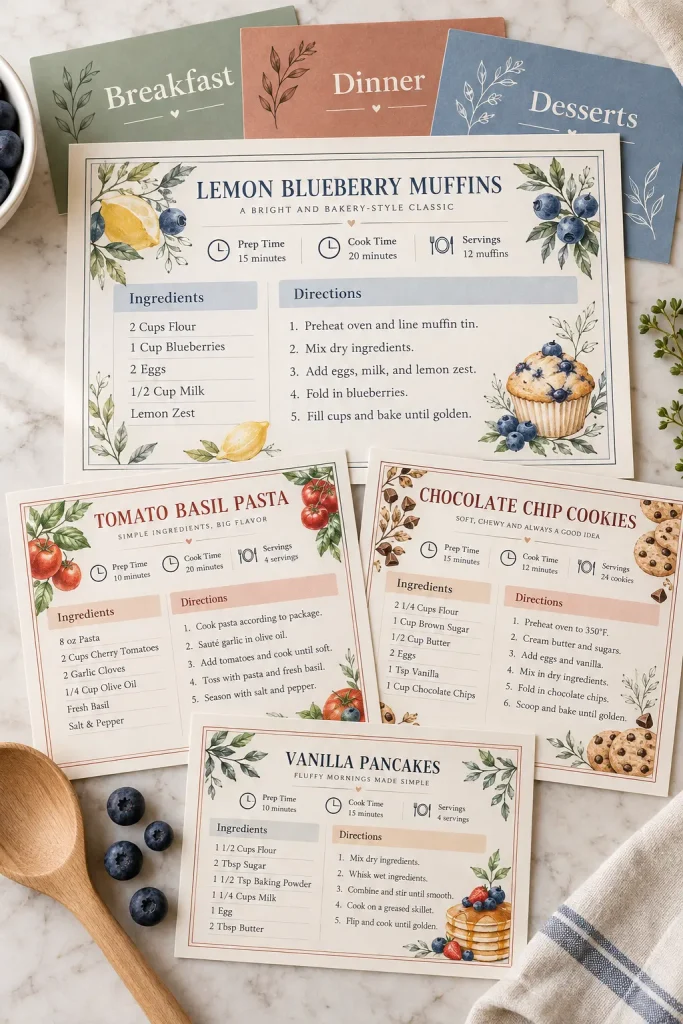
Handwritten recipes often come from different places. Some are on scraps of paper, while others are tucked inside old cookbooks.
A matching recipe card bundle gives home cooks a simple way to organize their favorite dishes.
Create cards with clearly marked spaces for the recipe title, ingredients, preparation steps, cooking time, and personal notes.
You could include two card sizes, plus category dividers for breakfast, dinner, baking, and desserts.
A useful extra: Add a small checkbox for recipes the buyer wants to make again. It is an easy way to mark family favorites without creating another tracking page.
Keep ingredient lines wide enough for measurements, especially when recipes have longer lists.
24. Design a Home Maintenance Binder
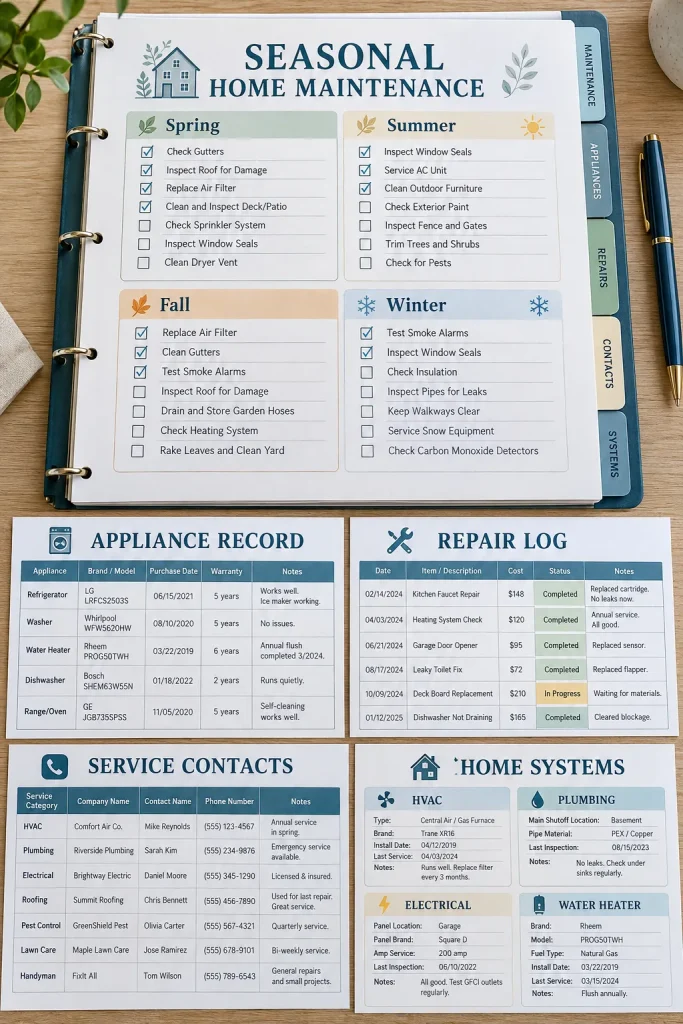
Remembering when an appliance was serviced or a home repair was completed can be difficult months later.
A printable home maintenance binder gives homeowners a place to record those details before they are forgotten.
Include seasonal maintenance checklists, appliance information sheets, repair logs, service contact pages, and a yearly overview.
Homeowners and landlords may use this type of binder to keep household records in one place.
Make the repair log specific. Add fields for the date, problem, work completed, service provider, and next follow-up.
Use separate sections for recurring tasks and completed repairs. That way, buyers can quickly find past records without sorting through old checklists.
25. Create a Pet Care Planner for Everyday Routines
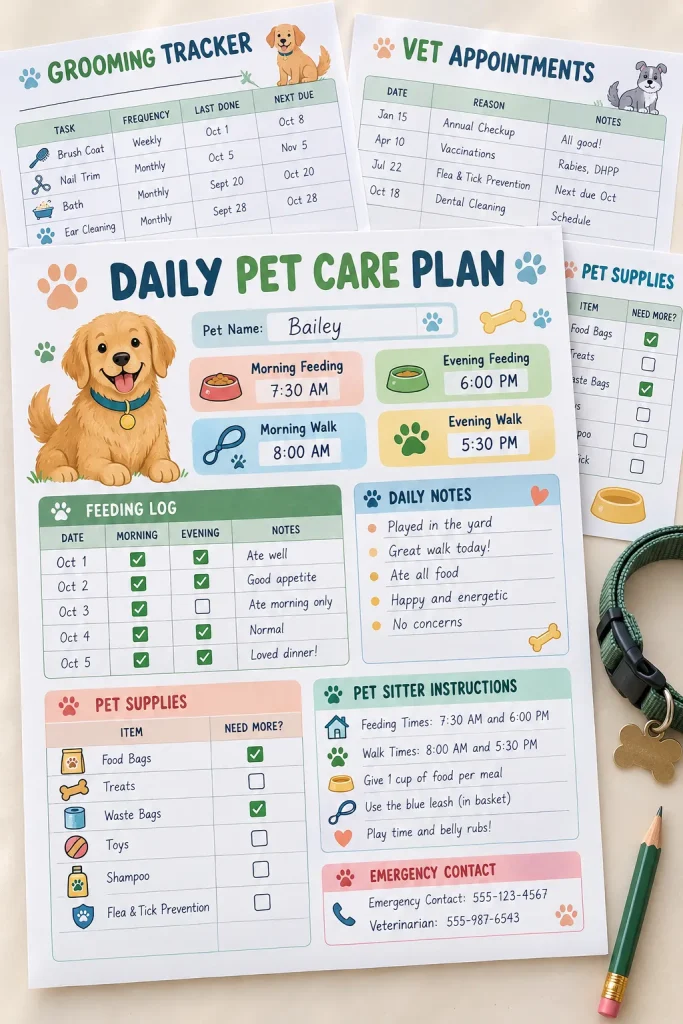
Keeping a pet’s feeding schedule, grooming needs, and appointment details together can make everyday care much easier, especially when more than one person helps.
A printable pet care planner gives owners a simple place to record routines and important information.
Include these practical pages:
- Daily feeding schedule with times and portions.
- Grooming checklist and appointment log.
- Veterinary contact details and visit notes.
- Pet supplies tracker and restocking list.
This product could appeal to dog owners, cat owners, pet sitters, and families sharing pet care duties.
Add a separate care instructions page for someone looking after the pet while the owner is away. Clear routines are especially helpful when handing over responsibilities.
Feeding instructions in messages, grooming dates forgotten, appointments scattered
Care routines, supplies, grooming, vet contacts, sitting instructions in labeled pages
Conclusion
You don’t need to create a huge collection of products to start selling printables. One useful design that solves a clear problem is a better starting point than dozens of pages people may never use.
Choose a few printable ideas to sell that match your interests and the type of customer you want to help. Focus on readable layouts, practical sections, and pages that print correctly at home.
Before listing your product, check the current selling platform rules, permitted design assets, and file requirements.
Start with one idea, improve the small details, and build your collection as you learn what customers need.
Found a few ideas worth making? Save this list to your Pinterest board so you can come back when you’re ready to create your next printable product.