
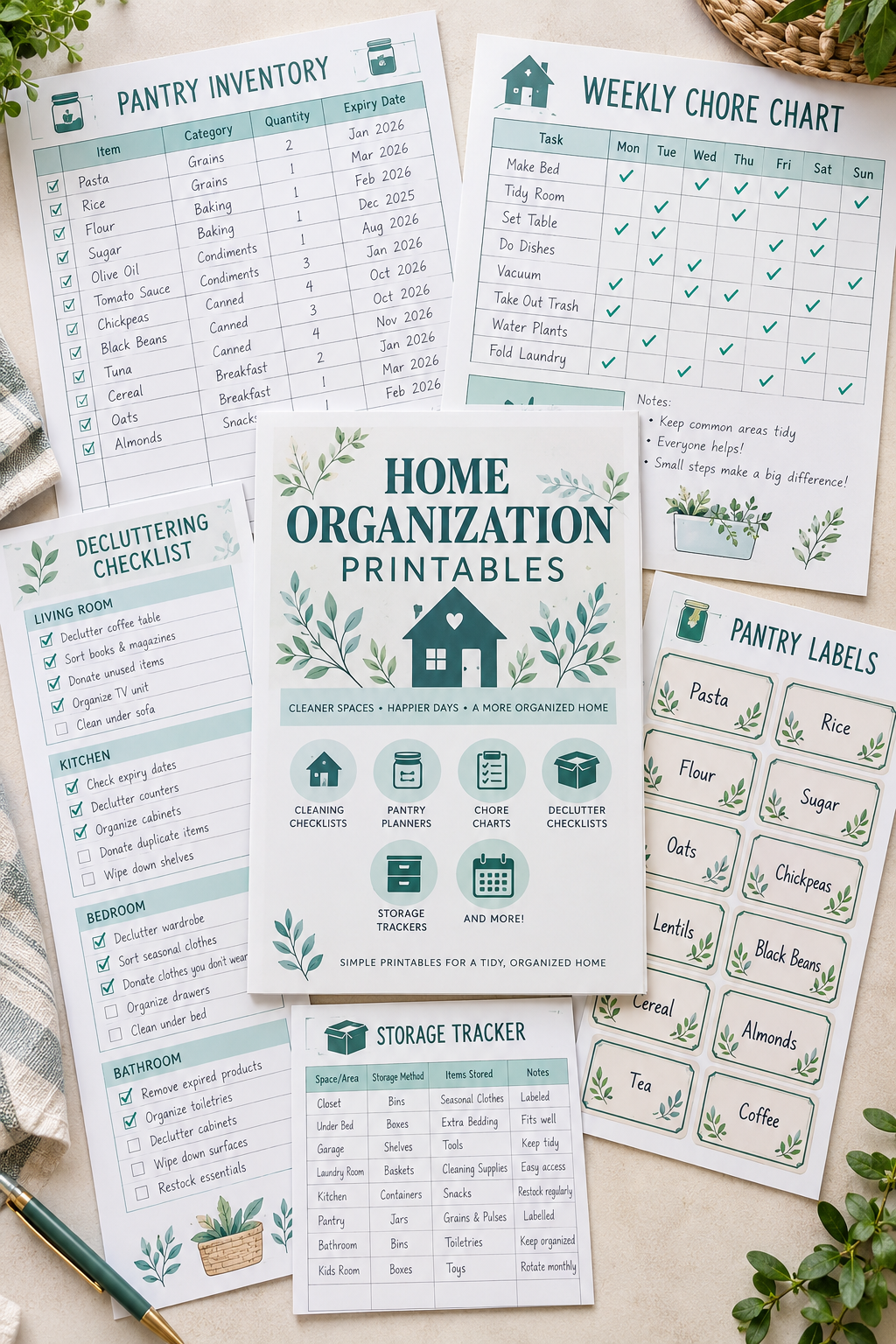
A tidy home does not always need more storage baskets. Sometimes, people already have enough shelves, drawers, and containers. What they are missing is a simple way to keep track of everything.
That is where home organization printables come in.
People want to know what is hiding in the freezer, which closet holds the spare bedding, and what needs cleaning before the weekend. A well-designed printable can make those everyday jobs easier without adding another complicated system.
For digital product sellers, this creates plenty of useful product ideas. You can design checklists, inventory sheets, labels, and planners that solve one clear household problem at a time. Most can be created with beginner-friendly tools like Canva or Google Docs, then offered as printable PDF downloads.
The key is to make each product easy to understand and simple to use. Customers should know exactly what to do with it when they print the first page.
Here are 25 practical printable products you can create for people who want a more organized home.
1. Whole-Home Declutter Checklist
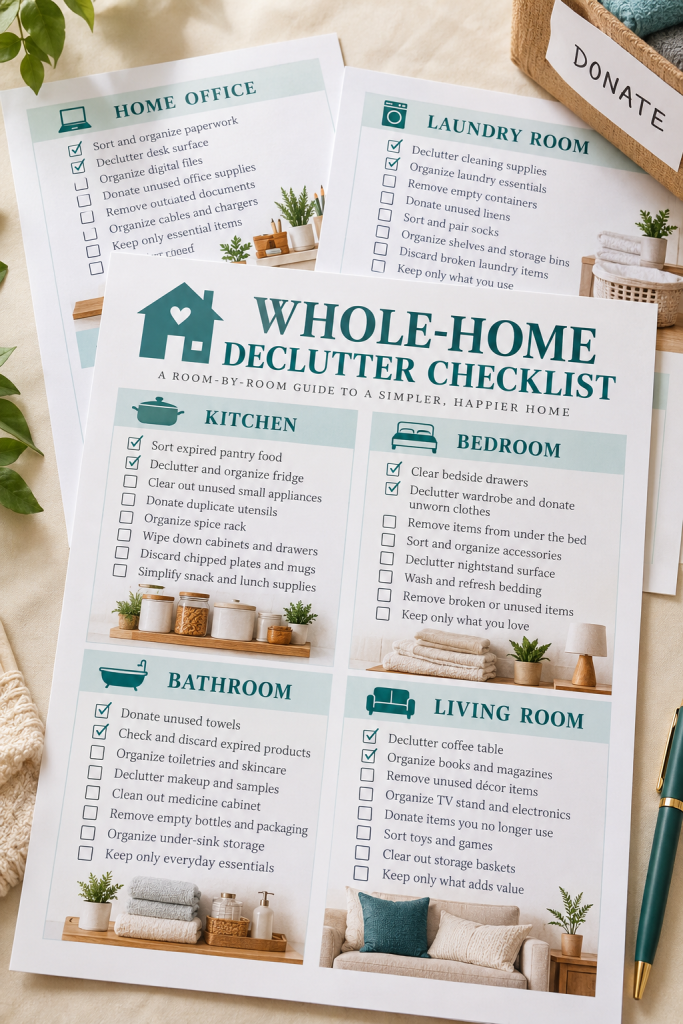
A cluttered home can feel like one enormous job. A room-by-room checklist breaks that job into smaller tasks people can finish without feeling overwhelmed.
Create separate pages for the kitchen, bedroom, bathroom, living room, and storage areas. Each page can list specific jobs, such as clearing expired pantry items or sorting old bathroom products.
For a useful printable:
• Add checkboxes beside individual tasks.
• Include a small progress section for each room.
• Leave space for items to donate, recycle, or relocate.
This product suits homeowners, renters, and anyone preparing for a seasonal cleanout. Offer a complete bundle with a simple cover page and clear room labels.
What to Include in Your Declutter Checklist
2. Pantry Inventory Tracker
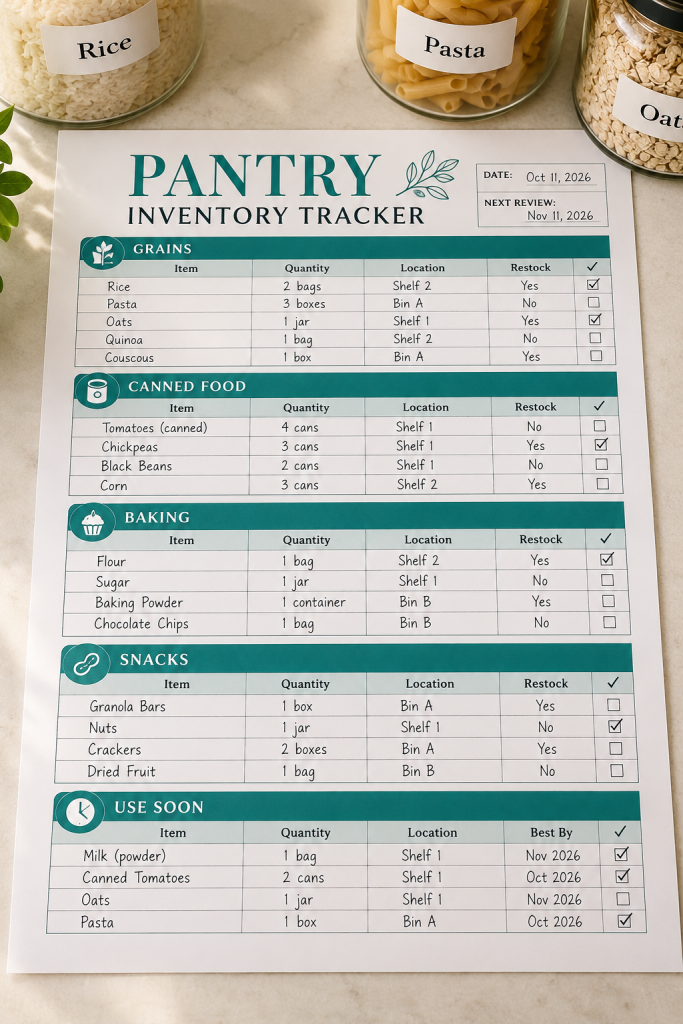
Buying another bag of rice when three are already in the cupboard is a common pantry problem. An inventory tracker helps people see what they have before making a shopping list.
Design a printable with columns for the item name, quantity, storage location, and restock status. Divide the page into easy categories like canned food, grains, baking supplies, and snacks.
A useful extra: Include a small section for opened packages that should be used soon.
This printable works well for families, meal planners, and people who buy pantry staples in bulk. Keep the layout simple enough to update with a pencil instead of creating a complicated record.
Pantry Tracker: Four Useful Sections
3. Fridge and Freezer Inventory Sheets
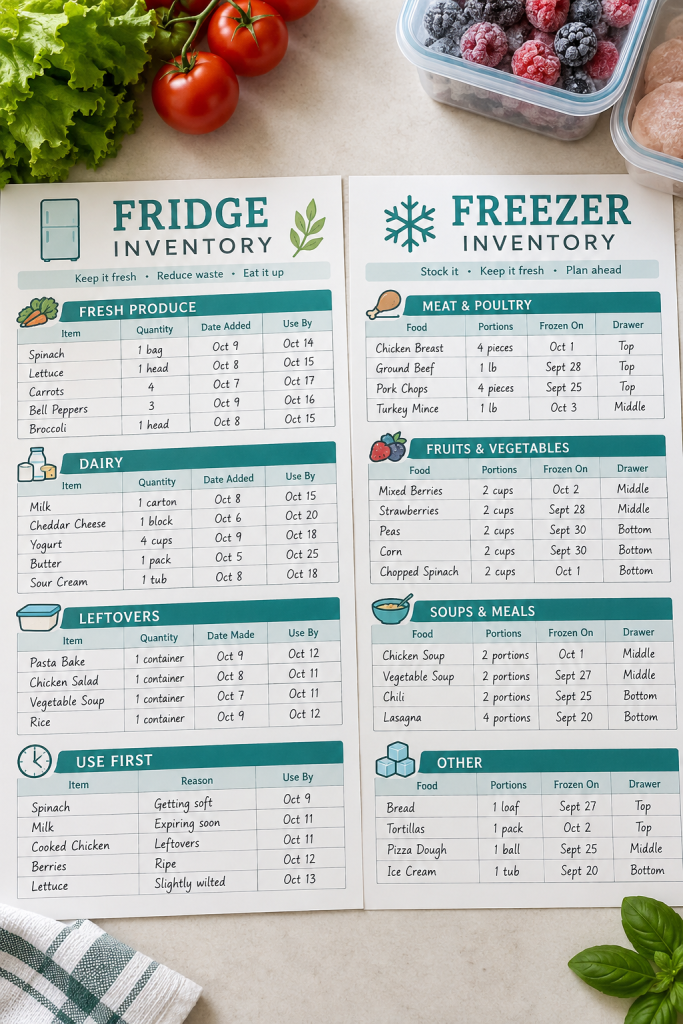
Food hidden at the back of a freezer is easy to forget. A separate fridge and freezer inventory set helps households keep track of fresh ingredients, leftovers, and frozen meals.
Make two matching pages with slightly different columns.
For the fridge sheet, include food name, date added, and use-by date. For the freezer sheet, add quantity, freezing date, and storage section.
Both pages should have a small space for meal ideas using food already available.
These sheets appeal to busy families, meal preppers, and anyone trying to reduce forgotten groceries. A matching design makes the set feel like one organized product while keeping each page useful for its own purpose.
Fridge vs. Freezer Inventory
| Fridge Sheet: Date opened or added; use-by date; fresh ingredients and leftovers; foods to use next. |
| Freezer Sheet: Date frozen; portion quantity; frozen meals; drawer or shelf location. |
4. Printable Pantry Label Set
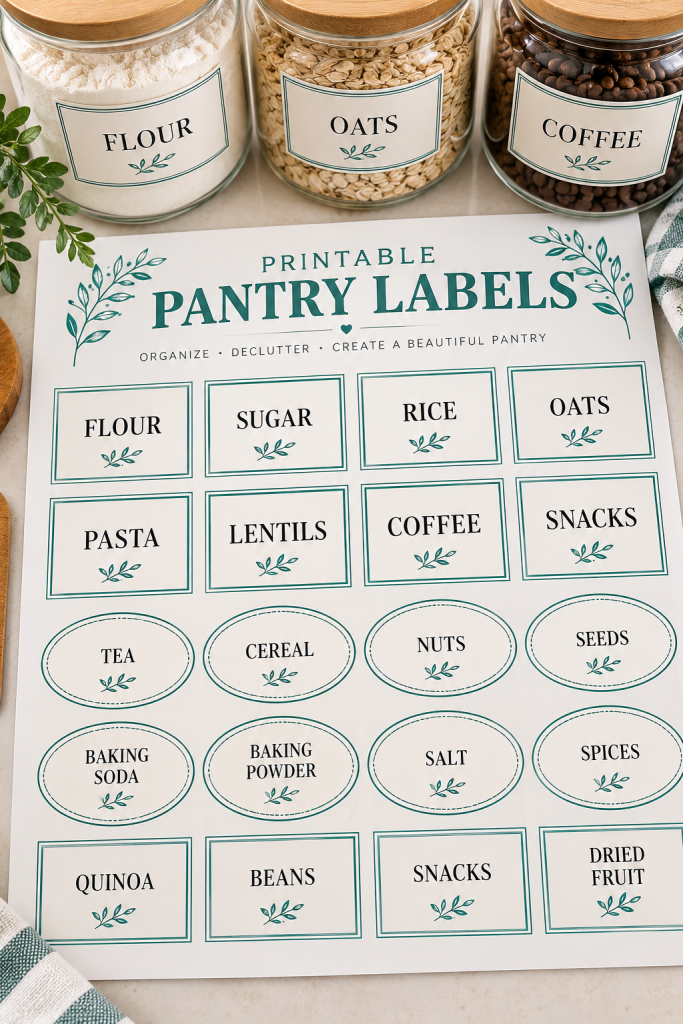
Matching labels can make a pantry easier to navigate, especially when several containers look almost identical.
Create a printable label collection for common pantry items such as flour, sugar, rice, pasta, oats, and snacks. Include different label sizes for jars, tall containers, and storage bins.
Keep the lettering large enough to read from a shelf. Buyers should also receive a blank version for items that are not included in the ready-made set.
You could offer a few coordinated designs, such as simple black lettering, soft neutral backgrounds, or clean teal borders.
Add a short printing guide explaining how to select the correct paper size and test one label before printing the full sheet.
Pantry Label Set at a Glance
5. Linen Closet Inventory Sheet
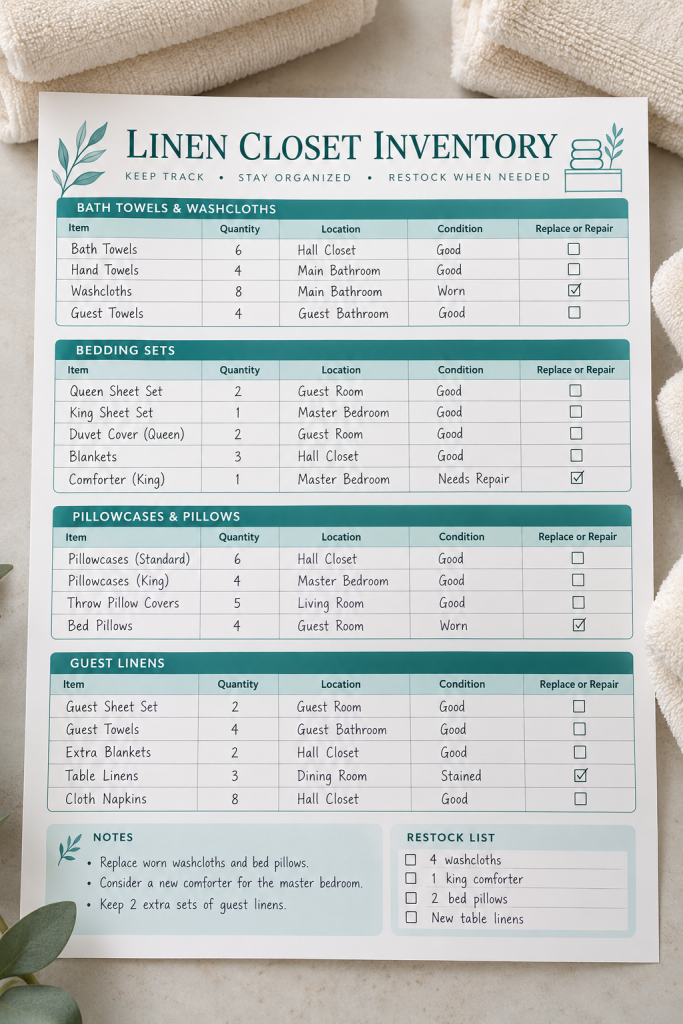
Ever found three fitted sheets but no matching pillowcases? A linen closet inventory can help people keep complete sets together and see what they actually own.
Design a printable with separate spaces for bath towels, hand towels, bedding, spare pillows, and guest linens.
Include columns for size, quantity, assigned bedroom, and storage location. This is especially helpful when a household has different bed sizes.
One practical design choice: Add a column for items that need replacing, such as worn towels or missing pillowcases.
Homeowners, families, and people managing guest bedrooms can use this sheet during closet cleanouts. A black-and-white version is useful for inexpensive home printing.
Quick Tip: Track Complete Bedding Sets
6. Household Command Center Planner

A household command center gives busy families one place to manage the little jobs that are easy to forget.
Instead of making one crowded planner page, create a matching printable set. Include a weekly family schedule, errands list, household reminders, appointment tracker, and a page for important notes.
Use the same colors and heading style across all pages so they look organized when displayed together.
For customers with limited wall space, include a compact weekly overview that combines only the essentials.
This product suits families juggling school events, appointments, and shared responsibilities. Show the pages together in your product preview so buyers can see how the full system works.
Make a Command Center Easy to Use
7. Family Chore Chart
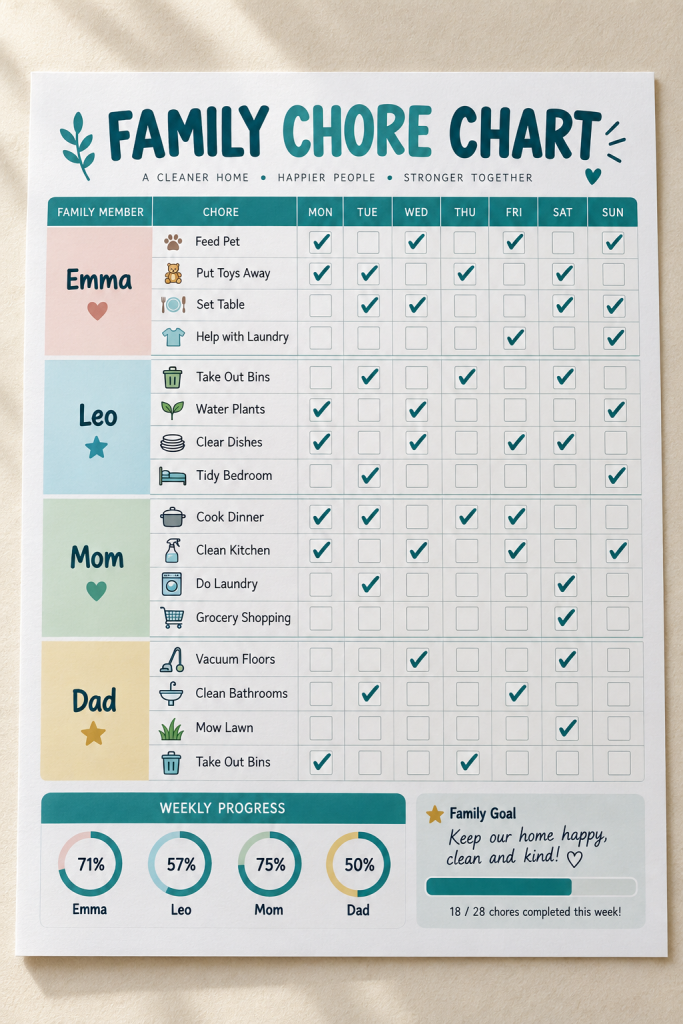
A chore chart works better when everyone can quickly see what needs doing and who is responsible.
Create a weekly printable with family member names across the top and everyday jobs down the side. Tasks might include feeding a pet, clearing the table, sorting laundry, or putting toys away.
Add checkboxes for each day so progress is visible without needing another page.
To make the product more flexible:
1. Create a version for younger children with simple icons.
2. Include a blank chart for custom household tasks.
3. Offer a layout for adults sharing chores.
Keep the design cheerful but easy to print. The chart should work with a pencil, marker, or dry-erase sleeve.
Build a Chore Chart in Three Steps
8. Weekly Home Reset Checklist

Some homes stay fairly organized during the week, then collect small unfinished jobs by Sunday. A weekly reset checklist gives people a manageable way to catch up.
Design a single-page printable with sections for the kitchen, bedrooms, bathrooms, laundry, paperwork, and planning for the week ahead.
Include quick tasks such as changing towels, clearing kitchen counters, emptying bins, and checking upcoming appointments.
Keep the list realistic. A weekly reset should not feel like an entire spring-cleaning project.
This product appeals to busy households and people who enjoy a regular cleaning routine. Consider adding a blank version so customers can choose which tasks belong in their own weekly reset.
What a Weekly Reset Changes
9. Home Maintenance Schedule
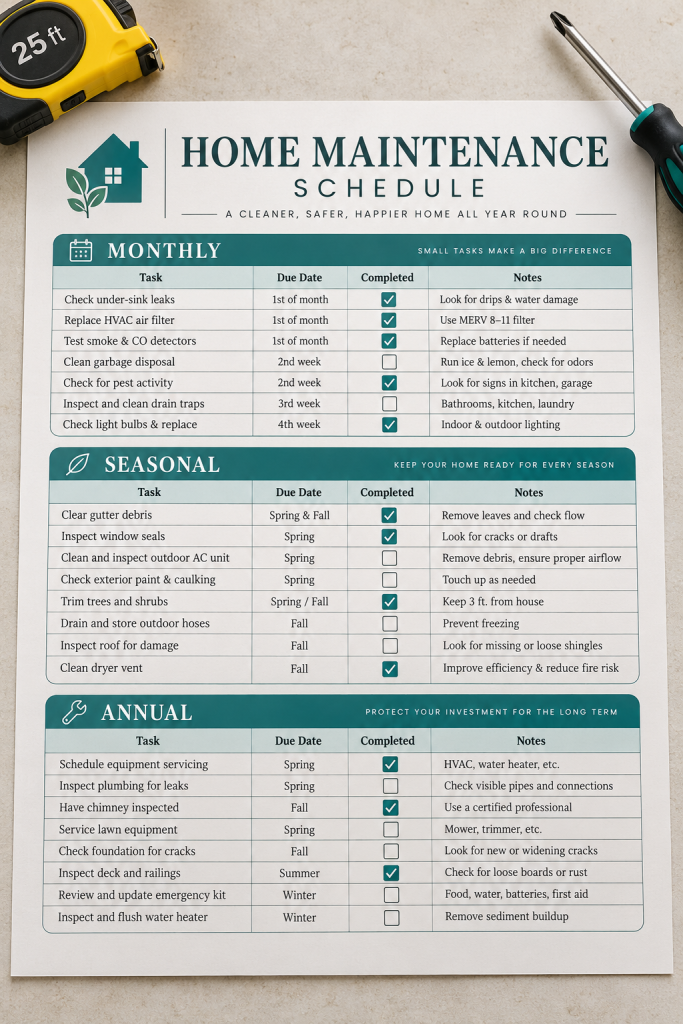
Home maintenance is easy to forget until something stops working. A printable maintenance schedule helps homeowners keep routine tasks in one place instead of relying on memory.
Design a planner with monthly, seasonal, and annual sections. Include spaces for the task, due date, completion date, and notes.
Some useful categories are:
• Monthly: Check for leaks under sinks and inspect frequently used fixtures.
• Seasonal: Clean gutters when needed and review outdoor maintenance.
• Annual: Schedule appropriate professional inspections and servicing.
This product suits new homeowners, landlords, and people maintaining older properties. Include a blank schedule so buyers can follow their equipment manuals and local maintenance needs.
Home Maintenance Planner Checklist
10. Important Documents Binder Index
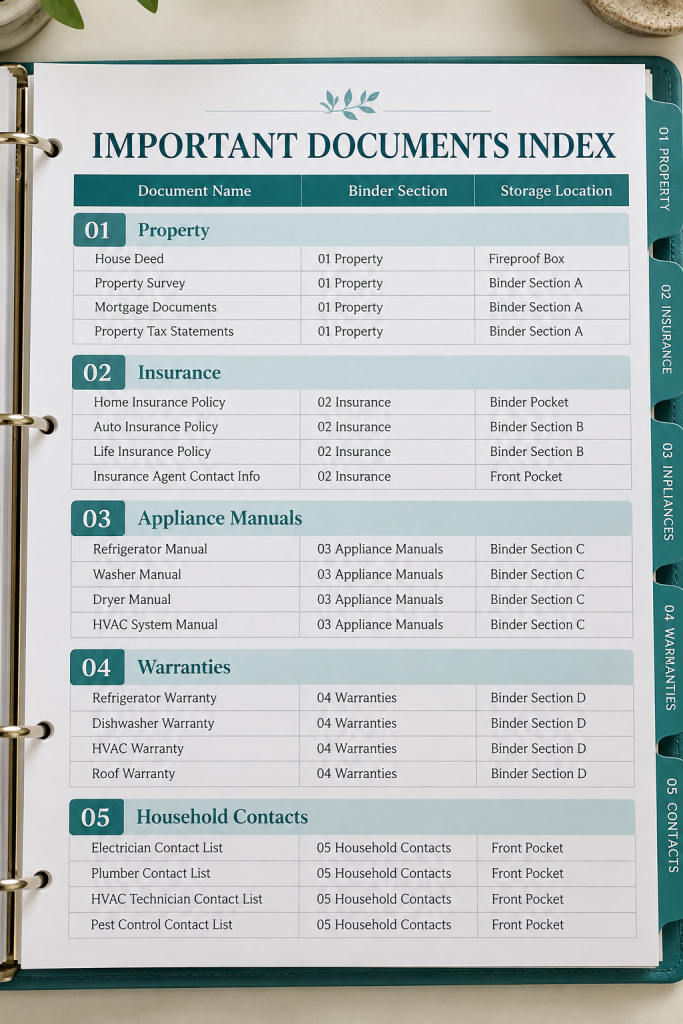
Finding a warranty or insurance document should not mean opening every drawer in the house. A binder index gives important household paperwork a clear filing system.
Create a printable table of contents with categories for property records, insurance, appliance manuals, warranties, household contacts, and other essential documents.
Give each category its own section number or tab label. Buyers can then write down where each document is stored.
Include two helpful pages:
• A master index showing every category.
• A document location tracker for papers stored outside the binder.
This product appeals to homeowners and families organizing household records. Keep personal information fields optional and avoid asking buyers to write passwords or other sensitive details on the pages.
Four Sections for a Household Documents Binder
11. Moving Box Inventory Labels

A box marked “Kitchen” does not tell someone whether it contains dinner plates or spare baking trays. More detailed moving labels make unpacking far less confusing.
Design large printable labels with spaces for the destination room, box number, contents, and unpacking priority.
Use bold headings that remain readable when boxes are stacked. A small color strip can identify rooms, but the written room name should always be visible.
Offer several labels per page along with a matching master box list.
People moving apartments, families relocating, and anyone packing items for temporary storage can use this product. Include a high-contrast version that prints clearly without color ink.
Good to Know: Number Every Moving Box
12. Garage Storage Bin Labels
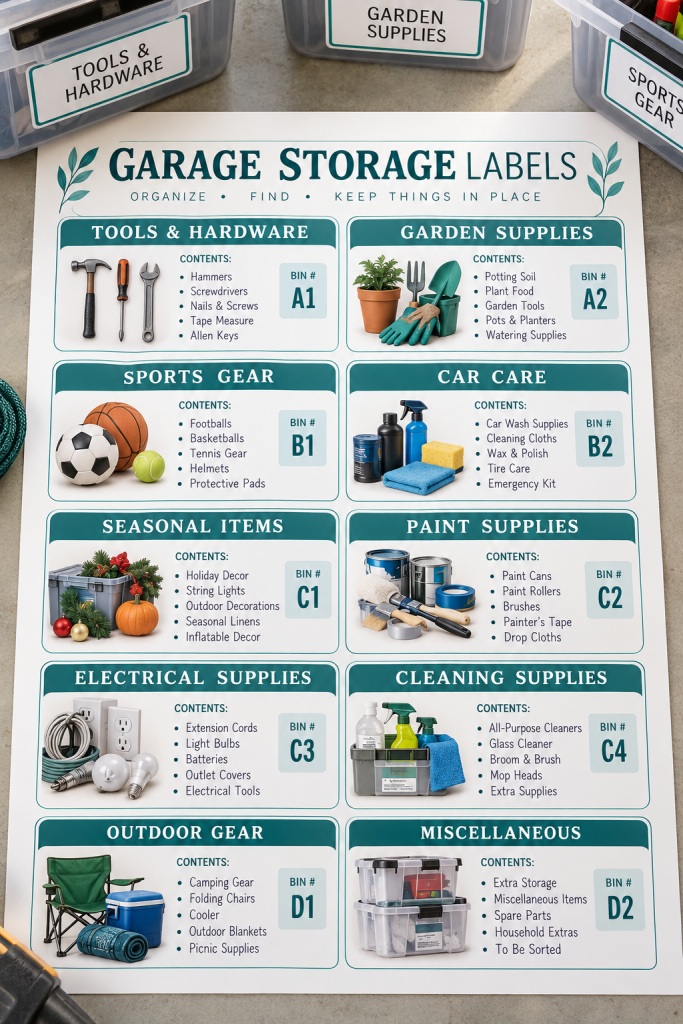
Garage bins often look identical once they are stacked on shelves. A clear label system helps people find tools, sports equipment, and seasonal supplies without opening every container.
Create printable storage labels with large category names and smaller spaces for listing contents.
Useful label categories include:
• Tools and hardware
• Garden supplies
• Sports equipment
• Car cleaning products
• Seasonal decorations
Add a blank label sheet for categories unique to each household. Buyers may also appreciate a choice of horizontal and vertical layouts.
This product works well for homeowners with garages, sheds, or utility storage areas. Keep the lettering bold and suggest using suitable protective sleeves or holders where dust and moisture are common.
Garage Label Set at a Glance
13. Toy Rotation Tracker

Not every toy needs to stay on the playroom floor all week. A toy rotation tracker helps parents organize which toys are available and which ones are stored away.
Design a printable with two main sections: toys currently in use and toys waiting in storage. Add spaces for the storage bin, rotation date, and notes.
Make the tracker useful for different ages:
1. Group toys into categories such as building, pretend play, puzzles, and art.
2. Give each storage bin a simple name or number.
3. Include a small notes area for toys children request again.
Parents, daycare providers, and playroom organizers may find this product useful. A reusable blank layout allows each household to adjust the rotation to its needs.
Simple Toy Rotation Process
14. Kids’ Clothing Size Tracker
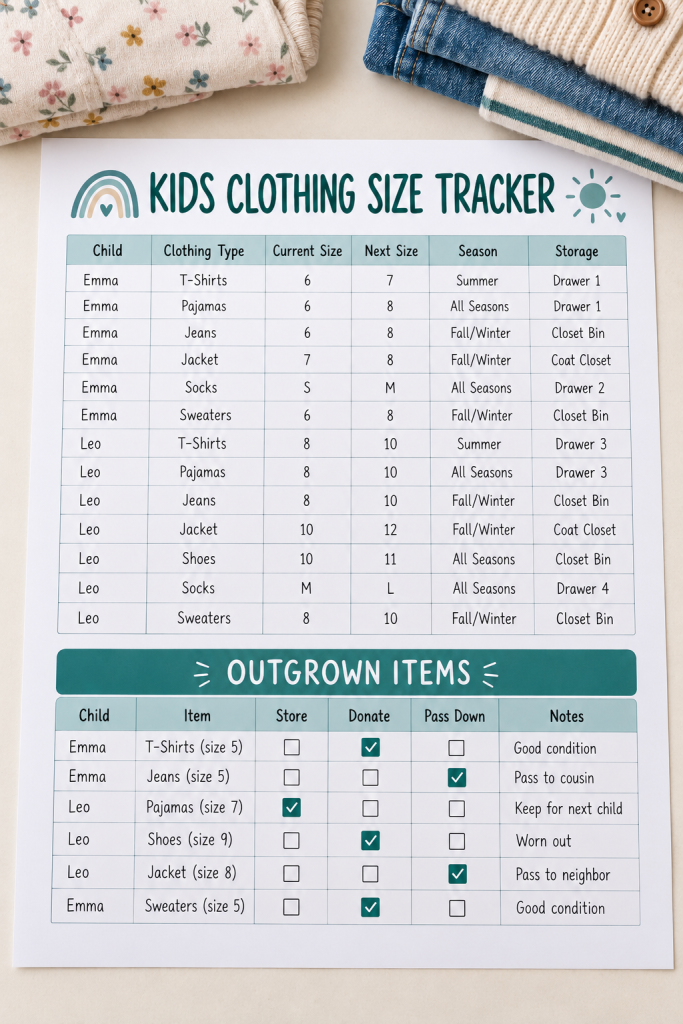
Children outgrow clothes at different times, so clothing sizes can quickly become mixed across drawers and storage boxes.
A kids’ clothing size tracker helps parents record what currently fits, what has been stored, and what might be needed next.
Create a printable with columns for clothing type, current size, quantity, season, and storage location. Include separate rows for shoes, coats, school clothes, and everyday outfits.
A helpful addition is a small section for outgrown items marked to donate, pass down, or keep.
This product is especially useful for families with several children or parents saving clothing for younger siblings. Make room for each child’s name without overcrowding the page.
Clothing Storage Before and After
15. Laundry Routine Planner

Washing clothes is only part of the laundry routine. Sorting, drying, folding, and putting everything away can easily become separate unfinished jobs.
A laundry planner gives households a simple way to divide those tasks across the week.
Design a printable with designated days for everyday clothing, towels, bedding, and delicate items. Include small checkboxes for washing, drying, folding, and putting away each load.
Consider adding:
• A blank weekly schedule for custom routines.
• A small reminder area for special-care garments.
• A section for laundry supplies that need replacing.
This printable suits families, shared households, and people who prefer having set laundry days. Keep the page easy to update rather than filling it with rigid instructions.
Laundry Planner Checklist
16. Paper Filing Category Labels
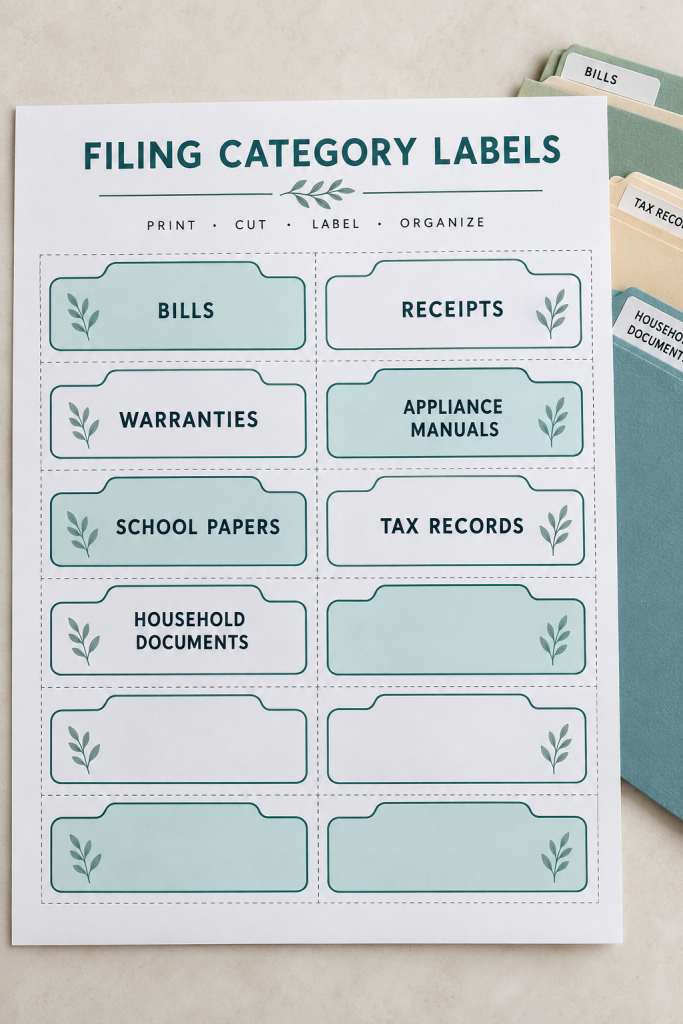
A drawer full of paperwork becomes much harder to manage when every folder looks the same. Printable filing labels make categories visible before someone opens a folder.
Create a matching collection of folder tabs and larger file box labels. Include common categories such as bills, receipts, appliance manuals, warranties, school papers, and household records.
Choose simple lettering that remains readable on narrow tabs. Add a blank sheet for custom category names and a cutting guide for the labels.
This product works well for people setting up a household filing cabinet or sorting years of accumulated paperwork.
One important detail is to keep sensitive documents in appropriate secure storage. Labels should identify general categories without displaying private information.
Design Filing Labels That Stay Useful
17. Household Supplies Restock Tracker
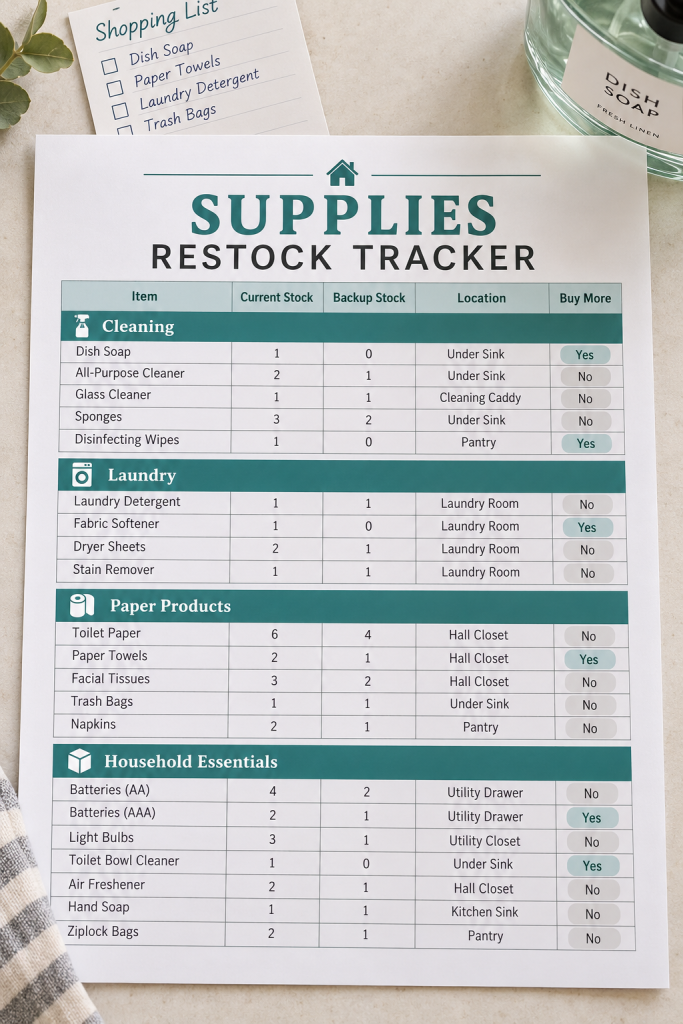
Running out of dish soap halfway through cleaning is annoying. Buying another bottle when two are already stored in the cupboard is not much better.
A household supplies restock tracker helps people see what they have and what needs replacing.
Design a printable with columns for item name, current quantity, backup quantity, storage location, and restock status.
Separate the page into practical categories:
• Cleaning supplies
• Paper products
• Laundry essentials
• Everyday household supplies
This product suits families, shared households, and people who prefer keeping backup items at home. Include a small shopping list section that customers can fill in before their next store visit.
Household Supplies: Stock vs. Restock
| Inventory tracker: What is already at home; current and backup amounts; shelf location. |
| Shopping list: What to purchase; amount required; shopping categories. |
18. Bathroom Cabinet Inventory

Bathroom cabinets can become crowded with half-used toiletries, extra shampoo bottles, and products nobody remembers buying.
A bathroom cabinet inventory makes it easier to organize those supplies and see which items are already available.
Create a printable with separate areas for toiletries, personal care products, spare towels, cleaning supplies, and backup items.
Include columns for quantity, storage location, and a date-check reminder where appropriate.
A useful product detail: Give buyers a small section for items they want to finish before opening another package.
This printable appeals to families, people sharing bathrooms, and homeowners with limited cabinet space. Keep the categories flexible so customers can adapt the page to their own storage setup.
Four Bathroom Inventory Zones
19. Under-Sink Storage Planner

An under-sink cabinet rarely has the same usable space as an ordinary cupboard. Pipes, drains, and awkward corners can make standard organizers difficult to fit.
An under-sink storage planner helps buyers measure the available space before choosing baskets or containers.
Design a printable with a simple cabinet sketch, measurement fields, storage zones, and a list of items that need a home.
Encourage customers to record:
• Cabinet width, height, and usable depth.
• Pipe locations and other obstructions.
• Planned basket sizes and storage categories.
This product suits people organizing kitchen or bathroom cabinets. Add a reminder to consider leaks, moisture, and safe product storage, particularly around household cleaning chemicals.
Quick Tip: Measure the Usable Space
20. Craft Supply Inventory Tracker
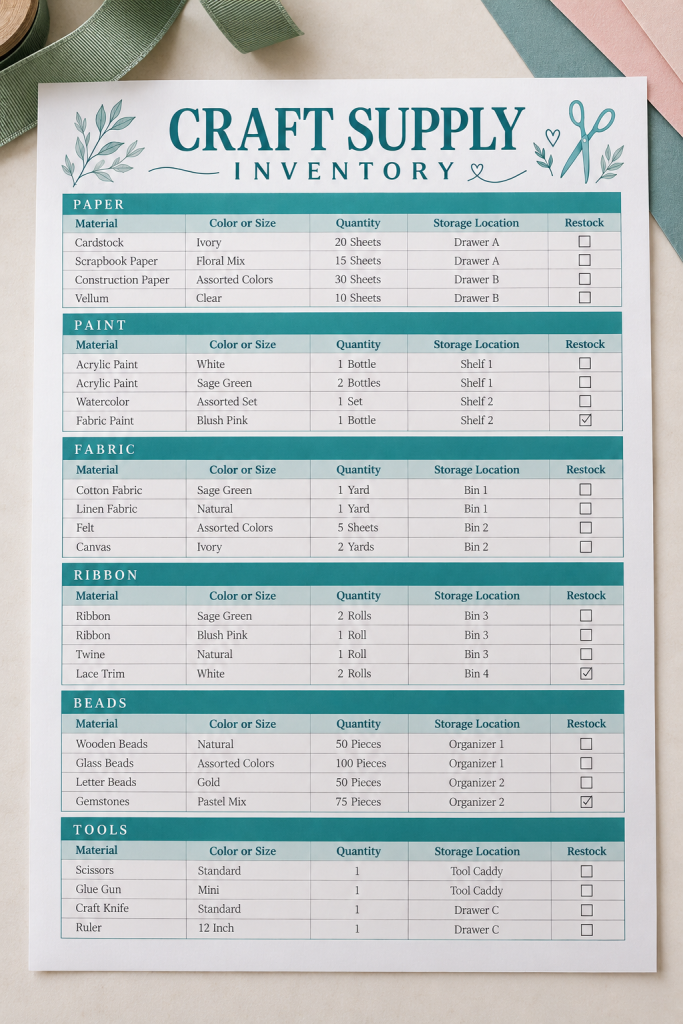
A craft drawer can hold several packs of stickers, half-used paper pads, and ribbons that disappear underneath everything else.
A craft supply inventory tracker helps hobbyists see what materials they own before starting another project.
Create a printable with sections for paper, paints, markers, fabric, ribbons, beads, and other supplies. Include columns for quantity, color, size, and storage location.
Keep the design flexible. Someone who enjoys scrapbooking needs different categories from a person who sews or paints.
This product suits crafters, parents organizing activity supplies, and people with dedicated hobby rooms. Offer a blank category version alongside a prefilled one so customers can track the materials they use most.
Craft Supply Tracker at a Glance
21. Entryway Drop Zone Planner
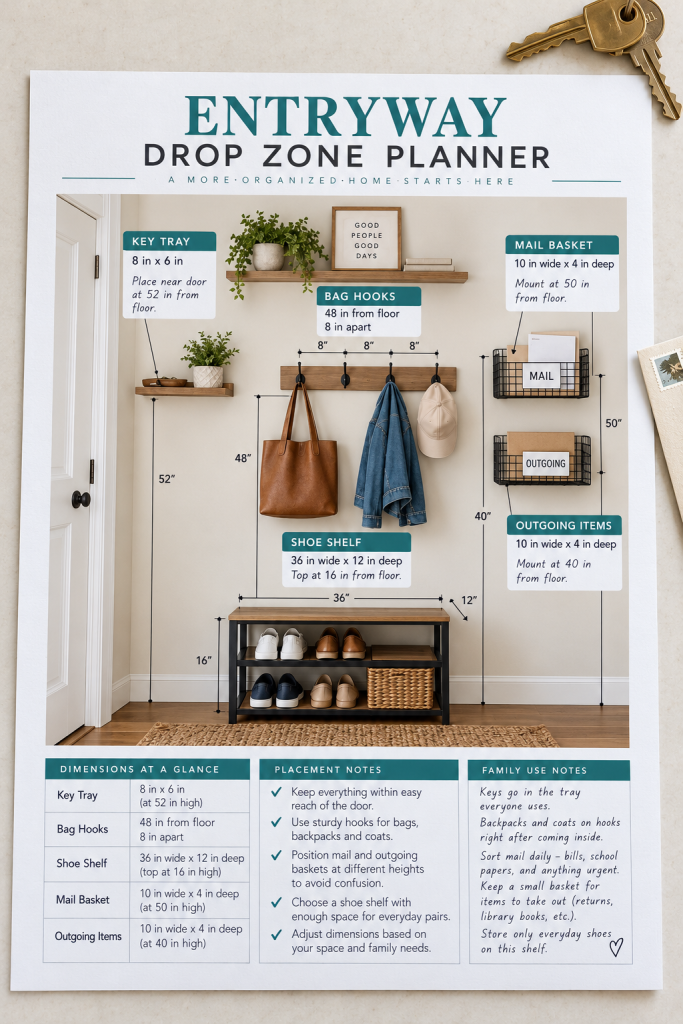
Keys on the kitchen counter, shoes beside the sofa, and unopened mail on the table usually point to the same problem. Those everyday items do not have a clear place near the door.
An entryway drop zone planner helps households decide where things should go when people arrive home.
Design a printable with a simple entryway layout and dedicated spaces for keys, bags, shoes, coats, incoming mail, and items waiting to leave the house.
Include a short measurement section for hooks, shelves, and baskets.
This printable works for apartments, family homes, and small entryways. Make sure buyers can plan around their existing furniture instead of needing to purchase a complete new storage system.
Plan an Entryway in Three Steps
22. Home Donation Tracker
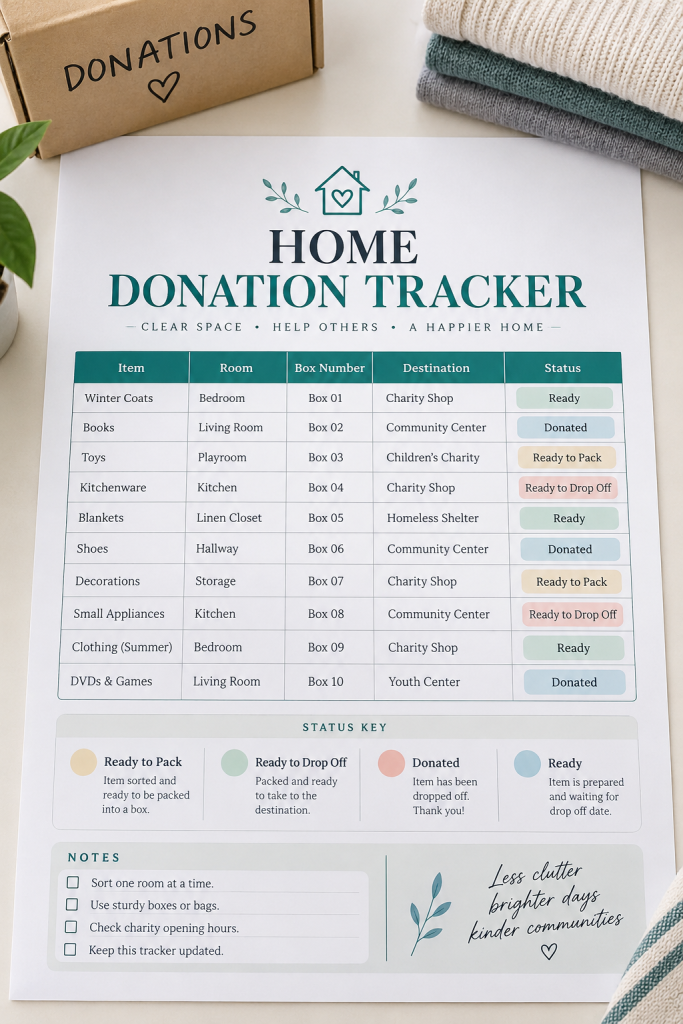
Filling a donation bag is easy. Remembering what went into it, where it should go, and whether it has actually left the house can be harder.
A home donation tracker helps people finish the decluttering process instead of leaving bags sitting in a hallway.
Create a printable with columns for item description, room, bag or box number, intended donation location, and completion status.
Add three simple status choices: Ready to pack, ready to drop off, and donated.
This product suits households doing seasonal cleanouts, families preparing to move, and people organizing unwanted belongings. Consider including a separate donation drop-off checklist so the final step is not forgotten.
Donation Tracking: Before and After
23. Seasonal Decor Storage Inventory
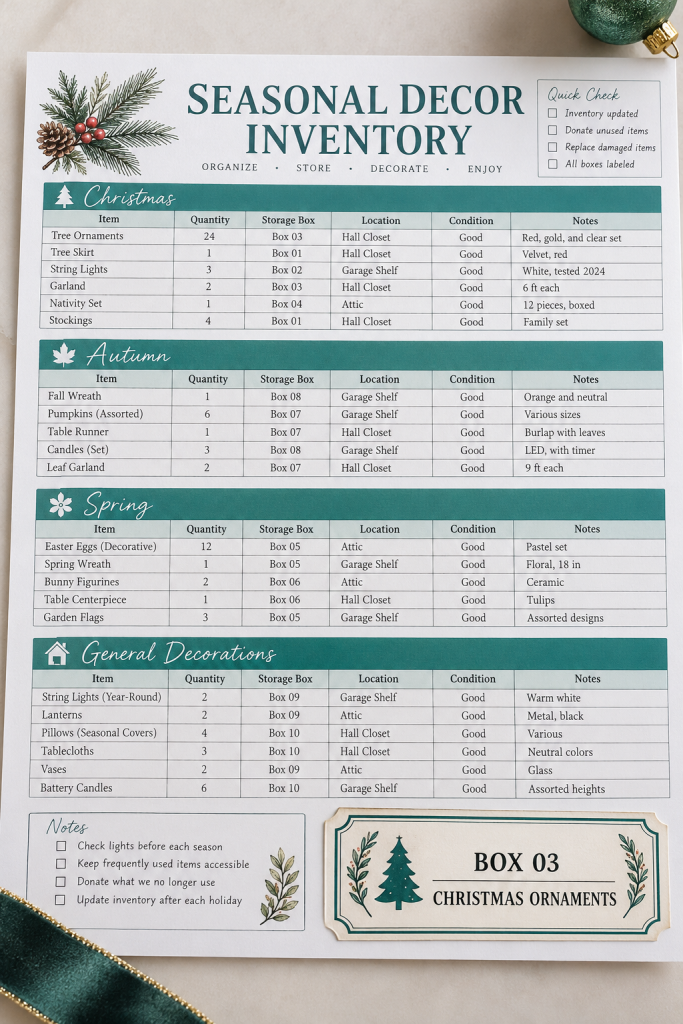
Holiday decorations often spend most of the year inside boxes. When those boxes are poorly labeled, finding one wreath or string of lights turns into a storage search.
A seasonal decor inventory helps homeowners record what belongs to each holiday or season.
Design a printable with sections for decoration type, quantity, container number, storage location, and condition.
Include common categories such as:
• Holiday ornaments and decorations
• Seasonal table linens
• Outdoor displays
• Wreaths and decorative accents
A separate notes column can record missing pieces or items that need replacing.
This product suits people with attic, garage, or closet storage. Offer a matching blank box label to make the inventory easier to use.
Seasonal Decor Inventory Checklist
24. Cord and Cable Label Sheet
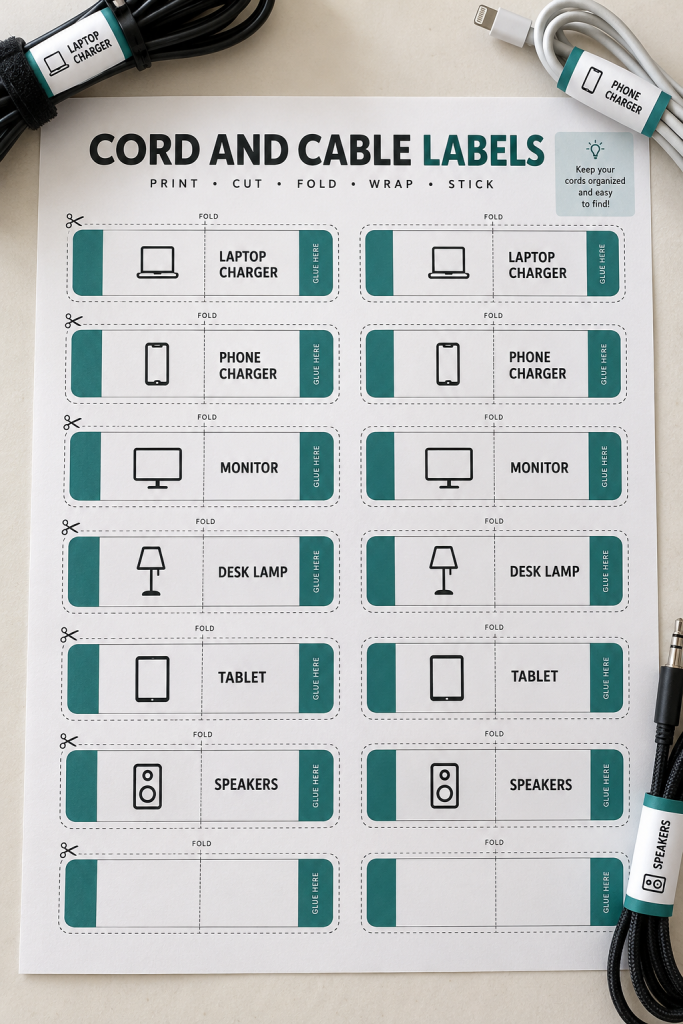
Several black charging cables can look almost identical, especially when they are stored together in a drawer or behind a desk.
Printable cord labels help people identify which cable belongs to each device without unplugging everything to find out.
Create a sheet of narrow wraparound labels for cables and larger tags for chargers or storage pouches.
Use common names such as phone charger, tablet charger, monitor, and desk lamp. Include blank labels for custom devices.
Keep the design practical: Use short text, clear lettering, and enough room for cutting.
This printable suits home offices, families with shared charging stations, and people organizing electronics. Remind buyers not to cover electrical markings, connectors, or ventilation openings.
Cord Label Design: Do This, Skip That
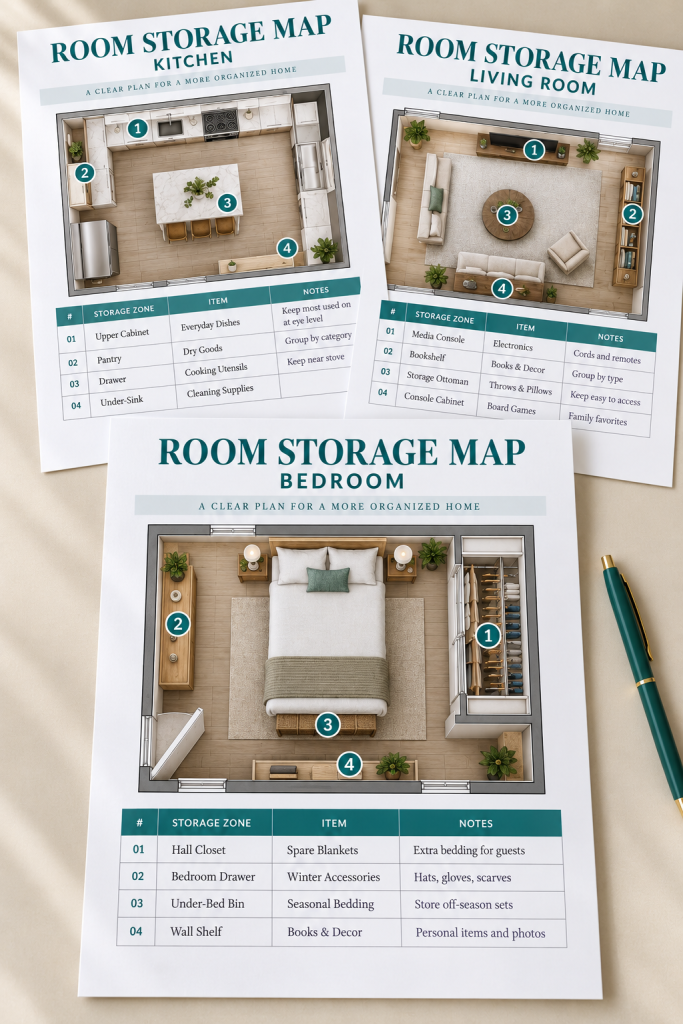
25. Room-by-Room Storage Map
Knowing where everything belongs is helpful. Remembering exactly where those things are stored six months later is a different challenge.
A room-by-room storage map gives households a simple record of what is kept inside closets, drawers, cabinets, and storage bins.
Create printable pages with basic room diagrams and numbered storage zones. Each number should match a short contents list beside the map.
Include these useful features:
• Separate layouts for bedrooms, kitchens, and living spaces.
• Numbered shelves, drawers, and cabinet sections.
• A blank room diagram for unusual layouts.
• Space to update storage locations when items move.
This product suits families, homeowners, and people with limited storage. Keep the diagrams simple enough for buyers to label by hand.
A good storage map shows both WHERE something is stored and WHAT is stored there.
Zone 01: Hall closet, upper shelf | Spare blankets.
Zone 02: Living room cabinet | Board games.
Zone 03: Bedroom under-bed bin | Seasonal bedding.
Conclusion
Useful printables solve small household problems without making everyday routines more complicated. A pantry tracker helps people find forgotten groceries, a chore chart makes responsibilities clearer, and a storage map shows where belongings actually live.
For creators, the best place to start is with one product that has a clear purpose. Focus on readable layouts, enough writing space, and instructions that make sense the first time someone prints the page.
You can also combine related home organization printables into matching collections once you have several useful designs. Before listing products, check the current rules of the platform you plan to use.
Found a few printable ideas worth creating? Save this list to your Pinterest board for digital product ideas, so you can come back when you’re ready to design your next printable.