
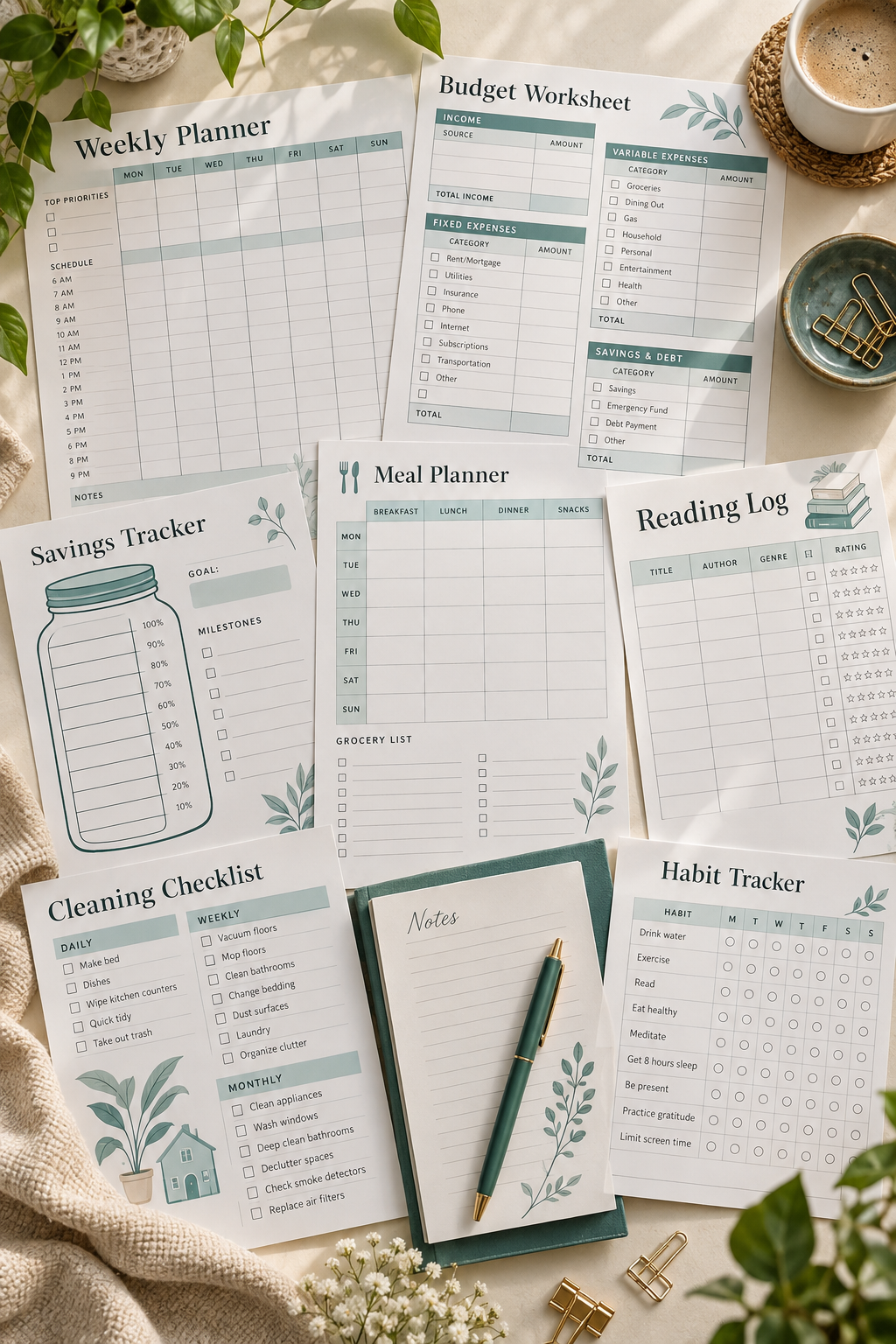
Selling printables sounds simple until you realize how many products depend on a holiday, a specific year, or a short shopping season. A dated planner can become outdated, and a seasonal worksheet may attract attention for only a few weeks. That leaves sellers constantly making new designs just to keep their shops stocked with relevant products.
A better starting point is creating printables that solve everyday problems without depending on a calendar year. People need help planning meals, managing money, organizing tasks, and tracking habits throughout the year. These needs do not disappear when the season changes.
That is why evergreen printables are worth considering for a digital product shop. You can create reusable designs that customers fill in whenever they need them, without replacing dates or rebuilding the layout each January.
The key is choosing practical products with clear uses, rather than making another generic printable that looks nice but does very little.
Here are 25 undated printable ideas you can create with tools like Canva and offer in your Etsy shop or digital storefront.
1. Undated Weekly Planner Pages
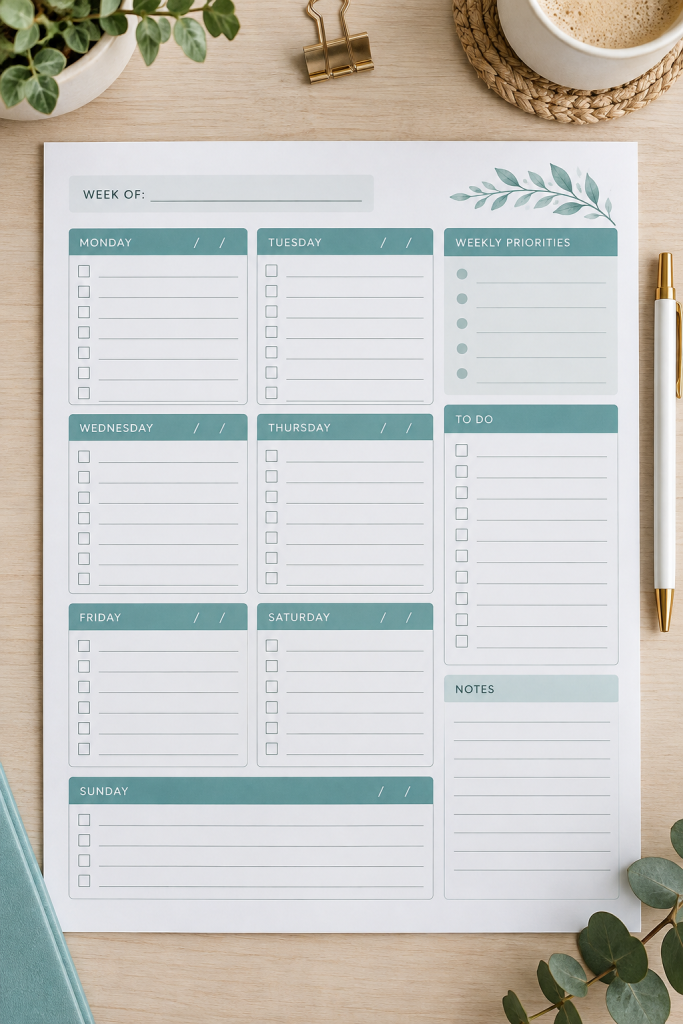
A weekly planner does not need printed dates to be useful. In fact, leaving the dates blank lets customers start planning on any day of the year.
Create a simple weekly layout with seven day sections and enough writing space for appointments, tasks, and reminders.
Include these useful sections:
- Monday through Sunday planning boxes.
- A small weekly priorities area.
- Space for notes and unfinished tasks.
Students, parents, and busy professionals may prefer a planner they can print only when needed instead of buying a full dated planner.
Design tip: Offer both Monday-start and Sunday-start versions. This small choice makes the printable more useful without changing the entire design.
2. Daily Schedule and Time Block Sheets
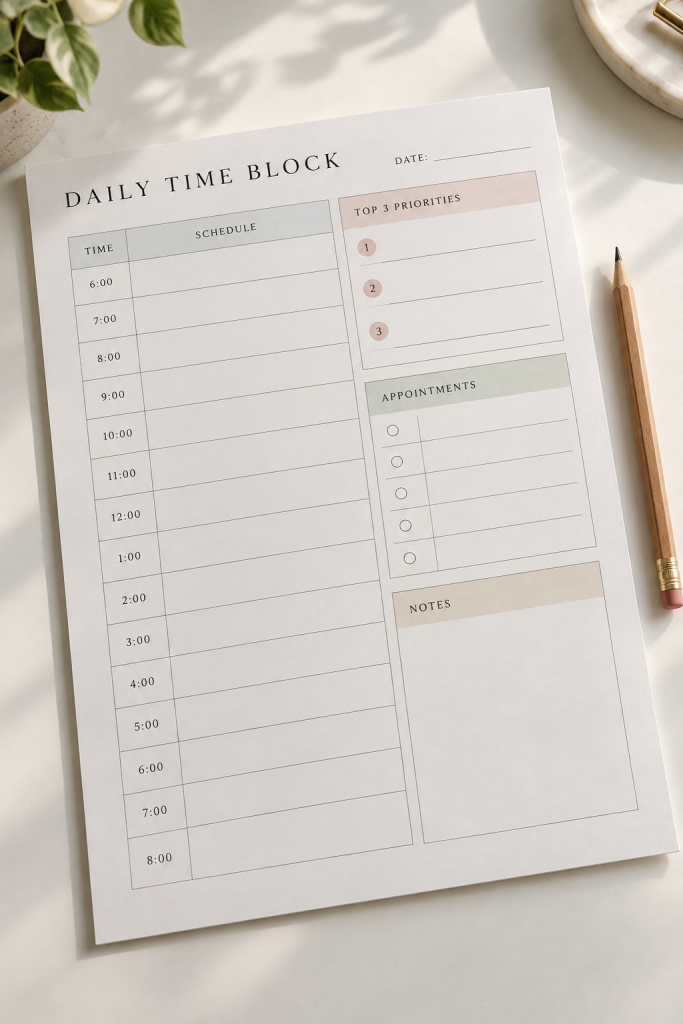
Some people need more detail than a weekly planner provides, especially when their days include appointments, work blocks, and family responsibilities.
A daily time block printable gives each activity its own place on the page. Customers can write the date themselves and use a fresh sheet whenever their schedule gets busy.
To make one, create a vertical timeline with hourly spaces and leave a wider notes area along the side.
Add a small box for the day’s three main tasks and another for appointments that cannot move.
This printable can appeal to freelancers, students, and people managing several responsibilities. Keep the hourly labels readable, even when the page is printed in black and white.
3. Monthly Budget Planner

A budget printable works best when people can understand their money without searching through several complicated pages.
Start with an undated monthly budget sheet that separates income, fixed bills, everyday expenses, and savings. Add simple spaces for planned amounts and actual amounts so customers can compare their spending.
A beginner-friendly budget bundle could contain:
- Monthly budget overview.
- Bills and due dates worksheet.
- Expense category tracker.
- End-of-month review sheet.
People organizing household finances may prefer printable pages because they can write everything down in one place.
Keep calculations optional instead of filling the design with formulas. You can also include a short instruction page explaining how to complete each section.
4. Savings Goal Tracker
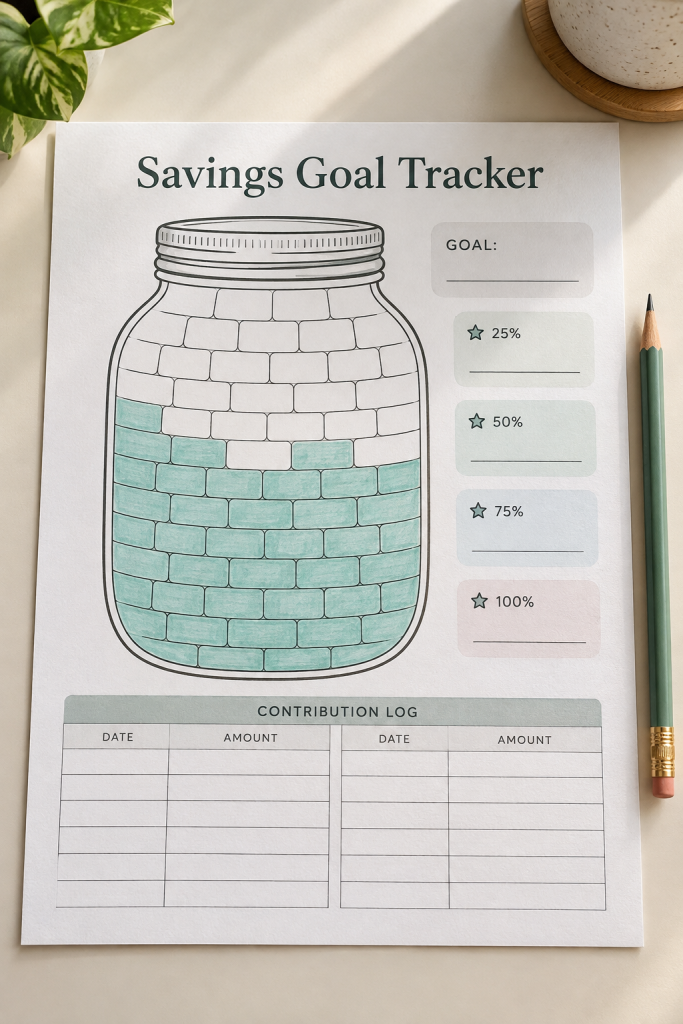
Watching a savings goal fill up can make the process easier to follow.
A printable savings tracker gives customers a visual way to mark their progress, whether they are setting money aside for an emergency fund, a purchase, or a future trip.
Design a large progress graphic in the center of the page. A grid of small boxes, a filling jar, or a simple progress bar can work.
Leave spaces for the target amount, starting amount, contributions, and current total.
One useful addition: Include both a numbered progress version and a blank version. The blank layout lets buyers divide their goals into amounts that fit their situation.
Avoid decorating the page so heavily that the tracking areas become difficult to fill in.
💡 Quick Design Tip
Add a small contribution log beneath the progress graphic. Customers can record the date and amount saved instead of only coloring boxes. This gives the printable a useful written record alongside the visual tracker.
5. Debt Payoff Tracker

Debt payments can be difficult to follow when balances, due dates, and payment records are kept in different places.
A debt payoff tracker brings those details onto one printable page. It helps users record what they owe and monitor how their balances change over time.
Include a section for the account name, starting balance, payment amount, remaining balance, and payment date.
For a more complete product, create an individual debt tracker plus a summary sheet covering several accounts.
Keep the design practical: Use large writing spaces and simple headings. Customers should be able to update the sheet without following complicated instructions.
This is an organizational tool, not a promise of faster debt repayment, so keep product descriptions focused on recording and reviewing payments.
Payment dates are scattered across notes, and the latest balance has to be looked up each time.
Each payment, date, and updated balance has a dedicated place on one tracking sheet.
6. Habit Tracker Sheets
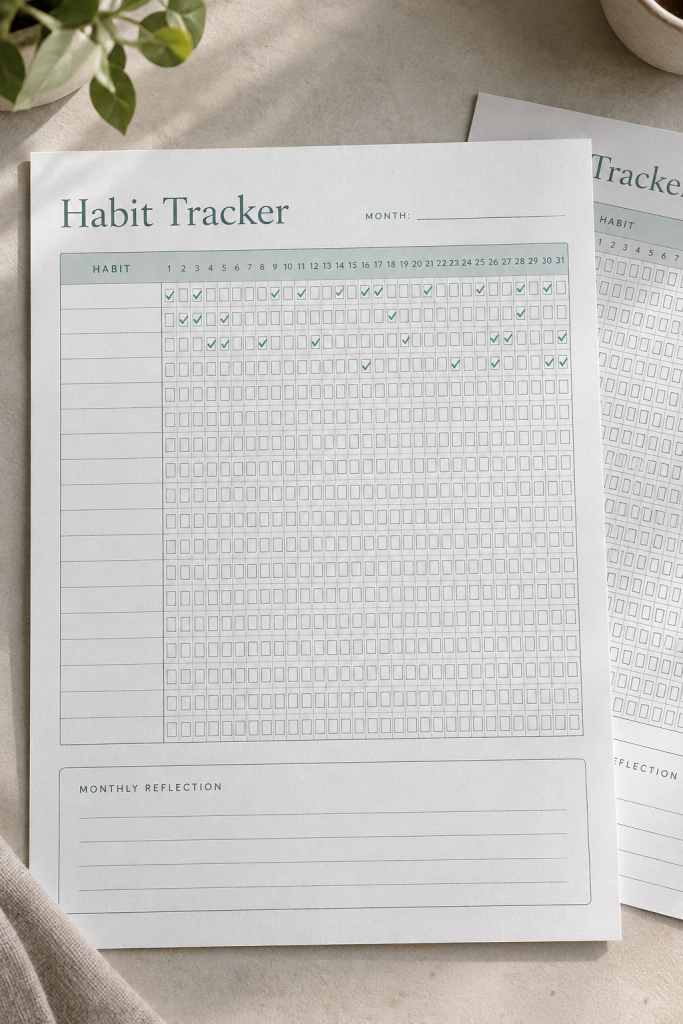
A habit tracker is one of those simple printables that can be used for many different goals without needing a new design.
Someone might track reading, daily movement, cleaning routines, or study time. The printable stays the same, while the habits change.
Create a grid with blank habit names along the left side and small check boxes for each day across the top.
An undated version should let customers enter their own month and use the layout whenever they start.
Offer two styles: A simple black-and-white sheet for easy printing and a softer colored version for customers who enjoy decorating their planners.
Make sure the check boxes remain large enough to mark by hand.
7. Meal Planning Printable
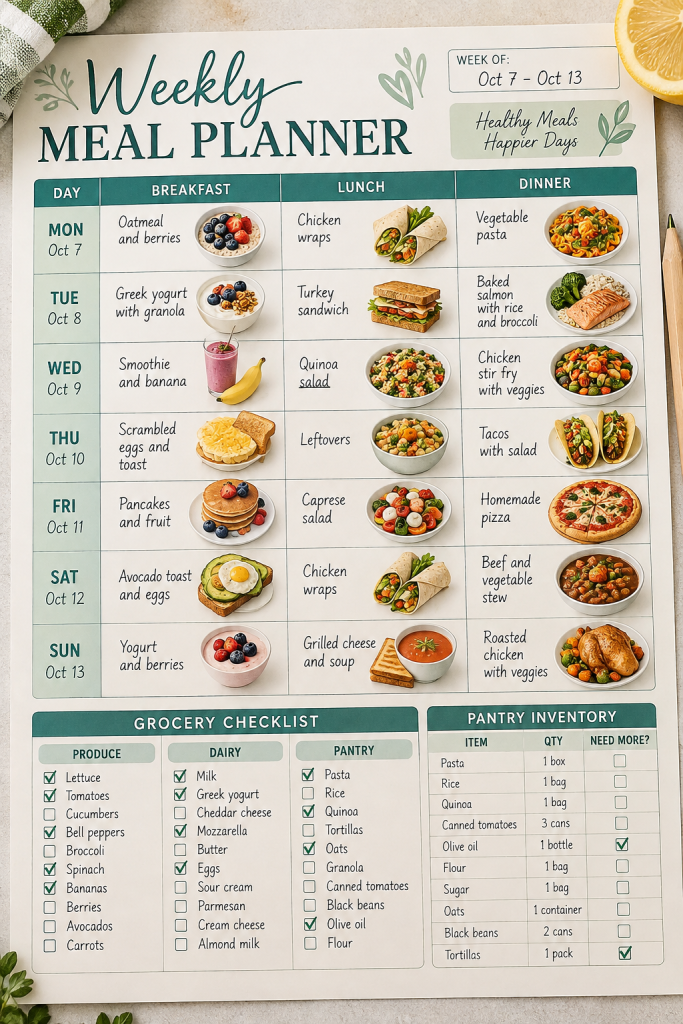
Deciding what to cook every day becomes more manageable when the meals are written down in advance.
A weekly meal planning printable helps customers organize breakfast, lunch, dinner, and grocery needs in one place.
Instead of creating a complicated food journal, start with a clean weekly grid. Give each day enough room for meal names and keep a separate section for ingredients to buy.
Families, students, and people who prepare meals ahead of time can all use the same undated layout.
For a useful product bundle, include:
- A weekly meal planning page.
- A dinner-only planning sheet.
- A matching grocery list.
Use simple food illustrations sparingly. The writing space matters more than decorative graphics.
8. Grocery List by Store Section
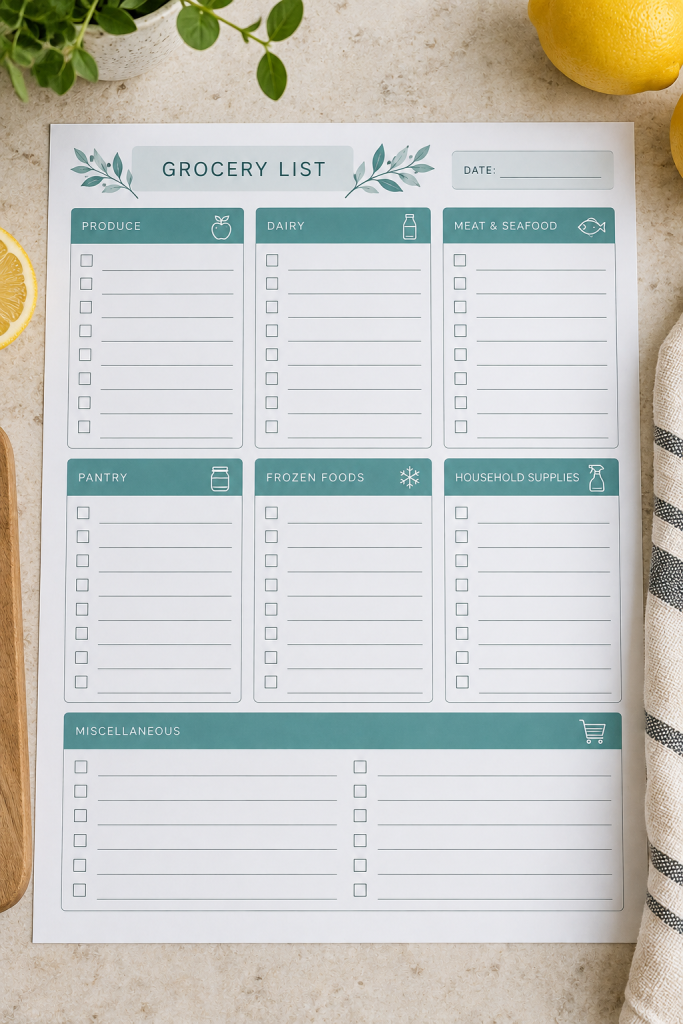
A grocery list becomes harder to use when produce, frozen foods, and cleaning supplies are all mixed together.
A category-based grocery printable solves that small but familiar problem by grouping items according to where people usually find them in a store.
Divide the page into clear sections such as produce, dairy, meat, pantry, frozen foods, and household supplies.
Make each section easy to scan:
- Add check boxes next to blank writing lines.
- Leave extra space for common shopping categories.
- Include a small area for items that do not fit elsewhere.
This printable works well as an individual digital download or as part of a household planning bundle.
Different stores arrange products differently, so keep the categories broad rather than following one specific supermarket layout.
| Option A | Option B |
|---|---|
| One long list of mixed items. | Separate sections for common food groups. |
| Items are written in any order. | Items are grouped for easier checking. |
| Best for a short shopping trip. | Useful for longer household shopping lists. |
9. Home Cleaning Checklist
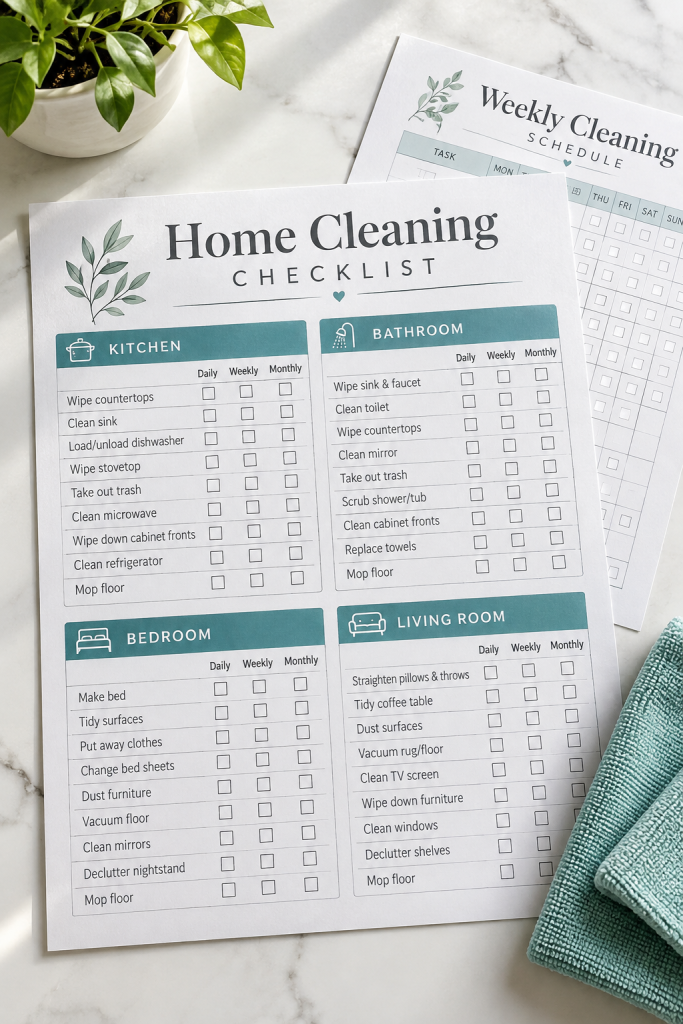
Cleaning the house feels less overwhelming when every room has a clear list of jobs. A home cleaning checklist gives people a simple way to see what needs attention without trying to remember everything.
Create a printable with separate sections for the kitchen, bathroom, bedrooms, and living areas.
Include practical tasks such as:
- Wiping kitchen counters and cabinet fronts.
- Cleaning bathroom sinks and mirrors.
- Dusting shelves and furniture.
- Vacuuming floors and changing bed sheets.
This product can appeal to busy families, renters, and people managing household routines.
Offer daily, weekly, and monthly cleaning pages as a matching set. Keep the schedule fields blank so customers can adjust them to their own homes.
Group tasks by room. Customers can finish one area before moving to another. Separate task frequency. Give daily, weekly, and monthly jobs their own sections.
One crowded task list makes the sheet difficult to scan. Tiny check boxes are hard to use by hand.
10. Decluttering Checklist
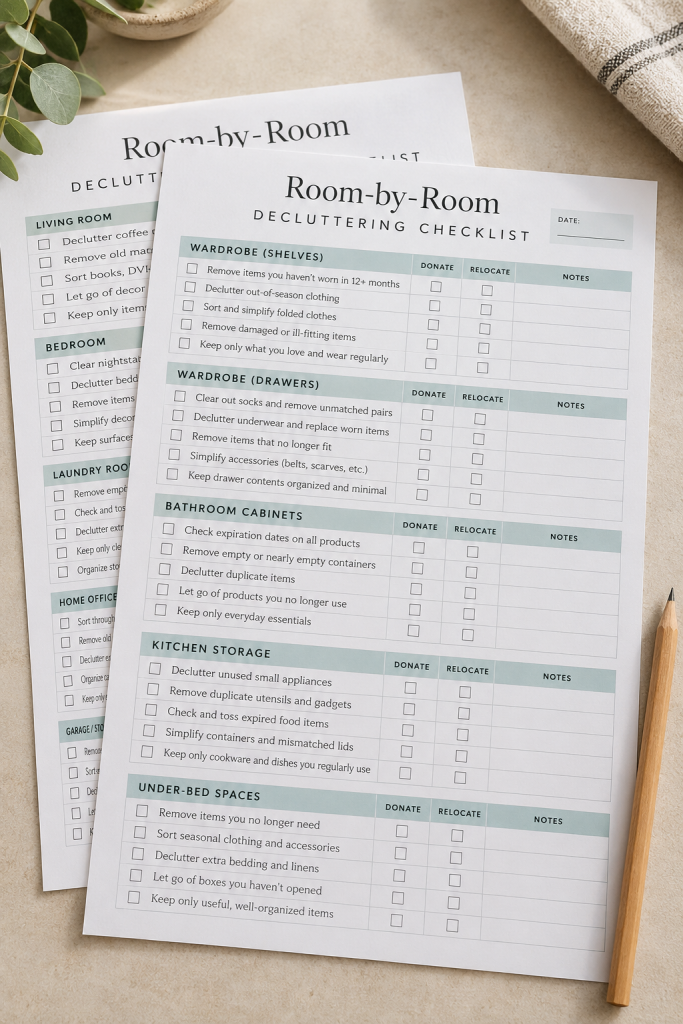
A cluttered closet or overflowing kitchen drawer can feel like a huge project when there is no clear starting point.
A decluttering checklist breaks the job into smaller areas customers can tackle one at a time.
Instead of listing broad instructions like “organize bedroom,” name the exact places to check.
For example, a bedroom section could include nightstand drawers, wardrobe shelves, under-bed storage, and bedside surfaces.
A useful printable set might include:
- Kitchen decluttering checklist.
- Bedroom and closet checklist.
- Bathroom cabinet checklist.
- General household checklist.
Leave a small space beside each task for notes about items to donate, recycle, or relocate.
This is a practical product for people who want a room-by-room plan without committing to a dated challenge.
11. Home Maintenance Log
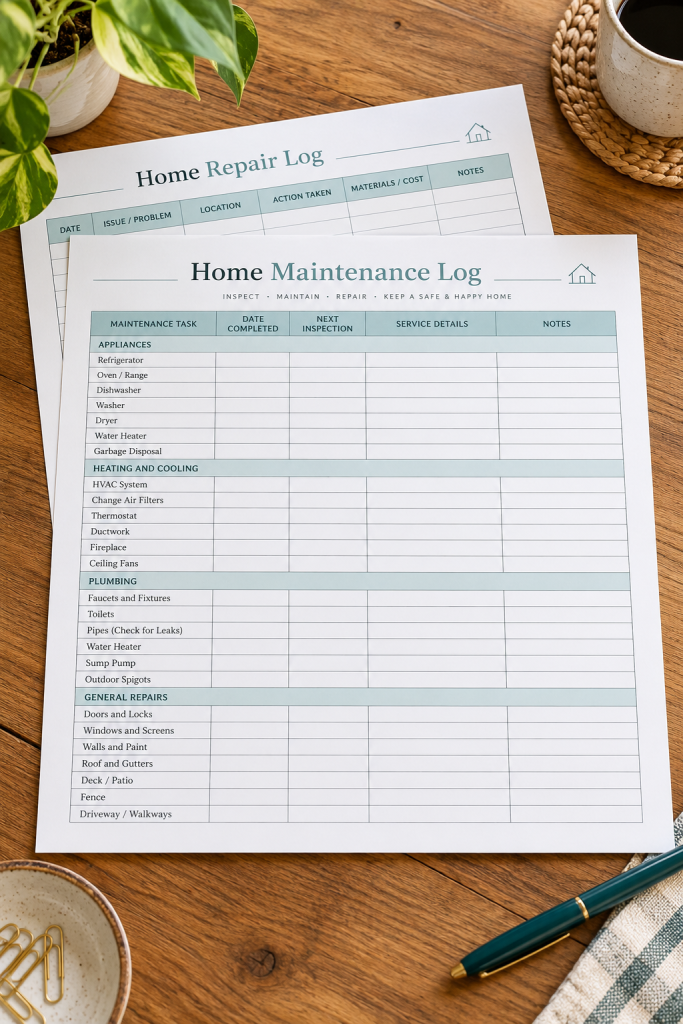
Small home maintenance jobs are easy to forget, especially when they only need attention occasionally.
A home maintenance log gives homeowners and renters a place to record completed work, service visits, and tasks that need to be checked again.
Design the printable as a simple table with columns for the maintenance task, completion date, next check date, and notes.
Useful examples include:
- Checking air conditioner filters.
- Recording appliance servicing.
- Noting small repairs.
- Tracking smoke alarm checks.
Unlike a cleaning checklist, this printable focuses on keeping a record of household upkeep.
Add a separate repair history sheet for customers who want to record service details. Avoid printing fixed maintenance intervals because recommendations can vary by equipment and manufacturer.
12. Password Record Printable

Remembering which email address belongs to each account can become confusing when someone manages several online services.
A password record printable can help people organize account reference details, but the design needs to consider privacy.
Rather than encouraging customers to write complete passwords on an exposed sheet, create a safer account information organizer.
Include fields for the website name, username, account email, password manager entry name, and recovery notes that do not reveal secret information.
This product may appeal to people who prefer keeping a paper index of their online accounts.
Keep the layout simple. Use wide writing lines and a clear alphabetical or category-based format.
Add a note encouraging customers to store actual passwords and recovery codes in a reputable password manager, not on an easily accessible printed page.
🔒 Important Privacy Note
Design this printable as an account reference sheet rather than a list of exposed passwords.
Useful fields: website or service name, login email, username, password manager reference, and general account notes.
Avoid fields that invite customers to record passwords, authentication codes, or recovery keys on paper.
13. Reading Log and Book Tracker

Readers often enjoy keeping a record of the books they finish, especially when they want to remember favorite stories or discover which authors they enjoy most.
A reading log printable makes that record easy to maintain without needing a dated journal.
Create a table with spaces for the book title, author, start date, finish date, and personal rating.
You can also design a bookshelf-style tracker where customers color in a book spine whenever they finish reading.
For a matching printable set, include:
- A book reading log.
- A favorite quotes page.
- A reading wishlist.
- A bookshelf progress tracker.
This product can appeal to casual readers, book clubs, and parents supporting reading habits at home.
Keep the main log spacious enough for longer book titles.
14. Fitness and Workout Log
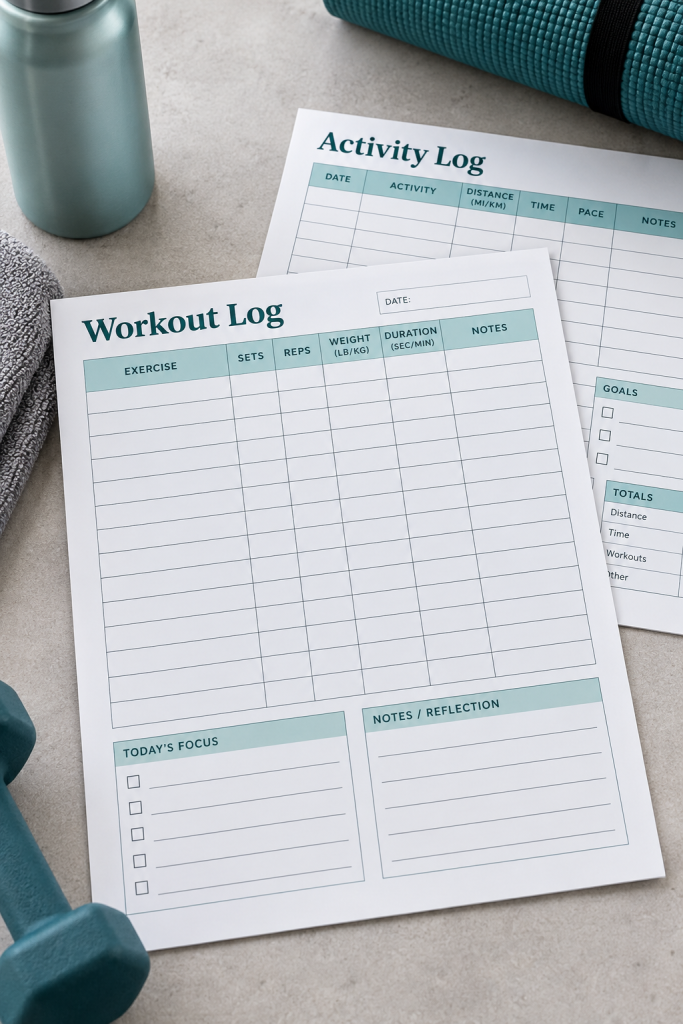
Tracking workouts on paper gives people a straightforward record of what they did during each exercise session.
A fitness log can be especially useful for customers who follow their own training routines and prefer writing notes rather than entering everything into an app.
Start with an undated exercise table that includes the workout name, sets, repetitions, weight if relevant, and completion notes.
For walking, cycling, or other activities, offer a separate layout with duration and distance fields.
Make the printable flexible: Avoid filling it with one specific workout program. Let customers enter the exercises that fit their own routines.
Use clear column headings and enough space for handwritten numbers. Small boxes can become frustrating once the page is printed.
15. Wellness and Self Care Tracker

Not every printable needs to focus on completing more tasks. Some customers want a gentle way to notice how they are caring for themselves.
A wellness and self care tracker can provide space for everyday habits like drinking water, resting, moving, or taking a break from screens.
Design a calm, uncluttered sheet with a few simple check boxes and a short reflection area.
Useful sections might include:
- Sleep and rest notes.
- Daily water intake.
- Movement or outdoor time.
- Mood check-in.
- One small act of self care.
Avoid presenting the printable as a medical tool or a way to diagnose health concerns.
A flexible tracker that allows customers to skip or change categories is often more practical than one filled with strict daily targets.
Make the tracker a place to notice patterns, not a daily scorecard. Leave room for rest days, blank entries, and personal choices.
16. Goal Planning Worksheets
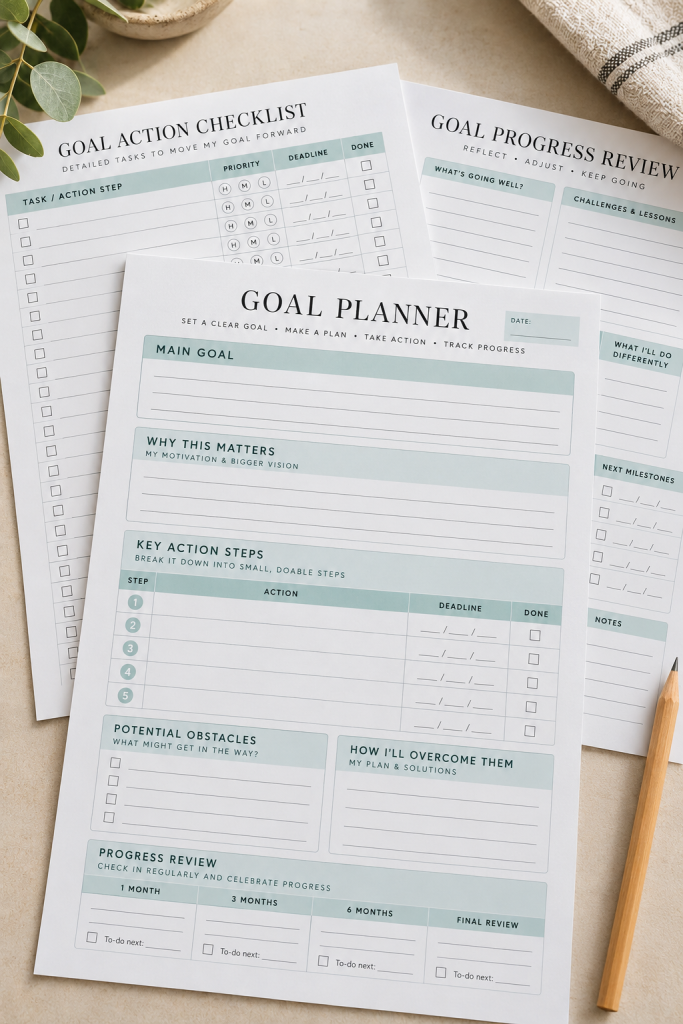
Writing down a big goal is easy. Figuring out what to do next is usually the harder part.
A goal planning worksheet helps customers turn a broad idea into smaller actions they can follow.
Start with a page that asks for the main goal, the reason it matters, and the steps needed to reach it.
Then add spaces for possible obstacles, helpful resources, and progress notes.
A simple product could include:
- Main goal worksheet.
- Action step planner.
- Progress review page.
- Blank notes sheet.
This printable may appeal to students, small business owners, and people working on personal projects.
Keep dates optional so the customer can plan at their own pace. A clear layout with guided questions is more useful than a page covered in motivational quotes.
17. Project Planner Printable

A project planner is more than a long to-do list. It gives people a place to organize everything needed to finish one specific project, from the first idea to the final task.
Create a printable with a project name, main objective, task breakdown, priorities, and progress notes.
A useful project planner could include:
- Project overview and goals.
- Task list with priority labels.
- Materials and resources checklist.
- Progress review and completion notes.
This product can appeal to freelancers, small business owners, students, and people planning personal projects.
Unlike a daily planner, each sheet stays focused on one project. Leave the deadline field optional so customers can use the printable for projects without fixed schedules.
18. Brain Dump and Task Sorting Sheets
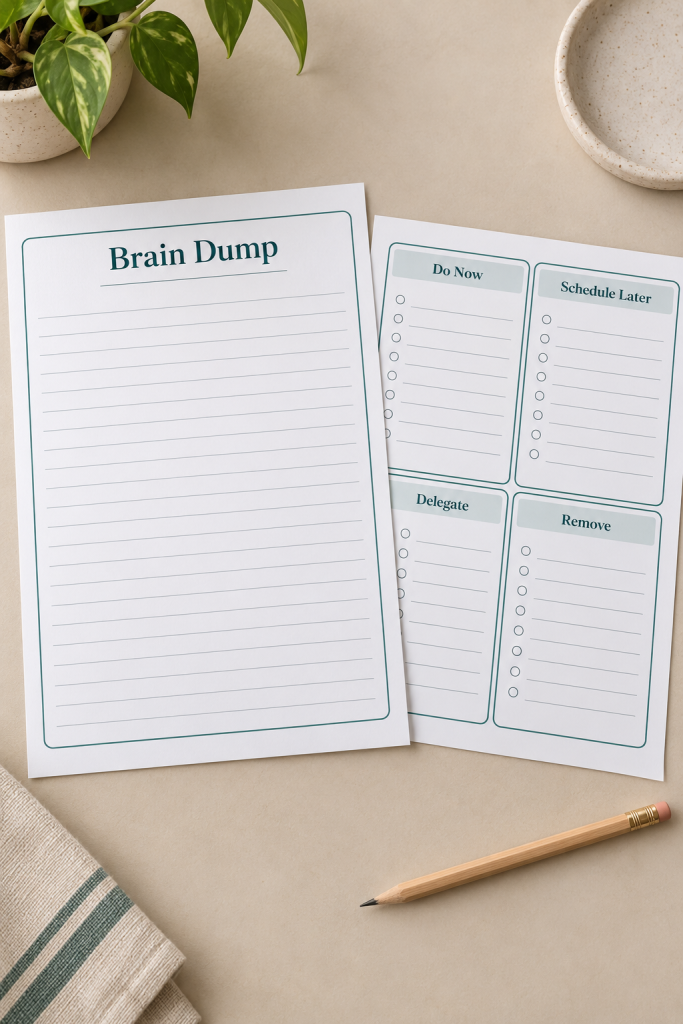
Sometimes a person has so many small tasks in mind that even writing a proper to-do list feels like another job.
A brain dump printable gives customers space to write everything down first and organize it afterward.
Design the page with one large writing area labeled “Brain Dump.” Beside it, or on a second page, add sections for sorting the written tasks.
Useful sorting categories include:
- Do now.
- Schedule for later.
- Delegate if possible.
- Remove from the list.
The difference between this product and a regular planner is the starting point. Customers do not need to organize their thoughts before filling it in.
Keep the first writing area mostly blank. Too many boxes can defeat the purpose of getting thoughts onto paper quickly.
| Option A | Option B |
|---|---|
| Large blank writing area. | Separate task categories. |
| Ideas can be written in any order. | Tasks are placed in groups based on the next action. |
| Best for collecting scattered thoughts. | Best for deciding what to handle next. |
19. Content Planning Calendar

Bloggers and online creators often need to see their upcoming content in one place rather than keeping ideas across notebooks and separate documents.
An undated content planning calendar provides a reusable overview of what they plan to publish.
Create a monthly grid with blank date fields and enough space for short content titles. Pair it with a separate planning sheet for longer details.
Include these content fields:
- Topic or working title.
- Content format.
- Publishing platform.
- Planned date.
- Draft or publication status.
This printable works for bloggers, newsletter writers, and creators managing content across different platforms.
Avoid printing platform-specific features that could change. General planning fields will keep the product useful even when social platforms update their tools.
20. Social Media Content Planner
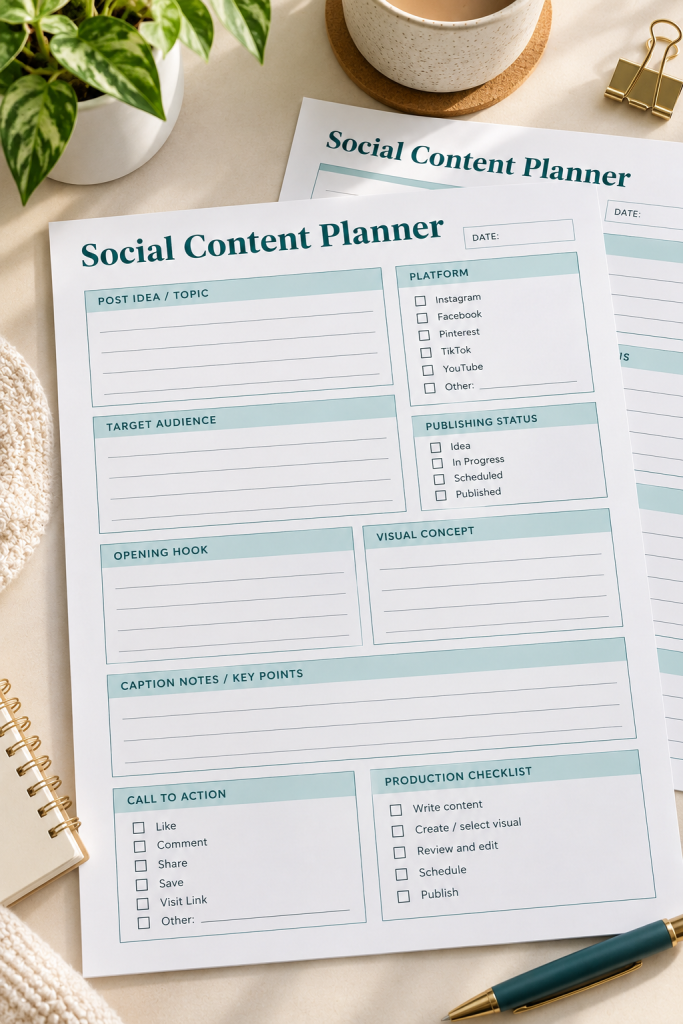
A social media calendar shows when something will be posted. A content planning worksheet goes further by helping creators prepare the actual post.
Design a printable with a large area for the main content idea, followed by smaller sections for the opening hook, visual concept, caption notes, and call to action.
It can help creators organize Instagram posts, Pinterest content, and other social media material before they open a design tool.
One practical layout: Give each post its own page so customers have space to develop the idea properly.
Add a small production checklist for writing, designing, reviewing, and publishing.
Keep the platform field blank rather than designing the entire sheet around one social network. That makes it easier to reuse for different content types.
21. Small Business Order Tracker
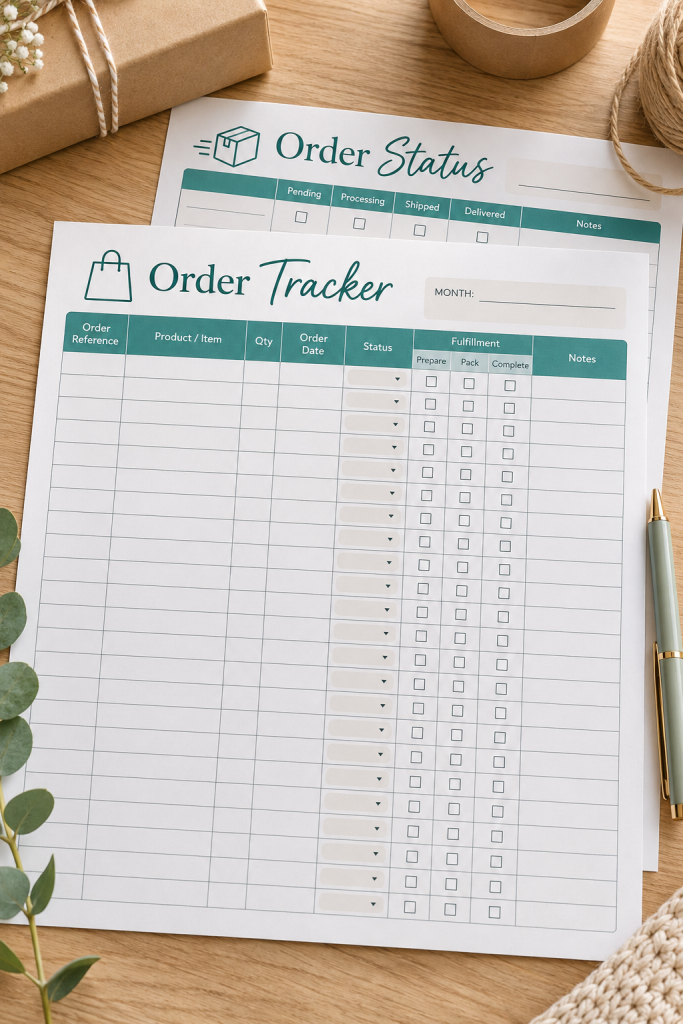
Orders can become difficult to manage when customer requests, product details, and fulfillment notes are written in different places.
A small business order tracker gives sellers a clear paper record of each order’s progress.
Create a printable table with fields for the order reference, product name, quantity, order date, current status, and fulfillment notes.
Useful status options include:
- New order.
- Preparing.
- Ready to send.
- Completed.
- Follow-up needed.
This printable may suit handmade sellers, craft businesses, and people handling a manageable number of orders.
Use an order number or reference instead of encouraging customers to write unnecessary personal information.
For larger operations, sellers may still need a dedicated order management system. Position the printable as a simple organizational aid rather than a replacement for secure business software.
Order reference and product details. A clear fulfillment status field. Space for important follow-up notes.
Unnecessary customer personal details. Tiny spaces for handwritten information. Complicated status labels that need explanation.
22. Inventory Tracking Sheets
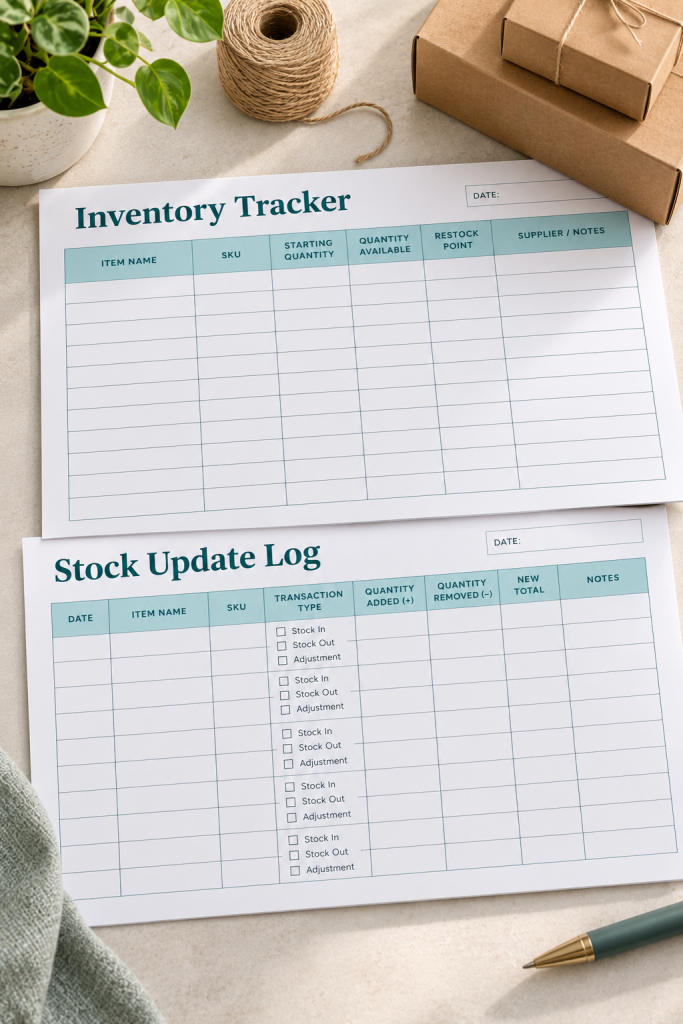
Knowing what is in stock sounds simple until a small business starts carrying several products, sizes, or variations.
An inventory tracking printable gives sellers a place to record product quantities and notice which supplies may need attention.
Design a landscape-style sheet if you need extra room for columns. Include the item name, product reference, starting quantity, current quantity, and restock notes.
Consider adding these fields:
- Product or material name.
- SKU or item reference.
- Quantity available.
- Restock reminder.
- Supplier notes.
This printable can be useful for craft sellers, small product businesses, and people organizing materials.
Keep the layout flexible enough to track finished products or supplies. For sellers with frequent stock changes, a digital inventory system may be more practical for keeping quantities current.
23. Client Information and Project Intake Forms
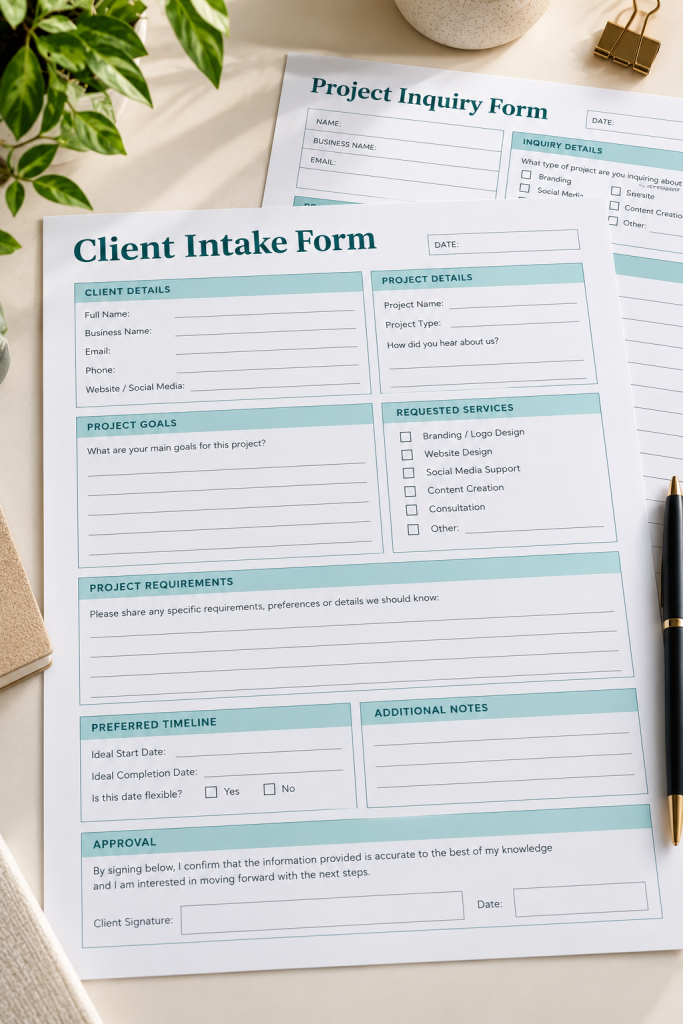
Freelancers and service providers often need the same basic information whenever someone asks about a new project.
A client intake printable collects those details in one organized place before work begins.
Create a form with sections for general contact information, project goals, requested services, preferred timeline, and extra notes.
Useful questions might include:
- What does the client need help with?
- What is the main goal of the project?
- Are there any important requirements?
- Is there a preferred completion date?
This product could appeal to designers, photographers, consultants, and other independent service providers.
Keep questions broad enough to work across different industries. Avoid asking for sensitive information unless it is genuinely needed, and remind sellers to handle completed forms securely.
24. Travel Planning Worksheets

A trip can involve several small details, from remembering reservation information to deciding what to pack.
Travel planning worksheets bring those details into a printable set that customers can reuse for different destinations.
Rather than designing around summer vacations or a specific holiday, create an undated travel planner that works for weekend breaks, family visits, and longer trips.
A practical travel bundle could contain:
- Trip overview and destination details.
- Daily itinerary worksheets.
- Packing checklist.
- Reservation reference sheet.
- Travel budget planner.
Leave dates, destinations, and activities blank so customers can personalize every page.
Include enough writing space for transportation and accommodation notes, but avoid encouraging people to record payment card numbers or sensitive travel documents in an unsecured printable.
✈️ Quick Product Design Tip
Make each travel worksheet usable on its own, even when you sell the pages together as a bundle.
A customer planning a short overnight stay may only need the packing checklist and reservation notes, while someone organizing a longer trip may use the full set.
Use matching headings and colors so every page still looks like part of the same product.
25. Gift and Occasion Planning List

A gift planning printable can help people keep track of thoughtful ideas for birthdays, anniversaries, weddings, and other special occasions throughout the year.
Instead of creating separate planners for individual holidays, design one reusable sheet with blank occasion and date fields.
Include these helpful sections:
- Recipient’s name and occasion.
- Gift ideas and personal preferences.
- Items already purchased.
- Wrapping and delivery status.
- Extra notes or reminders.
This printable may appeal to busy parents, families, and people who enjoy planning gifts ahead of time.
For a more complete product, include a master gift list and an individual gift planning page. Use simple check boxes for each stage, from choosing a gift to wrapping it.
A flexible design means customers can use the same pages whenever another occasion comes up.
Final Thoughts on Selling Undated Printables
Creating digital products does not have to mean designing something new for every holiday or calendar year. A useful undated printable can serve the same purpose whenever a customer needs it.
The strongest evergreen printables solve clear, everyday problems. They help people organize information, plan activities, or keep track of tasks without unnecessary complications.
Start with one product that suits your audience. Give it a clean layout, enough writing space, and a useful set of sections. Before listing it on Etsy or another platform, check the current seller rules and digital product requirements.
You can always expand a simple printable into a matching bundle later.
Save this list to your Pinterest board for digital product ideas so you can come back whenever you need inspiration for your next printable.